




Summarize with AI


2026 energy calendar: regulatory obligations, taxation and key dates for businesses
March 18, 2026
8
Min reading

Uncertainty hangs over 2026.
The energy sector is no exception, between governmental instability and the wait for the third multiannual energy plan (PPE3).
However, the 2026 energy calendar is already dense for businesses and communities. Tax developments, reporting obligations and regulatory changes punctuate the year, and impact energy budgets, purchasing strategies and investments.
Faced with this complexity, Sirenergies identifies the key deadlines in order to secure your choices, optimize your contracts and seize opportunities.
Discover how to anticipate in order to sustainably control your energy costs, in a context that is more volatile than ever.
In 2026, energy taxation was subject to several successive adjustments. Taken in isolation, they may seem marginal.
But combined, they represent several hundreds - even thousands of euros - on your energy bills.
The 2026 finance law confirms the Mechanical lift Of theexcise on electricity.
Debated by parliamentarians, the reduction in the electricity tax was finally not retained.
After indexation, the excise duty on electricity is set at 1Er February 2026 to:
Usually scheduled for 1Er January, the revaluation of the excise duty on gas was postponed to 1Er February.
The finance law confirms the passage of excise duties on natural gas used as fuel from 15.43 €/MWh to 16.39 €/MWh. This amount includes the increase intended for investments in non-interconnected areas (ZNI).
Surprise announcement at the start of the year, the Delivery Rate Contribution (CTA) Fall to 1Er February from 21.93% to 15%.
This decrease is reflected in reduction in the fixed portion of the subscription on electricity bills. For a bakery or a small workshop, the annual savings can reach 200 euros per year.
Driven by the lull in the electricity markets, the 2026 TRVs are trending downward in the 1Er February, with - 1.58% TTC for professional blue rates.
The Commission for Energy Regulation (CRE) does not communicate detailed developments for higher powers (yellow and green tariffs).
Updated every six months, TRVs could Evolve again to 1Er August.
As every year, CRE updates the tariff for third party access to gas transport networks (ATRT) on 1Er April.
One increase of 3.41% is announced. It includes the third party storage access rate (ATS).
The annual review of Tariff for Third-Party Access to Distribution Networks (ATRD) is expected on 1Er July.
After two years of successive increases, The 2026 rate has not yet been announced.
Entered into force on 1Er August 2025, the TURP 7 (tariff for the use of public electricity networks) should change to 1Er August.
The rate is reassessed each year by CRE on the basis of inflation and two coefficients: the annual evolution of costs and the settlement of the Enedis expenses and income adjustment account (CRCP).
The 2026 energy calendar is also punctuated by reporting obligations for businesses. More than ever, regulatory compliance is based on the quality, reliability, and traceability of data.
Since 2022, companies and communities occupying more than 1000 m² of buildings for tertiary use must report their annual consumption on the OPERAT platform.
They have until September 30, 2026 to report 2025 energy consumption.
The absence of a declaration exposes businesses to a reputational risk. Non-compliant companies are listed on a website, according to the principle of “Name and shame.”
Professionals who do not implement a program to reduce energy consumption, for their part, incur a financial fine : 1,500 euros for a natural person and 7,500 euros for a legal person.
Starting in 2026, The perimeter Mandatory energy audit widens. It now concerns businesses whose average annual energy consumption is:
The new obligors have until October 11, 2026 to carry out their first energy audit.

Test the Pilott centralized energy management platform to prepare your energy declarations and audits, in complete compliance and serenity.
{{ask-demo=” /ctas "}}
The year 2026 marks the entry into force of obligations and structuring mechanisms, which are likely to impact investment strategies and electricity purchases.
Since the 1Er January, the Regulated Access to Historic Nuclear Electricity (ARENH) is replaced by the Universal Nuclear Payment (UNV).
Backed by the wholesale market, UNV breaks with the ARENH regulated price mechanism. Consumers are now exposed to the volatility of electricity prices.
This new device transforms the purchase of electricity into strategic financial variable, to be managed with agility and foresight.
At this stage, the concrete impact of UNV on invoices remains difficult to anticipate. At current price levels, it is not expected to be activated in 2026.
The 6th Period of Energy Saving Certificates Opened on 1Er January.
It is characterized by a 27% increase in bonds energy suppliers. She also gives the priority to works deemed to be efficient (global energy renovation, electric mobility, heating support...)
For professionals, it is time to plan to maximize the assistance that can be mobilized and sustainably reduce energy consumption.
Since the 1Er January 2026, gas suppliers must justify that a portion of their customers' consumption is covered by biomethane, by acquiring Biogas Production Certificates (CPB).
The impact of this progressive system on the gas bill remains to be evaluated.
For 2026, the CRE estimates that 8.3 euros the annual additional cost for an average consumer (14 MWh/year). It could rise to 79 euros in 2028.
Starting on 1Er In July, the Renewable Energy Acceleration Act (APER law) reinforces the obligation to install a renewable energy production system on the roof.
In 2026, the minimum coverage rate increases from 30 to 40% of the roof surface.
All buildings are affected (commercial, industrial, tertiary, warehouses...), during a new construction, an extension or a major renovation of more than 500 m² of land space.
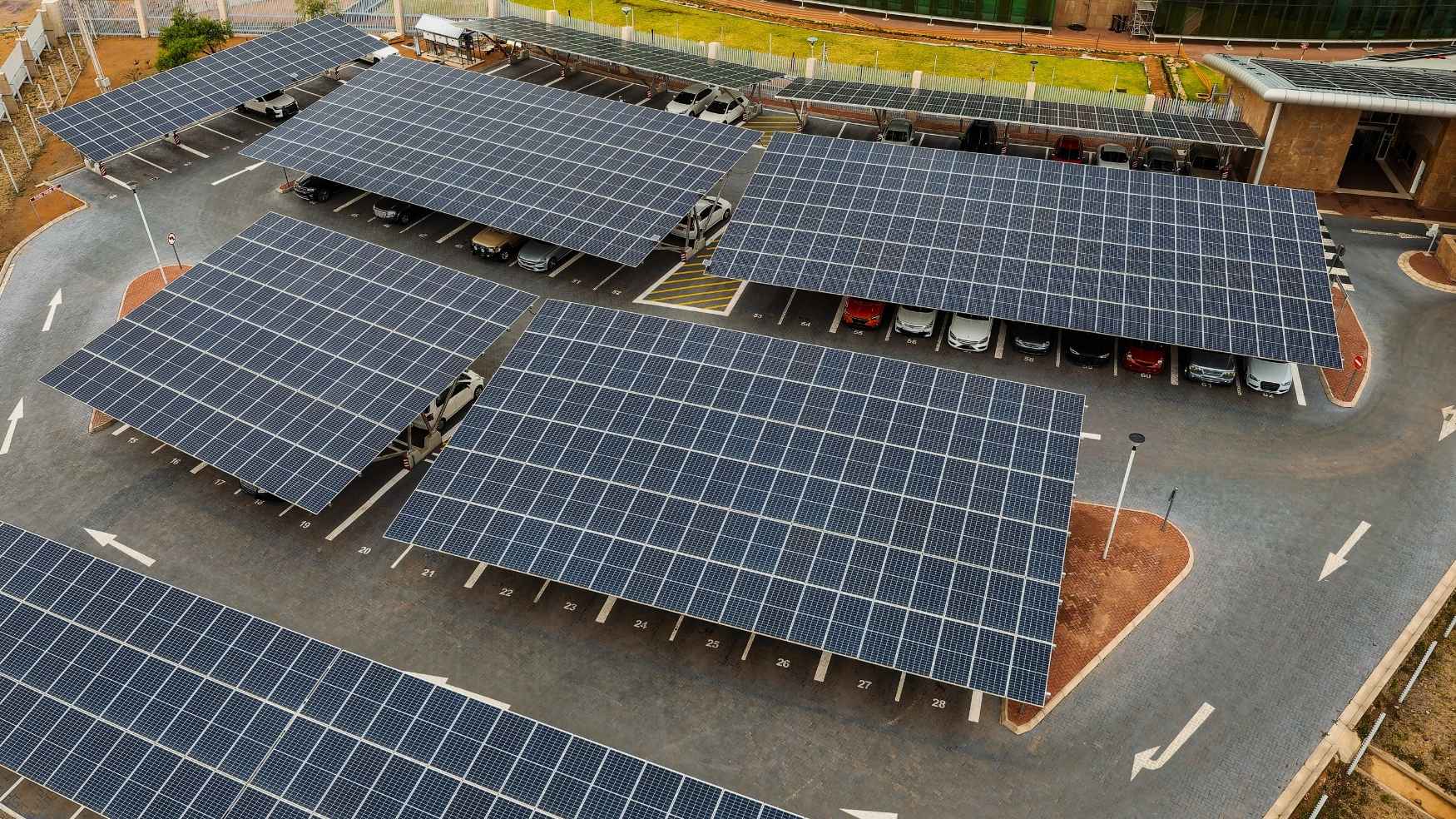
At 1Er July, the APER law requires companies to equip their car parks of more than 10,000 m² with photovoltaic shades. These should cover at least 17.5% from the surface. The objective? Achieve 50% shade thanks to a mix combining photovoltaics and vegetation.
An exemption is possible for companies until January 2030. To benefit from it, companies must commit to investing in more efficient panels, produced in Europe.
Next deadline: 1Er July 2028 for car parks between 1,500 and 10,000 m².
In 2026, the application of the new TURPE 7 tariff structure continues.
After the new distribution of day and night off-peak hours, the device becomes seasonal starting in autumn 2026. It provides for:
9.3 million consumers are affected. Priority is given to individual consumers, before an extension to professionals in 2027.
With Sirenergies, anticipate, personalize and manage your purchasing and investment strategy, so as not to be subject to regulatory obligations and innovations.
{{ask-rdv=” /ctas "}}
The 2026 energy calendar focuses on numerous fiscal and regulatory developments. In this uncertain and restrictive environment, a purely reactive approach is no longer enough. The control of energy costs and budgets is now based on proactive, anticipated and continuously optimized management.
With Sirenergies, secure your purchasing and investment strategies and transform regulatory and financial constraints into real drivers of management, compliance and performance.
{{ask-sourcing=” /ctas "}}
In a few clicks, organize an exchange with one of our experts.


weekly newsletter subscribers

4.9

.png)

Absolument. La réforme des heures creuses vise à absorber la surproduction solaire en milieu de journée. Les créneaux d'heures creuses se déplacent progressivement vers la plage 11h00 – 17h00, notamment en été. C'est une opportunité majeure pour les sites industriels ou tertiaires capables de flexibilité.
Conseil stratégique :
Le prix Forward est fixé à l'avance (sécurité budgétaire), tandis que le prix Spot varie heure par heure selon le marché (opportunité mais risque élevé).
Non. L'IA traite la donnée (data processing), mais l'analyste apporte la compréhension du contexte (market sentiment) et la prise de décision stratégique.
Instauré en 2017, ce dispositif répond à un enjeu de sécurité nationale.
L'électricité ne se stockant pas à grande échelle, le réseau doit être capable de répondre instantanément à la demande, même lors des pics de froid hivernaux. Le mécanisme incite financièrement les producteurs à maintenir leurs centrales disponibles et les entreprises à réduire leur consommation (effacement) lors de ces périodes critiques.
Car les marchés dépendent de facteurs exogènes imprévisibles (géopolitique, météo soudaine, politique) que les modèles basés sur l'historique ne peuvent pas anticiper, tout comme on ne prédit pas le Loto.
La Vente de Nucléaire Universelle (VNU) est le nouveau mécanisme de régulation des prix de l'électricité en France. Contrairement à l'ARENH, il ne s'agit plus d'un volume fixe à prix réduit, mais d'une redistribution financière des revenus excédentaires d'EDF aux consommateurs, basée sur les prix de marché et les coûts de production du nucléaire historique.
The range E @sy is available in four pricing structures to adapt to each risk profile:
La Multiannual Energy Programming (PPE) is the strategic management tool for France's energy policy. Established by the 2015 law on energy transition for green growth (LTECV), it serves as a compass for the State, communities and businesses.
Concretely, the PPE sets the priorities for action of the public authorities for the management of all forms of energy on the national territory. It covers a period of ten years, divided into two periods of five years, and must be revised periodically to adapt to technological and economic developments.
It deals with major topics such as:
It is crucial not to confuse it with National Low Carbon Strategy (SNBC). While SNBC sets carbon budgets (the ceilings for greenhouse gas emissions by sector), the PPE determines the technical and energy resources to achieve them.
La fin de l'ARENH (Accès Régulé à l'Électricité Nucléaire Historique) marque l'arrêt de la fourniture d'électricité à prix fixe garanti (42 €/MWh).
Dès le 1er janvier 2026, les entreprises sont exposées aux prix de marché, mais deux nouveaux mécanismes de régulation prennent le relais, bien que leur logique soit différente :
Conseil stratégique : Ne comptez pas sur le VNU pour réduire votre facture en 2026 si les marchés restent stables. Auditez vos contrats dès maintenant pour intégrer une part de prix fixe ou explorer des "Power Purchase Agreements" (PPA) pour sécuriser vos coûts sur le long terme.
L'impact dépendra des prix de marché. Le mécanisme prévoit une redistribution si les prix dépassent 78 €/MWh. Cependant, si les cours restent bas (actuellement autour de 60 €/MWh), le dispositif ne s'activera pas. La facture sera alors indexée à 100% sur les prix de marché, rendant le choix du fournisseur et du moment d'achat critiques.
Chaque modèle d'IA répond à un besoin spécifique du cycle d'achat :
L'expertise humaine reste néanmoins indispensable.
In 2025, the supplier had a NPS (Net Promoter Score) of +16 and a note of 4,17/5.
Satisfaction is based on a “zero solicitation” model and 100% in-house customer service in Toulon, guaranteeing proximity and responsiveness that cannot be found with major historical suppliers.
The central objective of PPE 3 is to engage France towards carbon neutrality by 2050 by breaking the country's historical dependence on fossil fuels.
Today, approximately 60% of final energy consumption in France still relies on imported oil and natural gas. PPE 3 aims to radically reverse this trend by setting an ambitious target: to reach 60% of carbon-free energies in final consumption by 2030.
To achieve this, PPE 3 pursues three major sub-objectives:
Ce seuil est jugé élevé par rapport aux prévisions actuelles du marché. Si le prix de l'électricité reste en dessous de 78 €/MWh, les entreprises ne bénéficieront d'aucune redistribution. Cela signifie que la protection promise par la réforme pourrait être inexistante dans un marché baissier, d'où l'importance de stratégies de sourcing agiles et d'outils de monitoring comme Pilott.

L'augmentation s'explique par la revalorisation de l'Accise sur le gaz à 16,39 €/MWh et la hausse de 3,41 % du tarif de transport (ATRT 8).
S'y ajoute l'entrée en vigueur des Certificats de Production de Biogaz (CPB), un nouveau coût réglementaire pour soutenir le biométhane.
Face à ces évolutions, Sirenergies vous accompagne dans l'achat de gaz naturel pour sécuriser vos prix malgré la volatilité du marché.
Le calendrier 2026 impose deux échéances majeures :
Pour simplifier ces démarches, vous pouvez centraliser vos données de consommation avec la plateforme Pilott de Sirenergies, garantissant ainsi la conformité de vos rapports réglementaires.
Le dispositif ARENH a laissé place au VNU (Versement Nucléaire Universel).
Ce changement structurel expose davantage les entreprises aux prix de gros, rendant la gestion des risques plus complexe qu'auparavant.
Il devient alors indispensable de définir une stratégie d'achat d'électricité avec Sirenergies pour lisser l'impact de la volatilité des marchés sur votre budget.