




Summarize with AI

March 18, 2026
7
Min reading
After three years of waiting, the government unveiled the third Multiannual Energy Programme (PPE) on 12 February. This long-awaited document finally gives companies visibility for the coming decade.
PPE 3 is not an energy revolution. But it sets a clear course: the gradual exit from fossil fuels.
To achieve this, the State relies on an assumed duo: a nuclear base, complemented by renewable energies. In the line of sight, the objective remains the same: to achieve carbon neutrality in 2050.
A political compromise for some, a pragmatic roadmap for others, PPE 3 is a source of debate. But its hundreds of pages have one merit: setting a structured investment trajectory until 2035.
What are the core energies of this new energy program?
What are its main challenges?
How does it concretely influence the energy strategy of companies?
Sirenergies deciphers the main balances of PPE 3 and its implications for companies.
The Multiannual Energy Programming (PPE) derives from the 2015 law on the energy transition for green growth (LETCV).
It sets the public action priorities for ten years, with a revision planned halfway through. This document frames production, consumption, investments and the energy mix, in order to succeed in the energy transition. The ambition: to reach carbon neutrality in 2050.
Since 2015, three versions have succeeded one another:
You can now link your competitiveness to the energy transition thanks to PPAs (Power Purchase Agreements) and next-generation carbon-free offers.
The consulting firm SirEnergies and its experts in the sector, support you to find the right offer at the right time. But above all, the offer that meets your specific needs. The first step: a detailed analysis of your consumption profile.
{{ask-advice=” /ctas "}}
One figure summarizes the challenge: 60% of French energy consumption now comes from fossil fuels.
The new energy program intends to reverse the proportion. PPE 3 aims for 60% carbon-free energy by 2030.
The effort is considerable. To achieve this, national production of carbon-free energy will have to jump from 19 to 27%, all sectors combined.
First lever of PPE 3: the gradual and massive electrification of uses. With this strategy, France wants to capitalize on its electricity that is already largely carbon-free. To achieve this, PPE 3 settles the debate: the base will be nuclear.
With PPE 3, the nuclear returns to the center of the game, after a period of disgrace. PPE 2 planned to close 14 nuclear reactors. The new energy program acts on the Construction of 6 EPR, plus 8 as an option.
It also validates the extension of nuclear power plants over 60 years of age.
Nuclear power is once again becoming the basis of the electrical system, recognized for its advantages: stable, controllable, low-carbon and competitive production.
PPE 3 focuses on the “rational” acceleration of three renewable sectors:
On the other hand, programming pushes the pedal of Brake for onshore wind. This political arbitration is intended to ease local tensions. The focus is on the modernization of existing installations and their integration into the landscape.
Some industrial sectors will not be able to electrify all their uses. For their decarbonization, PPE 3 is banking on the rise of domestic production of low-carbon gas and heat :
In terms of electric mobility, there is no major break between PPE 3 and PPE 2.
France reaffirms its ambition to generalize electric mobility, via:
For heavy mobility, such as air and sea transport, the PEP 3 encourages the development of biofuels and synthetic fuels.
On energy sobriety, the new energy program is content with confirm existing tools :
The objective is twofold: to reduce national energy consumption, while protecting purchasing power.
Alexandre Joly, in charge of the Energy division at Carbone 4, alerted to this double-edged clause, it is useful:
” If it is to keep up with the pace of electrification and adapt the resources, but not if it is to return once again to the renewable vs nuclear match ”.
The objective of PPE 3 is clear: reduce France's dependence on fossil fuels. This orientation responds to a triple motivation: geopolitical, environmental and economic.
France remains largely dependent on imports for its oil and gas. Each year she spends about 60 billion euros per year, some of which benefits unstable or controversial political regimes.
This dependence exposes France to geopolitical upheavals. Since the invasion of Ukraine by Russia, conflicts have continued, especially in the oil-rich Middle East region.
Producing more on the National soil becomes strategic for France's energy sovereignty. What's at stake? Secure supplies and limit price shocks.
Another strategic imperative: decarbonization.
The challenge is twofold, both environmental and economic. Reducing greenhouse gas emissions responds to the urgency of climate change. But it is also a Competitiveness challenge for the industrial and tertiary sector.
Abundant, stable and affordable low-carbon energy allows businesses to control their costs. The key is maintaining competitiveness, while meeting the environmental requirements of Europe and to the expectations of investors.
PPE 3 is guided by a guideline: controlling energy prices for households and businesses.
Reducing dependence on fossil fuels limits exposure to volatility gas, oil and, by extension, electricity prices.
By betting on energies with lower and predictable production costs, the State hopes to stem the risk of sudden increases in the years 2022—23.
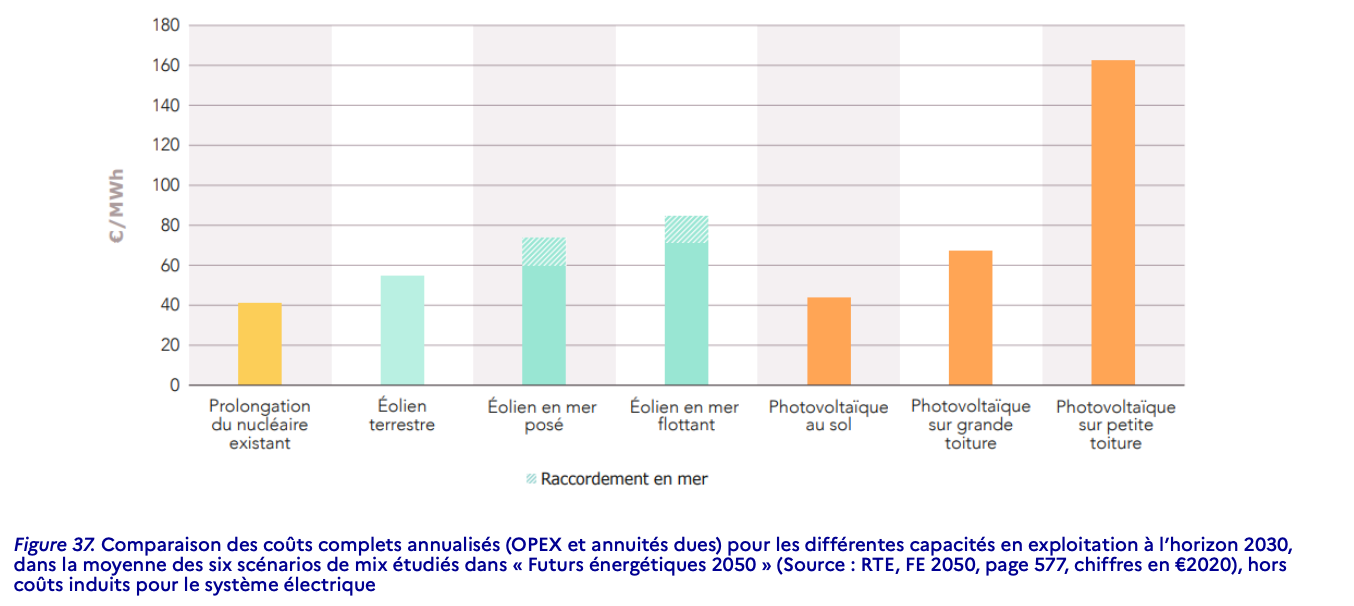
Availability of energies, investment priorities, public aid: PPE 3 is redesigning the strategic framework for investment decisions until 2035.
Businesses need to change their posture. It's about move from opportunistic price management to energy planning aligned with the national trajectory.
For businesses, the signal is explicit. Decarbonized electricity and low-carbon gases will be the energy backbone of the coming decades. Investing in equipment dependent onNon-substitutable fossil fuels becomes risky in the medium term.
The question is no longer just, “How much does energy cost?” but: “What energy will guarantee the continuity and competitiveness of my business in 2035? ”.
Businesses need to start now anticipate trade-offs between :
Aligning with national energy policy is a lever for financial optimization.
The trajectory of PPE 3 indeed guides public funding. Projects compatible with national priorities will receive strengthened support, through the CEEs, the Green Fund, the Chaleur Fund or ADEME calls for projects.
Increasing electrification is transforming the energy management of businesses. Elle changes key elements of contracts and electricity purchases :
Without foresight, these developments can lead to an increase in TURP, power overruns and additional contractual costs.
Are your energy contracts prepared to deal with market volatility?
Increased power, increased seasonality, risk of overruns... the evolution of your consumption profile can have a major impact on your bill without an early purchasing strategy. Secure your purchases thanks to Sirenergies support. Discover our solutions:
{{know-more-services=” /ctas "}}
In this context, three main buying strategies are taking shape:
With PPE 3, the purchase of electricity is becoming more than ever a competitive tool.
Coupled with the new tariff structure, PPE 3 reinforces the interest of a fine management of energy consumption.
Analyzing your consumption profile in detail makes it possible in particular to:
PPE 3 is not just a national planning document. The new energy program is also a compass for businesses. It outlines the framework in which they will evolve until 2035.
Those who anticipate today will secure their competitiveness, regulatory compliance and resilience in the face of future shocks.
With Sirenergies, align your energy strategy with the national energy policy now.
Anticipate market developments, secure your contracts and transform PPE 3 into a sustainable opportunity.
{{ask-sourcing=” /ctas "}}
In a few clicks, organize an exchange with one of our experts.


weekly newsletter subscribers

4.9

.png)

La Vente de Nucléaire Universelle (VNU) est le nouveau mécanisme de régulation des prix de l'électricité en France. Contrairement à l'ARENH, il ne s'agit plus d'un volume fixe à prix réduit, mais d'une redistribution financière des revenus excédentaires d'EDF aux consommateurs, basée sur les prix de marché et les coûts de production du nucléaire historique.
Chaque modèle d'IA répond à un besoin spécifique du cycle d'achat :
L'expertise humaine reste néanmoins indispensable.
In 2025, the supplier had a NPS (Net Promoter Score) of +16 and a note of 4,17/5.
Satisfaction is based on a “zero solicitation” model and 100% in-house customer service in Toulon, guaranteeing proximity and responsiveness that cannot be found with major historical suppliers.
Absolument. La réforme des heures creuses vise à absorber la surproduction solaire en milieu de journée. Les créneaux d'heures creuses se déplacent progressivement vers la plage 11h00 – 17h00, notamment en été. C'est une opportunité majeure pour les sites industriels ou tertiaires capables de flexibilité.
Conseil stratégique :
Car les marchés dépendent de facteurs exogènes imprévisibles (géopolitique, météo soudaine, politique) que les modèles basés sur l'historique ne peuvent pas anticiper, tout comme on ne prédit pas le Loto.
The range E @sy is available in four pricing structures to adapt to each risk profile:
Ce seuil est jugé élevé par rapport aux prévisions actuelles du marché. Si le prix de l'électricité reste en dessous de 78 €/MWh, les entreprises ne bénéficieront d'aucune redistribution. Cela signifie que la protection promise par la réforme pourrait être inexistante dans un marché baissier, d'où l'importance de stratégies de sourcing agiles et d'outils de monitoring comme Pilott.
L'impact dépendra des prix de marché. Le mécanisme prévoit une redistribution si les prix dépassent 78 €/MWh. Cependant, si les cours restent bas (actuellement autour de 60 €/MWh), le dispositif ne s'activera pas. La facture sera alors indexée à 100% sur les prix de marché, rendant le choix du fournisseur et du moment d'achat critiques.
Le prix Forward est fixé à l'avance (sécurité budgétaire), tandis que le prix Spot varie heure par heure selon le marché (opportunité mais risque élevé).
Instauré en 2017, ce dispositif répond à un enjeu de sécurité nationale.
L'électricité ne se stockant pas à grande échelle, le réseau doit être capable de répondre instantanément à la demande, même lors des pics de froid hivernaux. Le mécanisme incite financièrement les producteurs à maintenir leurs centrales disponibles et les entreprises à réduire leur consommation (effacement) lors de ces périodes critiques.
The central objective of PPE 3 is to engage France towards carbon neutrality by 2050 by breaking the country's historical dependence on fossil fuels.
Today, approximately 60% of final energy consumption in France still relies on imported oil and natural gas. PPE 3 aims to radically reverse this trend by setting an ambitious target: to reach 60% of carbon-free energies in final consumption by 2030.
To achieve this, PPE 3 pursues three major sub-objectives:
Non. L'IA traite la donnée (data processing), mais l'analyste apporte la compréhension du contexte (market sentiment) et la prise de décision stratégique.
La Multiannual Energy Programming (PPE) is the strategic management tool for France's energy policy. Established by the 2015 law on energy transition for green growth (LTECV), it serves as a compass for the State, communities and businesses.
Concretely, the PPE sets the priorities for action of the public authorities for the management of all forms of energy on the national territory. It covers a period of ten years, divided into two periods of five years, and must be revised periodically to adapt to technological and economic developments.
It deals with major topics such as:
It is crucial not to confuse it with National Low Carbon Strategy (SNBC). While SNBC sets carbon budgets (the ceilings for greenhouse gas emissions by sector), the PPE determines the technical and energy resources to achieve them.
La fin de l'ARENH (Accès Régulé à l'Électricité Nucléaire Historique) marque l'arrêt de la fourniture d'électricité à prix fixe garanti (42 €/MWh).
Dès le 1er janvier 2026, les entreprises sont exposées aux prix de marché, mais deux nouveaux mécanismes de régulation prennent le relais, bien que leur logique soit différente :
Conseil stratégique : Ne comptez pas sur le VNU pour réduire votre facture en 2026 si les marchés restent stables. Auditez vos contrats dès maintenant pour intégrer une part de prix fixe ou explorer des "Power Purchase Agreements" (PPA) pour sécuriser vos coûts sur le long terme.

La Multiannual Energy Programming (PPE) is the strategic management tool for France's energy policy. Established by the 2015 law on energy transition for green growth (LTECV), it serves as a compass for the State, communities and businesses.
Concretely, the PPE sets the priorities for action of the public authorities for the management of all forms of energy on the national territory. It covers a period of ten years, divided into two periods of five years, and must be revised periodically to adapt to technological and economic developments.
It deals with major topics such as:
It is crucial not to confuse it with National Low Carbon Strategy (SNBC). While SNBC sets carbon budgets (the ceilings for greenhouse gas emissions by sector), the PPE determines the technical and energy resources to achieve them.
The central objective of PPE 3 is to engage France towards carbon neutrality by 2050 by breaking the country's historical dependence on fossil fuels.
Today, approximately 60% of final energy consumption in France still relies on imported oil and natural gas. PPE 3 aims to radically reverse this trend by setting an ambitious target: to reach 60% of carbon-free energies in final consumption by 2030.
To achieve this, PPE 3 pursues three major sub-objectives: