




Summarize with AI

March 6, 2026
9
Min reading
With temperatures rising by at least 1.1°C since the 19th century, the effects of climate change are palpable. This deregulation of our planet's climate is mainly due to the massive use of fossil fuels, which greatly degrade our environment.
It is for these reasons that a rapid transition to renewable energies is essential and that they are heralded as the energy of the future.
Before reaching these conclusions, it is essential to clearly define what renewable energies are. Know the content of the Multiannual Energy Programming (PPE) concerning this type of energy can help you better identify the issues and challenges to be met.
A study of the evolution of the future shares of green energy will also be carried out to get an overview of the future that is in store for them. An update will be made on the objectives of renewable energies by 2030 in France.
To make plausible predictions about the future of renewables, it is necessary to define, in advance, what they are. Having a brief knowledge of energies that are not renewable is also very important to promote a good global understanding of the subject.
Renewable energies are a set of techniques that make it possible to produce electricity, gas, fuel or heat using natural sources. It exists five main categories What are:
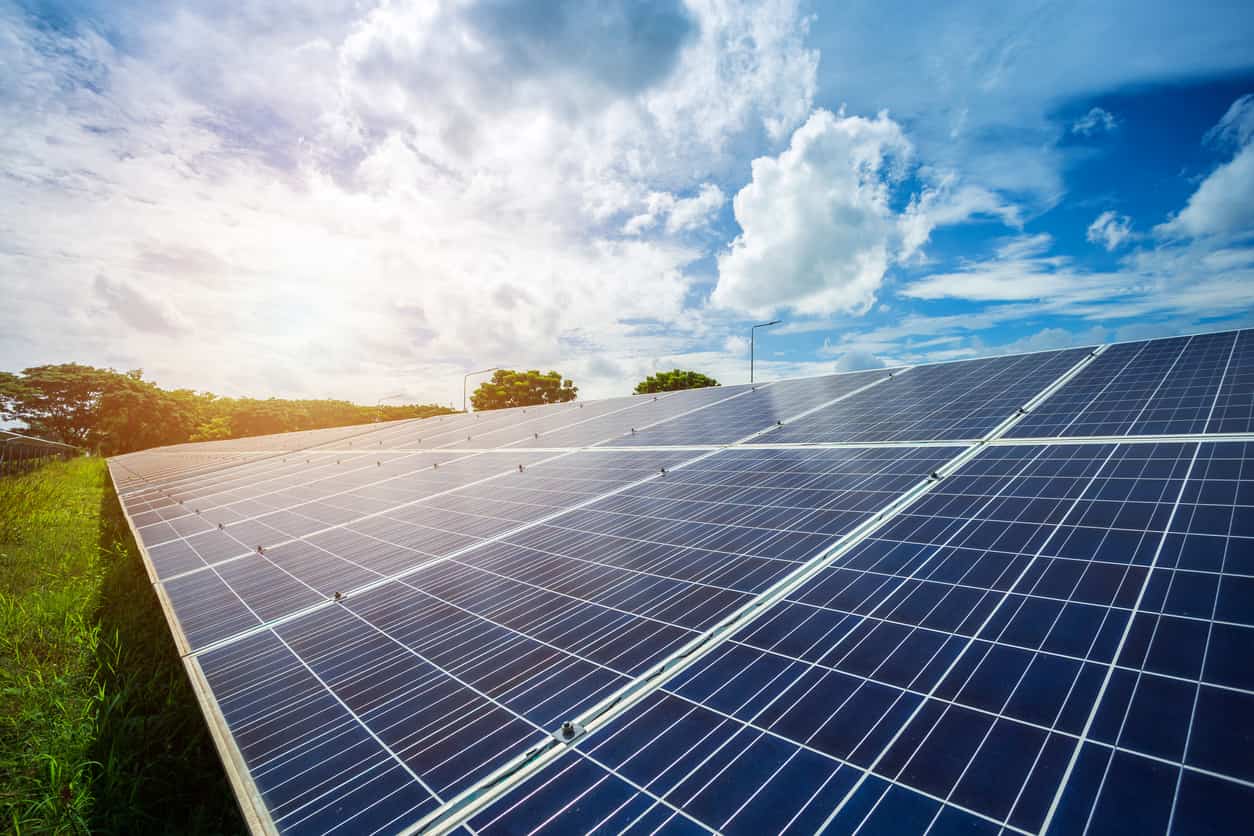
The particularity of renewable energies is thatThey are inexhaustible, because the energy sources involved are regenerate continuously.
Clean energies produce little or no waste. The use of an ENR also causes few CO2 emissions, which contributes to reducing the overall quantity of greenhouse gases issued.
Harnessing clean energies on a daily basis and for human activity is then a reliable way to fight climate change.
It should also be noted that solar and wind energies are intermittent energies. This is due to their energy production which is interrupted under certain conditions. It's about the night for solar energy and the absence of wind for wind turbines.
The elements classified in this category are in total opposition to green energy. Les non-renewable energies are in fact characterized by high air pollution and massive emissions of greenhouse gases.
These effects on the environment are observed both at the level of the extraction or production of non-renewable energy, and at the stage of its exploitation. These so-called “fossil” energies do not exist in unlimited quantities. Their Stock is running out quickly and is bound to dry up.
There are four non-renewable energy sources: Oil, Coal, natural gas and Nuclear. The continuous exploitation of the first three would lead to their respective exhaustion after 50, 70 or 150 years.
La Multiannual Energy Programming (PPE) is an energy roadmap adopted by the French State in 2016 to serve two specific goals. It is about reaching the carbon neutrality by 2050 and to fight effectively against climate change.
These are objectives defined by the energy transition law for green growth. The PPE covers a period of 10 years starting in 2018, with objectives planned for each five-year term ending in 2023 and 2028.
This energy strategy concerns Mainland Metropolitan France and Non-Interconnected Zones (ZNI). The territories included in the ZNI are: Corsica, Réunion, Réunion, Guiana, Guyana, Martinique, Guadeloupe, Wallis and Futuna, Saint-Pierre-et-Miquelon.
The Multiannual Energy Program includes several components, including the development of the exploitation of renewable energies and recovery. The objectives of the PPE in this area are oriented along three main axes.
The “renewable and recovered heat and cold” category includes several renewable energy sources.
For the production of heat and cold using biomass, a target of 145 TWh is set for 2023. This quantity of energy produced from agricultural and organic waste must reach at least 157 TWh in 2028 and 169 TWh at most.
Concerning the heat pumps and geothermal ones, renewable energy production of 39.6 TWh is planned for 2023. In 2028, the green energy supplied by this means will be between 44 and 52 TWh.
For deep geothermal energy, the clean energy generated at the end of the first 5 years of the PPE must be at least 2.9 TWh. An energy production of 4 to 5.2 TWh is planned for 2028.
In the case of solar thermal energy, the green energy supplied must be at least 1.75 TWh in 2023. Five years later, the quantity of solar thermal energy generated will be between 1.85 and 2.5 TWh.
La Quantity of renewable heat and recovery provided thanks to heating networks should reach 24 TWh in 2023. At the end of the following deadline, this thermal energy production will be between 31 and 36 TWh.
Biogas is the second axis presented with regard to the development of the exploitation of renewable and recovered energies in the Multiannual Energy Planning. The objective set here is to achieve renewable energy production of 6 TWh by 2023.
In 2028, a quantity of biogas injected into the distribution network between 14 and 22 TWh is expected.

With regard to renewable electricity, the objectives are rather defined in terms of installed capacity.
For hydropower as a whole, the objective set is to reach 25.7 GW in 2023 and 26.4 to 26.7 GW in 2028.
In terms of electricity produced by a photovoltaic system, obtaining an installed power of 20.1 GW is the challenge. Five years later, the objective would be achieved if the available power is between 35.1 and 44 GW.
For electricity produced by methanization, the aim is to have a capacity of 270 MW in 2023, for 340 to 410 MW in 2028.
In terms of onshore wind energy, the expected installed capacity for 2023 is 24.1 GW. At the end of the next five years, it should be between 33.2 and 34.7 GW.
Concerning offshore wind energy, the objective is to reach an installed capacity of 2.4 GW in 2023. At the end of 2028, a capacity of between 5.2 and 6.2 GW would be a sign of success.
When it comes to the evolution of the share of renewable energies over the coming years, it is important to approach it from several perspectives. The analysis will be done chronologically at the global, European and then French scales.
According to REN21, the share of renewable energies in 2020 represented only 12.6% of total final energy consumption worldwide.
According to the IEA (International Energy Agency), this share is expected to increase by 50% by 2024, driven by solar energy growth.
By 2030, renewable energies could represent 65% of the electrical energy consumed in the world according to the projections of the New Energy Outlook 2018. 48% of this electricity will be produced thanks to photovoltaic and wind energies.
The remaining 52% will be generated by hydropower as well as other renewable energies. This strong growth of green energy would be the consequence of a significant reduction in offshore wind and solar costs. This is a decrease of 15% and 35% respectively.
By 2050, renewable energies should account for 80% of global energy consumption and allowreach carbon neutrality (zero net emissions). Coal, oil and natural gas will be largely abandoned.
At the level of the European Union, the clean energies represented 22.1% of final energy consumption in 2020.
The prevalence of renewable energies is expected to increase by 2030, with a share that represents 45% of energy mix according to the RepowerEU program.
By 2050, Europe's renewable electricity consumption is expected to reach 87%. 74% of it will be composed of photovoltaic and wind energy.
As far as gas is concerned, two thirds of network gas must be carbon-free. The gas distributed must then be mainly composed of biogas, green or low-carbon hydrogen, synthetic methane, etc.
In 2021, renewable energies represented around 19% of gross final energy consumption in France.
The objective in 2030 is to satisfy 32% of this consumption with renewable energies, 40% of which should be used to produce electricity. This growth observed in clean energies will also be linked to the evolution of photovoltaic and wind energy. The final consumption of heat, fuel and gas will be provided by renewable energies at the rate of 38%, 15% and 10% respectively.
By 2050, renewable energies will make it possible to reach the carbon neutrality in France also and will represent nearly 70% of final energy consumption. The objective is to be more dependent on renewable energies, and to be less than 50% dependent on nuclear energy.
The future of renewable energies in France is intrinsically linked to the goals to be achieved in 2030.
In 2020, the total production of clean energy in France was estimated at 322 TWh, for a primary consumption of 348 TWh.
33% of the total quantity of renewable energy produced is dominated by wood energy, followed by renewable hydropower and wind with 19.3% and 12.7% respectively. Renewable heat production during 2020 is 178 TWh. That of electricity is estimated at 117 TWh and that of biofuel at 27 TWh.
This production of green energy is expected to increase gradually in order to achieve the objectives of renewable energies in 2030.
To reach the goal of 38% of final consumption, heat production must increase by 1.3% each year between 2020 and 2030.
After five years, production will have increased by 6.5% and will reach a capacity of at least 190 TWh in 2025.
For electricity, the PPE predicted an increase in renewable energies of 70%, from 2014 to 2023. This equates to a growth of 38.8% in five years (from 2020 to 2025).
The electricity production expected in 2025 will then be at least 162.5 TWh. Between 2014 and 2019, the quantity of biofuel produced increased by around 16%. By following this constant from 2020, it is possible to predict that the Quantity of biofuel in 2025 will be 31.32 TWh.
By maintaining the same principle for heat production, projections predict an increase of 6.5% compared to 2025, at the end of the year 2030. The heat production will then be 202.35 TWh. Regarding the production of clean electrical energy, it will be 225.5 TWh. For biofuel production capacity, it will be 36.33 TWh in 2030.
Clean energies have a very bright future ahead of them. They are a viable alternative to fossil fuels, which they surpass ecologically.
Using green energy is one of the surest ways to reach carbon neutrality in 2050, according to the third part of report from the IPCC (Intergovernmental Panel on Climate Change).
However, achieving this objective requires supporting the development of clean energies through several mechanisms. At the governmental level, these may include development and investment policies. For businesses, it will rather be an obligation to buy or any other similar principle.
Recognizing the climate emergency, SirEnergies offers professionals and businesses the opportunity to limit the ecological impact in terms of energy.
We have made the choice to work with key players in solar photovoltaic to offer you support solutions dedicated to your photovoltaic self-consumption projects.
Click below for more information:
In a few clicks, organize an exchange with one of our experts.


weekly newsletter subscribers

4.9

.png)

Les caves coopératives de taille ETI ou grande entreprise peuvent être soumises à l'audit énergétique réglementaire (norme NF EN 16247). Sirenergies n'a ni la compétence ni l'accréditation pour réaliser cet audit : nous vous orientons vers un bureau d'études partenaire accrédité, et vous accompagnons en amont sur vos achats et en aval sur le pilotage.
Yes. The supplier guarantees an offer 100% renewable via the official Guarantees of Origin (GO) mechanism.
For the most demanding companies, the offer GREENVOLT+ ensures very low carbon intensity electricity, sourced exclusively from independent French producers (hydraulic, wind, solar).
The range E @sy is available in four pricing structures to adapt to each risk profile: