





Summarize with AI

March 5, 2026
8
Min reading

Local authorities are among the first victims of rising energy prices.
The Observatory of Finances and Local Public Management (OFLG) notes an increase of 29.3% in energy-electricity expenditure by municipalities in 2023, after an increase of 22.4% in 2022!
If inflation decelerates in 2024, energy spending continues to threaten the balance of local authorities.
How can municipalities, intermunicipalities and departments deal with this financial pressure and maintain a balanced budget? Reducing energy consumption is key.
Sirenergies offers you an overview of winning strategies.
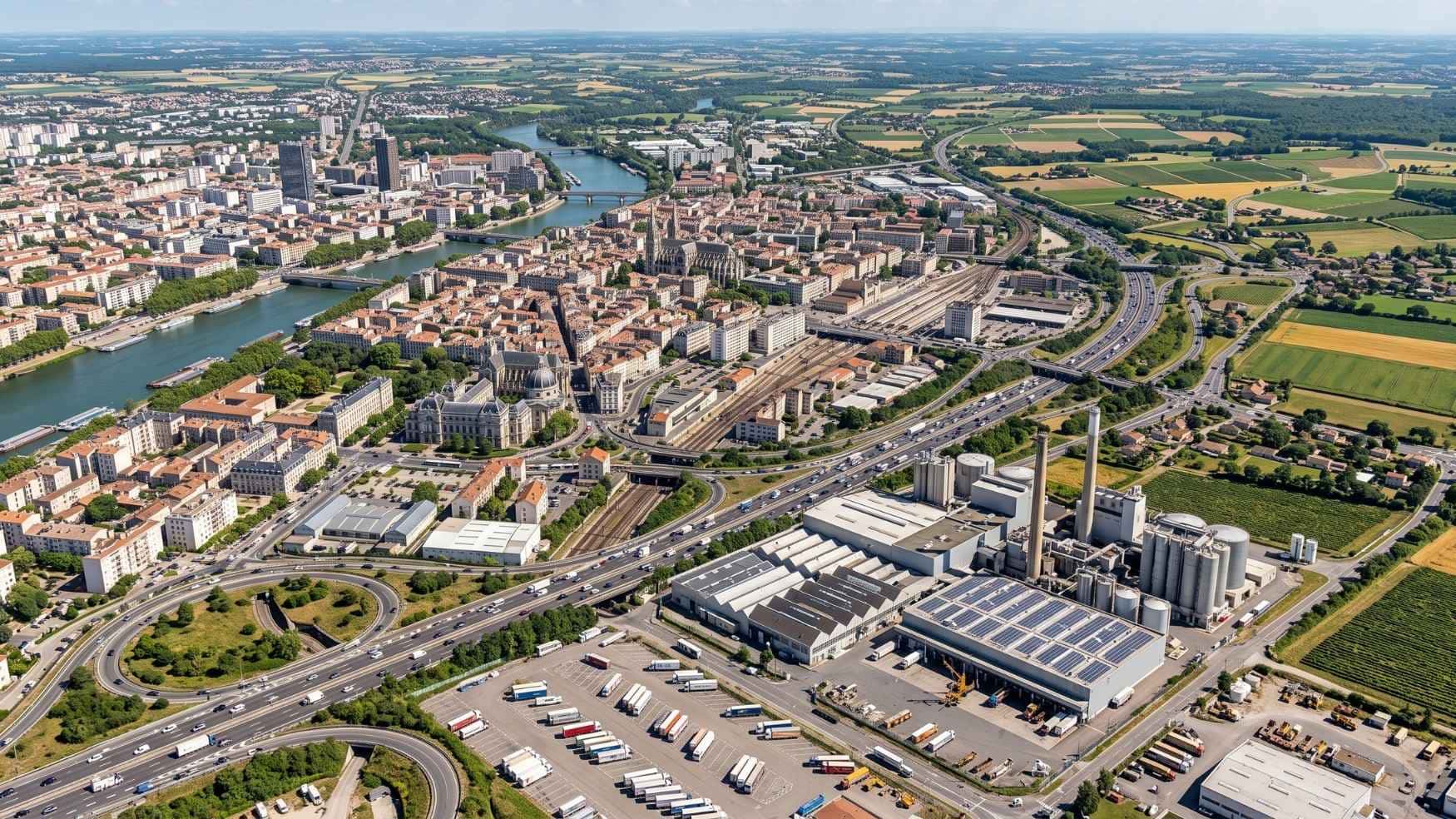
Public buildings, public lighting, technical infrastructures: to exercise their skills and provide public services, local authorities have an incompressible heritage, often consuming electricity and gas.
76% of municipal energy consumption is generated by public buildings. Town halls, schools, colleges, gymnasiums, gymnasiums, gymnasiums, libraries,...: with more than 225,000 public buildings and 280 million square meters, the built heritage of local authorities is impressive, both by its surface area and by the energy expenditure it generates!Nearly 3 billion euros are spent every year by municipalities for the consumption of their buildings, 75% of which is spent on lighting and heating.
Public lighting is the second item of energy expenditure communities. According to ADEME, it represents 41% of the energy consumption of municipalities and 37% of their electricity bill total (compared to 32% and 18% respectively in 2017).
This trend is explained by the increase in electricity costs, coupled with outdated, energy-consuming and inefficient equipment. 40% of the lights are over 20 years old. Fluorescent mercury vapor balloons symbolize the obsolescence of the public lighting park. Particularly demanding on electricity, they have been banned from marketing since 2015 but still authorized for exploitation.
Technical infrastructures generate energy costs that are often forgotten. Les pressurized drinking water networks consume electricity to fill tanks and water towers, but also for pump stations and boosters. Likewise, the sewage treatment plants consume energy to treat wastewater.
In a 2022 survey, the AMORCE association estimates that the energy required for the drinking water service represents 100 kWh/year and 150 kWh/year for the sanitation service.
Budget balance, protection of public policies, environmental compliance and energy transition are all major challenges hidden behind the necessary control of energy consumption.
At the heart of the energy crisis, the Association of Small Cities in France (APVF) believes that “the energy expenditure of some municipalities has jumped by 50%”, with increases of up to 300%!
However, municipalities, intermunicipalities and departments haveobligation to present a balanced budget. An explosion in the energy station can force them to remove public policies, Cut back on grants or redirecting investments to offset rising energy costs. They may also be tempted to play on recipes by increasing taxes and local taxes. Controlling energy expenses makes it possible toavoid these harmful choices to public services.
Local authorities are concerned by the Tertiary Energy Eco System (DEET). Resulting from the ELAN law, the Tertiary decree imposes on any tertiary building of more than
1,000 m² to reduce its energy consumption.
France's objective? Achieve carbon neutrality in 2050.
The goals are ambitious. Concretely, communities must reduce the energy consumption of their buildings 40% by 2030, 50% by 2040, and 60% by 2050.
At the origin of 12% of greenhouse gas emissions, communities have a major role to play in energy transition. Economic choices are also ecological choices. Controlling consumption reduces CO2 emissions. Develop the renewables promotes local natural resources, strengthens the energy sovereignty of territories and consolidates their resilience in the face of crises.
These choices contribute toattractiveness of a territory, by conveying the image of an exemplary community, committed to the energy transition and concerned about the future of its citizens.
Even if the public heritage is incompressible, many concrete solutions exist to reduce energy consumption, without threatening the operating and investment budgets of local authorities.
The energy audit is often the key to raising the awareness of elected officials. Extensive and detailed, this document provides a State of the energy situation of the community. Consumption analysis makes it possible to identify the highest expenditure items, to identify possible malfunctions and to clearly specify the needs.
Armed with this data, the expert can suggest concrete ways of improvement. The conclusions serve as basis for building an energy strategy adapted to the needs and budget of the community.
The community can reduce its energy expenses by optimizing its energy purchases and its electricity and gas contracts. Like businesses, municipalities and intermunicipalities can achieve substantial financial savings thanks to:
THEgroup purchase is also an effective choice for reducing energy costs. The grouping of orders secures the public procurement procedure in the form of a single tender organized by an expert. The pooling of needs stimulates the competition of energy suppliers for get the best rates and services, while freeing the community from the constraints of negotiating and analysing offers.
Fast, effective and inexpensive actions, the informed purchase of energy and the optimization of contracts require expertise and a solid knowledge of the electricity and gas markets.
💡The energy consulting and sourcing firm, Sirenergies supports local authorities for Decrypt their supply contract, select the best supplier and To pilot the energy strategy.
With the Pilott platform, local authorities can know their energy consumption to build a tailor-made energy contract.Contact us
Encouraged by the State, the energy renovation of public buildings has proved its effectiveness. One average energy savings of 43% is observed in the 6,000 projects of the national plan to stimulate energy renovation.
THEthermal insulation And the modernization of heating and ventilation systems stand out as the actions ofee the most efficient. But local authorities can go further by equipping their buildings with intelligent management energy.
Les energy management systems (EMS) make it possible to save energy thanks to the real-time monitoring of consumption, the automated detection of malfunctions and the remote control equipment.
Another tool available to communities: the energy performance contract (CPE). Signed with an energy efficiency operator, this contract aims at a concrete objective of reducing energy consumption by carrying out works and optimizing equipment management.
If the investment is high, energy renovation opens up the right to numerous public grants : State green fund, departmental grants, calls for projects from departmental energy unions, ACTEE program carried by the FNCCR (1), etc
According to ADEME, public lighting represents a potential of 50 to 75% in energy savings. Simply switching to LEDs saves up to 60% on electricity.
The use of smart lighting systems (or Smart lighting) maximizes savings. Sensors, astronomical clocks, electronic ballasts, presence detectors and remote control regulate lighting according to hours and needs and reduce electricity bills.
Radical to reduce spending, nocturnal extinction is also increasingly practiced in France. In the 2023 barometer from the French Observatory of Ecological Transition, 80% of the 500 mayors surveyed say they turn off the public lighting after 22 p.m. This quick and effective solution also reduces light pollution and protects biodiversity.
Acting on lighting is the promise of real financial savings.
Self-consumption its own electricity production reduces energy purchases. But it is also a additional source of income thanks to the resale of unused electricity.
THEinstallation of photovoltaic panels on public buildings is the most popular solution by local authorities. You don't have to be a big city to access this energy transition tool.
Les heating networks are also on the rise. They make it possible to heat public and private buildings using renewable and recovered energies (biomass, wood energy, energy from waste treatment, geothermal energy, etc.)
However, investment remains an obstacle to the development of renewable energies by local authorities. Solutions exist to amortize the cost, including the use of third party private or public-private investors (SEM — Société d'Économie Mixte, SPL — Société Publique Locale,...) and the looking for grants (ADEME Heat Fund).
How can energy consumption be reduced if agents and users of public buildings leave a window open in the classroom or do not turn off the light when leaving the village hall? La communication is essential to support the community's energy strategy.
Inexpensive, training and awareness-raising campaigns on energy sobriety can make it possible to: reduce expenses by up to 10%.
Faced with budgetary pressure and rising energy prices, local authorities need more than ever to rethink their energy management.
Audits, anticipated purchases, optimization of electricity and gas contracts, development of renewable energies, energy renovation works, energy efficiency measures: local authorities have no shortage of concrete and targeted solutions to control their energy budget. Shared energy consultants, departmental energy unions, local energy and climate agencies, ADEME and its Territorial Committed Ecological Transition program are there to help them overcome technical and financial obstacles.
Are you a community? What if you also called on an expert to optimize your electricity and gas purchases and contracts?
Sirenergies combines strategic expertise with digital technology to build personalized strategies to control your energy costs.
(1) ACTEE program (Action by Territorial Communities for Energy Efficiency) supported by the FNCCR (National Federation of Licensing Communities and Authorities)
In a few clicks, organize an exchange with one of our experts.


weekly newsletter subscribers

4.9

.png)

En 2025, la France a atteint un solde exportateur net de 92,3 TWh, battant le précédent record de 2024 (89 TWh).
C'est le levier le plus rapide pour obtenir des résultats visibles. L'éclairage représente environ 40 % de la consommation d'électricité d'une commune.
Passer au LED avec pilotage intelligent permet de réduire la facture de 50 à 80 %, avec un retour sur investissement (ROI) rapide, souvent estimé à 2 ou 3 ans.
L'augmentation s'explique par la revalorisation de l'Accise sur le gaz à 16,39 €/MWh et la hausse de 3,41 % du tarif de transport (ATRT 8).
S'y ajoute l'entrée en vigueur des Certificats de Production de Biogaz (CPB), un nouveau coût réglementaire pour soutenir le biométhane.
Face à ces évolutions, Sirenergies vous accompagne dans l'achat de gaz naturel pour sécuriser vos prix malgré la volatilité du marché.
Le processus repose sur l'utilisation de la force de l'eau (énergie cinétique) issue des courants, des chutes d'eau ou des dénivelés. Le fonctionnement suit trois étapes clés :
Oui, elle est considérée comme une énergie renouvelable à faibles émissions de gaz à effet de serre.
De plus, l'eau ne subit aucune transformation chimique durant le cycle de production et réintègre son milieu naturel en aval.
Cependant, la construction de barrages nécessite des mesures pour protéger les écosystèmes (débit minimum, passes à poissons).
The range E @sy is available in four pricing structures to adapt to each risk profile:
Yes. The supplier guarantees an offer 100% renewable via the official Guarantees of Origin (GO) mechanism.
For the most demanding companies, the offer GREENVOLT+ ensures very low carbon intensity electricity, sourced exclusively from independent French producers (hydraulic, wind, solar).
These are signals sent by RTE during periods of tension on the electrical network. The Sirenergies tool informs you in real time to anticipate your uses.
Tertiary companies are concerned by taxes such as TICFE or TICGN. Sirenergies checks the accuracy of invoices, identifies possible exemptions, and helps correct errors to sustainably reduce costs.
The subscribed power must be calculated according to the consumption profile and uses (heating, industrial processes, tertiary equipment). One fine analysis makes it possible to ensure the adequacy between real need and contract.
One invoice consists of several elements: consumption, supplier share, taxes and contributions. The analysis of each line makes it possible to identify possible errors and to check the consistency with the signed contract.
Ce record de 92,3 TWh s'explique par la conjonction de trois facteurs :
Among the taxes include TICFE, TICGN, CTA, CJA and TURPE. They represent a significant part of the bill and vary according to consumption profiles. Understanding them well is essential to optimize costs.
The industry is concerned by TICFE, TICGN and other contributions that may represent an important part of invoices. Sirenergies identifies cases of exemption and accompanies the procedures to benefit from them.
L'abondance de production française tire les prix du marché de gros vers le bas.
En vertu du mécanisme de l'Ordre de Mérite (Merit Order), les centrales les moins coûteuses (nucléaire, renouvelables) couvrent la demande plus souvent, évinçant les centrales à gaz ou charbon plus onéreuses.
Cela multiplie les épisodes de prix bas, voire négatifs, sur le marché spot.
Exceeding capacity leads to financial penalties and can impact the size of the contract. Adjust the correctly subscribed power makes it possible to avoid these additional costs.
Un appel d’offres permet de mettre en concurrence plusieurs fournisseurs d’électricité et de gaz afin d’obtenir des conditions contractuelles optimisées. C’est une démarche transparente qui permet de choisir l’offre la plus adaptée aux besoins budgétaires et techniques de l’organisation.
Tertiary companies must manage their energy costs while guaranteeing the comfort of users (offices, shops, services). Consumption is often linked to heating, air conditioning and lighting, which requires precise monitoring to avoid budgetary excesses.
Le kVA mesure la capacité maximale que votre compteur peut supporter à un instant T, tandis que le kWh mesure la quantité d'énergie consommée sur une durée.
Le transport (RTE) correspond aux "autoroutes" de l’électricité. Il s’agit de transporter de très grandes quantités d'énergie sur de longues distances, depuis les centrales de production (nucléaires, barrages, parcs éoliens offshore) vers les régions de consommation.
La distribution (Enedis) s'apparente aux "routes départementales" et aux rues. Elle récupère l'électricité à la sortie du réseau de transport pour la livrer directement chez le client final, en abaissant la tension pour qu'elle soit utilisable par vos appareils.
Parce que la puissance souscrite en kVA détermine le prix de l'abonnement et que tout dépassement peut entraîner des surcoûts importants.
C'est l'indicateur d'efficacité d'un appareil électrique ; il représente le ratio entre la puissance active (utile) et la puissance apparente (totale).
Farms are subject to taxes such as TICFE or TICGN. Sirenergies verifies their application, identifies cases of exemption and accompanies the procedures to reduce the tax burden.
This makes it possible to choose the right time to contract, secure your budgets and anticipate increases.
In 2025, the supplier had a NPS (Net Promoter Score) of +16 and a note of 4,17/5.
Satisfaction is based on a “zero solicitation” model and 100% in-house customer service in Toulon, guaranteeing proximity and responsiveness that cannot be found with major historical suppliers.
Some businesses may obtain a partial or total exemption from the TICFE or the TICGN, depending on their activity and energy intensity. The support of an expert makes it possible to identify the eligibility criteria and to put together the file.
The €/MWh is a price unit used in wholesale markets, while kWh is the unit visible on your bills.
Le dispositif ARENH a laissé place au VNU (Versement Nucléaire Universel).
Ce changement structurel expose davantage les entreprises aux prix de gros, rendant la gestion des risques plus complexe qu'auparavant.
Il devient alors indispensable de définir une stratégie d'achat d'électricité avec Sirenergies pour lisser l'impact de la volatilité des marchés sur votre budget.
Communities are subject to taxes such as TICFE or TICGN. Sirenergies analyzes invoices, identifies exemption possibilities and fixes possible errors to reduce the tax burden.
Sourcing consists in identifying and analysing the offers of several electricity and gas suppliers. This approach makes it possible to obtain contracts adapted to the consumption profile and budgetary constraints of the company.

Sourcing consists in identifying and analysing the offers of several electricity and gas suppliers. This approach makes it possible to obtain contracts adapted to the consumption profile and budgetary constraints of the company.