






Summarize with AI

30 September 2026
10
Min reading

In the industrial sector, energy management has long been treated as a purely operational constraint. Within factories, Building Management Systems (BMS) and supervisory control and data acquisition (SCADA) systems ensure that facilities run smoothly.
Their mission is clear: to guarantee the continuity of utilities, whether it be industrial refrigeration, compressed air, steam, or heating, ventilation, and air conditioning (HVAC) for workshops.
However, in a context marked by increasingly volatile electricity prices and ever-stricter decarbonization targets, this exclusively technical approach is showing its limitations. A factory can boast perfect equipment availability while suffering a major financial drift on its energy bill.
Relying solely on field automation to manage energy consumption is like driving a production vehicle while watching the speedometer but never looking at the price of fuel.
Key takeaways
To understand why a BMS is no longer sufficient on its own, we must return to its primary function. BMS and SCADA systems were developed at a time when energy was considered an abundant resource with stable and predictable prices.
The main challenge at the time was to maximize productivity and avoid any production line downtime.
The BMS acts as the factory's nervous system. It interconnects sensors, actuators, and programmable logic controllers (PLCs) to regulate environmental variables in real time.
Its functions include:
The operation of a BEMS relies on control loops (PID type) and fixed thresholds configured during the commissioning of the building or production lines. The system continuously compares the measurement from a sensor against a defined setpoint.
If the temperature in a zone rises, the BEMS commands a valve to open or a chiller unit to start. If pressure drops in a pneumatic network, it triggers an additional compressor. It performs its technical function with precision, but its scope of action is strictly limited to the physical engineering constraints of the plant.
According to data published by the Syndicat des Automatismes du Génie Climatique et de la Régulation (OCR), the French BEMS market has seen an increase of more than 30%.
This boom is primarily driven by regulatory urgency (obligations linked to the BACS decree and the Tertiary decree).
This logic, which is exclusively focused on the field, creates three major economic and strategic limitations:
The BEMS has no information on real-time electricity or gas prices. It triggers energy-intensive equipment as soon as the physical setpoint requires it, even when electricity is trading at peak prices on the spot markets.
With the development of intermittent renewable energy sources (solar, wind), electricity markets are experiencing increased volatility. Price gaps between different hours of the same day can vary significantly.
A BEMS that does not account for the hourly cost of energy leads to suboptimal decisions:
In industrial groups operating multiple plants, the heterogeneity of equipment and supervision systems makes data centralization complex.
It is common to observe the following across a single industrial portfolio:
Consequence: comparing energy performance between plants generally relies on manual extractions and spreadsheet processing at the end of each month. This workflow prevents the rapid detection of drifts and limits management's ability to drive a global energy strategy.
Regardless of the age or brand of your BEMS installed site by site, Pilott automatically centralizes your consumption data on a single interface, for consolidated tracking at the group level without manual extraction.
{{ask-pilott="/ctas"}}
Industrial automation systems are configured to signal technical malfunctions: exceeding a maximum temperature, a sudden pressure drop, or the unexpected shutdown of a motor.
However, they do not detect the additional costs associated with gradual malfunctions or poor operational practices:
Do you suspect your BMS is masking invisible extra costs on your bill? Sirenergies experts can audit your current energy management and identify the financial drifts that your automation systems fail to report.
{{ask-conseil="/ctas"}}
The inability of BMS to optimize energy bills is becoming more pronounced with the transformation of industrial facilities.
The modern factory is no longer just a passive consumption point: it is becoming a complex energy system.
Many factories are now integrating on-site energy production facilities, such as rooftop or carport solar power plants, or cogeneration units.
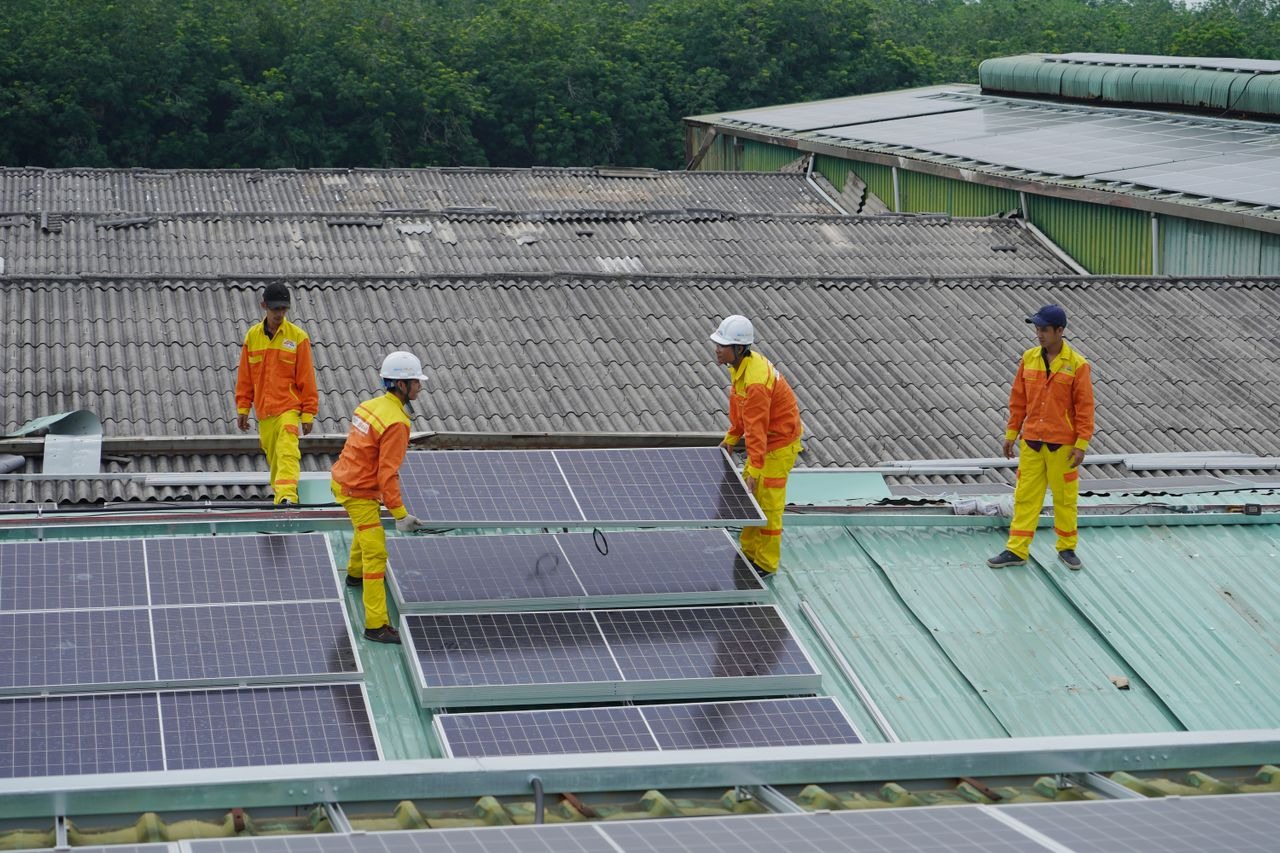
To make the most of this self-produced energy, the factory must adapt its usage to peak production hours.
Traditional BMS lack the tools to cross-reference weather forecasts with production schedules to adjust utility consumption accordingly.
Whether it involves electricity storage via batteries or thermal storage (ice tanks, hot water tanks), managing this equipment requires regular trade-offs:
These choices do not depend on fixed automated rules, but on an economic analysis based on energy supply contracts and the site's projected needs.

The goal for an industrial site is no longer just to consume less, but to consume at the most opportune time.
Achieving this goal requires layering a software solution dedicated to analysis and decision-making over existing automation systems.
This upper layer corresponds to an EMS (Energy Management System) . The EMS is not intended to replace BMS or SCADA systems, but rather to provide them with optimized setpoints.
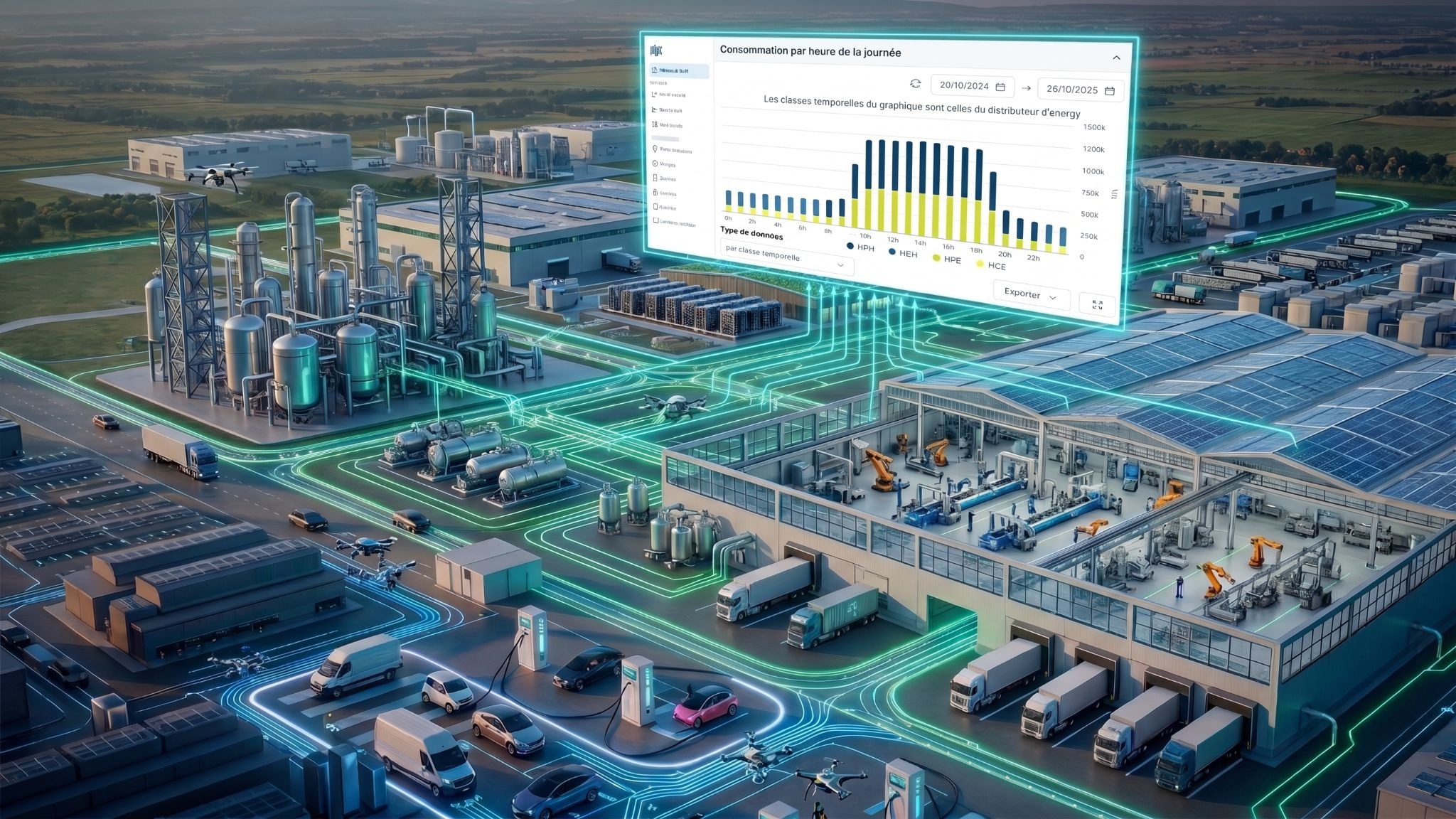
Discover how Pilott, the platform developed in-house by Sirenergies, adds a layer of technical and economic control to your existing BMS to track your consumption, contracts, and invoices in real time.
{{ask-pilott="/ctas"}}
Compressed air often represents one of the largest electricity consumption items for an industrial site, with generally low overall energy efficiency.
This comparison is not a forecast: it is a well-documented reality.
Studies conducted by RTE (Réseau de Transport d'Électricité) and ADEME during recent energy sobriety plans confirm this. Simply implementing intelligent control of schedules, setpoint temperatures, and base-load consumption monitoring via BEMS and EMS can generate savings of up to 15–20% (without even performing major renovations on machinery or building insulation).
Return on investment analyses from ADEME and audit firms point to the same conclusion: a BEMS installed on its own, without human oversight or a dedicated software layer, generally only generates a passive gain of 5–10%. When combined with active data analysis, such as EMS or AI, and properly configured, it increases consumption reduction to 20–30%, with an average return on investment of 2 to 4 years in the field.
To move from purely technical management to a techno-economic energy optimization strategy, industrial organizations can follow a step-by-step approach:
By combining the precision of BEMS in the field with the global analysis capability of an EMS, the industry can maintain operational excellence while sustainably controlling energy costs.
Conclusion
A high-performance BEMS alone is not enough to control an energy bill. It ensures the continuity of utilities, but it ignores electricity prices, production history, and the gradual drifts that burden the budget without ever triggering an alarm. It is the EMS layer, superimposed on the existing system, that transforms this technical control into techno-economic management and secures the site's energy EBITDA over the long term.
Does your BEMS really control your costs, or just your equipment? Sirenergies experts can help you audit your current architecture and deploy, with Pilott, the control layer your BEMS is missing.
{{ask-rdv="/ctas"}}
In a few clicks, organize an exchange with one of our experts.


weekly newsletter subscribers

4.9
