




Summarize with AI

November 10, 2026
7
Min reading
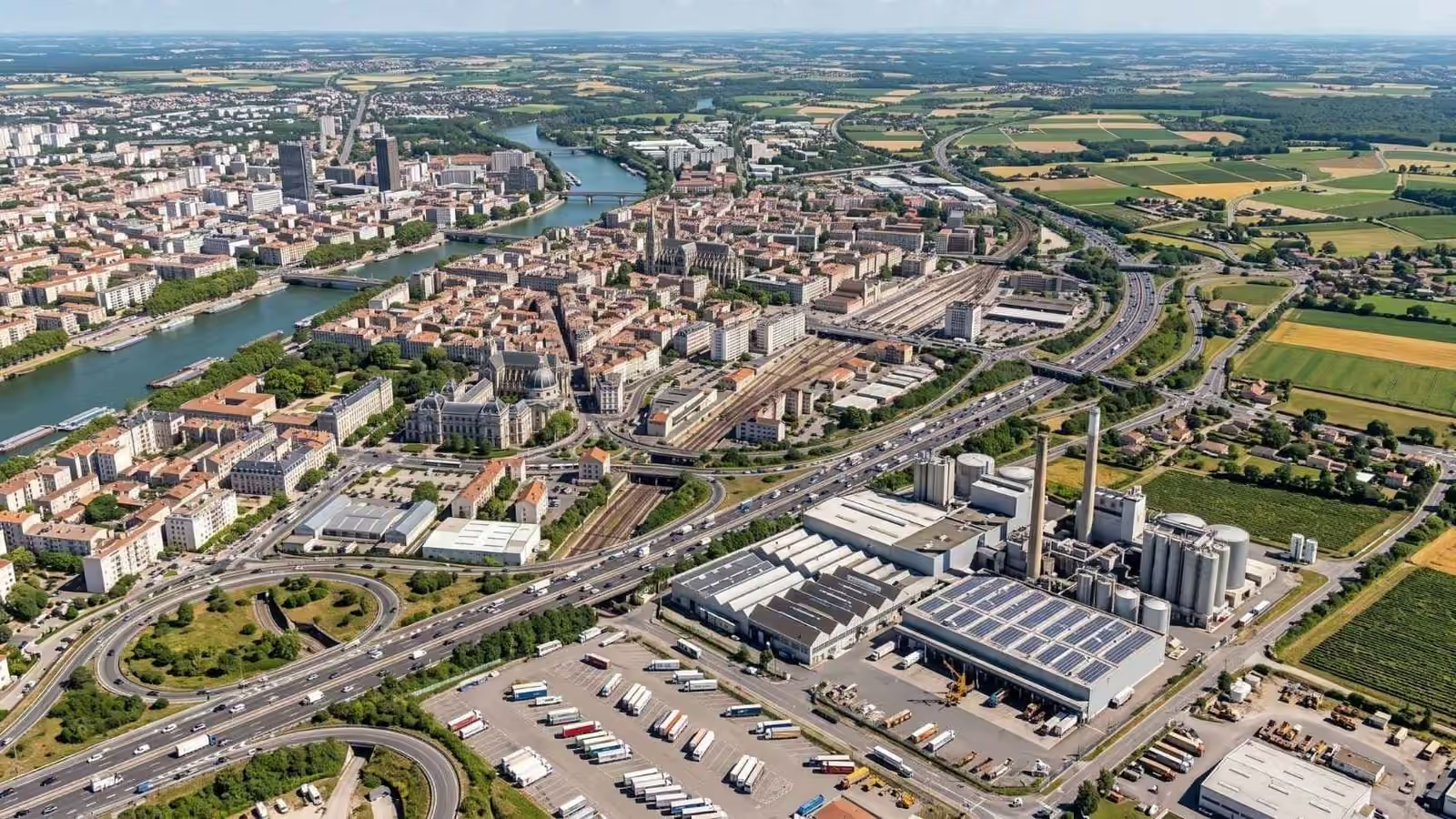
Analyzing the energy consumption of French companies yields different results depending on the indicator chosen: gas, electricity, or the overall mix.
An industrial site and a service-sector office have neither the same usage nor the same mix. The former runs on gas and process heat, while the latter operates almost exclusively on electricity for heating, air conditioning, and digital infrastructure.
As a result, the ranking of the most energy-intensive sectors changes completely depending on the perspective taken.
Added to this is growing concern regarding data centers. Driven by artificial intelligence, they are reshaping the future of the list of major consumers and raising questions about the grid's capacity to handle this demand.
So, what is the energy mix of business sectors in France? Which sectors consume the most energy in France? And what are the solutions for optimizing their professional energy bills?
Sirenergies answers your questions in this analysis.
Key takeaways
When diving into the figures from the 2025 Electricity Report published by RTE, it quickly becomes clear that each sector has a different relationship with energy.
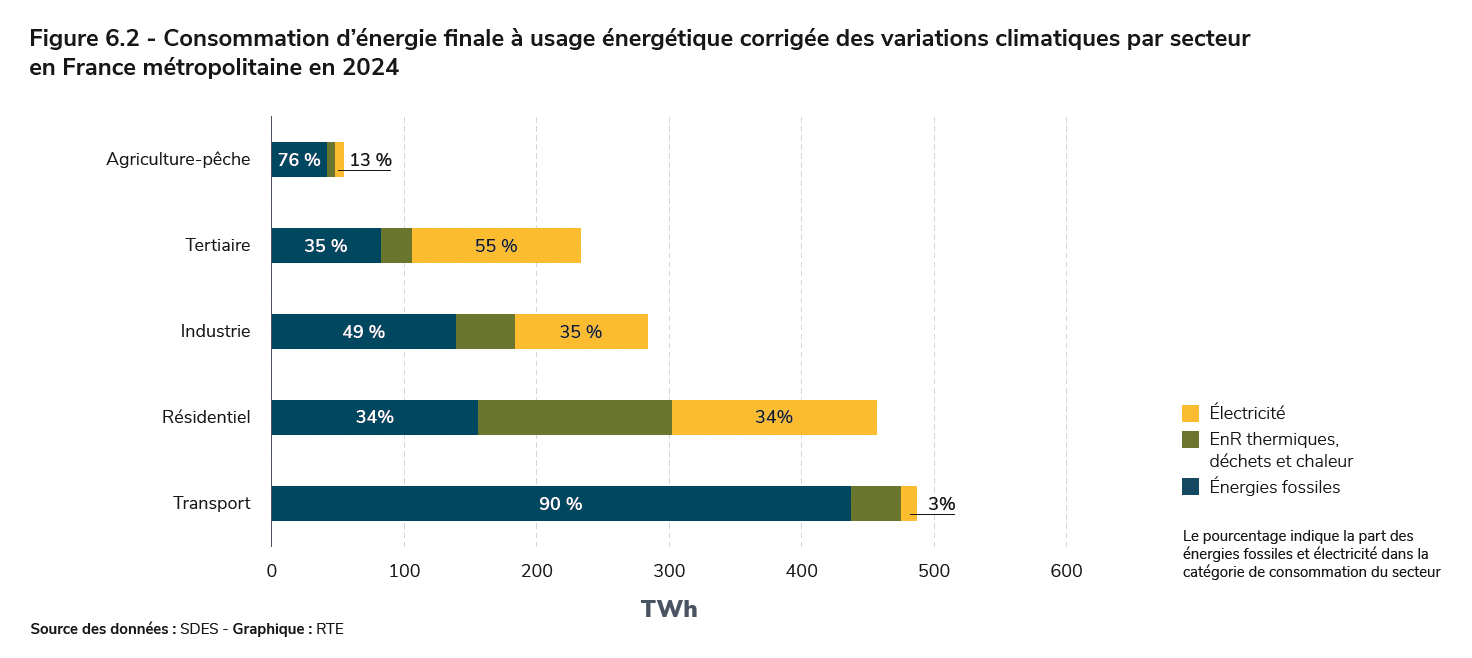
Some still operate almost exclusively on hydrocarbons, while others have already largely shifted to electricity. The SDES chart from the same report allows for a sector-by-sector comparison of the share of electricity, fossil fuels (natural gas and petroleum products), and renewable thermal energy (wood energy, waste, heat) in final consumption.
Source: RTE, 2025 Electricity Report
Certain sectors or companies consume far more energy than the average. They require high electrical power as well as a high level of supply stability.
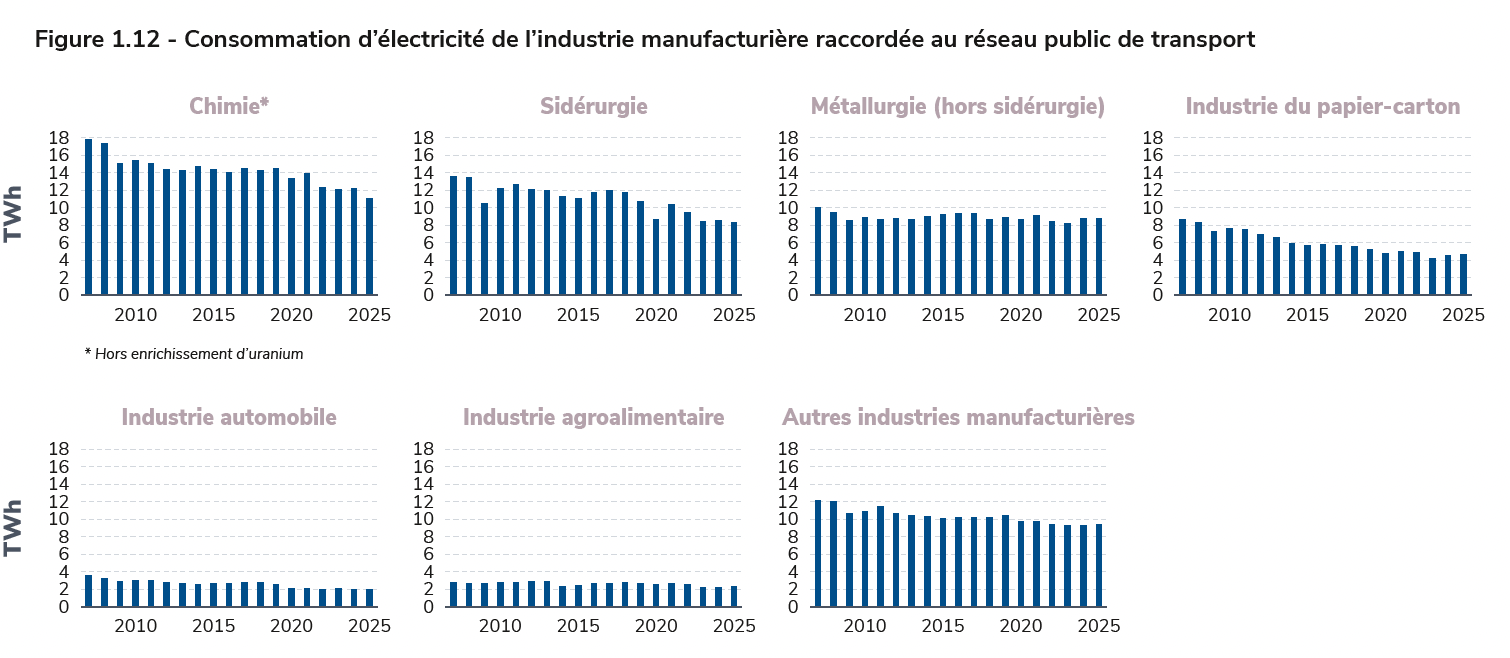
RTE refers to them as "major consumers." These are sites directly connected to the public electricity transmission network (RPT), i.e., the extra-high voltage grid. Sites with lower consumption are connected to the distribution network (Enedis or a local distribution company). These major consumers mostly belong to the industrial sector and are often associated with energy-intensive production processes, for example:
This same category is also more commonly referred to as "electro-intensive."
In 2025, consumption by these large sites connected to the public transmission network fell by 1.7% year-on-year, following a rebound in 2024. This decline was largely driven by the chemical industry due to the macroeconomic environment and increased international competition.
With approximately 280 TWh of final energy consumed each year, of which 35% is electricity and 49% is fossil fuels (primarily natural gas for process heat requirements), industry remains the second most energy-intensive economic sector in France, behind transport. It is also the sector for which controlling energy bills has the most direct impact on competitiveness, particularly for sites connected to the transmission network.
Several families of processes account for the bulk of this electricity and gas consumption:
The tertiary sector (offices, retail, healthcare, education, hospitality, etc.) is currently the most electrified professional sector in France, with electricity accounting for 55% of its energy mix, far ahead of industry. Out of 230 TWh of final energy consumed, approximately 125 TWh comes from electricity.
Several areas account for the bulk of this electricity and gas consumption:
For companies in the sector, managing this electricity bill involves, in particular, the tertiary decree, which mandates a reduction trajectory for energy consumption in buildings over 1,000 m².
With approximately 50 TWh consumed per year, agriculture and fishing is by far the smallest of the four business sectors studied here.
However, it remains the sector most dependent on fossil fuels after transport, with 76% of its consumption covered by gas and petroleum products (fuel for agricultural machinery, greenhouse heating, propulsion for fishing vessels) compared to only 13% electricity.
Several uses explain this persistent dependence on fossil fuels:
Although theoretically classified under the service sector, data centers deserve a separate mention.
In recent news, it is not uncommon to see them depicted as true energy sinks. But what do the figures actually say?
According to figures released by RTE, in 2025, the electricity consumption of data centers (connected directly to the transmission network) reached nearly 1 TWh, compared to 0.8 TWh in 2024. To this, approximately 3 TWh connected to the Enedis distribution network in 2024 must be added.
These volumes may seem modest on a national scale, but the trend is dramatic: of the 30 GW of transmission network access rights already granted by the end of November 2025 for large industrial and digital projects, 14 GW specifically concern data centers, representing almost half.
In other words, the energy consumption of data centers, currently marginal on a national scale, could become a major component of French demand as these projects come online.
Regardless of your sector or company size, and whether you are energy-intensive or not, the principle remains the same: you should manage your professional electricity or gas bill, not just accept it.
There are three main ways to reduce it sustainably:
Since the energy markets were opened to competition, companies are no longer required to stay with their incumbent supplier (EDF, Engie).
Unfortunately, many companies still stick with their incumbent energy supplier for peace of mind, fearing the administrative burden or potential service interruptions.
Comparing multiple professional electricity suppliers, evaluating offers, and knowing when and how to switch energy providers often makes it possible to secure a cheaper electricity contract (or even lower long-term electricity costs) without changing your production equipment.
With subscribed power levels, it is all about balance.
Poorly calibrated subscribed power—whether set too high for safety or undersized, leading to costly overages—directly impacts the TURPE, the grid-access portion of your electricity bill.
Regarding taxes, several mechanisms (excise duty exemptions and reductions, Energy Savings Certificates) remain underutilized by many eligible companies. However, navigating the regulatory maze is not easy. The simple solution is to turn to experts who know them inside and out.
An unidentified power spike, drifting equipment, or exceeding your subscribed power: these discrepancies are costly, yet they are easy to detect with regular monitoring. This is where technology changes the game.
With Pilott, the platform developed in-house by Sirenergies, every company has a personalized space to track consumption, view market and spot prices in real time, and receive dedicated advice from an expert contact.
{{pilott-conso="/ctas"}}
For companies that want to go further and direct a portion of their purchases toward renewable electricity, it is possible, particularly through guarantees of origin and PPAs. This is a choice that can be reconciled with budget management and one that more and more companies are turning to in order to reduce their carbon footprint.
There are many ways to reduce or optimize your company's energy consumption:
However, implementing these measures requires time and resources. They demand legal, financial, and technical expertise that few companies have in-house, especially those with multi-energy or multi-site operations.
Our role?
As a connected energy consulting firm, Sirenergies relies on two inseparable pillars: energy sourcing and digital technology.
Do you want to know how your company compares to others in your sector and identify opportunities to optimize your electricity and gas costs?
Speak with one of our energy advisors.
{{ask-conseil="/ctas"}}
In a few clicks, organize an exchange with one of our experts.


weekly newsletter subscribers

4.9


Non, et c’est notre force. Nous ne sommes pas un bureau d’études techniques de terrain. Pour l’audit réglementaire obligatoire des grandes structures, nous vous mettons en relation avec un partenaire accrédité. Notre valeur ajoutée intervient en amont et en aval : négocier vos prix de gros et piloter vos contrats.