




Summarize with AI

March 6, 2026
9
Min reading
2025, a year of energetic chiaroscuro?
Between tariff reforms, geopolitical turbulence, budgetary tensions, the rise of climate scepticism and new energy challenges, the French and global landscape has been profoundly shaken up.
However, behind the crises, hope dominates, with record investment in clean energies, a rise in renewable energies and a revival of nuclear power.
Looking back on a perhaps pivotal year, where the energy transition, put to the test, has shown its resilience.
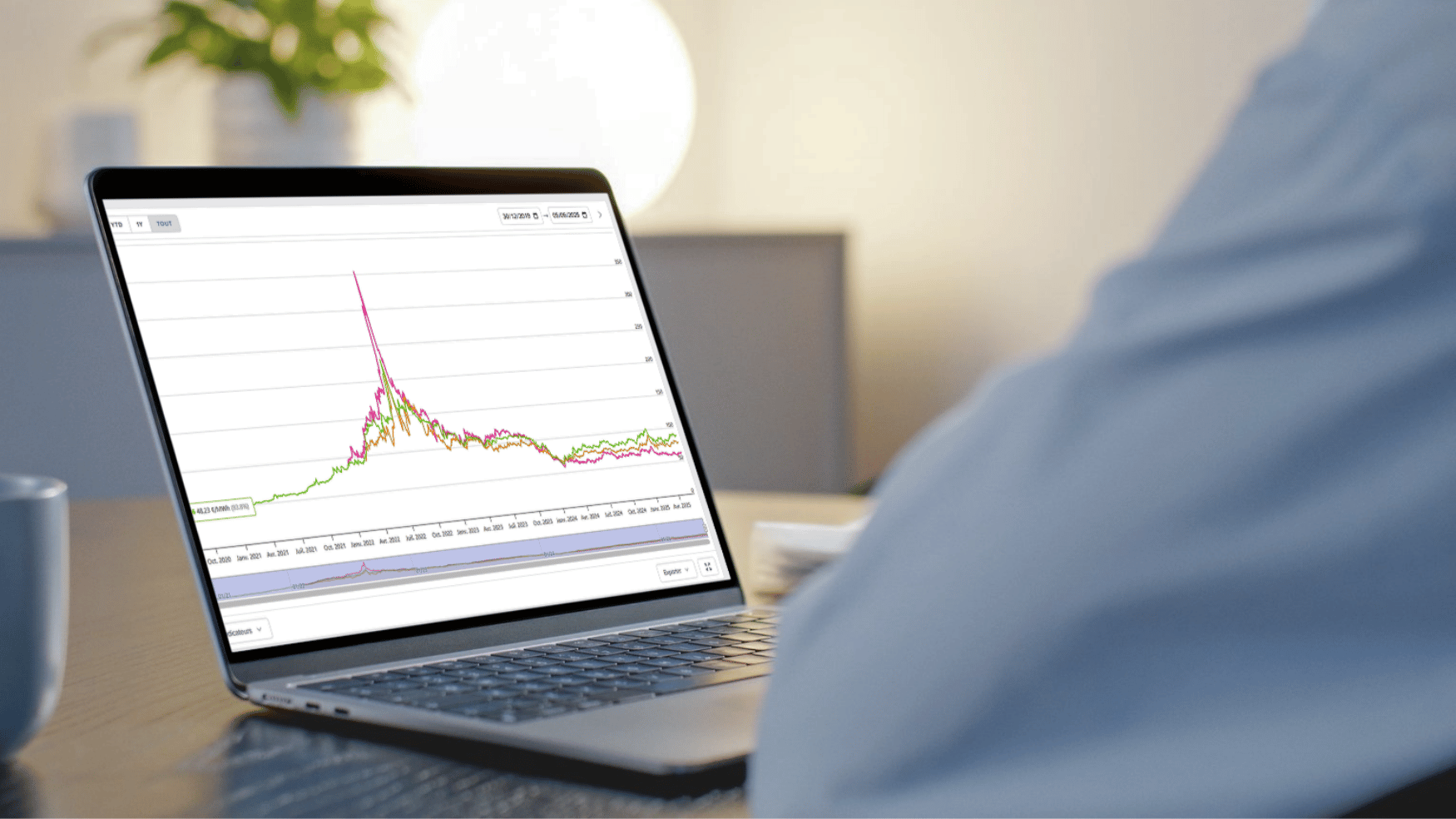
In 2025, the electricity market returned to more moderate price levels, far from the peaks observed in 2022 and 2023.
According to RTE, the average spot price in the first half of the year was around €67/MWh compared to €111/MWh in 2023. However, this level remains “relatively high”, due to the rise in gas prices at the beginning of the year and a severe winter.
But this appeasement should not mask the high market volatility.
Between negative prices Record high in spring, a summer surge and rapid monthly oscillations, the dynamics remain difficult to predict, due to several factors: the evolution of gas prices, the availability of nuclear power, variations in demand and the level of renewable production.
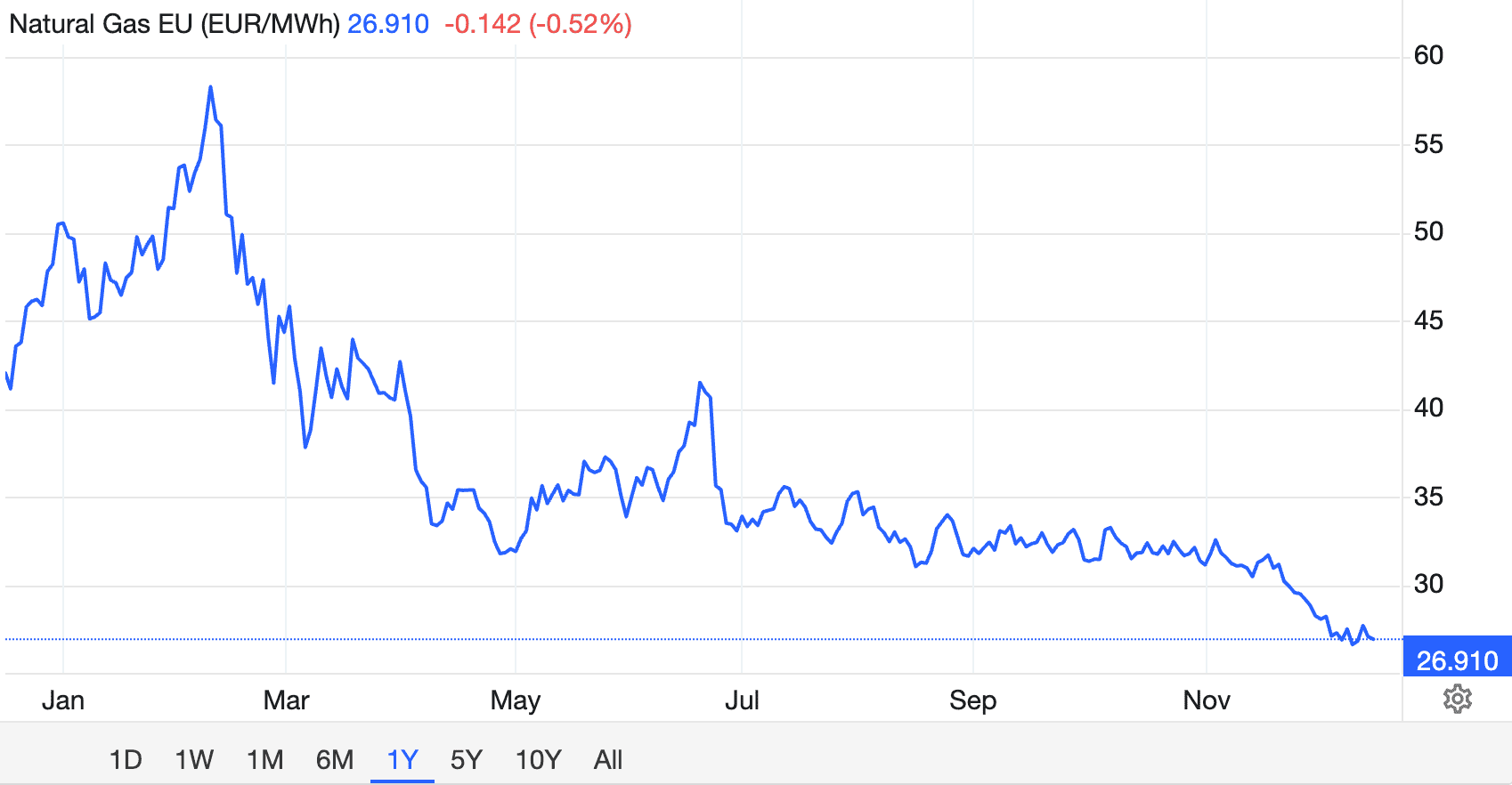
In 2025, the gas market followed a downward trajectory, driven by a relatively abundant supply and the normalization of markets.
After a peak at the beginning of the year, wholesale prices have stabilized in the second half of the year around €30/MWh.
This drop reflects a calming of the markets, thanks to the diversification of supplies, the influx of American LNG, moderate demand and comfortable stocks.
Ceasefire talks between the United States, Ukraine and Russia have also raised hopes for an easing of tensions over Russian gas.
It's the perfect time to review your buy positions.
{{ask-sourcing=” /ctas "}}
The year 2025 did not spare energy bills, with a succession of price increases:
{{ask-invoice=” /ctas "}}
2025 saw the entry into force of the reform of Peak and off-peak hours (HP/HC), which could profoundly change electricity consumption patterns.
Deployed progressively since the 1Er November and until the end of 2027, this reform aims to rebalancing electricity supply and demand. The objective: to encourage people to shift some of their electricity consumption into the day, when renewable energy production is the most abundant.
In concrete terms, the reform provides for:
It is one of the major turning points of 2025, last year of application ofARENH, the historic regulatory mechanism for nuclear electricity for alternative suppliers.
Throughout the year, debates crystallized around these successors:
While the main lines of the post-ARENH framework were laid out in 2025, Uncertainty remains on the practical application of UNV and its impact on prices.
While France affirms its ambition to be carbon neutral, 2025 has been punctuated by contradictory signals, fuelled by political tensions, parliamentary instability and budgetary pressure:
The year 2025 once again demonstrated the precariousness of the geopolitical balance.
While the markets have resisted, caution is still required for the year to come, as energy security remains dependent on areas under tension: the war in Gaza, the 12-day flash clash between Israel and Iran, the difficult transition in Syria, the difficult transition in Syria, the conflict in Ukraine...
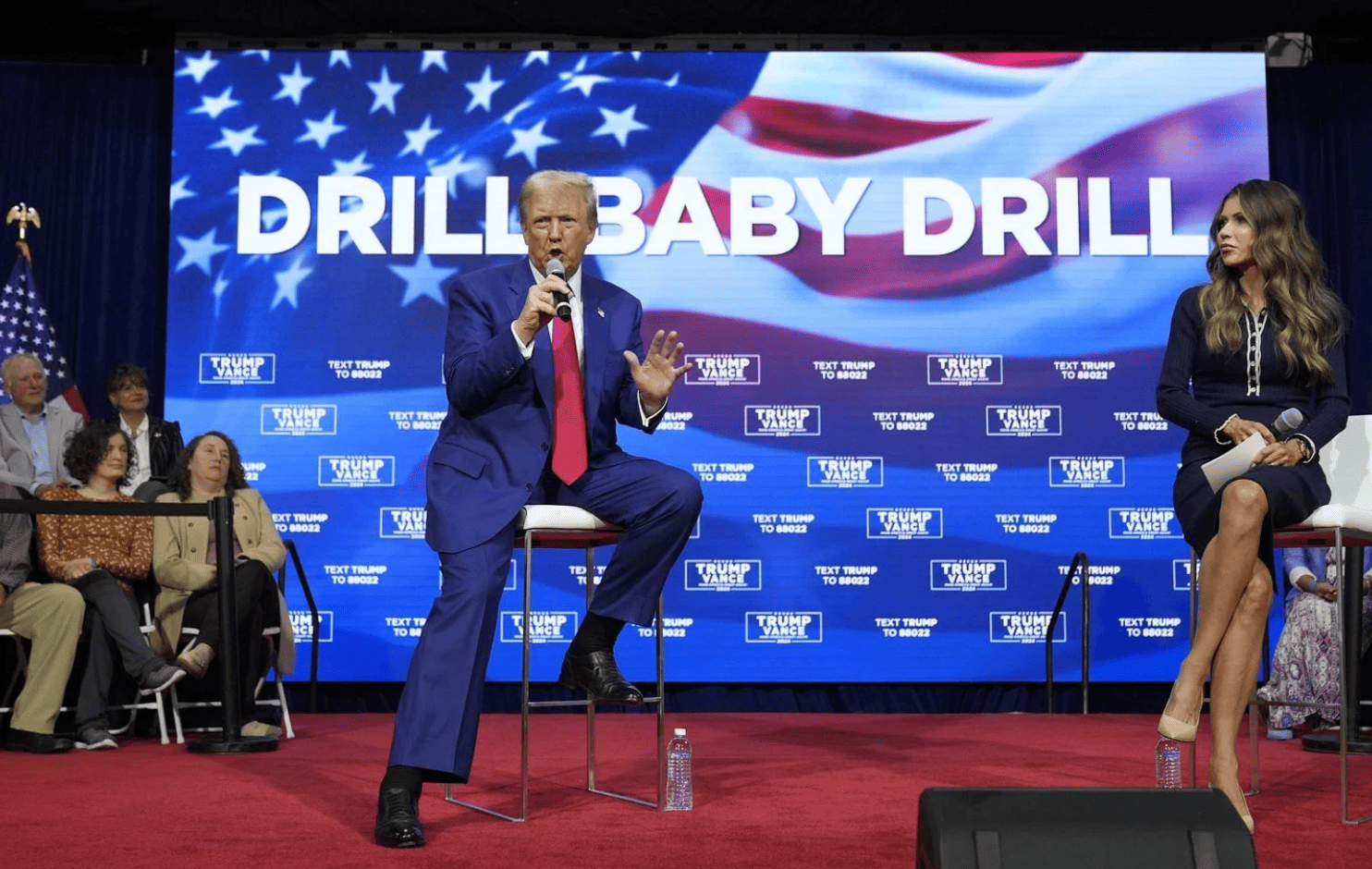
Barely invested in January 2025, the American president continued the pro-fossil decisions : withdrawal of the Paris Agreement, suspension of offshore wind projects, end of aid for electric vehicles, massive support for LNG through commercial blackmail, etc. At the UN desk in September, he described climate change as “biggest scam ever carried out against the world.”
Donald Trump's positions have Rekindled the climate sceptic flame around the world, uncomplicating speech in the media and on networks.
Organized in this tense international context, the COP 30 has failed to accelerate climate action. The result of successive compromises, the final agreement remains far below expectations, unsurprisingly for many experts:
On the sidelines of the agreement, a few advances still deserve to be highlighted:
Despite some encouraging signs on adaptation and financing, COP30 once again illustrates the growing gap between the promises made and the geopolitical realities.
On April 28, 2025, Spain and Portugal were hit by a massive power outage, unprecedented in Europe. Within a few minutes, the electrical system collapsed. One brutal imbalance between production and consumption has generated cascading surges and the shutdown of infrastructures.
This episode recalls the increasing pressure on electrical networks facing a double transition:
The Iberian blackout also reveals the fragility of electrical systems and the new ones. challenges in terms of flexibility, storage, and supervision
In 2025, theArtificial intelligence (AI) has made a strong entry into businesses and homes.
This rapid growth leads to a significant increase in electricity consumption to power and cool the data centers that host data and AI models.
The International Energy Agency (IEA) estimates that their electricity consumption should double by 2030, representing 3% of global consumption.
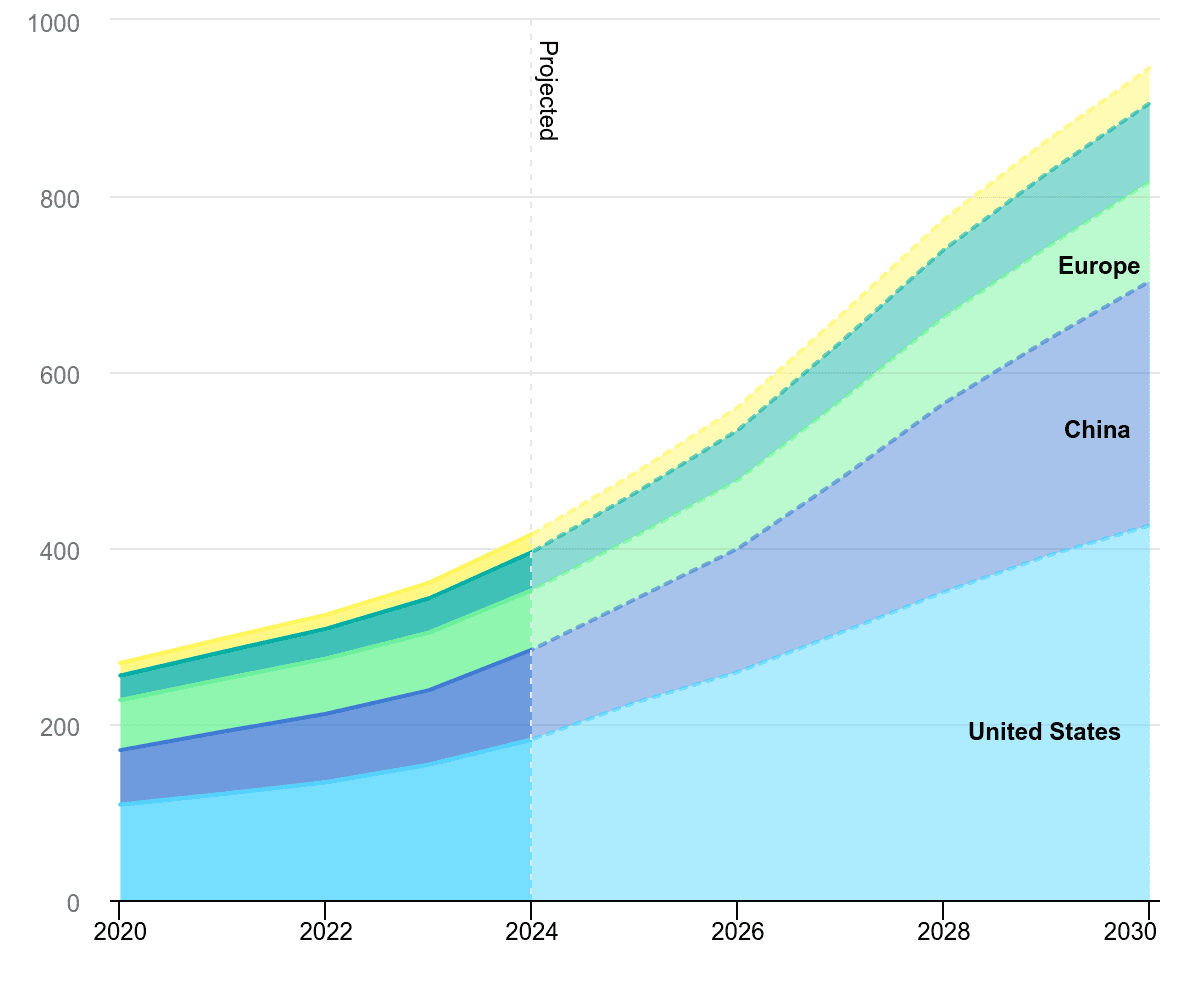
This rise in power of AI and electricity needs, which are often still carbon-based, raises a crucial question: How to reconcile technological progress and ecological sustainability ?
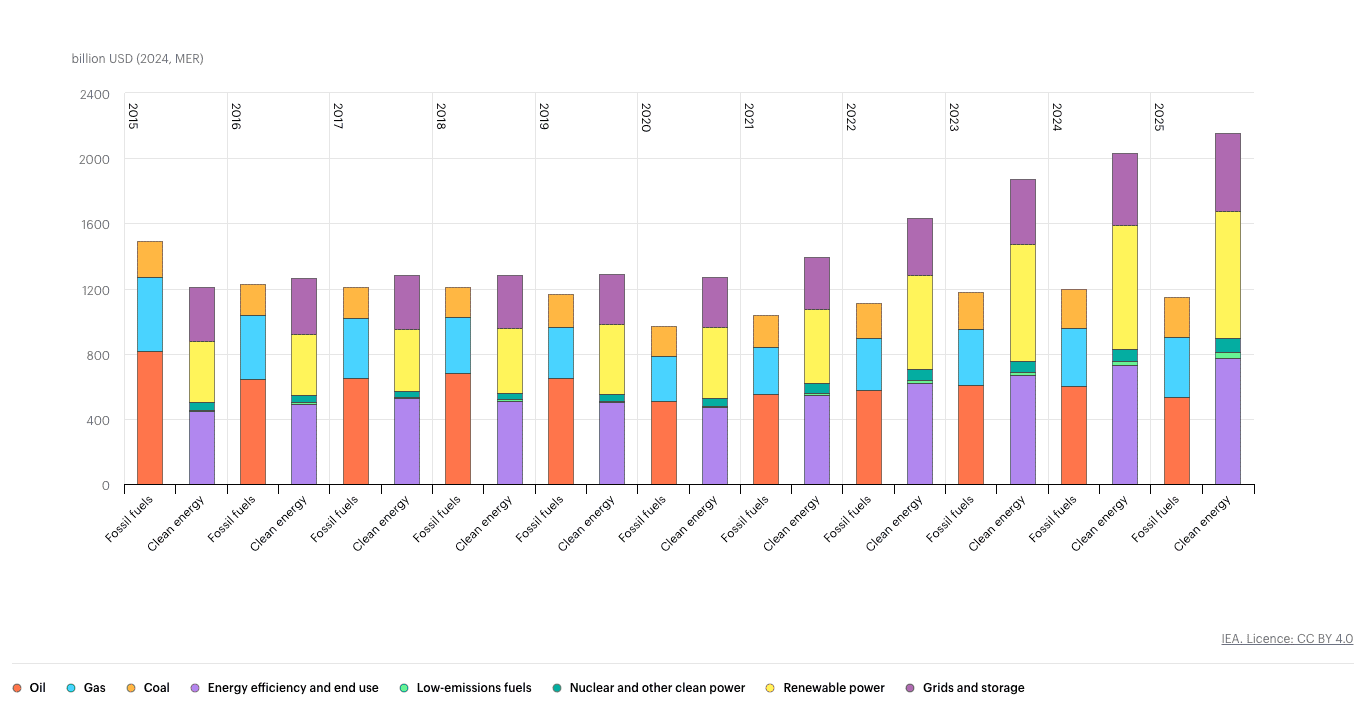
Despite the economic crisis, the IEA estimates that global energy investment should reach $3.3 trillion in 2025, including $2.2 trillion spent on clean technology : renewable energies, nuclear, networks, storage, storage, low-emission fuels, batteries, electric vehicles, energy efficiency and the electrification of uses. China accounts for around a third of global investments.
This figure testifies to thecommitment of businesses and industries who, beyond political tensions, are investing to reduce their emissions, strengthen their energy security and improve their competitiveness.
In 2025, France had 95% carbon-free electricity production, thanks to nuclear power and renewable energies. This trend is affirming itself on a global scale, where low-carbon energies are experiencing a real boom.
According to the IEA's mid-year report, renewable production is on the verge of overtaking that of coal. The total share of photovoltaic and wind energy is expected to increase from 15% in 2024 to 17% in 2025 in 2025 in global electricity production, compared to only 4% ten years ago. The think tank Ember confirms this outlook, with a spectacular growth in solar production in the first half of the year.
Based on this provisional report, renewable capacity could exceed the record increase already observed in 2024 by the International Renewable Energy Agency (IRENA).
In 2025, nuclear power also gained ground in the world.
A production record has already been announced, with the commissioning of new reactors in China, India and Korea. Global investments could reach $75 billion in 2025.
2025 will leave the image of a paradoxical and disconcerting year. Shaken by tariff reforms, geopolitical tensions and political debates, she recalled how vulnerable the energy transition is to global shocks.
The faults in the energy system have come to light, revealing the fragility of infrastructures and a strong dependence on international hazards.
But behind these turbulences, the year also revealed strong signals, bringing hope. Investments in low-carbon technologies are reaching unprecedented levels. Renewable energies continue to rise.
Businesses and industries are investing. Despite shocks, uncertainties and oppositions, the energy transition is resisting, adapting and continuing to gain ground.
What if you too chose a more sustainable, more resilient, more human future?
Let's accelerate the energy transition of your company or community together with SirEnergies
{{ask-advice=” /ctas "}}
In a few clicks, organize an exchange with one of our experts.


weekly newsletter subscribers

4.9

.png)

The range E @sy is available in four pricing structures to adapt to each risk profile:
La fin de l'ARENH (Accès Régulé à l'Électricité Nucléaire Historique) marque l'arrêt de la fourniture d'électricité à prix fixe garanti (42 €/MWh).
Dès le 1er janvier 2026, les entreprises sont exposées aux prix de marché, mais deux nouveaux mécanismes de régulation prennent le relais, bien que leur logique soit différente :
Conseil stratégique : Ne comptez pas sur le VNU pour réduire votre facture en 2026 si les marchés restent stables. Auditez vos contrats dès maintenant pour intégrer une part de prix fixe ou explorer des "Power Purchase Agreements" (PPA) pour sécuriser vos coûts sur le long terme.
Instauré en 2017, ce dispositif répond à un enjeu de sécurité nationale.
L'électricité ne se stockant pas à grande échelle, le réseau doit être capable de répondre instantanément à la demande, même lors des pics de froid hivernaux. Le mécanisme incite financièrement les producteurs à maintenir leurs centrales disponibles et les entreprises à réduire leur consommation (effacement) lors de ces périodes critiques.
L'impact dépendra des prix de marché. Le mécanisme prévoit une redistribution si les prix dépassent 78 €/MWh. Cependant, si les cours restent bas (actuellement autour de 60 €/MWh), le dispositif ne s'activera pas. La facture sera alors indexée à 100% sur les prix de marché, rendant le choix du fournisseur et du moment d'achat critiques.
Ce seuil est jugé élevé par rapport aux prévisions actuelles du marché. Si le prix de l'électricité reste en dessous de 78 €/MWh, les entreprises ne bénéficieront d'aucune redistribution. Cela signifie que la protection promise par la réforme pourrait être inexistante dans un marché baissier, d'où l'importance de stratégies de sourcing agiles et d'outils de monitoring comme Pilott.
Le prix Forward est fixé à l'avance (sécurité budgétaire), tandis que le prix Spot varie heure par heure selon le marché (opportunité mais risque élevé).
In 2025, the supplier had a NPS (Net Promoter Score) of +16 and a note of 4,17/5.
Satisfaction is based on a “zero solicitation” model and 100% in-house customer service in Toulon, guaranteeing proximity and responsiveness that cannot be found with major historical suppliers.
Chaque modèle d'IA répond à un besoin spécifique du cycle d'achat :
L'expertise humaine reste néanmoins indispensable.
Non. L'IA traite la donnée (data processing), mais l'analyste apporte la compréhension du contexte (market sentiment) et la prise de décision stratégique.
La Multiannual Energy Programming (PPE) is the strategic management tool for France's energy policy. Established by the 2015 law on energy transition for green growth (LTECV), it serves as a compass for the State, communities and businesses.
Concretely, the PPE sets the priorities for action of the public authorities for the management of all forms of energy on the national territory. It covers a period of ten years, divided into two periods of five years, and must be revised periodically to adapt to technological and economic developments.
It deals with major topics such as:
It is crucial not to confuse it with National Low Carbon Strategy (SNBC). While SNBC sets carbon budgets (the ceilings for greenhouse gas emissions by sector), the PPE determines the technical and energy resources to achieve them.
The central objective of PPE 3 is to engage France towards carbon neutrality by 2050 by breaking the country's historical dependence on fossil fuels.
Today, approximately 60% of final energy consumption in France still relies on imported oil and natural gas. PPE 3 aims to radically reverse this trend by setting an ambitious target: to reach 60% of carbon-free energies in final consumption by 2030.
To achieve this, PPE 3 pursues three major sub-objectives:
Absolument. La réforme des heures creuses vise à absorber la surproduction solaire en milieu de journée. Les créneaux d'heures creuses se déplacent progressivement vers la plage 11h00 – 17h00, notamment en été. C'est une opportunité majeure pour les sites industriels ou tertiaires capables de flexibilité.
Conseil stratégique :
La Vente de Nucléaire Universelle (VNU) est le nouveau mécanisme de régulation des prix de l'électricité en France. Contrairement à l'ARENH, il ne s'agit plus d'un volume fixe à prix réduit, mais d'une redistribution financière des revenus excédentaires d'EDF aux consommateurs, basée sur les prix de marché et les coûts de production du nucléaire historique.
Car les marchés dépendent de facteurs exogènes imprévisibles (géopolitique, météo soudaine, politique) que les modèles basés sur l'historique ne peuvent pas anticiper, tout comme on ne prédit pas le Loto.

La fin de l'ARENH (Accès Régulé à l'Électricité Nucléaire Historique) marque l'arrêt de la fourniture d'électricité à prix fixe garanti (42 €/MWh).
Dès le 1er janvier 2026, les entreprises sont exposées aux prix de marché, mais deux nouveaux mécanismes de régulation prennent le relais, bien que leur logique soit différente :
Conseil stratégique : Ne comptez pas sur le VNU pour réduire votre facture en 2026 si les marchés restent stables. Auditez vos contrats dès maintenant pour intégrer une part de prix fixe ou explorer des "Power Purchase Agreements" (PPA) pour sécuriser vos coûts sur le long terme.
Absolument. La réforme des heures creuses vise à absorber la surproduction solaire en milieu de journée. Les créneaux d'heures creuses se déplacent progressivement vers la plage 11h00 – 17h00, notamment en été. C'est une opportunité majeure pour les sites industriels ou tertiaires capables de flexibilité.
Conseil stratégique :