




Summarize with AI

November 4, 2026
7
Min reading
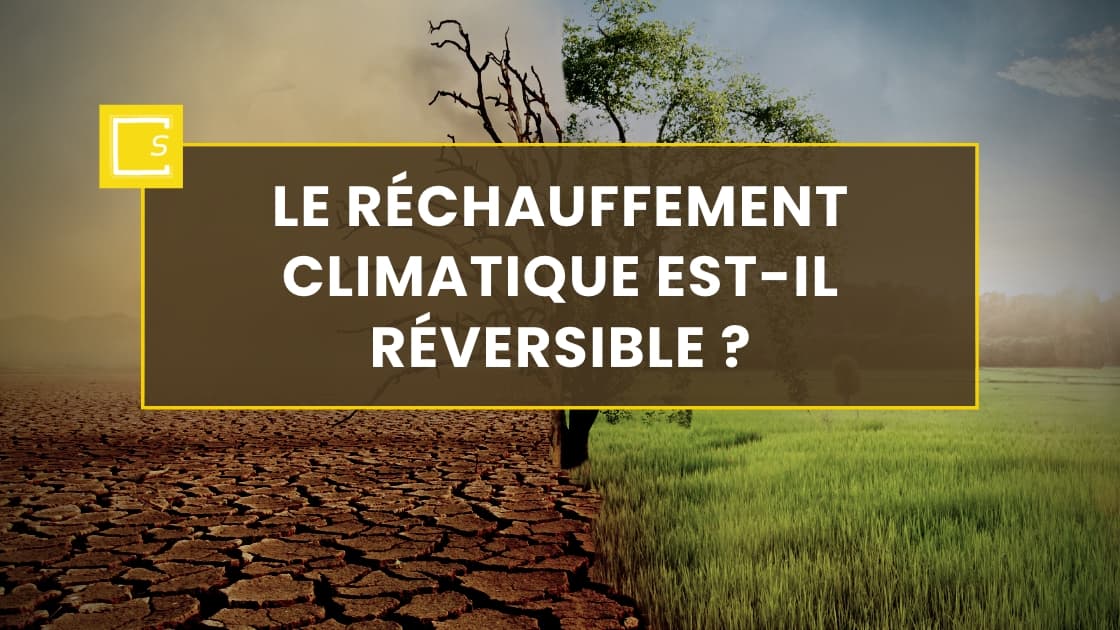
Over the last thirty years, global warming has become a major concern for our societies. Yet what worries the global scientific community most is not so much the phenomena we observe every day as what they mean: the risk of reaching a point of no return. Climate change cannot be reversed, but it can be mitigated.
In this article, we explain what global warming is, its main cause, the activities responsible for it and the solutions to tackle it.
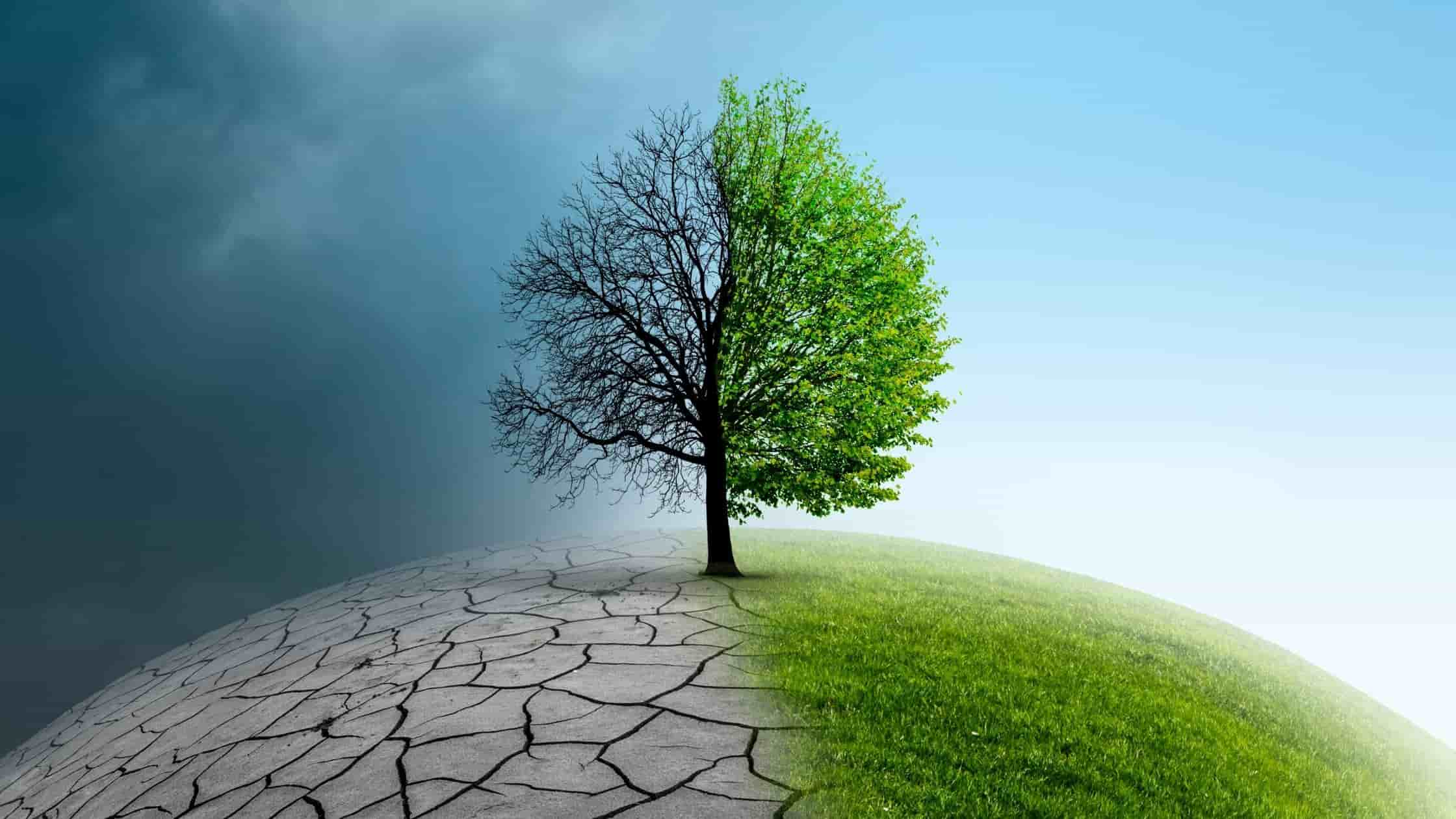
Global warming is a worldwide change in the climate, marked by a general rise in average temperatures (largely linked to human activities), which permanently alters weather patterns and ecosystems.
According to the French Ministry for the Ecological Transition, the main cause of global warming is human activity.
The French government relies on the work of the IPCC, which states in particular that the greenhouse effect, a natural phenomenon without which life on Earth would not be possible, has intensified over the last fifty years because of emissions from burning fossil fuels (oil, natural gas and coal) and from land use.
Among the greenhouse gases (GHG), namely carbon dioxide (CO₂), methane (CH₄), nitrous oxide (N₂O) and sulphur hexafluoride (SF₆), CO₂ is responsible for 63% of human-caused warming.
From the start of the pre-industrial era to 1986, a period of 200 years, the concentration of CO₂ in the atmosphere rose by 25%. Today, the increase has reached 50%. The concentration of CO₂ in the atmosphere has accelerated dramatically over the last 30 years.
Global warming is caused by rising greenhouse gas emissions, especially the carbon dioxide generated by human activities.
The human activities behind this growth in CO₂ emissions are:
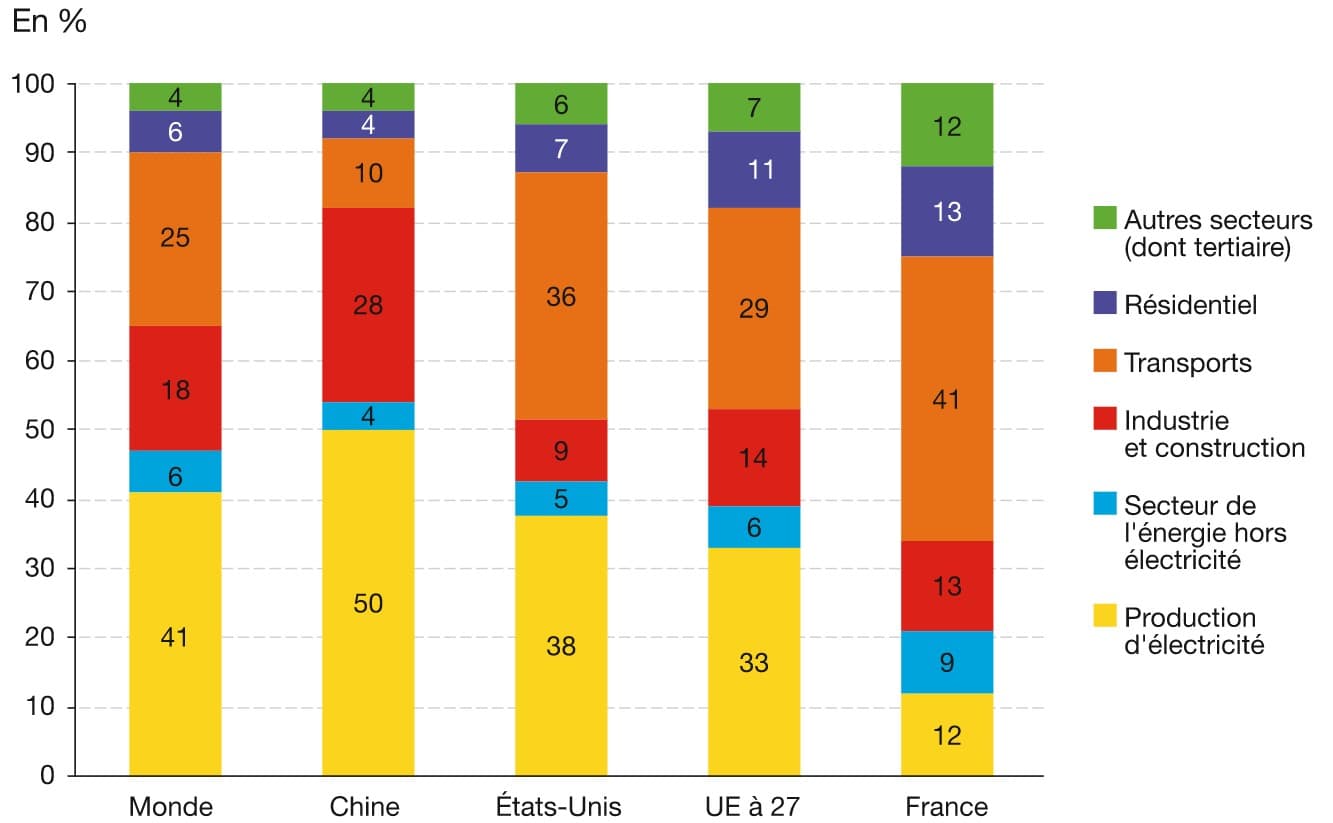
Source: French Ministry for the Ecological Transition
Let us now look at electricity production and transport, which account for two thirds of these emissions. The share of fossil fuels in electricity production is:
So 62% of electricity is produced from fossil fuels, according to Ember's « Global Electricity Review 2022 ».
The share of fossil fuels in transport is:
It is worth noting that electricity accounted for only a tiny share of mobility in 2019.
Finally, to complete this picture of the human activities that emit CO₂:
To tackle global warming effectively:

Source: Statista
Several levers exist to tackle global warming:
We also need to contain the growth of future consumption, in particular:
Make no mistake: to cope with global warming, adaptation is necessary.
Even so, the most important actions to tackle global warming depend on ambitious local public policies and on international agreements (such as the Paris Agreement) that help our societies adapt.
This adaptation is all the harder because Western societies use GDP as their yardstick, and GDP is correlated with CO₂ emissions, as the chart below shows:

Source: Green Supply Chain News
The IPCC's 6th assessment report, written by 234 authors from 66 countries, confirms that human activities influence the climate.
The report stresses that since 1750, the average temperature has risen by 1.1 °C because of the continuous increase in greenhouse gas concentrations.
In its report, the IPCC presents five scenarios for the change in global average temperature:
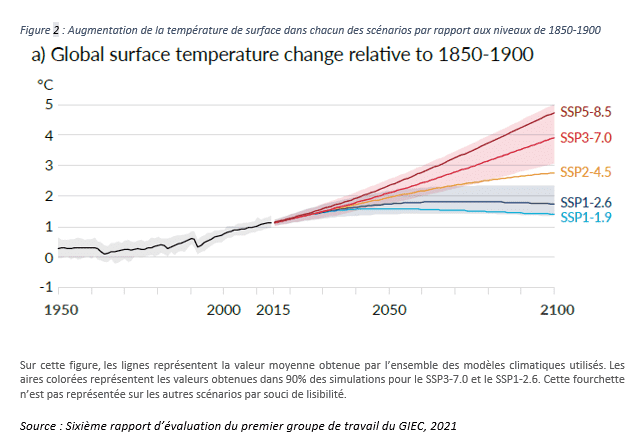
Source: IPCC report
Each scenario is described by two key criteria: adaptation and mitigation.
This twofold challenge is crucial to tackling climate change:
Adaptation and mitigation challenges are low:
Adaptation and mitigation challenges are low:
Adaptation and mitigation challenges are medium:
Adaptation and mitigation challenges are high:
The adaptation challenge is low and the mitigation challenge is high:
Researchers have identified tipping points that could help us change our future, such as:
Because our societies have not managed to tackle global warming gradually, they must now transform quickly:
As Carbone 4 likes to point out in its « Net Zero Initiative » document, using the metaphor of the bathtub, global warming is hard to reverse. The only way out is to stop all CO₂ emissions as quickly as possible in order to halt the rise in average temperature.
If we fail to do so, we will be forced to adapt, painfully, to new ways of life for which no one is prepared. Every region of the world is affected, and the oceans are becoming more acidic. We know that any further rise in temperature will affect the whole planet and increase the number of climate refugees.
Global warming cannot be reversed, but there is still time to act to limit extreme weather and stabilise temperatures.
To find out more, read our article « What is the energy transition? »
Why choose a Power Purchase Agreement for your company?
Buy green electricity directly from a renewable energy producer with a power purchase agreement (PPA).
For the buyer, a PPA reduces exposure to price volatility and makes financial forecasts more stable over time. Sirenergies supports you from the search for a producer to the integration of the PPA into your contracts.
Click below to find out more:
In a few clicks, organize an exchange with one of our experts.


weekly newsletter subscribers

4.9
