





Summarize with AI

March 31, 2026
4
Min reading
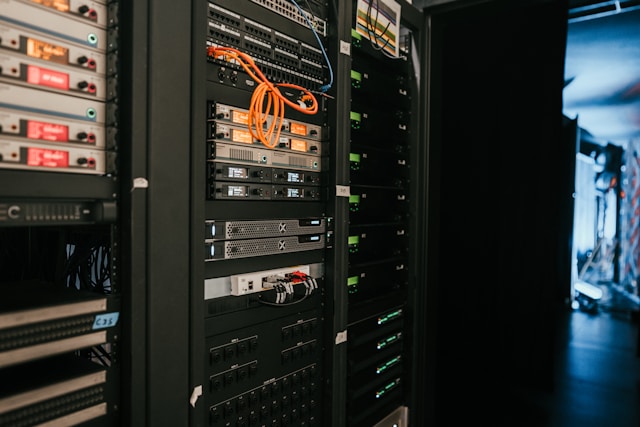
The number of data centers is on the rise. They consume nearly 3% of the electricity produced in the world. This is not really surprising considering the enormous computing power they do on a daily basis.
They are also prone to overheating, which explains the key role thermal management plays in their operation. For this purpose, several techniques are used to keep them at an ideal temperature, i.e. between 18 and 27°C. SirEnergies presents these different cooling solutions.
Data center cooling is traditionally provided by a system based on raised floors and CRAC units (computer room air conditioner) and CRAH (computer room air treatment).
These two elements put pressure on the space available under the floor, which pushes fresh air into the server entrances. Afterwards, this fresh air passes through the various components of the server, is heated and then expelled. He then joined the CRAC and CRAH units, which ensured his cooling.
Let's look at these two technologies in more detail.
CRAH is a particularly effective technique in spaces where the cold reigns. This system requires the provision of a chilled water plant (or water chiller unit) contained in a cooling exchanger that uses the fans to ensure the suction of outside air.
For an analogy, the CRAH units work more or less like chilled water air treatment units commonly found in most office buildings.
CRAH units are capable of regulating fan speed in order to maintain a certain static pressure. This allows them to ensure the stability of temperature and humidity levels. In this system, ice water is also produced by direct expansion or by means of DRY.
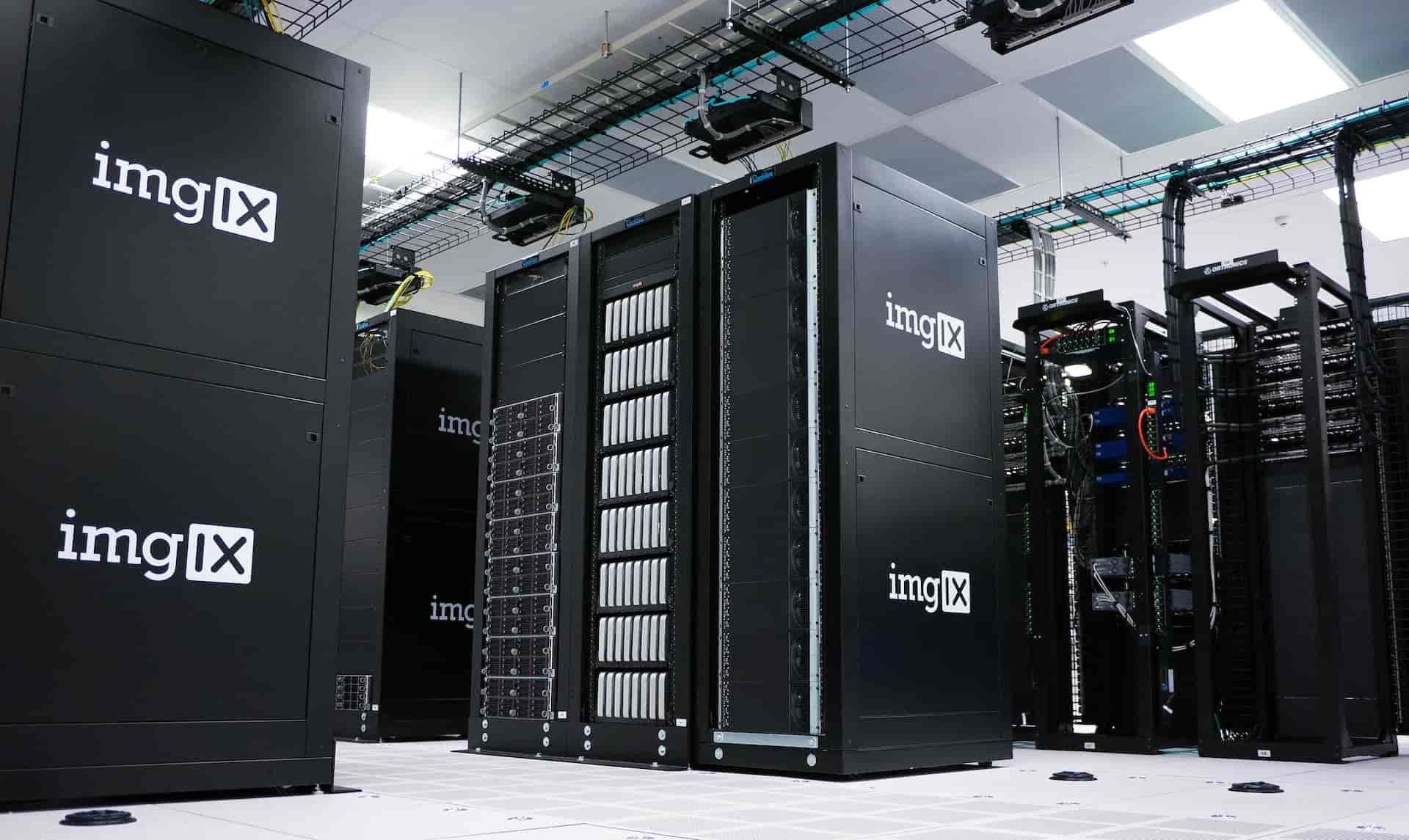
One of the biggest advantages of this air conditioning system is its low cost of use. In fact, it is for this reason that it is found in a good number of data centers. Its characteristics are very similar to those of conventional air conditioners. Its operation requires a compressor.
To do this, the CRAC units havea system of integrated compressors. These provide cooling by blowing air onto an exchanger filled with refrigerant.
The presence of a mixture of water, glycol or air allows excess heat to be evacuated. Most CRAC units provide a constant volume and only modulate basic on/off operation. However, the situation is about to change with the development of new models that should allow air flow variations.
CRAC units can be placed in a variety of ways, but they are usually installed opposite the hot aisles of a data center. From this strategic position, they release cold air through the perforations in the raised floor. It helps to cool computer servers more efficiently.
With ongoing research to develop more efficient techniques, other cooling systems have emerged. This is particularly the case with free cooling, adiabatic cooling, water cooling and liquid cooling.
The technique of Free cooling is essentially based on the direct use of cold outside air. This is filtered in order to cool the computer equipment in the data center.
The principle of this technique is relatively simple. Fresh outdoor air, whose temperature is lower than that of indoor air, is used. It is then sent to the data rooms after humidity control and correction.
Ideally, the temperature difference between outdoor and indoor air should not exceed 10°C. On very hot days, for example, it is essential to take steps to cool the outside air before it is sent to the computer rooms.
It is also possible to run the servers at a higher temperature to optimize the efficiency of free cooling. In order to take full advantage of this technique, the choice of the geographic location of the data center should not be risky.
In this system with proven effectiveness, the air is humidified in order to cool the fluid. In this way, the water then flows onto humidification media, which lowers the ambient temperature.
One of the biggest advantages of adiabatic cooling is that it is not subject to the ICPE regulation (installations classified for the protection of the environment) and is also not very demanding in terms of water. This technique also makes it possible to achieve significant energy savings.
With this system, the ambient air is humidified and cooled without additional energy costs by crossing adiabatic panels. The incoming air is thus at a low temperature, which guarantees a refrigeration capacity much greater than that obtained with free cooling.
This technique combines the wet mode by trickling water onto the batteries and forced convection provided by fans. It thus resumes, to a certain extent, The principle of dry coolers and runoff towers.
The humid mode allows maximum cooling in summer. Hybrid chillers require on average half as much floor space as adiabatic systems, not to mention their greater efficiency.
Immersion liquid cooling is a technology that is still in its infancy. It makes it possible to optimize the thermal design by directly immersing the servers in a non-conducting liquid.
This fluid effectively absorbs the heat generated by computer components during their operation. This makes it possible to improve energy efficiency and to obtain higher densities per square meter.
Although this system has not yet been widely democratized, in particular because of its high costs, its numerous advantages are attracting a growing number of companies. The liquid cooling makes it possible, for example, to reduce energy consumption, which amortizes its initial cost.
This system also ensures better efficiency in the operation of the servers and promotes the reduction of the number of moving parts that require maintenance. While it is still too early to say what will be the future of data center cooling, there is clearly no shortage of assets. For now, each company is choosing the solution that best suits them to cool their data centers.
In a few clicks, organize an exchange with one of our experts.


weekly newsletter subscribers

4.9

.png)

Le processus repose sur l'utilisation de la force de l'eau (énergie cinétique) issue des courants, des chutes d'eau ou des dénivelés. Le fonctionnement suit trois étapes clés :
The subscribed power must be calculated according to the consumption profile and uses (heating, industrial processes, tertiary equipment). One fine analysis makes it possible to ensure the adequacy between real need and contract.
L'abondance de production française tire les prix du marché de gros vers le bas.
En vertu du mécanisme de l'Ordre de Mérite (Merit Order), les centrales les moins coûteuses (nucléaire, renouvelables) couvrent la demande plus souvent, évinçant les centrales à gaz ou charbon plus onéreuses.
Cela multiplie les épisodes de prix bas, voire négatifs, sur le marché spot.
Le transport (RTE) correspond aux "autoroutes" de l’électricité. Il s’agit de transporter de très grandes quantités d'énergie sur de longues distances, depuis les centrales de production (nucléaires, barrages, parcs éoliens offshore) vers les régions de consommation.
La distribution (Enedis) s'apparente aux "routes départementales" et aux rues. Elle récupère l'électricité à la sortie du réseau de transport pour la livrer directement chez le client final, en abaissant la tension pour qu'elle soit utilisable par vos appareils.
En 2025, la France a atteint un solde exportateur net de 92,3 TWh, battant le précédent record de 2024 (89 TWh).
Ce record de 92,3 TWh s'explique par la conjonction de trois facteurs :
C'est le levier le plus rapide pour obtenir des résultats visibles. L'éclairage représente environ 40 % de la consommation d'électricité d'une commune.
Passer au LED avec pilotage intelligent permet de réduire la facture de 50 à 80 %, avec un retour sur investissement (ROI) rapide, souvent estimé à 2 ou 3 ans.
Un appel d’offres permet de mettre en concurrence plusieurs fournisseurs d’électricité et de gaz afin d’obtenir des conditions contractuelles optimisées. C’est une démarche transparente qui permet de choisir l’offre la plus adaptée aux besoins budgétaires et techniques de l’organisation.
Some businesses may obtain a partial or total exemption from the TICFE or the TICGN, depending on their activity and energy intensity. The support of an expert makes it possible to identify the eligibility criteria and to put together the file.
Tertiary companies are concerned by taxes such as TICFE or TICGN. Sirenergies checks the accuracy of invoices, identifies possible exemptions, and helps correct errors to sustainably reduce costs.
To calculate Scope 2 emissions, use the following formula:
Energy quantity (kWh) × Emission factor (kg CO₂ e/kWh).
Use databases like ADEME for precision.
Tertiary companies must manage their energy costs while guaranteeing the comfort of users (offices, shops, services). Consumption is often linked to heating, air conditioning and lighting, which requires precise monitoring to avoid budgetary excesses.
It allows you to prove your commitment to the energy transition and to meet regulatory requirements.
Communities are subject to taxes such as TICFE or TICGN. Sirenergies analyzes invoices, identifies exemption possibilities and fixes possible errors to reduce the tax burden.
Exceeding capacity leads to financial penalties and can impact the size of the contract. Adjust the correctly subscribed power makes it possible to avoid these additional costs.
The range E @sy is available in four pricing structures to adapt to each risk profile:
This makes it possible to choose the right time to contract, secure your budgets and anticipate increases.
Sourcing consists in identifying and analysing the offers of several electricity and gas suppliers. This approach makes it possible to obtain contracts adapted to the consumption profile and budgetary constraints of the company.
Farms are subject to taxes such as TICFE or TICGN. Sirenergies verifies their application, identifies cases of exemption and accompanies the procedures to reduce the tax burden.
Le calendrier 2026 impose deux échéances majeures :
Pour simplifier ces démarches, vous pouvez centraliser vos données de consommation avec la plateforme Pilott de Sirenergies, garantissant ainsi la conformité de vos rapports réglementaires.
In 2025, the supplier had a NPS (Net Promoter Score) of +16 and a note of 4,17/5.
Satisfaction is based on a “zero solicitation” model and 100% in-house customer service in Toulon, guaranteeing proximity and responsiveness that cannot be found with major historical suppliers.
Oui, elle est considérée comme une énergie renouvelable à faibles émissions de gaz à effet de serre.
De plus, l'eau ne subit aucune transformation chimique durant le cycle de production et réintègre son milieu naturel en aval.
Cependant, la construction de barrages nécessite des mesures pour protéger les écosystèmes (débit minimum, passes à poissons).
Parce que la puissance souscrite en kVA détermine le prix de l'abonnement et que tout dépassement peut entraîner des surcoûts importants.
One invoice consists of several elements: consumption, supplier share, taxes and contributions. The analysis of each line makes it possible to identify possible errors and to check the consistency with the signed contract.
Le dispositif ARENH a laissé place au VNU (Versement Nucléaire Universel).
Ce changement structurel expose davantage les entreprises aux prix de gros, rendant la gestion des risques plus complexe qu'auparavant.
Il devient alors indispensable de définir une stratégie d'achat d'électricité avec Sirenergies pour lisser l'impact de la volatilité des marchés sur votre budget.
These are signals sent by RTE during periods of tension on the electrical network. The Sirenergies tool informs you in real time to anticipate your uses.
The industry is concerned by TICFE, TICGN and other contributions that may represent an important part of invoices. Sirenergies identifies cases of exemption and accompanies the procedures to benefit from them.
Yes. The supplier guarantees an offer 100% renewable via the official Guarantees of Origin (GO) mechanism.
For the most demanding companies, the offer GREENVOLT+ ensures very low carbon intensity electricity, sourced exclusively from independent French producers (hydraulic, wind, solar).
Le kVA mesure la capacité maximale que votre compteur peut supporter à un instant T, tandis que le kWh mesure la quantité d'énergie consommée sur une durée.
The €/MWh is a price unit used in wholesale markets, while kWh is the unit visible on your bills.
C'est l'indicateur d'efficacité d'un appareil électrique ; il représente le ratio entre la puissance active (utile) et la puissance apparente (totale).
Among the taxes include TICFE, TICGN, CTA, CJA and TURPE. They represent a significant part of the bill and vary according to consumption profiles. Understanding them well is essential to optimize costs.
La réussite d'un projet collectif énergie repose sur trois piliers fondamentaux :