




Summarize with AI

March 6, 2026
5
Min reading
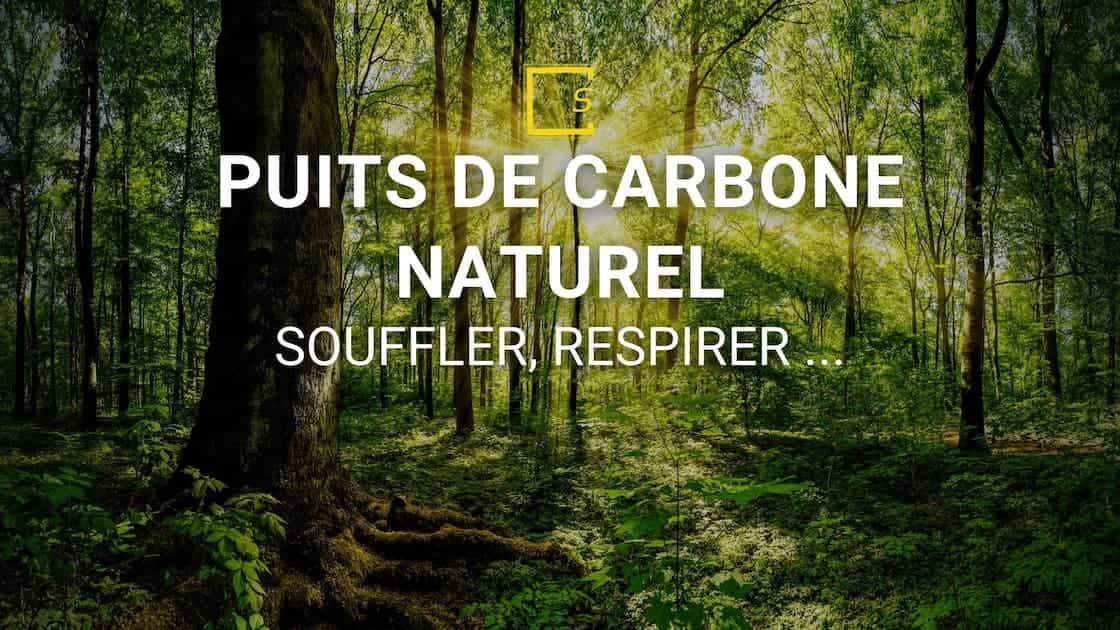
Carbon dioxide (CO₂) is produced when carbon compounds are burned and exposed to oxygen. It is one of greenhouse gases in its natural state causing global warming and health problems. The increase in CO₂ is largely due to human activity.
If our planet has not yet become a no-man's land, it is because we are taking advantage of natural carbon sinks. SirEnergies offers you here a focus on these.
Don't be surprised if we tell you that life on Earth is largely possible thanks to natural carbon sinks. The latter are carbon exchange regulators on the planet.
A natural carbon sink is a virtual reservoir that stores carbon in the atmosphere. It is a natural space that absorbs more CO₂ than it emits. It stores or destroys this gas in another form and Prevents it from spreading through the atmosphere.
Carbon in the atmosphere can be fixed or modified by Coal, methane hydrates, calcareous rocks, Oil and natural gases. The ecosystems in which these materials are concentrated are carbon sinks, with different CO₂ storage capacities.
According to the WHO (World Health Organization), air pollution is a major environmental health risk. The international institution estimates that in 2016, 4.2 million premature deaths in the world were due to outdoor air pollution in urban and rural areas. Combined with other fine particles circulating in the air, CO₂ is likely to cause respiratory and cardiovascular diseases, asthma attacks, etc.
Carbon sinks are seen as a solution to reduce CO₂ emissions on nature and humans. Already, the Kyoto Protocol signed in December 1997 encouraged the expansion of carbon reservoirs in order to limit climate change. Carbon sinks are in fact essential for the smooth running of the carbon cycle, which is necessary to maintain the balance of the planet. Unfortunately, human activities are reducing them more and more.
A number of processes take place in the marine environment and create the marine carbon cycle. This cycle is generally referred to as the ocean carbon pump consisting of a biological pump and a physical pump. The biological carbon pump transfers atmospheric carbon from the surface to the seabed through the food chain. As for the physical pump, it is set up by ocean circulation.
Many scientists believe that The ocean is the main natural carbon sink of the planet. For them, this ecosystem concentrates up to fifty times more carbon than the atmosphere.
Since water is denser at the poles, it sinks to the depths with the carbon it has dissolved. The higher the latitude, the more easily water dissolves atmospheric carbon thanks to the low temperature. The polar regions therefore play a major role in the carbon sequestration and its transformation.
However, the marine carbon cycle is not immune to the harmful effects of human activity. The release of chemicals into the oceans is causing disturbances in this cycle. The biological carbon pump easily copes with the acidification of marine waters. By dint of experiencing disturbances, it could get out of balance and release carbon stocks in nature.
The biological pump needs ecosystems to function normally in order to play its role. It is made up of any organic matter found in the oceans and promotes the formation of oil when the conditions are right. Calcareous organisms, which are part of the components of the biological pump, produce a vertical carbon flow at the end of life. The carbon emitted is then stored in the depths of the marine environment over several geological periods.
A bog is characterized by humidity and the high content of organic matter in the soil. It develops thanks to the mosses that appear from plant debris that is not completely destroyed. The characteristics of peats depend on the plants from which they come. A bog is a full-fledged ecosystem which plays a big role in the carbon cycle.
On a peatland, the soil does not provide enough oxygen to microorganisms for the decomposition and recycling of organic matter. This is due to the fact that the water is constantly stagnant under the ground. The carbon captured by the peat is not reused, which favors the reduction of air pollution.
Peatlands would only cover about 3% of the world's land area. And yet, they would concentrate 30% of organic matter available on the planet, which is equivalent to 50% of atmospheric CO₂ (source: futura-sciences.com).
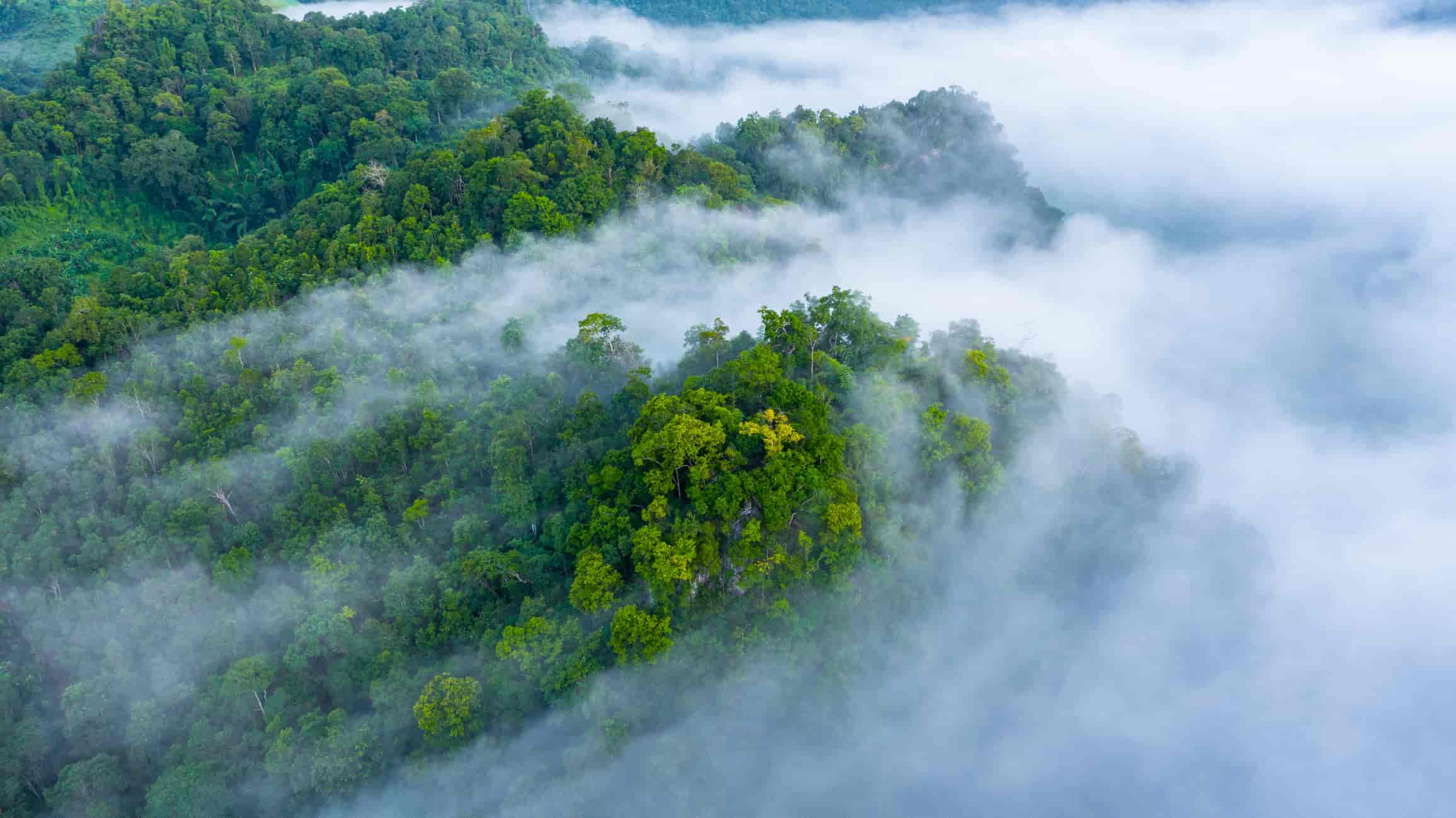
When the issue of environmental pollution control is raised, many of us think of forests as the ideal solution. In the collective imagination, we consider, for example, the Amazon as “the lungs of the Earth”. Certainly, this designation is a misnomer because The Amazon produces between 5 and 10% of oxygen according to scientists like Jonathan Foley. But the fact is that forests as a whole do store some of the carbon in the atmosphere.
Photosynthesis is one of the biochemical processes that take place during the carbon cycle. And it is this phenomenon that allows the plant to grow. The tree absorbs CO₂ which it transforms to produce oxygen.
Trees are chemically composed of carbon in a high proportion. Therefore, they only capture what little CO₂ they lack from the atmosphere. Despite everything, the How much carbon does forest trees capture are still important.
Finally, it should be noted that studies are being carried out all over the world to create artificial carbon sinks. In addition to promoting the reduction of carbon emissions, this solution would contribute to the energy transition.
In France, the first carbon sink was set up in 2016, in Colombes, for producegreen energy. Installations of this type were subsequently set up in other cities. While the project to create clean energy with atmospheric CO₂ is still in its infancy, it will undoubtedly evolve in the coming years.
To find out more about the CO₂ market in Europe and France, do not hesitate to read our article.
Resulting from a desire of the French government, the Tertiary Eco-Efficiency System (DEET), also called Tertiary decree, requires a gradual reduction in energy consumption for French tertiary buildings greater than 1,000 m².
This regulation aims to save 60% of final energy in these buildings by 2050.
We support you in the compliance tertiary buildings in order to comply with the obligations of the tertiary decree.
Click below for more information:
In a few clicks, organize an exchange with one of our experts.


weekly newsletter subscribers

4.9

.png)

The range E @sy is available in four pricing structures to adapt to each risk profile:
Yes. The supplier guarantees an offer 100% renewable via the official Guarantees of Origin (GO) mechanism.
For the most demanding companies, the offer GREENVOLT+ ensures very low carbon intensity electricity, sourced exclusively from independent French producers (hydraulic, wind, solar).
Les caves coopératives de taille ETI ou grande entreprise peuvent être soumises à l'audit énergétique réglementaire (norme NF EN 16247). Sirenergies n'a ni la compétence ni l'accréditation pour réaliser cet audit : nous vous orientons vers un bureau d'études partenaire accrédité, et vous accompagnons en amont sur vos achats et en aval sur le pilotage.