




Summarize with AI

October 28, 2026
6
Min reading
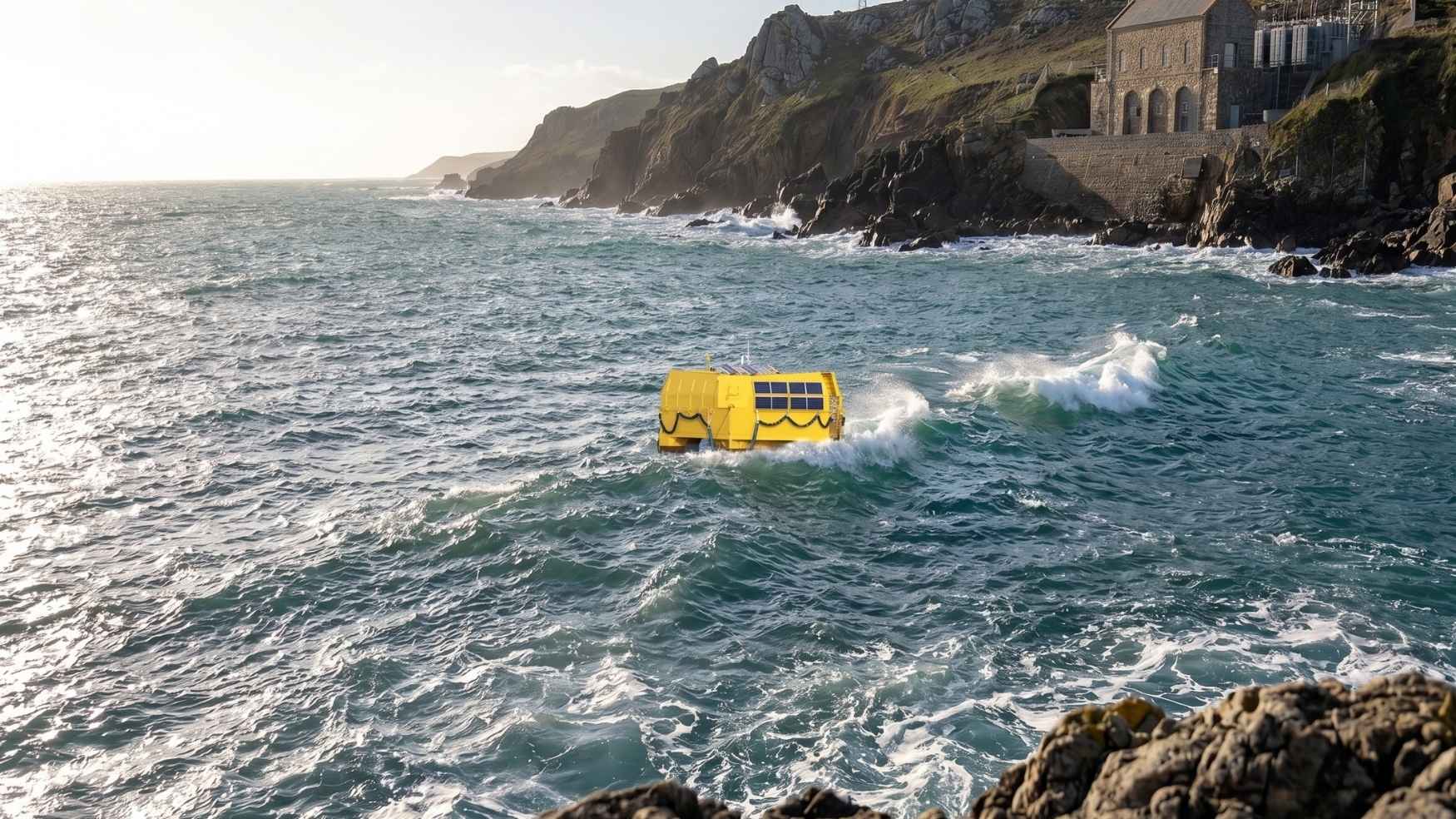
More than 70% of our planet's surface is covered by oceans. It is an expanse in perpetual motion, driven by the swell. What if the natural force of the waves could become a major source of electricity? That is the promise of wave energy.
But turning the ocean's oscillations into kilowatts is a significant challenge. From ingenious technologies and promising benefits to hurdles to overcome and bold experiments, Sirenergies provides an overview of this high-potential emerging energy source.
Do you want to understand the challenges of new energy sources to better manage your energy strategy?
{{ask-conseil="/ctas"}}
Wave energy gets its name from the swell, the undulating movement that travels across the ocean's surface. Born from the wind, these successive small waves that propagate over long distances are harnessed to produce electricity.
The principle is simple: transform themechanical energy of the waves into electrical energy using ingenious technologies that exploit every oscillation of the sea.
Driving a turbine connected to an electrical alternator using the mechanical energy of the waves: this is the principle behind all the wave energy technologies currently being tested to capture the power of the swell:
The sea is a tremendous reservoir of energy. Many green marine energies are currently developing at different rates.
Anyone who has spent time at sea knows that the swell never stops, whether driven by a light breeze or a powerful wind.
With over 360 million km² of ocean on the planet, this natural resource is not only abundant but also perpetual and inexhaustible. Its main advantage over other renewable energies? Its consistency. Unlike solar or wind power, swell is continuous, predictable, and can be anticipated.
According to a 2013 report by the National Assembly, every meter of wave front on the Atlantic coast carries approximately 45 kW, enough to instantly power about forty homes. Multiplied by the kilometers of coastline, the potential is immense! To put this into perspective, a 2 MW onshore wind turbine provides the same power as a 50-meter wave front.
Globally, the figures reach dizzying heights. TheInternational Energy Agency (IEA) estimates that under ideal conditions, waves could produce between 8,000 and 80,000 TWh per year. Recent studies place the realistic potential between 2,000 and 8,000 TWh/year, which is 6% to 25% of the global electricity demand in 2024 (31,153 TWh).
Wave energy is fully aligned with the carbon neutrality goals set by the Paris Agreement and the "Net Zero Emissions" strategy. As a local and renewable source, wave power generation produces no direct greenhouse gas emissions.
Over its entire life cycle (including construction, maintenance, and decommissioning), several studies estimate the carbon footprint of wave energy to be between 17 and 46 g CO₂ eq./kWh produced, a level comparable to that of wind and solar power.
Wave energy naturally complements other renewable energies, such asoffshore wind and coastal solar. Thanks to the inertia of wave motion, swell produces electricity continuously, day and night, even when wind or solar output wanes.
This consistency paves the way for more stable coastal energy mixes, capable of securing the electricity supply for ports, islands, and maritime infrastructure.
Do you want to track energy market price trends and optimize your purchases?
{{ask-pilott="/ctas"}}
As they are still largely experimental, wave energy technologies require heavy investment due to several factors:
The vulnerability of installations, which are subject to storms, corrosion, and salt and biological deposits.
In France, the production cost of wave energy is estimated at between €200 and €250/MWh. For comparison, theInternational Renewable Energy Agency (IRENA) puts the average cost of solar electricity at €40/MWh.
Institutional source: The French Energy Regulatory Commission (CRE) regularly publishes analyses on the production costs of renewable energies in France, confirming the significant gap between mature sectors and experimental technologies like wave energy.
With the exception of the oscillating water column, most wave energy technologies remain at the experimental stage.
However, a few prototypes (limited in size and duration) demonstrate the sector's potential. Examples include the Finnish WaveRoller project, which generates electricity by harnessing wave pressure on underwater plates, and the Danish Wave Dragon overtopping project.
Nevertheless, investors remain cautious due to a lack of visibility regarding the performance and lifespan of the infrastructure, as well as production costs.
Although green and renewable, wave energy presents environmental challenges. Opponents point to the risk of altering currents, disrupting marine ecosystems, and causing noise and visual pollution.
Wave energy also conflicts with other human activities, such as fishing, shipping, and tourism. The success of these projects depends on extensive local consultation to ensure social acceptance.
The development of wave energy faces a regulatory maze, involving maritime permits, environmental impact assessments, and port laws.
In France, the Coastal Law, the Water Act, and protected zones strictly regulate coastal development. The government is, however, working to create experimental zones within a framework that respects the environment and maritime usage.
Despite these advances, wave energy is struggling to find its place in the national energy mix. To clarify regulations, several industry players are advocating for its official inclusion in the future Multiannual Energy Program (PPE). A first step was taken in 2023 with the Renewable Energy Acceleration Act and the recognition of wave energy in the Energy Code.
Despite the challenges, the wave energy sector is gradually moving from research to full-scale experimentation.
In Europe, pilot projects are emerging, with Portugal leading the way. In July 2025, the AWESDI (Atlantic Wave Energy Sustainable Deployment Initiative) project received a European grant of nearly 2.5 million euros. As part of this, the company Eco Wave Power is preparing an industrial wave energy project off the coast of Porto with a maximum capacity of 20 MW.
It is also leading the VianaWave project. Its 30 wave energy converters must produce 30 GWh of electricity per year, enough to power nearly 7,500 homes. Eco Wave Power is also behind the curious blue floats deployed in the Port of Los Angeles since the summer of 2025.
France is also leading several initiatives:
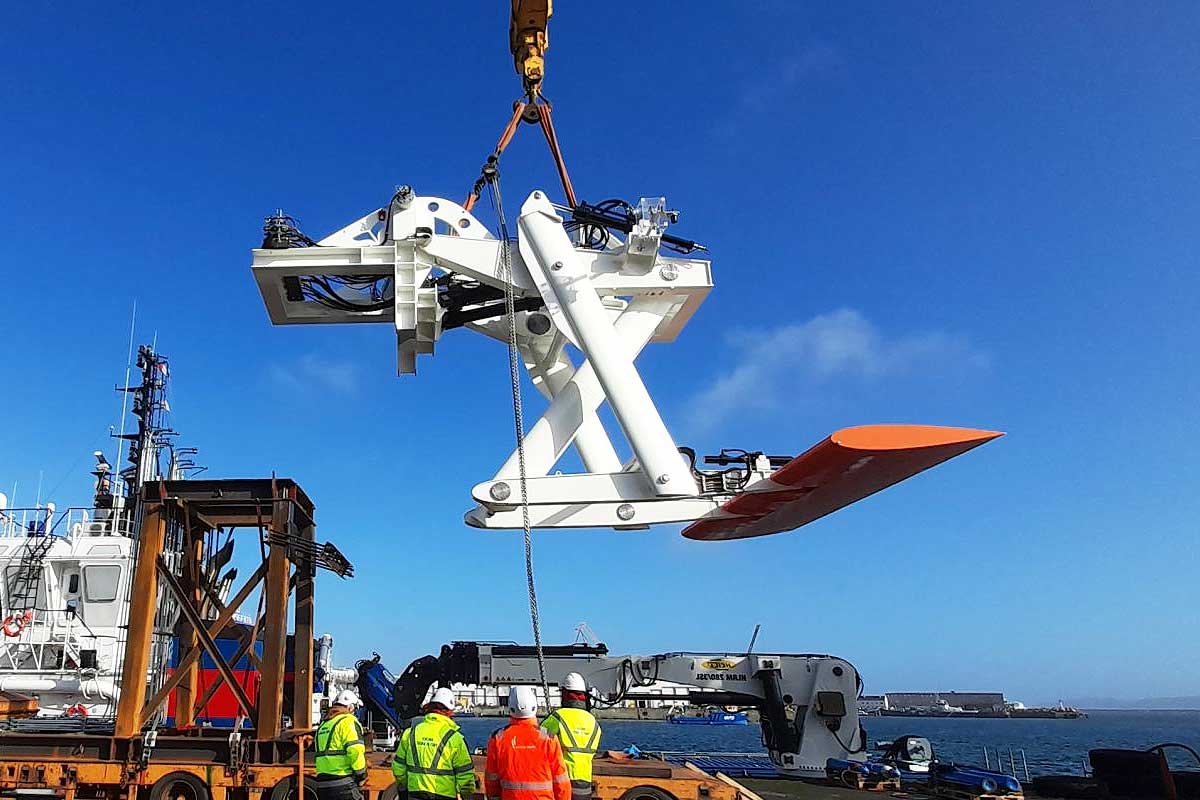
Inspired by the powerful, fluid movements of whale fins, an innovation promises to reduce ship fuel consumption by harnessing wave power.
Developed by Ifremer and a Breton start-up, this articulated fin converts the mechanical energy of waves into auxiliary propulsion, acting like an onboard mini-wave power plant. Still in the testing phase, this solution illustrates the potential of wave energy in unexpected fields, such as maritime transport.
Is wave energy truly a renewable energy source? The answer is an unequivocal yes: natural, local, abundant, carbon-free, and predictable, it combines all the advantages of green marine energy. Yet, its development remains hesitant, held back by financial, technical, and environmental challenges.
Each prototype is a small step toward bringing the industry, slowly but surely, to maturity. While far from dominant today, wave energy embodies the promise of a sustainable electric future.
Do you want to regain control over your energy costs and benefit from expert guidance?
{{know-more-services="/ctas"}}
"The Pilott tool has become our control tower. But beyond the platform, it is the accessibility and technical expertise of the Sirenergies consultants that make the difference. They translate the complexity of energy markets into simple operational decisions for us."
-Raphaël Dehlinger, Chief Financial Officer, Sotralentz Construction
In a few clicks, organize an exchange with one of our experts.


weekly newsletter subscribers

4.9
