




Summarize with AI

March 6, 2026
8
Min reading
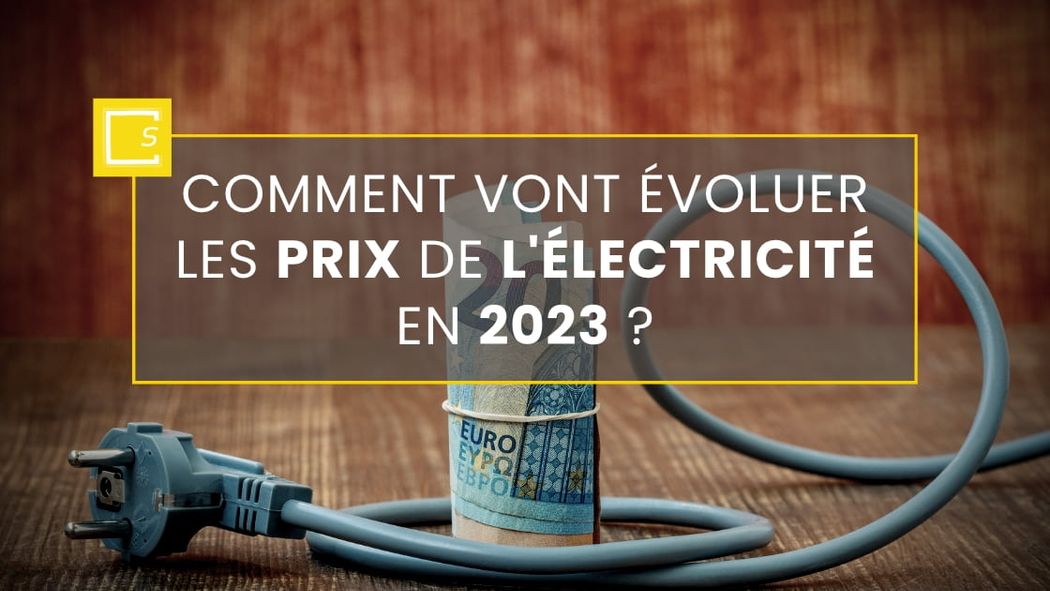
Electricity prices are at the heart of economic and social news, all over Europe. The various market and geopolitical events or even the political will of certain governments are causing significant turmoil in the world of energy in Europe.
Today, the vast majority of electricity markets Europeans are interconnected. The prices of the different areas (Germany, France, GB...) are interdependent. They influence each other through the construction of markets and the various European regulations.
Recently, to deal with the explosion in prices, Spain and Portugal resorted to a mechanism to block market prices. The European Union has also recently decided to put in place far-reaching measures, according to statements by Ursula von der Leyen.
The electricity markets are currently overheated. In this article, we will attempt to describe a price scenario with a “stable” context, in which we could see the effects of government measures, and a “tight” price scenario that could increase prices.
Initially, the rise in electricity prices started after the first Covid-19 crisis. This is mainly due to several factors:
Economic activity at half-mast during months of lockdown has destabilized energy markets.
By resuming intensive activity (even far from the pre-Covid level), industries around the world have sought massively to provide themselves with energy. Since energy producers did not double over this period, mechanically it does Raise electricity prices. This is why the latter has been rising constantly since 2020.
The invasion of Ukraine by Russia has also participated in this price race, in particular due to gas.
Before the conflict, Russia accounted for over 40% of Europe's gas imports. However, the current geopolitical context is reducing these imports to almost nothing. It is not possible to compensate for these gas volumes in the short term, the change in supply chain is complex and takes a long time to implement. For these reasons, gas prices have also soared.
Electricity markets were created on a simple principle: The marginal cost of production determines the price of electricity. As we mentioned in our articles, the price of electricity is determined by the cost of the most expensive power plant in order to be able to meet demand.
Logically, the higher the demand during peak consumption, the higher the price will be. It turns out that the most expensive power plant to “match” demand is often a... gas-fired power plant.
We now understand why this situation is exceptional, given this conjuncture of events following one another. The principle of marginal cost has never been contested in more than twenty years of existence; unfortunately, today, this market design challenges us.
Today, the duration of the conflict in Ukraine remains undetermined. The economic recovery seems to be on, even if we have not yet reached the levels before the health crisis.
The European Union has decided to set up shock measures in order to protect social peace in its various nations. Galloping inflation, the risk of the closure of many businesses as well as major social conflicts have led the EU to propose the following measures:
These are short-term measures aimed at alleviating the consequences of the energy price crisis on the purchasing power of European citizens.
The European Union and the French State also want to put in place longer-term measures, and this requires a total reduction of the Union's dependence on gas from Russia by 2027.
We should also mention the tariff shield set up by the French government, and followed by many states.
We can now imagine a scenario in which the current geopolitical crisis stabilises in Europe.
If certain conditions are also met, then a downward trend could be observed on short-term markets, especially if new sources of gas supply remain continuous and regular. But also if energy efficiency measures are effective and widespread, which has the consequence of reducing electricity consumption in France by 10%.
The unknown today lies in the availability of EDF's French nuclear power plants. In 2022, we observe one of the lowest rates of availability of nuclear energy in nearly ten years. A large number of them are now shut down due to maintenance operations linked to corrosion problems.
If they recover before next winter, the signal sent to the markets would be positive enough to pull prices down.
In this favourable scenario, the policy measures would have an immediate effect on prices. This could make it possible to re-establish a more socially acceptable market situation for several months; this system could disappear in the event of stabilization of conflicts in Europe.
It should be noted that even if the fighting in Ukraine stopped, there would be residual pressure on prices, time for Europe to adapt to its new modes of production and consumption, as well as to recreate gas supply chains.
The armed conflict between Ukraine and Russia remains the most important factor in the reaction of the markets. This war has shaken up the organization of the energy sector of sustainable way, and can still have serious consequences in the event of an escalation of the conflict.
Human and economic losses can be catastrophic; it is the first factor to look at when trying to understand how markets react.
The new supply chains (especially gas) are still fragile today. It is likely that, for a conjunctural or geopolitical factor, one of these sources will be reduced.
This could also lead to higher prices and thus further weaken the European industrial fabric.
The availability of the French nuclear fleet also plays an important role in prices in the CWE zone (Central West Europe). Si ASN Announcing new unavailability in the heart of winter, RTE will have difficulty ensuring electricity balance; the markets will no doubt react.
The advantage of the measures put in place by the EU is that, in this case, the amounts collected by the states should be colossal (more than 150 billion euros).
They should be enough to protect French businesses and households in the short term, but impossible to maintain in the long term. There will be less incentive to invest in new means of production; the entire sector would have to be rethought, as would the liberalization of markets.
The political situation also remains tense between Taiwan and its Chinese neighbor. It is also conceivable that an upsurge in hostilities could destabilize the energy sector even more significantly.
Algeria also provides part of the gas supply to France and Europe; if any event were to alleviate this support, lasting tensions will appear on the electricity markets.
In the scenario described above, electricity prices are expected to stabilize for several months, thanks to the important measures put in place.
However, the markets would still show prices as high as ever for fossil fuels (gas and coal). They would also be high for nuclear and renewable energies (inframarginal ones); however, the European measure will redirect these funds (beyond €180/MWh) to the final consumer.
In summary, volatility and price increases are expected to follow one another on the markets, even if the effect on the bills of energy-intensive businesses would be reduced thanks to these emergency measures.
The tensions observed on CO2 markets in 2020/2021 are now attenuated. It is also a factor explaining the increases in electricity prices. If this commodity sees its price double in 2023, electricity prices would suffer the immediate consequences.

Source: Carbon Credits
It is particularly difficult to predict what the electricity markets will do in 2023. At all times, The forecast of electricity prices is an exercise that is almost impossible to perform with precision.
The various mathematical models that currently exist (stochastic processes for the most part) are unable to show regular performances over time, mainly because of the diversity and number of factors that influence this price and are self-correlated.
In the short term, the measures put in place by the EU should be enough to reduce electricity bill businesses and individual customers, and thus secure the more structural adaptation of energy markets in Europe. The Energy Regulatory Commission (CRE) must also monitor the practices of suppliers and producers in order to avoid market manipulation or various excesses.
Do not hesitate to consult our article: What is the difference between baseload and peakload?
Your SirEnergies space allows you to visualize market price curves updated daily. There are various products:
- Forward products in electricity (baseload and peakload) and gas over the years, quarters and months periods;
- Total depth since the products were put on the market;
- Product history, current products and forecasts for A+4 and A+5;
- Spot electricity and gas product (PEG and TTF) by the hour, day and month;
- CO2 year and December.
In a few clicks, organize an exchange with one of our experts.


weekly newsletter subscribers

4.9

.png)

The industry is concerned by TICFE, TICGN and other contributions that may represent an important part of invoices. Sirenergies identifies cases of exemption and accompanies the procedures to benefit from them.
Communities are subject to taxes such as TICFE or TICGN. Sirenergies analyzes invoices, identifies exemption possibilities and fixes possible errors to reduce the tax burden.
Parce que la puissance souscrite en kVA détermine le prix de l'abonnement et que tout dépassement peut entraîner des surcoûts importants.
Changing suppliers can allow you to benefit from more competitive prices, adapted services or better contractual conditions. Thanks to sourcing, change is happening without interruption of supply.
L'ARENH est remplacé par le VNU (Versement Nucléaire Universel), un mécanisme de redistribution des revenus excédentaires d'EDF en cas de prix très élevés, et par les CAPN, des contrats long terme pour les gros industriels.
En analysant votre courbe de charge pour identifier la puissance réelle appelée, puis en demandant un ajustement à votre fournisseur ou via un expert en énergie.
Tertiary companies are concerned by taxes such as TICFE or TICGN. Sirenergies checks the accuracy of invoices, identifies possible exemptions, and helps correct errors to sustainably reduce costs.
En 2025, la France a atteint un solde exportateur net de 92,3 TWh, battant le précédent record de 2024 (89 TWh).
These are signals sent by RTE during periods of tension on the electrical network. The Sirenergies tool informs you in real time to anticipate your uses.
Plusieurs leviers existent pour préserver la fiscalité locale :
Exceeding capacity leads to financial penalties and can impact the size of the contract. Adjust the correctly subscribed power makes it possible to avoid these additional costs.
Sourcing offers better visibility on the market and promotes the selection of competitive contracts. It helps to reduce the risks associated with price volatility and to optimize the energy budget.
C'est l'indicateur d'efficacité d'un appareil électrique ; il représente le ratio entre la puissance active (utile) et la puissance apparente (totale).
Among the taxes include TICFE, TICGN, CTA, CJA and TURPE. They represent a significant part of the bill and vary according to consumption profiles. Understanding them well is essential to optimize costs.
This makes it possible to choose the right time to contract, secure your budgets and anticipate increases.
C'est le levier le plus rapide pour obtenir des résultats visibles. L'éclairage représente environ 40 % de la consommation d'électricité d'une commune.
Passer au LED avec pilotage intelligent permet de réduire la facture de 50 à 80 %, avec un retour sur investissement (ROI) rapide, souvent estimé à 2 ou 3 ans.
En 2026, les principaux leviers sont : la renégociation de votre contrat de fourniture au bon moment, l'optimisation de votre tarif d'acheminement (TURPE), la vérification de votre éligibilité aux taux réduits de taxes (Accise), et la réduction de votre consommation (efficacité énergétique, autoconsommation).
Yes. The supplier guarantees an offer 100% renewable via the official Guarantees of Origin (GO) mechanism.
For the most demanding companies, the offer GREENVOLT+ ensures very low carbon intensity electricity, sourced exclusively from independent French producers (hydraulic, wind, solar).
Les profits include a direct reduction in bills, strengthened budgetary forecasting and better control of consumption. Businesses gain visibility and efficiency thanks to adapted tools.
La réussite d'un projet collectif énergie repose sur trois piliers fondamentaux :
Pas nécessairement sur votre facture finale. Si les prix de gros (le prix de l'énergie brute) ont baissé, les coûts d'acheminement (TURPE) et certaines taxes augmentent, compensant souvent la baisse de la part énergie.
All businesses, from SMEs to large organizations, can benefit from this service. Les local authorities also find it a lever to better control their budgets.
Farms are subject to taxes such as TICFE or TICGN. Sirenergies verifies their application, identifies cases of exemption and accompanies the procedures to reduce the tax burden.
Sourcing consists in identifying and analysing the offers of several electricity and gas suppliers. This approach makes it possible to obtain contracts adapted to the consumption profile and budgetary constraints of the company.
The €/MWh is a price unit used in wholesale markets, while kWh is the unit visible on your bills.
Ce record de 92,3 TWh s'explique par la conjonction de trois facteurs :
Le kVA mesure la capacité maximale que votre compteur peut supporter à un instant T, tandis que le kWh mesure la quantité d'énergie consommée sur une durée.
Le processus repose sur l'utilisation de la force de l'eau (énergie cinétique) issue des courants, des chutes d'eau ou des dénivelés. Le fonctionnement suit trois étapes clés :
Le transport (RTE) correspond aux "autoroutes" de l’électricité. Il s’agit de transporter de très grandes quantités d'énergie sur de longues distances, depuis les centrales de production (nucléaires, barrages, parcs éoliens offshore) vers les régions de consommation.
La distribution (Enedis) s'apparente aux "routes départementales" et aux rues. Elle récupère l'électricité à la sortie du réseau de transport pour la livrer directement chez le client final, en abaissant la tension pour qu'elle soit utilisable par vos appareils.
Some businesses may obtain a partial or total exemption from the TICFE or the TICGN, depending on their activity and energy intensity. The support of an expert makes it possible to identify the eligibility criteria and to put together the file.
Les coopératives de taille ETI ou grande entreprise peuvent être soumises à l'audit énergétique réglementaire (norme NF EN 16247). Sirenergies n'a ni la compétence ni l'accréditation pour réaliser cet audit : nous vous orientons vers un bureau d'études partenaire accrédité, et vous accompagnons en amont sur vos achats et en aval sur le pilotage.
Le calendrier 2026 impose deux échéances majeures :
Pour simplifier ces démarches, vous pouvez centraliser vos données de consommation avec la plateforme Pilott de Sirenergies, garantissant ainsi la conformité de vos rapports réglementaires.
Oui, elle est considérée comme une énergie renouvelable à faibles émissions de gaz à effet de serre.
De plus, l'eau ne subit aucune transformation chimique durant le cycle de production et réintègre son milieu naturel en aval.
Cependant, la construction de barrages nécessite des mesures pour protéger les écosystèmes (débit minimum, passes à poissons).
Un appel d’offres permet de mettre en concurrence plusieurs fournisseurs d’électricité et de gaz afin d’obtenir des conditions contractuelles optimisées. C’est une démarche transparente qui permet de choisir l’offre la plus adaptée aux besoins budgétaires et techniques de l’organisation.
The range E @sy is available in four pricing structures to adapt to each risk profile:
Farms must deal with high seasonal needs (greenhouse heating, irrigation, storage) and high volatility of prizes. Controlling these costs is essential to maintain profitability and secure the business.
Idéalement entre 6 et 12 mois avant l'échéance, de préférence au printemps ou au début de l'été lorsque la demande est plus faible.
One invoice consists of several elements: consumption, supplier share, taxes and contributions. The analysis of each line makes it possible to identify possible errors and to check the consistency with the signed contract.
The subscribed power must be calculated according to the consumption profile and uses (heating, industrial processes, tertiary equipment). One fine analysis makes it possible to ensure the adequacy between real need and contract.
Tertiary companies must manage their energy costs while guaranteeing the comfort of users (offices, shops, services). Consumption is often linked to heating, air conditioning and lighting, which requires precise monitoring to avoid budgetary excesses.
Le dispositif ARENH a laissé place au VNU (Versement Nucléaire Universel).
Ce changement structurel expose davantage les entreprises aux prix de gros, rendant la gestion des risques plus complexe qu'auparavant.
Il devient alors indispensable de définir une stratégie d'achat d'électricité avec Sirenergies pour lisser l'impact de la volatilité des marchés sur votre budget.
Industrial companies consume large volumes of energy for their production processes. They have to deal with the volatility of prizes, multi-site management and specific taxes. Controlling costs is essential to remain competitive.
In 2025, the supplier had a NPS (Net Promoter Score) of +16 and a note of 4,17/5.
Satisfaction is based on a “zero solicitation” model and 100% in-house customer service in Toulon, guaranteeing proximity and responsiveness that cannot be found with major historical suppliers.
L'abondance de production française tire les prix du marché de gros vers le bas.
En vertu du mécanisme de l'Ordre de Mérite (Merit Order), les centrales les moins coûteuses (nucléaire, renouvelables) couvrent la demande plus souvent, évinçant les centrales à gaz ou charbon plus onéreuses.
Cela multiplie les épisodes de prix bas, voire négatifs, sur le marché spot.
Même le bâtiment le plus moderne et le mieux isolé perd son efficacité si ses usages sont inadaptés. La technologie et les normes ne suffisent pas : la transition énergétique est avant tout une transformation humaine.
Derrière chaque kilowattheure consommé se cache une habitude.
Un collaborateur sensibilisé comprend qu'ouvrir une fenêtre alors que le chauffage est allumé ou laisser un ordinateur en veille consomme de l'énergie inutilement. En replaçant l'humain au centre de la stratégie de gestion de l'énergie, l'entreprise s'assure que ses équipements performants sont utilisés de manière optimale, garantissant ainsi une rentabilité durable et un impact environnemental réduit.