




Summarize with AI

March 6, 2026
6
Min reading

Our modern society is based on a societal model that is increasingly dependent on the use of high-tech products that consume raw materials and polluting energies.
In a world with finite resources but infinite needs, numerous initiatives are emerging to establish a sustainable consumption system that is sustainable without losing the comfort provided by high-tech.
“Low-tech” (low technologies) are part of this current of thought with the main objective of combating climate change.
“Low-tech” (or “low-technology”) refers to an approach to designing and creating products, systems, or processes that aims to use technologies Simple, affordable and sustainable to meet practical needs. This involves using local and locally available materials, as well as reusing and repairing existing products rather than throwing them away and replacing them.
The objective is to promote a zero waste approach, more Resilient and more reachable. Especially in communities that have limited access to electricity, materials, and sophisticated infrastructure.
For some, a product is considered low-tech when it requires a low capital contribution and a low cost of transferring the knowledge necessary to manufacture the product. For others, the criteria are more basic, such as the absence of electricity orfossil fuels for the operation of it.
Low-tech is based on seven major principles:
Low-tech aims to offer solutions that limit the consumption of natural resources. The key concept to remember is the sobriety through the development of technologies that consume little or no non-renewable resources (products from the petrochemical industry, fossil fuels, etc.).
The use of robust systems created for last as long as possible. These systems are also designed in order to be repairable and recyclable in order to be used again in The circular economy. This makes it possible to create a resilient economy that is more capable of operating in an environment restricted by a lack of material and financial resources.
The adoption of low-tech makes it possible to reduce society's dependence on complex technologies that only a few people have the expertise of. A large part of low-tech innovations is based on creating simplified products to the extreme requiring few complex technologies and basic knowledge. The “do-it-yourself” concept is very present.
Thanks to a network of associations and groups, low-tech is also seen as a social project on a local/regional scale. Low-tech entities favor exchanges of local flows (raw materials, energy) and embrace a globalized vision of sharing low-tech knowledge and practices. The notions of cooperation and sharing are essential, which is why the technologies developed are mostly available in 'open source'.
To achieve sobriety, a real trade-off is made between primary and secondary needs based on 3 criteria: performance, comfort and utility.
The dependence of local communities on the high technology (high-tech) production chain is the biggest challenge to be met. This dependence on fossil fuels, rare metals and to Market price volatility makes society vulnerable.
Low-tech offers an alternative to the shortcomings of high-tech systems, in particular thanks to a territorial network of small local industries.
Low-tech is based on sophisticated tools that are manufactured locally and that mobilize the short circuit to obtain the necessary raw materials and resources. This means that there is no standardization of low-tech processes because each region meets its needs according to the local resources available.
By definition, low-tech seeks to reduce energy consumption as much as possible through innovative technologies. Whether in the delivery of raw materials, manufacturing processes or the energy efficiency of the product, the principle of sobriety is applied to achieve carbon neutrality.
According to low-tech, reducing our energy consumption is the only approach for a decarbonized and sustainable economy.
This reasoning is easily justified. Take for example The electrification of uses, perceived as the keystone of energy transition. We quickly understand that this is an energy and environmental aberration: massive use of rare earths, explosion in electricity demand that renewable energies (EnR) cannot satisfy them alone.
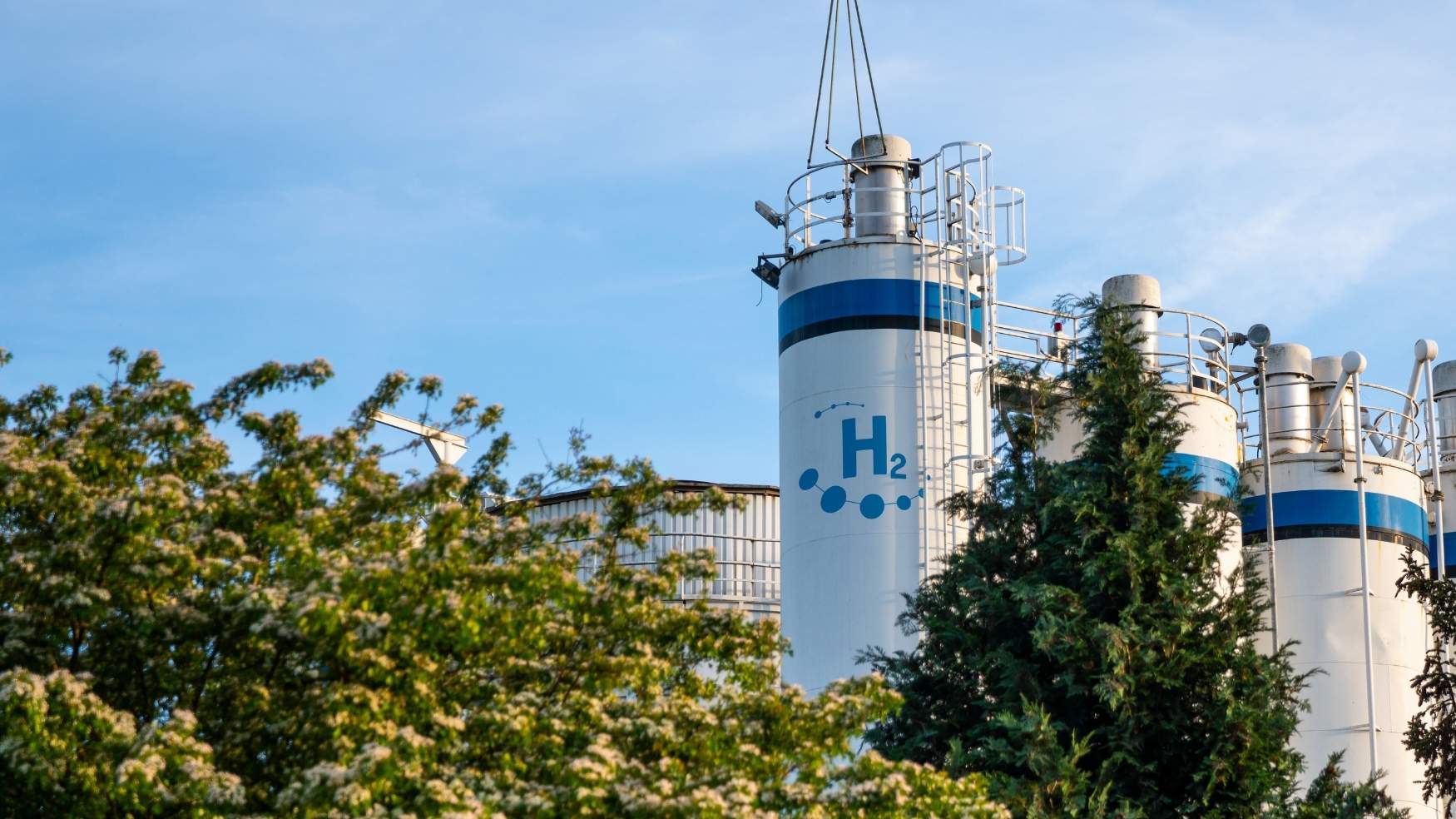
The same goes for the adoption of Hydrogen in replacement of natural gas. The quantity of electricity needed to meet European demand is in the hundreds of TWh. The reality of the figures is cruel, and it is from this observation that the low-tech energy sobriety strategy is based.
This emphasis is quite relative because low-tech now considers renewables as a lesser evil but not as a solution in itself. It's a double-edged sword in a way. Certainly, our economies require less natural gas or petroleum imported from abroad, which reinforces our energy independence. But the adoption of all-electric power or renewable energies exacerbates other forms of dependence, such as those to rare earths (batteries) and aux metals (copper, nickel).
Another point of tension with the low-tech mentality, renewable energies consume a significant quantity of raw materials, contrary to the principle of sobriety.
The plurality of low-tech players makes it possible to innovate in all fields and at all scales: daily lifestyle, agricultural and industrial production system, human relationships... Low-tech innovations are numerous and easily accessible on the Internet in more or less supervised formats (tutorial videos, articles, manufactured products, etc.).
France is at the forefront of this movement thanks to committed actors such as the Low-tech Lab, the engineer Corentin de Chatelperron and the financial support of local/regional authorities and governmental organizations (e.g.: Brittany Region, ADEME).
Here are a few low-tech examples:
It is crucial to remember that in order to transition to a sustainable society, solar panels and electric cars alone will not be enough. To achieve the goals set by the Paris Agreements and limit climate change, the energy sobriety is indispensable.
As you will have understood, the sobriety model promoted by low-tech brings financial, ecological and social benefits.
To summarize, low-tech principles make it possible to “satisfy our needs without compromising the ability of future generations to meet theirs”. From an energy point of view, low-tech can be used to decarbonize part of our economy and limit our environmental impact.
They also make it possible to place the principle of sobriety at the heart of our society, everyone acting at their own level and according to their means of course.
Finally, a coherent combination of high-tech and low-tech must take shape. It would be a shame to constantly oppose them when they can be complementary.
To go further, do not hesitate to consult our article on: Photovoltaic parking canopies: Solar energy within parking range
Recognizing the climate emergency, SirEnergies offers professionals and businesses the opportunity to limit the ecological impact in terms of energy.
We have made the choice to work with key players in solar photovoltaic to offer you support solutions dedicated to your photovoltaic self-consumption projects.
Click below for more information:
In a few clicks, organize an exchange with one of our experts.


weekly newsletter subscribers

4.9

.png)

The range E @sy is available in four pricing structures to adapt to each risk profile:
To calculate Scope 2 emissions, use the following formula:
Energy quantity (kWh) × Emission factor (kg CO₂ e/kWh).
Use databases like ADEME for precision.
Yes. The supplier guarantees an offer 100% renewable via the official Guarantees of Origin (GO) mechanism.
For the most demanding companies, the offer GREENVOLT+ ensures very low carbon intensity electricity, sourced exclusively from independent French producers (hydraulic, wind, solar).
Les coopératives de taille ETI ou grande entreprise peuvent être soumises à l'audit énergétique réglementaire (norme NF EN 16247). Sirenergies n'a ni la compétence ni l'accréditation pour réaliser cet audit : nous vous orientons vers un bureau d'études partenaire accrédité, et vous accompagnons en amont sur vos achats et en aval sur le pilotage.
Les caves coopératives de taille ETI ou grande entreprise peuvent être soumises à l'audit énergétique réglementaire (norme NF EN 16247). Sirenergies n'a ni la compétence ni l'accréditation pour réaliser cet audit : nous vous orientons vers un bureau d'études partenaire accrédité, et vous accompagnons en amont sur vos achats et en aval sur le pilotage.
La réussite d'un projet collectif énergie repose sur trois piliers fondamentaux :
It allows you to prove your commitment to the energy transition and to meet regulatory requirements.
Le calendrier 2026 impose deux échéances majeures :
Pour simplifier ces démarches, vous pouvez centraliser vos données de consommation avec la plateforme Pilott de Sirenergies, garantissant ainsi la conformité de vos rapports réglementaires.