






Summarize with AI

October 28, 2026
7
Min reading

What should you do with your photovoltaic surplus when your solar electricity production exceeds your actual consumption needs? Lacking a simple alternative, companies often choose to resell the excess, despite unattractive rates and burdensome administrative management.
What if this surplus became a CSR opportunity rather than a constraint?
Electricity donation (or donating kWh) allows you to leverage surplus production by redistributing it to local consumers, such as non-profits. Combined with collective self-consumption, this mechanism transforms a low-profit photovoltaic surplus into a measurable and socially responsible CSR lever.
Why and how should you implement electricity donation in your company? Sirenergies sheds light on this still-overlooked energy and social opportunity.
Electricity donation simplifies the management of photovoltaic surpluses while providing concrete support to local consumers.
Also known as donating kWh, electricity donation allows a company to redistribute its surplus solar electricity to local beneficiaries viacollective self-consumption.
This idea stems from two observations:
On one hand, companies sometimes produce more electricity than they consume (for example, when business slows down during holiday periods).
On the other hand, the operations of public-interest organizations are being weakened by rising energy costs.
Energy donation creates a bridge of solidarity between these two realities.
Note: in practice, electricity does not flow directly from the company to the beneficiary. It is injected into the local grid and then contractually distributed among the identified consumers.
Surplus production is difficult to track and monetize. By default, many companies turn to selling it back to the grid, which offers limited profitability.
Donating electricity changes the game. The company is no longer just managing a surplus; it is giving it a concrete purpose.
Donating allows you to:
{{ask-conseil="/ctas"}}
Donating renewable electricity is based on a strict and precise regulatory framework: collective self-consumption.
Since 2017, collective self-consumption has involved sharing local photovoltaic production among several consumers within a regulated framework.
Governed by the Energy Code, its organizational requirements are rigorous:
Once injected into the grid, electricity cannot be physically sent to a specific beneficiary.
Companies have two options for directing their surplus photovoltaic production to the organization of their choice:
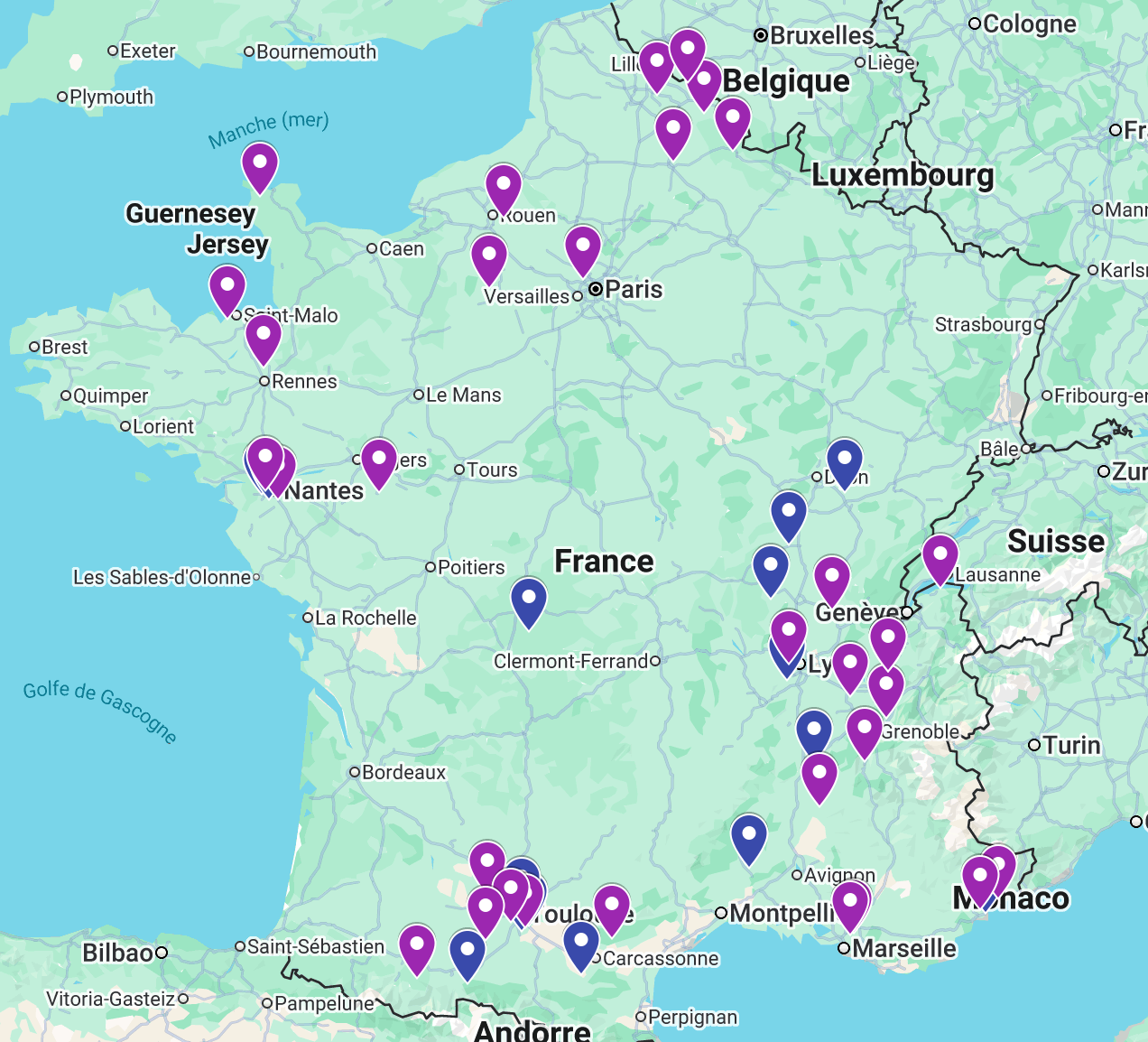
To facilitate electricity donations, companies can join an AMEP (Association for the Maintenance of Shared Energy). Inspired by community-supported agriculture models, these structures pool resources and organize local energy sharing between businesses, local authorities, organizations, and individuals. Around forty such projects are either planned or active in France as of 2026. Membership conditions depend on the local project.
At the intersection of energy performance and social impact, donating electricity is a tangible and measurable CSR lever.
Beyond promoting the consumption of non-fossil energy, donating renewable energy has a concrete social impact. It allows a company to:
In a context where corporate CSR commitments are increasingly scrutinized, donating kWh makes a real difference.
Unlike mere declarations of intent, this environmental and social lever is concrete and verifiable. It guarantees:
This ability to demonstrate the real impact of the donation avoids the pitfalls of greenwashing and reinforces the sincerity of your CSR strategy.
Donating green energy gives social meaning to energy investments. It helps the company meet its regulatory obligations and immediately improves its non-financial indicators.
The results provide concrete evidence for CSR communications and environmental and social reports, such as:
For a CEO or CFO, donating electricity is not an expense: it is a CSR asset. The redistributed volumes integrate directly into the carbon footprint (Scope 2) and CSRD indicators, with no negative impact on the income statement. It is one of the few mechanisms that combines measurable social impact, regulatory compliance, and the utilization of a surplus that would otherwise be of little value. For companies with photovoltaic installations, this is a lever to activate without delay.
Are you a CEO, CFO, or CSR manager? Let's discuss integrating electricity donations into your energy strategy.
{{ask-rdv="/ctas"}}
Implementing electricity donations requires method and foresight. The goal is to secure and optimize this CSR project while strictly adhering to the regulatory framework.
Before getting started, you must first verify that your surplus photovoltaic production is real, consistent, and sufficient.
This involves analyzing:
Make your consumption data reliable with our energy management platform, Pilott.
{{ask-pilott="/ctas"}}
To initiate your electricity donation project, you have two options: join an existing collective self-consumption operation or create your own project.
Whether the local loop includes one or several producers and consumers, you will need to:
Once in place, electricity donation should not remain a purely technical initiative. It becomes a genuine engagement tool. The challenge is twofold: accurately measuring the impact generated and making it visible.
Monitoring is based on concrete indicators: volume of kWh redistributed, number of beneficiaries, tons of CO2 avoided, financial savings generated for the supported organizations, etc.
This data strengthens the credibility of your CSR strategy. It transforms your donation into a powerful lever to enhance your corporate image as a company committed to the energy and social transition of its region.
Electricity donation gives new meaning to corporate energy investments. It turns an operational constraint (managing photovoltaic surplus) into a strategic opportunity.
It is a concrete, local, and measurable CSR lever that creates value beyond the company itself.
Still underutilized, it currently represents a powerful tool for organizations wishing to combine regional solidarity with energy performance.
Interested in donating photovoltaic electricity? Sirenergies helps you analyze your consumption profile and build a tailored strategy.
{{ask-rdv="/ctas"}}
In a few clicks, organize an exchange with one of our experts.


weekly newsletter subscribers

4.9
