





Summarize with AI

October 29, 2026
8
Min reading
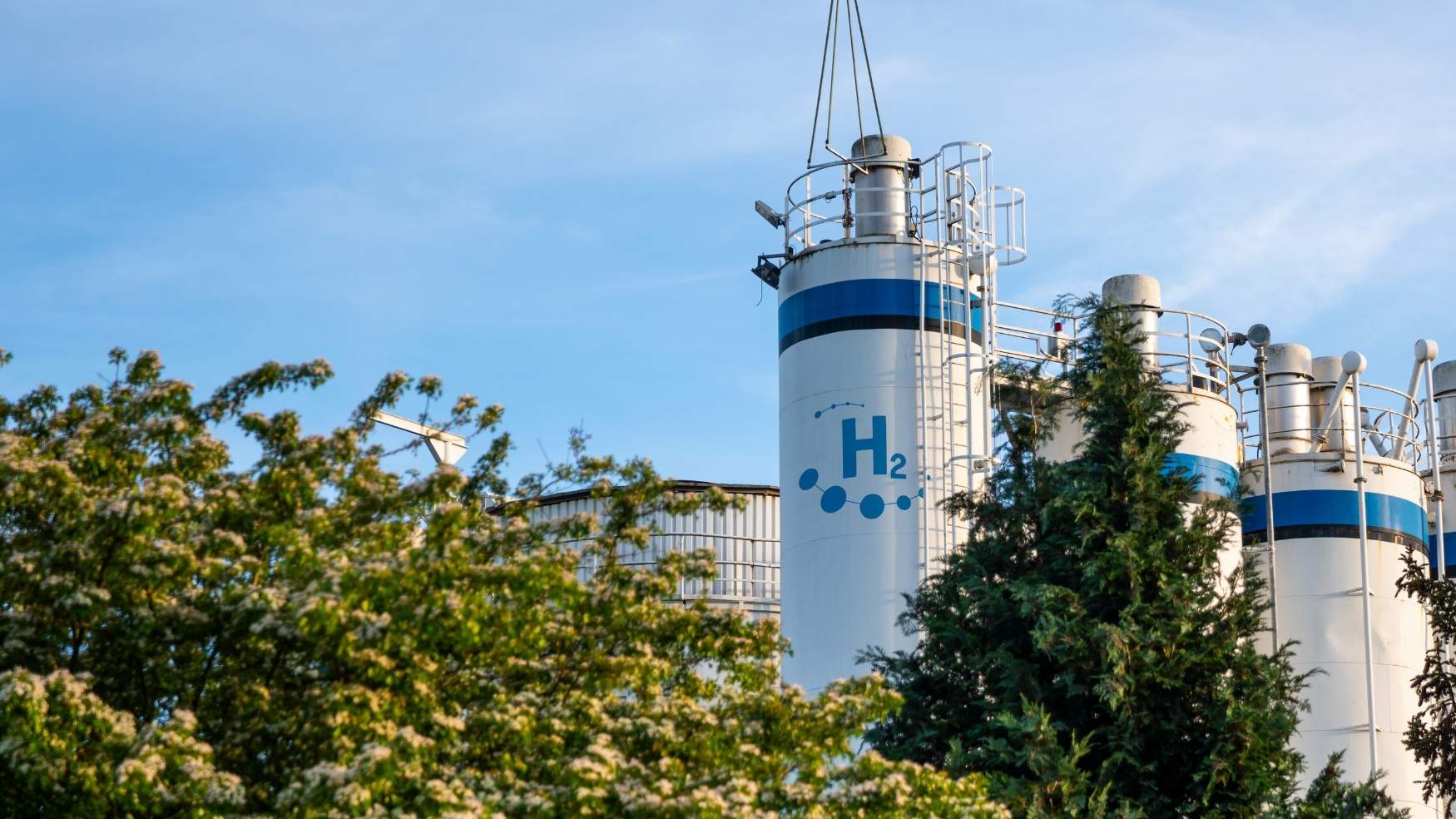
With the imminent commissioning of Europe's largest green electrolyzer in Normandy, France is accelerating its shift toward renewable hydrogen. This sends a strong signal to the industrial and heavy transport sectors. The industry is entering an industrialization phase, with the ambition of replacing a portion of fossil fuel consumption.
Produced from low-carbon or renewable electricity, green hydrogen is a powerful tool for decarbonization.
It is also a massive storage solution, capable of capturing surplus electricity in the future and reinjecting it into the grid when needed. This is a key issue for energy sovereignty in France, which exported a record 92.3 TWh in 2025.
France anticipated this shift as early as 2018. 2026 marks a change in scale. After years of experimentation, the time for maturity has arrived. For businesses, new opportunities are emerging: now is the time to understand, anticipate, and prepare.
Green hydrogen is produced via electrolysis using renewable or low-carbon electricity. In 2026, France is entering an industrialization phase with the commissioning of Europe's largest green electrolyzer (200 MW) in Normandy. While it is a key lever for decarbonizing industry and transport, it remains constrained by high costs, currently between $4.5 and $6.5 per kg.
While France is a pioneer in hydrogen, progress has remained below expectations. The reason: heavy investments and projects that take a long time to deploy. In 2026, the PPE 3, the electrification plan, and the arrival of Europe's largest green electrolyzer are giving the industry new momentum.
France set out its ambitions as early as 2018 with its national hydrogen strategy, which was updated in 2025. Backed by nine billion euros, it has enabled the emergence of over 150 projects.
The third Multiannual Energy Program affirms the trajectory toward a decarbonized energy mix, putting an end to the opposition between nuclear and renewables.
Combined with the electrification plan, the 2035 PPE makes hydrogen a key solution for sectors that are difficult to electrify (fertilizers, steel, chemicals, refineries, aviation, and maritime transport).
However, the industry remains cautious. While the third PPE confirms the target of 8 GW of installed electrolysis capacity by 2035, industry professionals consider the target production of 20 TWh of electricity to be insufficient.
In practice, progress is being slowed by high costs and the fact that the technologies are still only partially mature.
The rise of green hydrogen is taking shape in Normandy with the Normand'hy project. In Port-Jérôme, Air Liquide is building the largest renewable electrolyzer in Europe. Its gradual commissioning is scheduled to begin at the end of 2026.
Iconic in its scale, this project marks a shift in magnitude. Until now, French electrolyzers did not exceed 10 MW. With this 200 MW project, France is moving into an industrial-scale approach.
The figures and technical choices reflect the project's ambition:
This project is a model of a short-supply chain and low-carbon approach. The electrolysis process will be powered by water from the Seine and photovoltaic electricity (via a long-term PPA with the producer, Unit).
The green hydrogen produced will supply several industrial sites in the Normandy basin, including the TotalEnergies refinery in Gonfreville-l'Orcher. It will also support hydrogen mobility along the Seine corridor, notably through the HysetCo vehicle fleet.
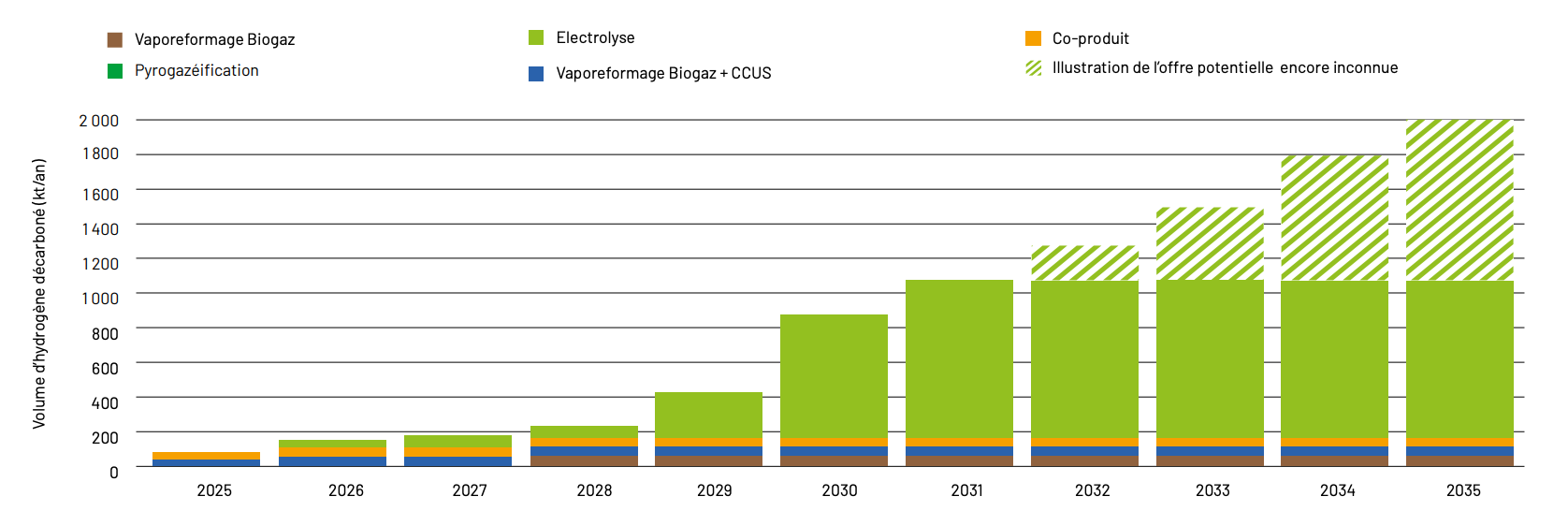
Green hydrogen is emerging as a credible alternative for decarbonizing industry and transport.
However, its impact extends beyond these sectors alone. SMEs and mid-cap companies are also affected through their value chains.
One major obstacle remains: its still-high cost. The expected decrease in cost over the coming years should accelerate its adoption.
Industry remains the primary consumer of hydrogen today.
This energy is primarily used for:
The ammonia production.Decarbonizing these sectors through hydrogen is a priority of the electrification plan. This plan notably includes the deployment of the IRICC mechanism to incentivize the reduction of the carbon intensity of fuels.
For SMEs and mid-cap companies, hydrogen is not a direct or immediately accessible solution. However, it will play an increasing role in the decarbonization of their value chain, through their suppliers and carriers.
Industrial players evaluate the competitiveness of hydrogen using the LCOH (Levelized Cost of Hydrogen).
This indicator measures the total cost of one kilogram of hydrogen, from the production of primary energy to its distribution.
Several parameters influence this cost:
Today, green hydrogen remains the most expensive solution. Its LCOH is estimated between 4.5 and 6.5 dollars per kilogram. A
ccording to projections, this cost could fall to 2.5 to 4 dollars per kg by 2030, driven by the combined effects of technological progress, economies of scale, and cheaper renewable electricity.
France has an additional advantage: its largely decarbonized electricity mix. Coupled with recurring production surpluses, this should allow for a gradual reduction in the cost of green hydrogen.
Do you want to reduce the impact of electricity on your costs, the primary lever of LCOH? Our consultants analyze your bills and taxes to identify potential optimizations. {{ask-facture="/ctas"}}
Cleaner and more sustainable, green hydrogen remains less competitive than grey hydrogen, which is produced from fossil fuels. In its hydrogen strategy, the government is banking on €4 billion in support over 15 years to bridge the gap.
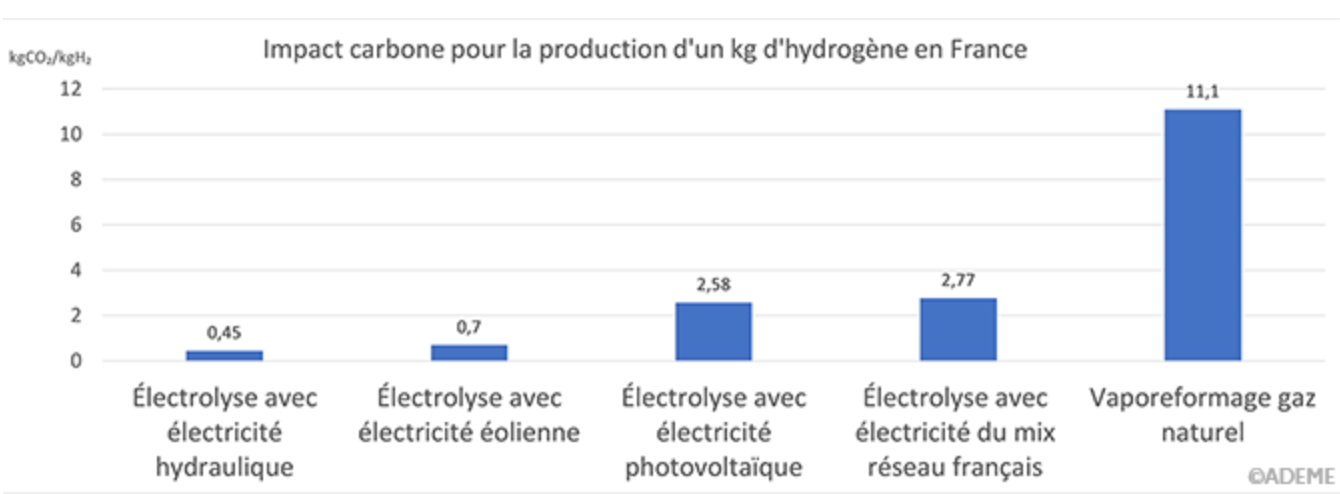
The 2025-2035 decade will be decisive for the hydrogen sector. Emerging regulatory and economic signals will shape the market and require companies to stay vigilant.
The European Union is pursuing an ambitious policy to accelerate renewable energy. The RePowerEU plan targets 42.5% renewable energy by 2030. Hydrogen is part of the solution.
Two texts mark a turning point for industry and transport:
To finance their hydrogen projects, companies must also monitor government support mechanisms:
Identifying the right schemes for your profile and building a roadmap requires a keen understanding of markets and regulations. That is precisely the role of our consultants. {{ask-conseil="/ctas"}}
The competitiveness of green hydrogen depends directly on the price of the electricity used for electrolysis. Monitoring market signals is therefore a strategic lever for reducing the LCOH.
For producers, the challenge is to operate electrolyzers when electricity is abundant and inexpensive, particularly during peaks in renewable production.
Known as "price-responsive electrolysis," this approach reduces the cost of hydrogen production while making use of surplus electricity.
Eventually, electrolyzers could become flexibility tools for the electrical system, capable of aligning their consumption with production in real time.
To track your consumption, contracts, and market signals in real time, our Pilott platform centralizes your entire energy management on a single interface. {{ask-pilott="/ctas"}}
Trusted by "The Pilott tool has become our control tower. But beyond the platform, it is the accessibility and technical expertise of the Sirenergies consultants that make the difference. They translate the complexity of energy markets into simple operational decisions for us." - Raphaël Dehlinger, Chief Financial Officer, Sotralentz Construction.
Discover all Sirenergies client testimonials
After years dedicated to research, pilot projects, and structuring the sector, 2026 marks the emergence of the first industrial hydrogen projects.
Not all companies will be affected at the same pace. The goal is not necessarily to invest immediately, but to adopt the right stance based on your size and sector of activity:
In this context of transition, managing your energy strategy requires a nuanced understanding of markets and expertise in supply contracts. Sirenergies analyzes your consumption profile and helps you define a flexible strategy, adapted to market changes and ongoing energy transformations.
{{ask-sourcing="/ctas"}}
In a few clicks, organize an exchange with one of our experts.


weekly newsletter subscribers

4.9
