




Summarize with AI

March 6, 2026
7
Min reading
The energy transition and the fight against greenhouse gas emissions are pushing us to reduce our dependence on fossil fuels, and to stimulate technological progress. It is certain that in the coming decades the transition between the oil era and renewable energies is going to operate.
But in what way and under what conditions? This question is obviously at the center of all questions. However, it is obvious that the electrification of uses will increase in order to lead to higher electricity consumption.
If it reduces our emissions of greenhouse gases that can be a good thing; however, what technologies do we have today? That's what we're going to find out in this article.
According to The International Energy Agency, fossil fuels still represent more than 81% of primary energy mix global. It is certain that their consumption will not collapse in a few years. The dependence of our economies on oil is still too important to consider getting rid of it.
However, The part ofrenewable energy in global production is constantly increasing. Electrification is a major issue in the energy transition and some RTE reports in the study Energy Futures 2050 bring us to more than 700 TWh of electricity consumed per year.
In this context, the use of fossil energy may decrease.
The estimated current reserves are in the order of:
These figures are announced without much certainty about future potentials. Indeed, the underground reserves of Saudi Arabia or even Russia are completely opaque. In the absence of inexpensive and abundant alternative energy, fossil fuels will still be in the majority in the short term future.
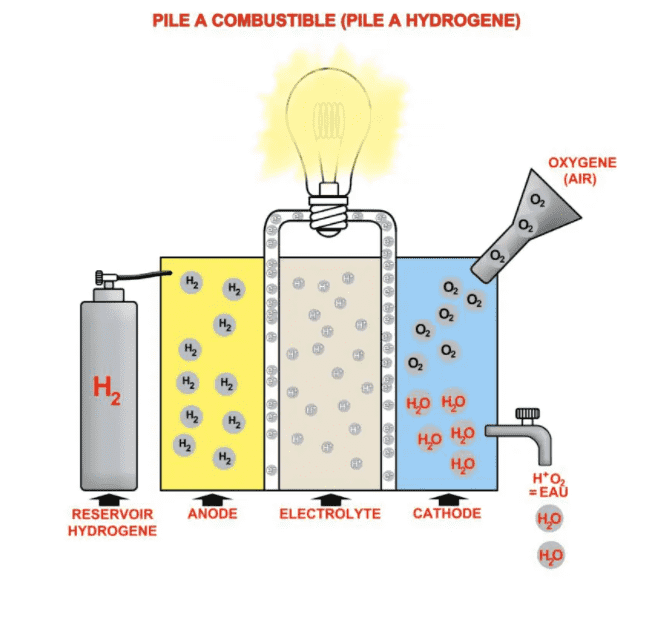
Hydrogen is a very promising energy vector. Thanks to the electrolysis process and with the help of fuel cells, it is possible to convert excess electricity produced by renewable energies into hydrogen. This may solve some of the The intermittency of renewable energies such as solar or wind energy.
Initially, the recovered electricity goes through an electrolysis system. This system consists of two electrodes immersed in water. The electric current will make it possible to separate the hydrogen molecules and those of oxygen that make up the water contained in the device.
It is thus possible to recover hydrogen and then store it for future use.
The fuel cell intervenes in a second stage: the hydrogen stored beforehand can make it possible to power the latter and to produce electricity again.
Hydrogen is thus a vector, a way of storing renewable electricity and injecting it into the grid or consuming it later.
Source: Energy Knowledge
Hydrogen asks a few more questions in terms of industrial maintenance, but the numerous current projects show that it will undoubtedly be one of the energies of the future.
The thorium is a metal that has exceptional characteristics. Its melting point is 1750 degrees Celsius, and that is not its only advantage.
It is said to be “fissile”, that is to say that it can also be used as fuel for a nuclear reaction. The main shortcomings of nuclear energy are the quantities of long-lived radioactive waste and the risks of accidents. With thorium, these disadvantages would be greatly alleviated.
It should also be noted that thorium is very abundant in the Earth's crust, about three to four times more than traditional uranium. In addition, all of the ore is usable (there are no losses). Thorium is therefore more efficient and contains 40 times more energy than natural uranium.

Source: Polytechnique Insights
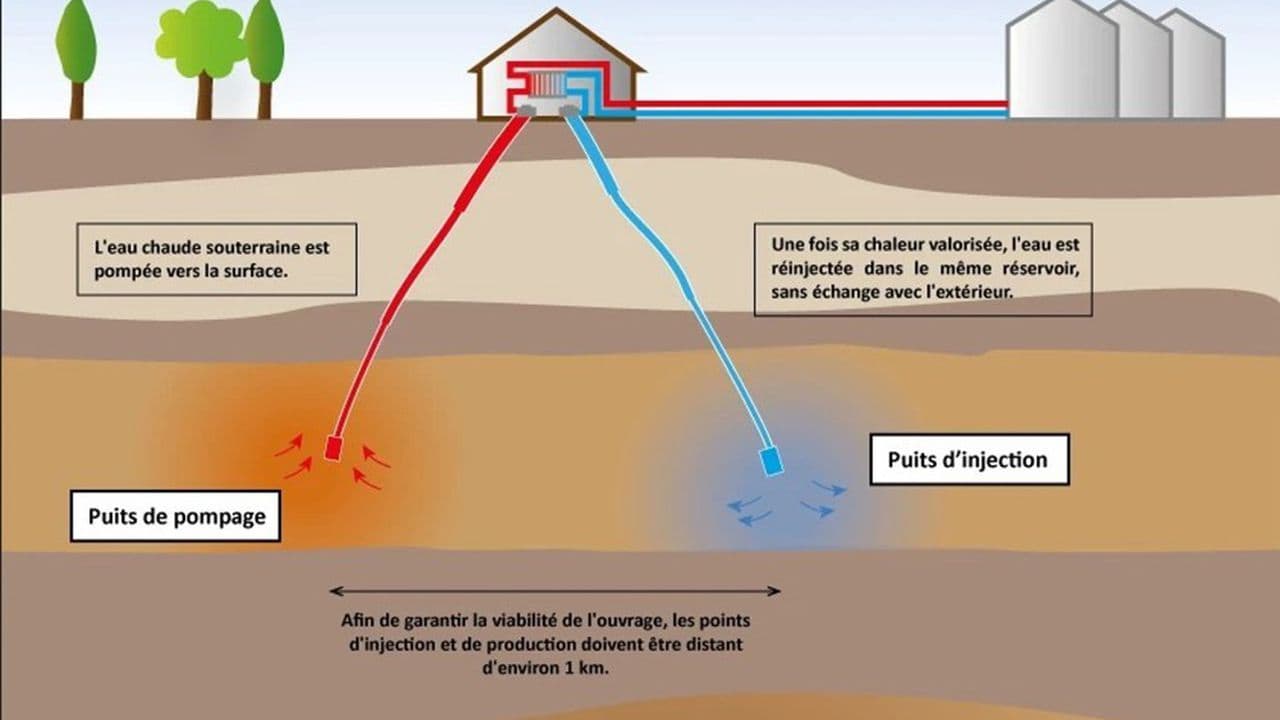
La geothermal energy is a process that is little known to the general public but very effective. Indeed, it is a renewable energy, which uses the heat of the water contained in deep groundwater. It is therefore clean and almost inexhaustible.
However, these projects cannot be set up just anywhere. Indeed, some drilling techniques weaken the Earth's crust and thus risk causing landslides at the surface.
On the contrary, geothermal energy for family use and small sizes can develop considerably in France.
Source: Les Echos
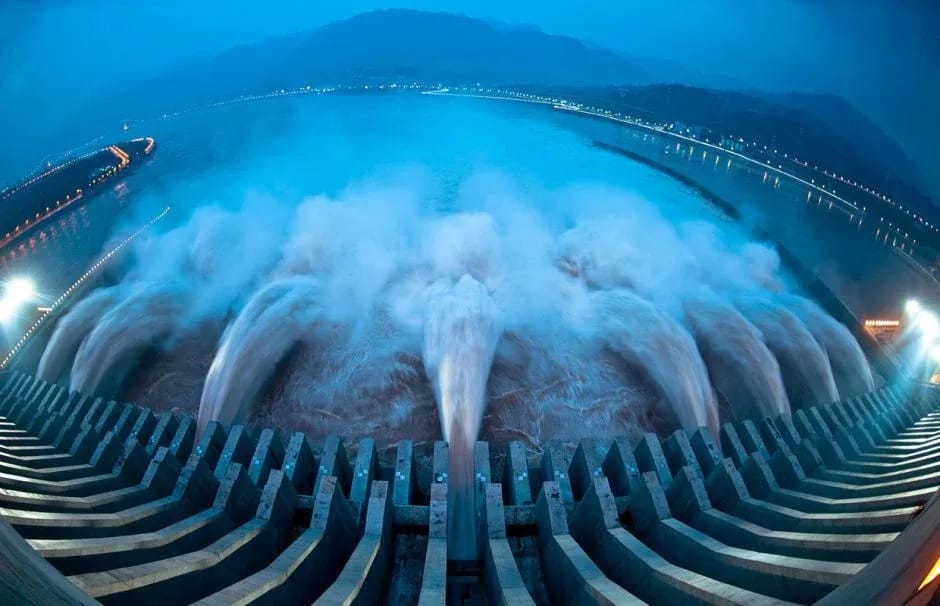
Hydraulic power is one of the most important renewable energies at the moment. However, this activity, which does not emit CO2, cannot be installed everywhere. It depends greatly on the landscape and the hilly nature of the environment.

Source: RTE
Hydraulic power already represents more than 20% of installed capacity in France (in 2019). However, despite its certain usefulness, it is not envisaged that this sustainable energy will develop considerably in the coming years.
Other regions in Europe (Switzerland) or Africa offer better prospects for the development of hydraulic technologies.
Source: Planète Énergies
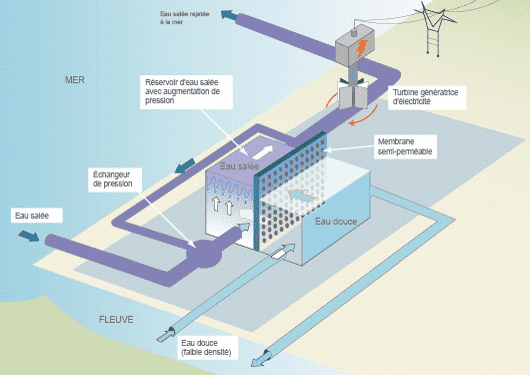
Osmotic energy is part of marine energies. It is a technology capable of producing electricity from the reaction induced by the difference in salinity between sea water and fresh river water. Indeed, it is capable of producing electricity from the chemical movement of molecules created by the difference in salinity between sea water and fresh water in rivers when the latter meet.
In chemistry, this is called osmosis; its energy potential is comparable to that of a waterfall.
Source: Energy Knowledge
The advantage of this technology is that it could be installed at every river mouth. However, these are ideas in the state of research and development, because to date there are no functioning and operational power plants.
Bioenergies concern all techniques for converting organic waste into electricity or heat. It therefore consists in recovering waste from forest or agricultural processes, then transforming it into energy.
The sources of supply are diverse: algae, forest and agricultural waste... And this process does not emit CO2. It is therefore a technology to be integrated into the French energy mix, while keeping in mind that it alone cannot replace fossil fuels.
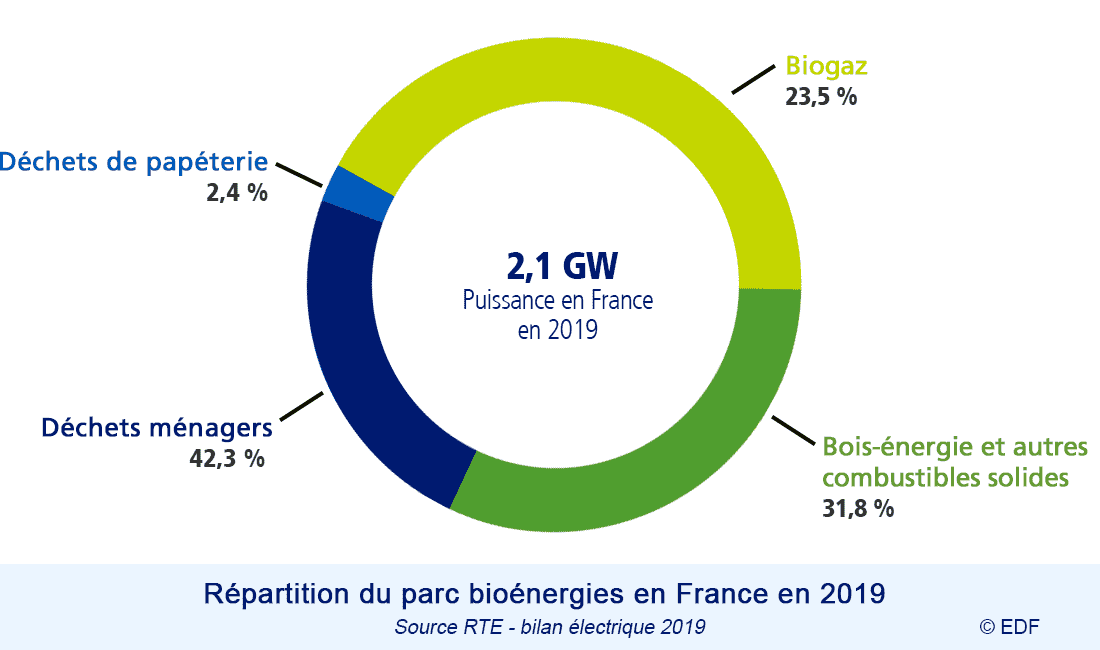
Source: RTE
This is the most experimental technology at the moment. Some marine organisms produce light through complex chemical reactions. Bioluminescence is used as a way to disguise itself or to escape predators.
Scientists are looking into the possibility of using this chemical reaction to replace public lighting or store fronts. Glowee is currently developing light energy projects of this type and is marketing interior lighting devices. This technology will have to pass several stages of maturity in order to be adopted by the general public.

Source: Science in School
Nuclear energy will undoubtedly be the spearhead in the fight against global warming. The latest IPCC reports are eloquent on this subject. Indeed, this technology, which does not emit CO2, is crucial in achieving greenhouse gas reduction goals.
Its detractors blame it for problematic waste management, however, it is time for pragmatism in public policies in the world of energy.
The situation differs depending on the European country: the French government is quite favorable, especially following the latest statements by the President of the Republic Emmanuel Macron concerning SMR (Small Modular Reactors). On the other hand, some countries, such as Germany, are less favourable.
France is the only country in the European Union that has not achieved its renewable energy goals. It is certain that, in order to meet future energy needs, it is necessary to increase the installed capacity of sustainable energy in France.
This concerns as well solar energy than wind energy. Detractors of onshore wind turbines reinforce the usefulness of offshore wind farms, and it is certain that civil society will have to find a compromise between a nuisance and a renewable source of energy.
The COP26 recalls the principles and objectives to be achieved. The latter will only be possible at the price of one change in consumption patterns And of a collective awareness.
However, new technologies and technical progress offer us alternative solids already ready to use or at least to be tested, as we have seen in this article.
It is certain that the development of hydrogen and renewable energies (renewable energies) will be a viable solution in the long term. It remains to be seen which of the other technologies will succeed in its industrial development in the future. As such, we must not forget synthetic fuels which will reach industrial maturity.
In a few clicks, organize an exchange with one of our experts.


weekly newsletter subscribers

4.9

.png)

Les coopératives de taille ETI ou grande entreprise peuvent être soumises à l'audit énergétique réglementaire (norme NF EN 16247). Sirenergies n'a ni la compétence ni l'accréditation pour réaliser cet audit : nous vous orientons vers un bureau d'études partenaire accrédité, et vous accompagnons en amont sur vos achats et en aval sur le pilotage.
Le calendrier 2026 impose deux échéances majeures :
Pour simplifier ces démarches, vous pouvez centraliser vos données de consommation avec la plateforme Pilott de Sirenergies, garantissant ainsi la conformité de vos rapports réglementaires.
To calculate Scope 2 emissions, use the following formula:
Energy quantity (kWh) × Emission factor (kg CO₂ e/kWh).
Use databases like ADEME for precision.
It allows you to prove your commitment to the energy transition and to meet regulatory requirements.
Yes. The supplier guarantees an offer 100% renewable via the official Guarantees of Origin (GO) mechanism.
For the most demanding companies, the offer GREENVOLT+ ensures very low carbon intensity electricity, sourced exclusively from independent French producers (hydraulic, wind, solar).
La réussite d'un projet collectif énergie repose sur trois piliers fondamentaux :