




Summarize with AI

March 6, 2026
9
Min reading
Carbon neutrality in 2050 is no longer a choice.
It is a necessity.
Achieving this objective implies an average reduction in CO2 emissions of 5% per year and the disappearance of fossil fuels. At the heart of this transition, decarbonizing large companies ceases to be an option. It is a strategic imperative.
This transformation involves a supply of carbon-free energy.
This choice is not without consequences for businesses. This means completely rethinking their energy strategy.
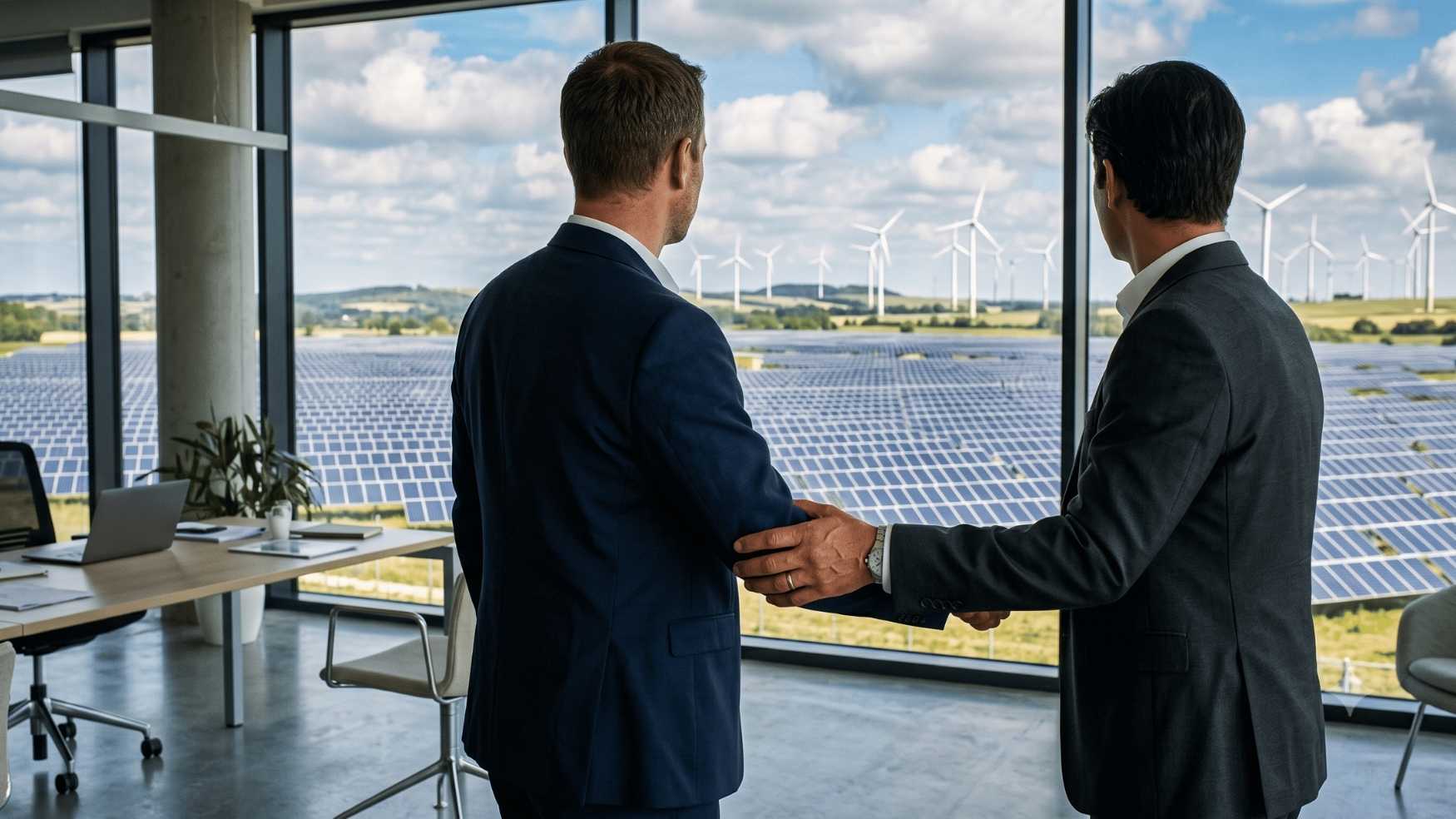
Between photovoltaic self-consumption, long-term green electricity purchase contracts and low-carbon technologies, solutions exist.
Certainly, these changes represent a technical, financial and operational challenge. But beyond the constraints, the decarbonization of supply offers a unique opportunity: to transform the company by strengthening its resilience and competitiveness.
Why and how to act? Sirenergies guides you.
Reach the carbon neutrality In 2050 is the ambitious objective of the global Net Zero Emission (NZE) scenario, implemented in France via the National Low Carbon Strategy (SNBC).
Large companies are highly emitters of greenhouse gases and play a driving role in this transition. The decarbonization of their energy supply is a major lever for reducing their CO2 emissions and their environmental impact.
It consists in replacing fossil fuels (oil, gas, coal) by a new energy mix including production generates few or no greenhouse gases.
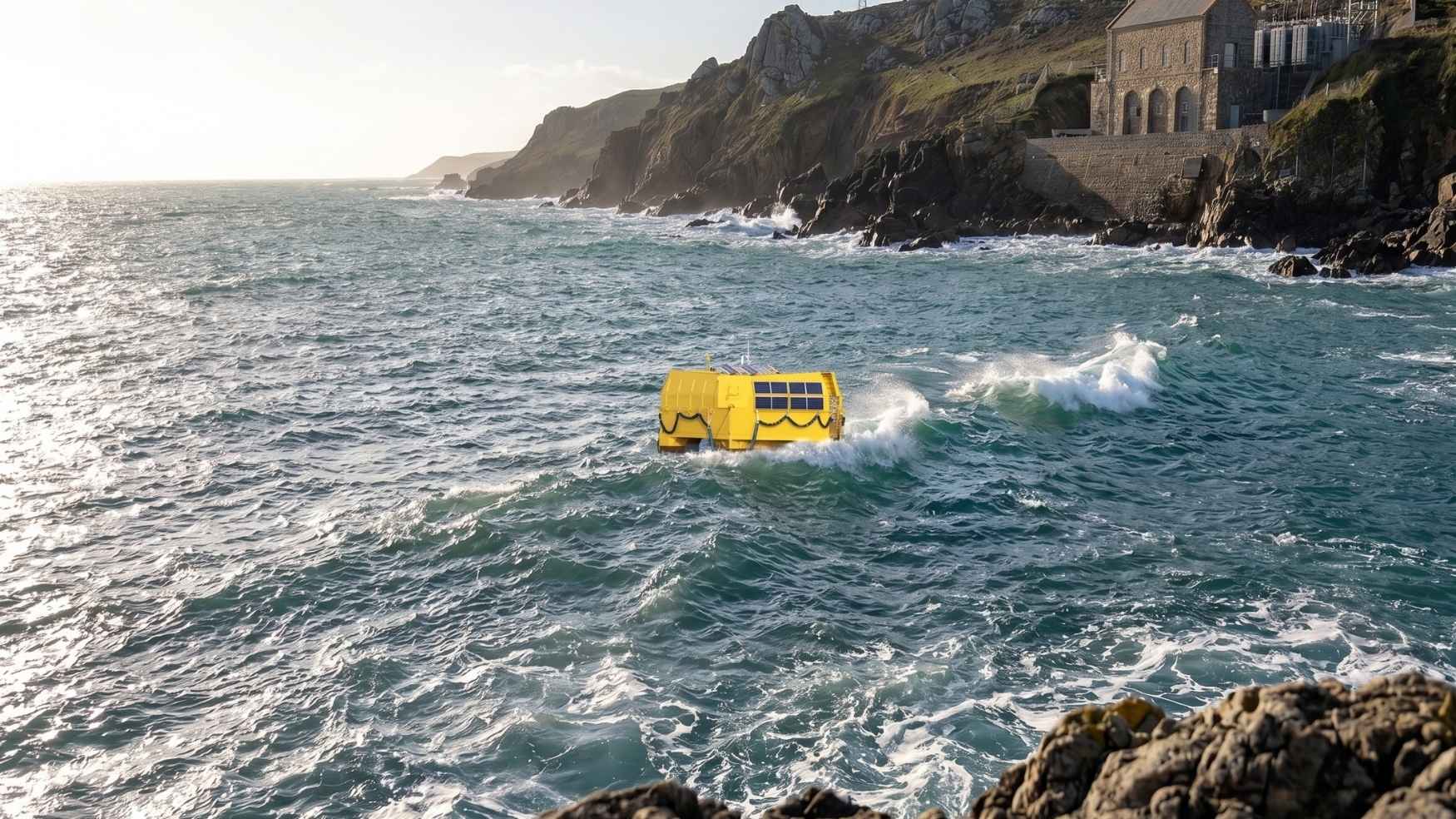
To achieve this, large companies can rely on renewable energies, produced from inexhaustible natural resources: the sun (Photovoltaic energy), the wind (wind power), water (Hydraulic power and tidal power) or biomass (biogas and biomethane).
However, renewable energies have a limit: their intermittency.
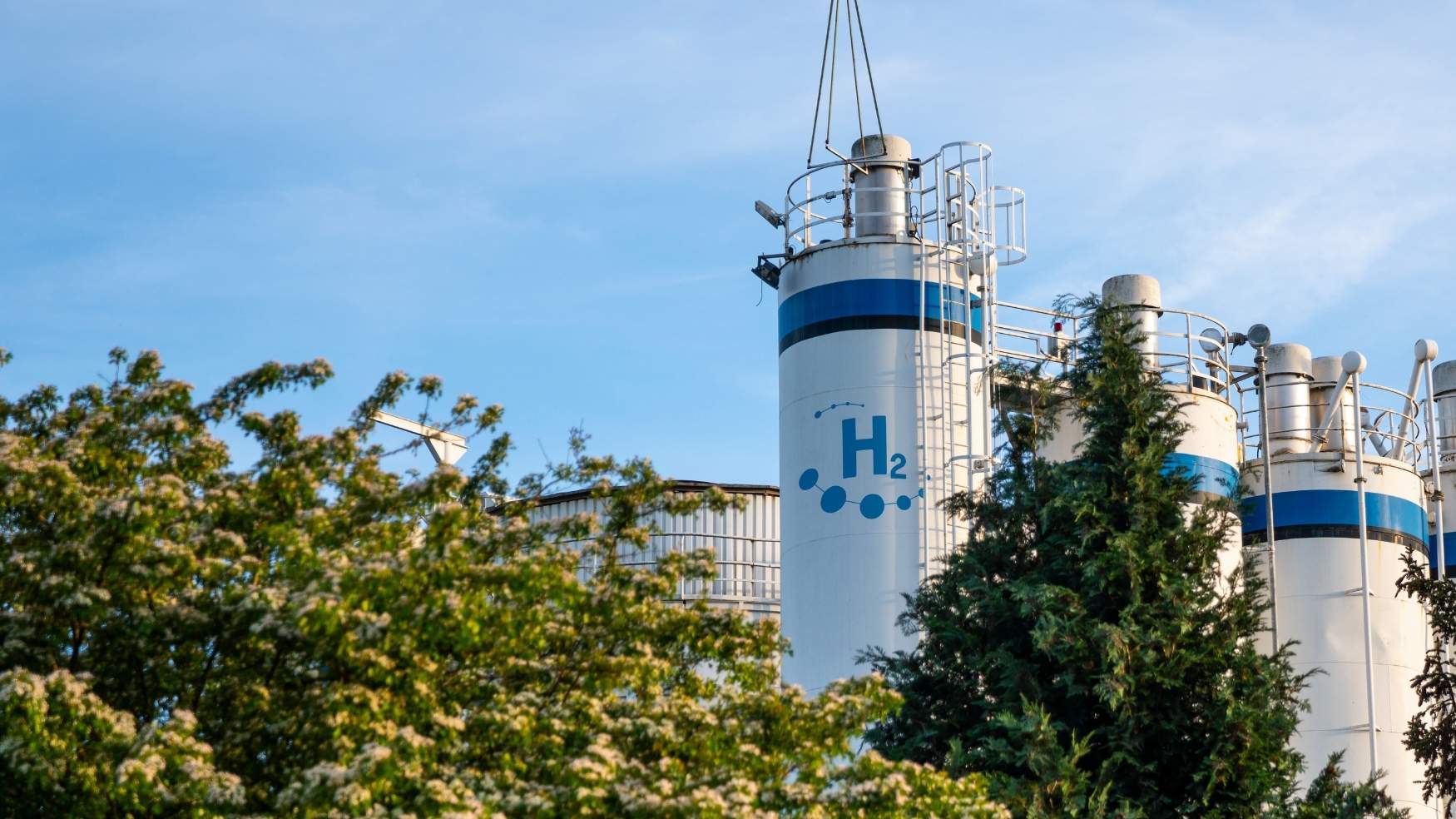
To guarantee energy continuity, researchers and engineers are experimenting with low-carbon technologies complementary, efficient, predictable and stable. Among them, thegreen hydrogen And the Nuclear fusion raise great hopes.
Why is energy decarbonization a priority for large companies?
By integrating energy decarbonization into their strategy, large companies reduce their exposure to multiple risks, both regulatory, economic, financial and reputational.
To remain compliant and competitive, large companies must comply with increasingly stringent environmental requirements, including:
In addition to these national obligations, the European Union is also tightening its tone.
Since 2024, the CSRD directive (Corporate Sustainability Reporting Directive) requires listed SMEs and large companies to publish a annual sustainability report.
The objective: to assess their environmental and social impact through to the new extra-financial ESG criteria (Environmental, Social and Governance).
Large companies must also prepare for the transposition in 2027 of the CS3D or CSDDD directive (Corporate Sustainability Due Diligence Directive).
This text reinforces their duty of vigilance, with the obligation to prevent environmental and social risks related to their activities throughout their value chain.
Faced with the climate emergency, the environmental vigilance of investors, customers, employees and other financial partners is being strengthened.
In this context, energy decarbonization is becoming a strategic lever.
Reducing CO2 emissions contributes to building a positive reputation and establishing a relationship of trust, two keys to competitiveness and attractiveness.
ESG indicators also influence investment decisions.
A committed decarbonization strategy can help raise funds and facilitate access to green finance.
Dependence on fossil fuels weakens the company's long-term strategy. Economically and financially, it is increasing its vulnerability to market volatility, subject to economic, geopolitical or climatic upheavals. On the strategic level, it links the company to unstable countries whose unpredictable decisions can disrupt supplies, as demonstrated by the war in Ukraine.
Investing in a low-carbon and renewable energy mix reduces these uncertainties. This choice reinforces the company's energy security and reduces its operational costs in the long term.
The supply of carbon-free energy is profoundly transforming the way businesses buy and manage their energy. Purchasing mechanisms are being redesigned to adapt to the specificities of renewable energies.
Investing in renewable infrastructure is the most direct and simple solution to source carbon-free energy.
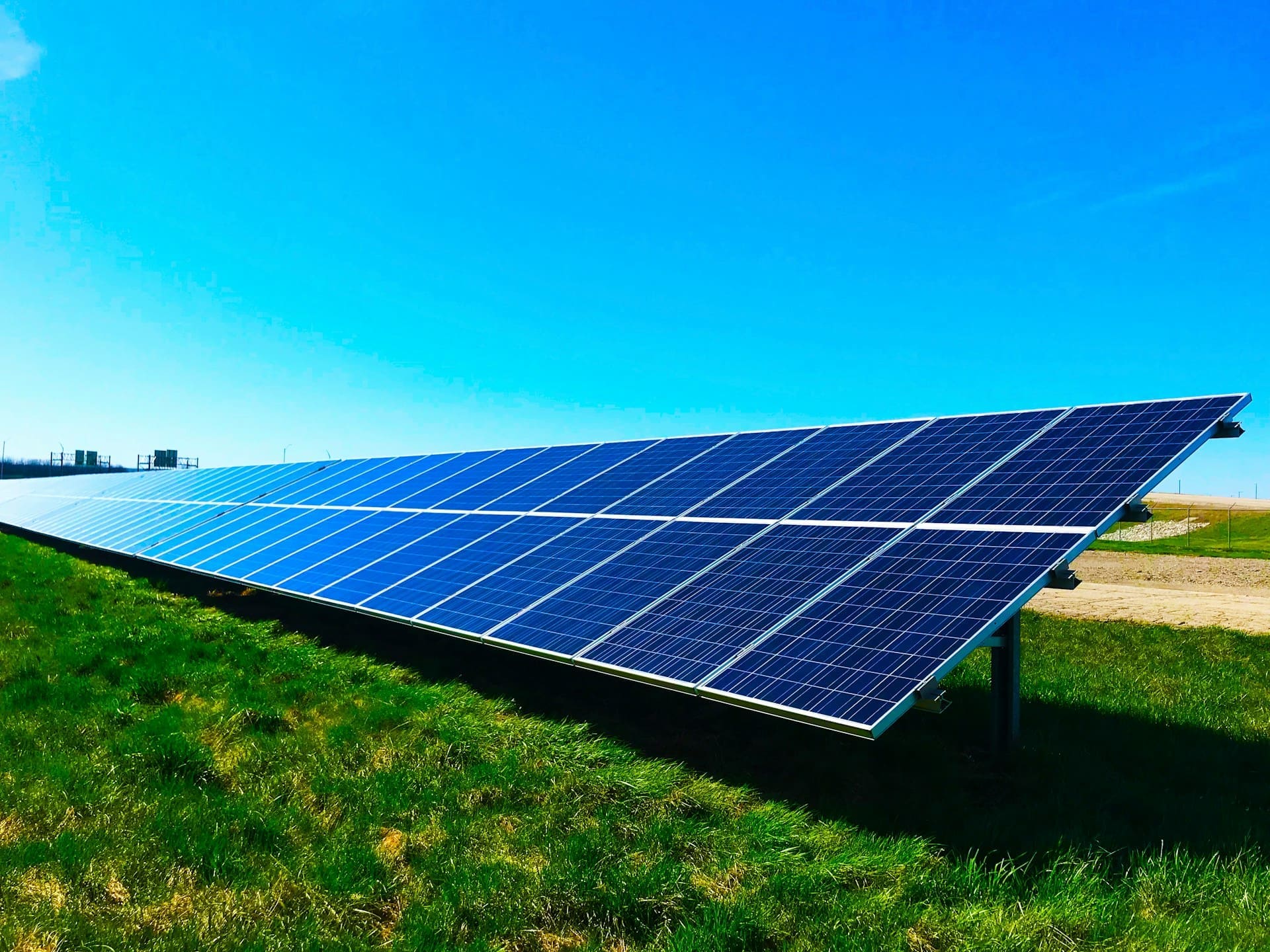
Over the past few years, thesolar self-consumption is acclaimed with nearly 678,000 installations in 2024. It consists in covering all or part of the company's energy consumption throughrenewable electricity produced directly on site, from photovoltaic power plants on the roof or on the car parks.
Today widely democratized and economically viable, this solution offers a real energy autonomy. It allows sustainably reduce costs, by protecting the company against the volatility of energy prices.
Power Purchase Agreements (PPAs) are renewable electricity purchase contracts, concluded directly between the company and a producer.
They are Physics, when electricity is produced and consumed on the company's site. They are Virtual, when purchased on the wholesale green energy market, without links to a specific site.
Thanks to a fixed price guaranteed over the long term (between 10 and 30 years), PPAs provide the company with financial stability, while securing its supplies. They also guarantee access to traceable energy, certified as being of renewable origin.
Concrete support for green energy producers, this energy purchase model strengthens environmental credibility of the company, values its CSR policy and improves its ESG criteria.

Subscribing to a certified green offer from your usual supplier seems a simple option for consuming carbon-free energy.
The reality is different.
Guarantees of origin do not guarantee that the electricity consumed by the company comes directly from renewable sources. They only attest that a selected percentage of its consumption was produced by renewable energies and injected into the grid.
Even if they do not mean a physical supply of carbon-free energy, guarantees of origin remain a useful tool to complete an energy strategy, support green sectors and affirm the company's environmental commitment.
Decarbonizing 100% of its energy supply is not just an environmental commitment. It is a large-scale technical, economic and organizational project at the level of the company, and more generally in France.
Sourcing 100% carbon-free energy involves thoroughly rethink purchasing practices. Businesses have to deal with complex mechanisms, such as PPAs, and simpler, but limited mechanisms, such as guarantees of origin.
They must also establish partnerships with emerging, little-known suppliers and diversify sources and areas of supply to ensure energy continuity.
These purchasing strategies, which are far removed from the traditional logic of the energy market, require: new skills and a strengthened capacity to manage risks associated with third parties.
You do not have the skills to navigate these new mechanisms for purchasing low-carbon energy?
Trust Sirenergies to gain expertise and secure your energy supply, at the best cost.
{{ask-sourcing=” /ctas "}}
The supply of 100% carbon-free energy to large companies faces physical and technical constraints.
Thus, despite the investments of network operators, The pipes are not yet all dimensioned or adapted to transport new energy sources such as biomethane or hydrogen. Also, some technologies, in particular green hydrogen and low-carbon gases, still remain at a experimental or minimally industrialized stage.
The development and availability of renewable energies are also constrained by land scarcity, with conflicts of use that hinder the energy transition.
Faced with the intermittency of renewable energies, the storing of energy is a central issue to guarantee the balance between production and consumption.
A 100% carbon-free energy supply requires the development of local storage solutions at the enterprise level, And of technologies on a larger scale reliable and durable.
Projects are gaining momentum in France, with the ongoing construction of the two largest battery electricity storage sites in Nantes and Cernay-lès-Reims.
Investing in renewable and low-carbon energies is an expensive cost, both for businesses and producers. Modernizing networks and developing storage solutions also require massive investments.
To move towards decarbonization, several levers are essential: public support, public-private partnerships, incentive schemes and financial security through contracts such as PPAs.
Cooperation is also key.
The collective dynamic between public actors, energy companies, suppliers and consumers makes it possible to pool investments and coordinate projects at the territorial level.
To conclude...
Large companies are key players in the energy transition. Decarbonizing them is an imperative to build a sustainable and carbon neutral future. Admittedly, switching to a carbon-free energy supply is demanding. But, beyond the technical, economic and organizational challenges, this choice opens up unique opportunities for transformation to reduce the carbon footprint, gain competitiveness and reinvent yourself.
With Sirenergies, choose a carbon-free energy supply today to reduce your CO2 emissions, anticipate tomorrow and seize the opportunities of a changing world.
{{ask-sourcing=” /ctas "}}
In a few clicks, organize an exchange with one of our experts.


weekly newsletter subscribers

4.9

.png)

It allows you to prove your commitment to the energy transition and to meet regulatory requirements.
The range E @sy is available in four pricing structures to adapt to each risk profile:
Les coopératives de taille ETI ou grande entreprise peuvent être soumises à l'audit énergétique réglementaire (norme NF EN 16247). Sirenergies n'a ni la compétence ni l'accréditation pour réaliser cet audit : nous vous orientons vers un bureau d'études partenaire accrédité, et vous accompagnons en amont sur vos achats et en aval sur le pilotage.
La réussite d'un projet collectif énergie repose sur trois piliers fondamentaux :
Le calendrier 2026 impose deux échéances majeures :
Pour simplifier ces démarches, vous pouvez centraliser vos données de consommation avec la plateforme Pilott de Sirenergies, garantissant ainsi la conformité de vos rapports réglementaires.
Les caves coopératives de taille ETI ou grande entreprise peuvent être soumises à l'audit énergétique réglementaire (norme NF EN 16247). Sirenergies n'a ni la compétence ni l'accréditation pour réaliser cet audit : nous vous orientons vers un bureau d'études partenaire accrédité, et vous accompagnons en amont sur vos achats et en aval sur le pilotage.
Yes. The supplier guarantees an offer 100% renewable via the official Guarantees of Origin (GO) mechanism.
For the most demanding companies, the offer GREENVOLT+ ensures very low carbon intensity electricity, sourced exclusively from independent French producers (hydraulic, wind, solar).
To calculate Scope 2 emissions, use the following formula:
Energy quantity (kWh) × Emission factor (kg CO₂ e/kWh).
Use databases like ADEME for precision.

This section includes articles classified by themes: Understanding energy, Optimize costs& contracts, Energy market & prices and Transition & climate strategy.
Sourcing consists in identifying and analysing the offers of several electricity and gas suppliers. This approach makes it possible to obtain contracts adapted to the consumption profile and budgetary constraints of the company.
Sirenergies helps renegotiate contracts, to analyze supplier offers and to optimize the subscribed power. We also assist in monitoring consumption and correcting billing errors.
Sirenergies offers an analysis of contracts and advises its clients in the analysis of available offers in order to find the most suitable conditions. Our experts also assist in the management of subscribed powers and in the implementation of adapted digital solutions.
For companies and communities that wish to anticipate ESG obligations, reduce their carbon footprint and structure a climate strategy.
Sirenergies offers an analysis of contracts and consumption, and organizes the competition of suppliers to find the best conditions. One dedicated expert supports internal teams and ensures continuous monitoring of performance.