




Summarize with AI

January 28, 2026
7
Min reading

Increasingly in demand in recent years, solar energy is positioned as one of the best solutions to achieve carbon neutrality.
While the enthusiasm it has aroused is very recent, its story is not. SirEnergies tells you the history of this energy source.
Solar energy is now one of most popular energy sources as part of the ecological transition. Its raw material is the sun.
Solar energy is therefore free and inexhaustible, insofar as the sun is not likely to disappear overnight. Moreover, it can be stored for later use.
The benefits of solar energy are multiple. This is what makes it a very popular solution. For example, unlike other alternative energy sources, it is clean, that is, it does not produce greenhouse gases.
The mode of operation of solar energy depends on several factors, and more specifically on the production technique used. Today, there are three main categories of solar energy.
This type of energy is one of the best known. It is produced from thermal solar panels which are generally placed on the roof of the house in order to capture the sun's heat.
More specifically, these panels are composed of heat transfer fluids (liquid or gas used to transfer heat from one location to another, usually in a heating or cooling system). When the latter are heated by the sun, they in turn heat the hot water tank. This is how solar thermal energy is obtained. It can be used in different ways: water heater, solar heating, stove...
A little rarer than the previous one, thermodynamic solar energy is produced from concentrated solar power plants. This equipment consists of several elements, including a solar electricity generator, and mirrors with heat transfer fluids.
Like solar thermal panels, mirrors are responsible for transforming the energy generated by The sun's rays in heat. The only difference is that the temperature here is much higher. It can be between 250 and 800°. The heat obtained is finally transformed into electrical energy, in particular by activating the turbogenerator.
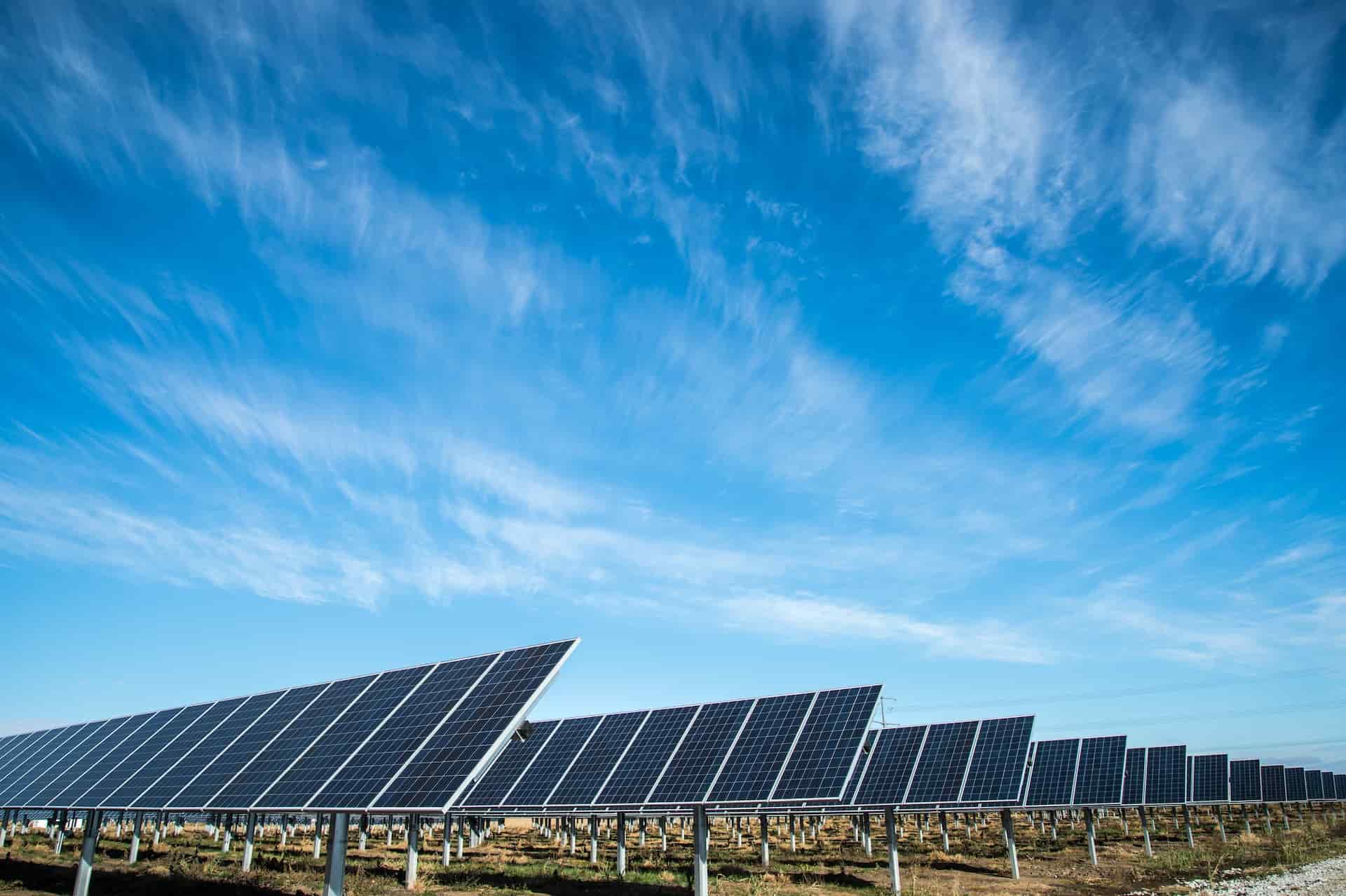
Unlike other solar energies, which come mainly from heat, photovoltaic solar energy comes directly from solar radiation. Photovoltaic panels installed on the roof of your building capture the sun's photons, then the Convert to electric current.
These panels generally consist of a superposition of layers of cells, one of which is positively charged, while the other is negatively charged. When a photon passes through the layers, it creates an electrical voltage. All you have to do then is connect one wire to the positive terminal, and the other to the negative terminal to use the electricity generated. The operation of solar photovoltaic energy is therefore similar to that of a battery.
Depending on the system used, solar energy is captured by photovoltaic panels, the thermal panels, or by the concentrated solar power plants.
In terms of its mode of storing, it is the same regardless of the technique used. In principle, solar energy is not in a position to guarantee the same performance every day. This one varies according to the amount of sunshine.
To store the electricity produced so that it can be used later, you need solar storage batteries. They are generally quite accessible. However, their cost depends on their storage capacity and the technology used.
You may have only started hearing about solar power a few years ago. However, its use is not recent.
In history, the very first use of solar energy may have been around 1500 BC, especially in the heart of ancient Egypt.
The Setjat, a kind of sundial, made it possible at the time to determine the time of day. Around 700 BC, man Learn to make a fire by concentrating sunlight.
For example, the Greeks were able to light the Olympic flame using an ingenious system. Thanks to the (fiery) mirrors, they were able to concentrate the sun's radiation at a specific point.
Solar energy would have even been used as a weapon of war during the IIIE century BC. According to legend, Archimedes, thanks to the sun, repelled the Romans. He would have used brass shields to direct the sun's rays onto enemy ships to ignite.
Solar energy has seen advances over the centuries. Even though its use dates back decades, it has only recently become popular.
In the 1800s, very few people used this energy source. Around the beginning of the 1900s, it became increasingly popular.
It's only around The end of the 1990sthe energy transition, which has become everyone's business.
During the ancient period, humans understood early on that solar energy could be concentrated to produce high temperatures. It was only between the XVIIE And the XVIIIE century that the legend of Archimedes was truly experienced.
Passionate about optics, some physicists of this time carried out the construction of “large burning mirrors” that they used for a variety of purposes. Among others, they were Jean-Dominique Cassini (1625-1712), Edme Mariotte (1620-1684), François Villette (1621-1698). A few years later, it was the turn of Antoine Lavoisier (1743-1794) to use burning mirrors to melt metals.
The use of renewable solar energy for current needs will not be seen until the 18th century.E century, thanks to the work of Horace-Bénédict de Saussure, physicist from Geneva. He was the first to present the concept of glazing placed on an absorber, which itself is placed on an insulated box. This is the principle of thermal sensors that continues to be used today. The first machines to convert solar energy were created in the 19th century.E century.
This is the case, for example, of the famous Mouchot machine which was built by Augustin Bernard Mouchot in 1878. However, it was not until 1910 that the first solar water heaters were marketed.
The history of solar photovoltaic energy begins with the French physicist Edmond Becquerel in 1839. He was the first to point out The photovoltaic effect in an electrochemical cell.
His work was taken up and improved by Willoughby Smith in 1873. At that time, technology was not very advanced. We will have to wait for advances in quantum physics to relaunch the subject of solar photovoltaic energy.
Albert Einstein opened the wave in 1905, by deciphering The photoelectric effect. The principles of quantum physics will then be successively deciphered by several physicists such as Louis de Broglie, Werner Heisenberg or Erwin Schrödinger.
The first Photovoltaic cells to silicon will appear in the early 1950s, in particular thanks to the previous work of Gordon Teal and E. Buehler. In 1958, Vanguard 1 will be the first satellite to be equipped with a photovoltaic module of 100 MW and 100 cm². In 1964, the Japanese company Sharp developed the first large-scale photovoltaic module, operational for terrestrial applications.
Every year, new techniques are invented to optimize the production, storage and use of solar energy.
The very latest one is The perovskite photovoltaic solar cell. Derived from the name of a Russian scientist, perovskite is a rare mineral that can be found in nature. However, its structure can be reproduced easily thanks to the combination of certain elements that are much more available.
Solar panels are generally made of silicon, which acts as a semiconductor in sensors. Perovskite can now be used as a substitute for silicon. The advantage is that it offers greater efficiency, is easy to produce and is more accessible in terms of cost.
Discovered only a few years ago, aerovoltaic panels are now widely used. This solution allows you to produce heating and electricity for your business and to carry out photovoltaic self-consumption.
Another evolution in the field of solar energy is Insolight technology. With this solution, each panel consists of several high level photovoltaic cells. The latter are placed under honeycomb lenses, allowing the sun's rays to be sent directly to the cells.
With this technology, you can have an efficiency of around 37% unlike a standard installation that only offers 18%. There are many other developments in solar energy such as solar tiles, solar optical panels, night panels, and many others.
Solar energy is not a contemporary invention. This renewable energy has existed for thousands of years, but has been perfected over the years thanks to technological advances. Despite its numerous advantages, it remains under the shadow of fossil energy whose disadvantages no longer need to be demonstrated.
To go further, do not hesitate to consult our article: Agrivoltaics: do solar and agricultural production mix?
Recognizing the climate emergency, SirEnergies offers professionals and businesses the opportunity to limit the ecological impact in terms of energy.
We have made the choice to work with key players in solar photovoltaic to offer you support solutions dedicated to your photovoltaic self-consumption projects.
Click below for more information:
In a few clicks, organize an exchange with one of our experts.


weekly newsletter subscribers

4.9

.png)

The industry is concerned by TICFE, TICGN and other contributions that may represent an important part of invoices. Sirenergies identifies cases of exemption and accompanies the procedures to benefit from them.
Oui, elle est considérée comme une énergie renouvelable à faibles émissions de gaz à effet de serre.
De plus, l'eau ne subit aucune transformation chimique durant le cycle de production et réintègre son milieu naturel en aval.
Cependant, la construction de barrages nécessite des mesures pour protéger les écosystèmes (débit minimum, passes à poissons).
Parce que la puissance souscrite en kVA détermine le prix de l'abonnement et que tout dépassement peut entraîner des surcoûts importants.
L'abondance de production française tire les prix du marché de gros vers le bas.
En vertu du mécanisme de l'Ordre de Mérite (Merit Order), les centrales les moins coûteuses (nucléaire, renouvelables) couvrent la demande plus souvent, évinçant les centrales à gaz ou charbon plus onéreuses.
Cela multiplie les épisodes de prix bas, voire négatifs, sur le marché spot.
Le transport (RTE) correspond aux "autoroutes" de l’électricité. Il s’agit de transporter de très grandes quantités d'énergie sur de longues distances, depuis les centrales de production (nucléaires, barrages, parcs éoliens offshore) vers les régions de consommation.
La distribution (Enedis) s'apparente aux "routes départementales" et aux rues. Elle récupère l'électricité à la sortie du réseau de transport pour la livrer directement chez le client final, en abaissant la tension pour qu'elle soit utilisable par vos appareils.
Un appel d’offres permet de mettre en concurrence plusieurs fournisseurs d’électricité et de gaz afin d’obtenir des conditions contractuelles optimisées. C’est une démarche transparente qui permet de choisir l’offre la plus adaptée aux besoins budgétaires et techniques de l’organisation.
Farms are subject to taxes such as TICFE or TICGN. Sirenergies verifies their application, identifies cases of exemption and accompanies the procedures to reduce the tax burden.
These are signals sent by RTE during periods of tension on the electrical network. The Sirenergies tool informs you in real time to anticipate your uses.
En 2025, la France a atteint un solde exportateur net de 92,3 TWh, battant le précédent record de 2024 (89 TWh).
Tertiary companies must manage their energy costs while guaranteeing the comfort of users (offices, shops, services). Consumption is often linked to heating, air conditioning and lighting, which requires precise monitoring to avoid budgetary excesses.
This makes it possible to choose the right time to contract, secure your budgets and anticipate increases.
Exceeding capacity leads to financial penalties and can impact the size of the contract. Adjust the correctly subscribed power makes it possible to avoid these additional costs.
In 2025, the supplier had a NPS (Net Promoter Score) of +16 and a note of 4,17/5.
Satisfaction is based on a “zero solicitation” model and 100% in-house customer service in Toulon, guaranteeing proximity and responsiveness that cannot be found with major historical suppliers.
Le dispositif ARENH a laissé place au VNU (Versement Nucléaire Universel).
Ce changement structurel expose davantage les entreprises aux prix de gros, rendant la gestion des risques plus complexe qu'auparavant.
Il devient alors indispensable de définir une stratégie d'achat d'électricité avec Sirenergies pour lisser l'impact de la volatilité des marchés sur votre budget.
Le kVA mesure la capacité maximale que votre compteur peut supporter à un instant T, tandis que le kWh mesure la quantité d'énergie consommée sur une durée.
Ce record de 92,3 TWh s'explique par la conjonction de trois facteurs :
The range E @sy is available in four pricing structures to adapt to each risk profile:
Yes. The supplier guarantees an offer 100% renewable via the official Guarantees of Origin (GO) mechanism.
For the most demanding companies, the offer GREENVOLT+ ensures very low carbon intensity electricity, sourced exclusively from independent French producers (hydraulic, wind, solar).
Sourcing consists in identifying and analysing the offers of several electricity and gas suppliers. This approach makes it possible to obtain contracts adapted to the consumption profile and budgetary constraints of the company.
The €/MWh is a price unit used in wholesale markets, while kWh is the unit visible on your bills.
Tertiary companies are concerned by taxes such as TICFE or TICGN. Sirenergies checks the accuracy of invoices, identifies possible exemptions, and helps correct errors to sustainably reduce costs.
The subscribed power must be calculated according to the consumption profile and uses (heating, industrial processes, tertiary equipment). One fine analysis makes it possible to ensure the adequacy between real need and contract.
C'est l'indicateur d'efficacité d'un appareil électrique ; il représente le ratio entre la puissance active (utile) et la puissance apparente (totale).
C'est le levier le plus rapide pour obtenir des résultats visibles. L'éclairage représente environ 40 % de la consommation d'électricité d'une commune.
Passer au LED avec pilotage intelligent permet de réduire la facture de 50 à 80 %, avec un retour sur investissement (ROI) rapide, souvent estimé à 2 ou 3 ans.
Among the taxes include TICFE, TICGN, CTA, CJA and TURPE. They represent a significant part of the bill and vary according to consumption profiles. Understanding them well is essential to optimize costs.
Some businesses may obtain a partial or total exemption from the TICFE or the TICGN, depending on their activity and energy intensity. The support of an expert makes it possible to identify the eligibility criteria and to put together the file.
Communities are subject to taxes such as TICFE or TICGN. Sirenergies analyzes invoices, identifies exemption possibilities and fixes possible errors to reduce the tax burden.
One invoice consists of several elements: consumption, supplier share, taxes and contributions. The analysis of each line makes it possible to identify possible errors and to check the consistency with the signed contract.
Le processus repose sur l'utilisation de la force de l'eau (énergie cinétique) issue des courants, des chutes d'eau ou des dénivelés. Le fonctionnement suit trois étapes clés :