





Summarize with AI

March 4, 2026
7
Min reading
12 million people live in fuel poverty in France. Housed in “thermal sieves” with high energy consumption, the most modest households are suffering the full brunt of the surge in energy prices. The consequences are serious in terms of health, social life, purchasing power and the environment. November 12, 2024, the day to combat fuel poverty recalled these sad observations for “make this social, health and environmental injustice visible”.
What is the current state of energy poverty in France? What actions are being taken to combat this growing phenomenon? What do you think of the latest DPE announcements? Decrypting the news.
Legally defined in 2010, fuel poverty is not an isolated phenomenon. Affecting nearly one in five French people, its impact is strong on an individual and collective scale.
Energy poverty is defined by the Grenelle 2 law of July 12, 2010. Under the law, “is in a situation of energy poverty: a person who experiences particular difficulties in obtaining the energy supply necessary to meet his basic needs in his home due to the unsuitability of his resources or his living conditions”.
Concretely, the public authorities consider that households are in a situation of energy poverty. when energy expenses related to housing are greater than 8% of their income (rate of energy effort).
The most modest households are the most affected, locked in a vicious circle. Because of their low incomes, they often live in poorly insulated housing. High energy consumption worsens financial difficulties, forcing them to restrict heating and suffer from the cold.
In 2024, the indicators of fuel poverty in France are orange. According to the state of play published by the National Observatory of Energy Poverty (ONPE), 5.6 million households live in a situation of fuel poverty. 26% of French people say they have suffered from the cold in their homes, compared to 14% in 2020. And 79% have restricted heating to save on electricity and gas bills, an increase of 10 points in one year.
Energy poverty is first and foremost a public health problem. Every year, more than 10,000 deaths would be due to the energetic unhealthiness of the home. Cold, damp and mold are the cause of chronic diseases such as bronchitis, asthma, allergies, osteoarthritis or depression. The elimination of “thermal strainers” could save the healthcare system 700 million euros annually.
The impact is also economic and social. Strangled by energy bills, households face painful dilemmas, as illustrated by a shocking sentence of the day against fuel poverty: “Sometimes you have to choose between heating or eating...”. In 2023, for the first time, more than 1 million households experienced power cuts or cuts due to unpaid electricity and gas bills.
Energy poverty is finally a environmental plague. According to the Cler network, the renovation of the most energy-consuming homes would avoid the emission of 6 million tons of CO₂ per year.
“Thermal sieves” are blamed for being the main culprits of fuel poverty. France still has 4.8 million main homes that consume a lot of energy. Their renovation is a priority to improve the quality of life, control energy bills and reduce greenhouse gas emissions.
A “thermal strainer” refers to a housing whose poor insulation causes heat loss. The house consumes a lot of energy for a low energy performance.
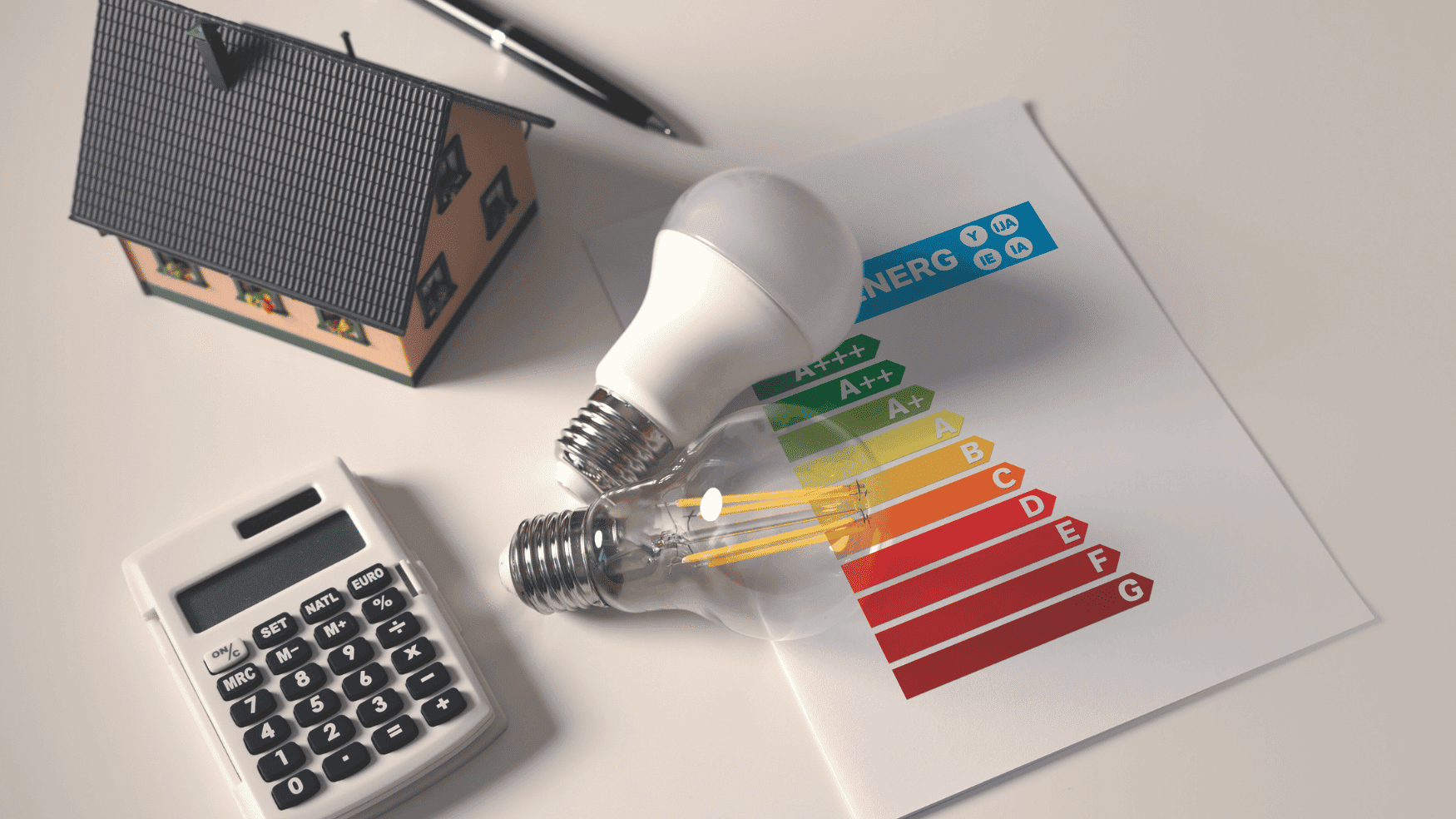
“Thermal strainers” can be recognized by their energy class. The Energy Performance Diagnosis (DPE) classifies homes into seven categories, from A to G, according to primary energy consumption and CO₂ emissions. E, F, and G labels designate the homes that consume the most energy.
The energy renovation of homes is the most effective action to fight against energy poverty.
THEADEME identifies 6 positions to be treated as a priority. In order of performance, the installation of ventilation and roof insulation allow each to avoid 25 to 30% of heat loss. Next comes wall insulation, which is responsible for 20% to 25% of losses, followed by the replacement of windows, floor and floor insulation and the treatment of thermal bridges.
Since 2022, the National Low Carbon Strategy aims to Objective of 370,000 global renovations per year. But while more than 500,000 grant applications are processed each year, the majority concern individual projects. According to the National Observatory for Energy Renovation (ONRE), in 2023 only 14% of subsidized works corresponded to global renovations.
The Climate and Resilience Law of August 2021 progressively prohibits the rental of thermal colanders. The objective? Forcing owners to renovate rental properties.
Since the 1Er January 2023, 90,000 homes are affected. Their annual final energy consumption exceeds 450 kWh per m² of living space. The ban should extend to all homes classified G in 2025, to those classified F in 2028 and to those classified E in 2034.
But this calendar could be relaxed, as announced in early October by Prime Minister Michel Barnier. If this relaxation would loosen the stranglehold on homeowners, associations fighting fuel poverty are worried.
A time lag would slow the pace of energy renovation and would further worsen fuel poverty of the most modest tenants. The risk: continue to see widen the energy and social divide.
“Energy policy guarantees social and territorial cohesion by ensuring that all households have the right of access to energy without excessive costs in terms of their resources.” In 2015, Article 1 of the Law on Energy Transition for Green Growth (TECV) established a right to energy. Numerous aids are in place to guarantee this and fight against fuel poverty.
The Energy check is the main state aid to pay electricity and gas bills. It can also be used to buy fuel (fuel oil, wood, etc.), finance energy renovation work or pay for heating costs in residential homes. In 2023, 5.6 million households received an energy check. It is sent automatically each year to eligible households, based on their income.
Tenants and owners in financial difficulties can also request the Solidarity Housing Fund (FSL) to pay their energy bills. This aid can be combined with the aid of other social actors such as CCAS (Communal Center for Social Action), the CIF, the MSA, the pension funds or Housing Action.
MaPrime Rénov' supports the energy renovation of homes. Managed by the ANAH (National Agency for Home Improvement), this grant helps owners to finance a total or partial renovation of their home (replacement of a heating system, roof insulation, etc.). My Decent Housing Premium is intended for owners whose housing is considered particularly unworthy or degraded. The amount of aid varies according to household income.
Excluded from MaPrimeRénov', tenants can access Energy Saving Certificates (CEE) to carry out energy-saving work in their rental. This aid is granted by energy suppliers. Their amount and form (bonus, voucher, free service, discount...) depend on the supplier.
Les “boost” bonuses complement these subsidy schemes. They finance specific works, in particular the replacement of an oil or gas boiler with equipment using renewable energies (heat pump, biomass boiler, connection to a heating network, etc.).
Locally, some regions, departments, intermunicipalities or municipalities also grant subsidies, such as the exemption from property tax or the Air Bois Fund.
Deployed throughout France, the National Public Service France Rénov' supports energy renovation projects and lists all available aid.
Although dynamic, the national aid policy suffers from two major criticisms.
Punctuelles, subsidies to pay energy bills do not address the source of the problem of fuel poverty. Faced with rising electricity and gas prices, the amount of the energy check also remains too low to relieve households in difficulty.
As for renovation grants, the majority is not available to tenants. The only solution for them: take advantage of the renewal of the lease to ask the owner to carry out a DPE. If the diagnosis concludes that the home is indecent, the tenant may initiate legal proceedings to demand energy renovation work or damages.
Energy poverty reveals the social divide in France, affecting the most modest and poorly housed households. Fighting against this energy poverty requires an ambitious housing renovation policy, in line with the objectives of the energy and environmental transition. This is the sine qua non condition for not widening the current disparities. It requires the commitment of all public and private actors for a just transition, respecting France's carbon neutrality ambitions by 2050.
At Sirenergies, we help businesses control their energy costs:
The interest: Lighten your expenses, participate actively in the reduction of energy poverty by supporting more balanced energy demand, and position yourself as a responsible player in the energy transition.
Our tailor-made solutions:
- Optimization of energy contracts to reduce costs
- Intelligent consumption management thanks to real-time monitoring tools,
- Energy efficiency advice and financing solutions for renovation projects.
In a few clicks, organize an exchange with one of our experts.


weekly newsletter subscribers

4.9

.png)

Farms are subject to taxes such as TICFE or TICGN. Sirenergies verifies their application, identifies cases of exemption and accompanies the procedures to reduce the tax burden.
Yes. The supplier guarantees an offer 100% renewable via the official Guarantees of Origin (GO) mechanism.
For the most demanding companies, the offer GREENVOLT+ ensures very low carbon intensity electricity, sourced exclusively from independent French producers (hydraulic, wind, solar).
Among the taxes include TICFE, TICGN, CTA, CJA and TURPE. They represent a significant part of the bill and vary according to consumption profiles. Understanding them well is essential to optimize costs.
Parce que la puissance souscrite en kVA détermine le prix de l'abonnement et que tout dépassement peut entraîner des surcoûts importants.
This makes it possible to choose the right time to contract, secure your budgets and anticipate increases.
En 2025, la France a atteint un solde exportateur net de 92,3 TWh, battant le précédent record de 2024 (89 TWh).
Le kVA mesure la capacité maximale que votre compteur peut supporter à un instant T, tandis que le kWh mesure la quantité d'énergie consommée sur une durée.
Un appel d’offres permet de mettre en concurrence plusieurs fournisseurs d’électricité et de gaz afin d’obtenir des conditions contractuelles optimisées. C’est une démarche transparente qui permet de choisir l’offre la plus adaptée aux besoins budgétaires et techniques de l’organisation.
The €/MWh is a price unit used in wholesale markets, while kWh is the unit visible on your bills.
One invoice consists of several elements: consumption, supplier share, taxes and contributions. The analysis of each line makes it possible to identify possible errors and to check the consistency with the signed contract.
C'est l'indicateur d'efficacité d'un appareil électrique ; il représente le ratio entre la puissance active (utile) et la puissance apparente (totale).
The subscribed power must be calculated according to the consumption profile and uses (heating, industrial processes, tertiary equipment). One fine analysis makes it possible to ensure the adequacy between real need and contract.
L'augmentation s'explique par la revalorisation de l'Accise sur le gaz à 16,39 €/MWh et la hausse de 3,41 % du tarif de transport (ATRT 8).
S'y ajoute l'entrée en vigueur des Certificats de Production de Biogaz (CPB), un nouveau coût réglementaire pour soutenir le biométhane.
Face à ces évolutions, Sirenergies vous accompagne dans l'achat de gaz naturel pour sécuriser vos prix malgré la volatilité du marché.
The industry is concerned by TICFE, TICGN and other contributions that may represent an important part of invoices. Sirenergies identifies cases of exemption and accompanies the procedures to benefit from them.
Communities are subject to taxes such as TICFE or TICGN. Sirenergies analyzes invoices, identifies exemption possibilities and fixes possible errors to reduce the tax burden.
Exceeding capacity leads to financial penalties and can impact the size of the contract. Adjust the correctly subscribed power makes it possible to avoid these additional costs.
Tertiary companies must manage their energy costs while guaranteeing the comfort of users (offices, shops, services). Consumption is often linked to heating, air conditioning and lighting, which requires precise monitoring to avoid budgetary excesses.
Tertiary companies are concerned by taxes such as TICFE or TICGN. Sirenergies checks the accuracy of invoices, identifies possible exemptions, and helps correct errors to sustainably reduce costs.
L'abondance de production française tire les prix du marché de gros vers le bas.
En vertu du mécanisme de l'Ordre de Mérite (Merit Order), les centrales les moins coûteuses (nucléaire, renouvelables) couvrent la demande plus souvent, évinçant les centrales à gaz ou charbon plus onéreuses.
Cela multiplie les épisodes de prix bas, voire négatifs, sur le marché spot.
In 2025, the supplier had a NPS (Net Promoter Score) of +16 and a note of 4,17/5.
Satisfaction is based on a “zero solicitation” model and 100% in-house customer service in Toulon, guaranteeing proximity and responsiveness that cannot be found with major historical suppliers.
Le processus repose sur l'utilisation de la force de l'eau (énergie cinétique) issue des courants, des chutes d'eau ou des dénivelés. Le fonctionnement suit trois étapes clés :
Sourcing consists in identifying and analysing the offers of several electricity and gas suppliers. This approach makes it possible to obtain contracts adapted to the consumption profile and budgetary constraints of the company.
The range E @sy is available in four pricing structures to adapt to each risk profile:
Le transport (RTE) correspond aux "autoroutes" de l’électricité. Il s’agit de transporter de très grandes quantités d'énergie sur de longues distances, depuis les centrales de production (nucléaires, barrages, parcs éoliens offshore) vers les régions de consommation.
La distribution (Enedis) s'apparente aux "routes départementales" et aux rues. Elle récupère l'électricité à la sortie du réseau de transport pour la livrer directement chez le client final, en abaissant la tension pour qu'elle soit utilisable par vos appareils.
C'est le levier le plus rapide pour obtenir des résultats visibles. L'éclairage représente environ 40 % de la consommation d'électricité d'une commune.
Passer au LED avec pilotage intelligent permet de réduire la facture de 50 à 80 %, avec un retour sur investissement (ROI) rapide, souvent estimé à 2 ou 3 ans.
Le dispositif ARENH a laissé place au VNU (Versement Nucléaire Universel).
Ce changement structurel expose davantage les entreprises aux prix de gros, rendant la gestion des risques plus complexe qu'auparavant.
Il devient alors indispensable de définir une stratégie d'achat d'électricité avec Sirenergies pour lisser l'impact de la volatilité des marchés sur votre budget.
Ce record de 92,3 TWh s'explique par la conjonction de trois facteurs :
Some businesses may obtain a partial or total exemption from the TICFE or the TICGN, depending on their activity and energy intensity. The support of an expert makes it possible to identify the eligibility criteria and to put together the file.
These are signals sent by RTE during periods of tension on the electrical network. The Sirenergies tool informs you in real time to anticipate your uses.
Oui, elle est considérée comme une énergie renouvelable à faibles émissions de gaz à effet de serre.
De plus, l'eau ne subit aucune transformation chimique durant le cycle de production et réintègre son milieu naturel en aval.
Cependant, la construction de barrages nécessite des mesures pour protéger les écosystèmes (débit minimum, passes à poissons).

More than 300 customers and 20,000 sites already rely on Pilott to secure their purchases and optimize their energy management. This technological base has been designed for SMEs, ETIs, large companies and local authorities.
Sirenergies is a consulting firm connected to the energy market. We support businesses thanks to our services to manage your energy, by providing appropriate strategic and operational solutions.
This section includes articles classified by themes: Understanding energy, Optimize costs& contracts, Energy market & prices and Transition & climate strategy.