






Summarize with AI

January 21, 2026
10
Min reading
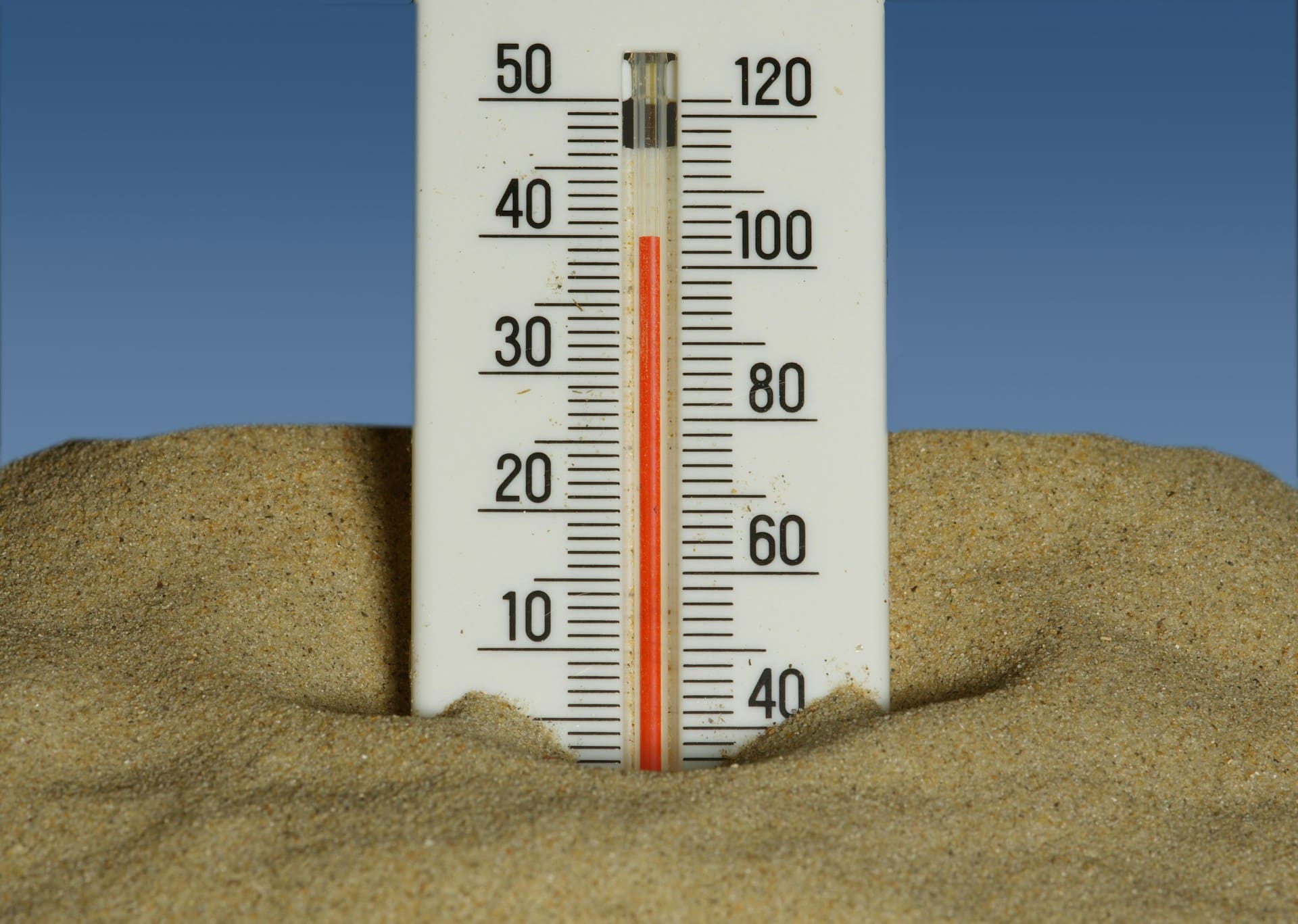
At the beginning of summer 2025, a new heat wave is hitting France. With the Global warming, this phenomenon is increasing year after year. In France, since 1900, eight of the ten hottest summers have been recorded in the last decade. These episodes are increasing in frequency and intensity, accompanied by prolonged droughts.
If human bodies suffer, infrastructure is not spared. In particular, the heatwave is putting a strain on electrical networks and electricity production. During the summer of 2022, it caused repeated power cuts in Paris, Marseille, Toulouse or Nice.
Why are heatwaves and droughts threatening the supply of electricity and increasing its price on the market? What are the strategies deployed to strengthen the energy resilience of the electrical system? How can businesses anticipate these risks and protect themselves?
Let's take stock at the beginning of July, when the Météo France forecasts - announcing a hotter than normal summer - already seem to be coming true.
Every summer, during heat waves, power cuts are observed on the network. If bodies suffer, so do equipment, especially as they have to deal with an increase in electricity consumption.
Buried a few tens of centimeters under the scorching ground, Underground 20,000 volt electrical cables get hot. Under the effect of sudden temperature variations between day and night, some cables end up giving way, weakened by the alternation of dilations and retractions. Airlines are also subject to this phenomenon, which is a constraining RTE.
Other equipment in the electrical network may also stop working, overcome by overheating. Combinations for measuring the current and voltage of an electrical substation are the most affected, due to the elements that compose them. As explained by Enedis, “the insulating membrane becomes porous, water is formed, the porcelain explodes and the oil leaks.”
Airlines are also victims of forest fires, more violent during periods of heatwave and drought. In 2021, the line between Perpignan and Narbonne had to be de-energized, depriving more than 100,000 consumers of electricity.
Another constraint that weakens the electrical network during a heatwave: the sharp increase in electricity consumption in summer.
Revealing this trend, Monday, June 30, 2025, broke electricity consumption records, with a jump of 13% compared to the same date in 2024. In question? The increased use of air conditioning and fans, but also the increase in the needs of data centers and industry.
In 2022, RTE was already showing “the fans and air conditioning effect”. In summer, electricity accounts for up to a quarter of a home's electricity consumption. In its forecasts for summer 2024, RTE estimated its impact” between 700 and 1,100 MW per additional degree, depending on the temperature conditions encountered at the national level ”. In addition, there is the more intensive use of refrigerators and freezers, as well as artificial lighting during the day behind closed shutters.
While French electricity production and imports have always made it possible to meet the increase in summer electricity demand, the coming years are worrying with global warming. Because electricity production is also suffering from the heatwave and drought.
La nuclear production requires water to cool the reactors. It is collected and then released into nearby waterways. However, in times of drought, low water levels should be maintained for guarantee a minimum flow and protect the environment and biodiversity.
Also, legal restrictions impose keep river temperatures below maximum levels. It is fixed at 26°C for the Rhône and 28°C for the Garonne. However, the water rejected by Nuclear power plants Heats up the waterways. EDF is therefore forced to reduce the power of its power plants, or even to stop them, as soon as the threshold is exceeded.
These two requirements combined reduce nuclear production in summer. In a press release published at the end of June, EDF already announced possible restrictions on the production of its nuclear fleet starting in July. At the end of June, the first power plant was temporarily shut down in Tarn-et-Garonne (Golfech power plant).
Due to the resource used, thehydropower is the first production to suffer from the drought.
While hydraulic production gradually recovered in 2023 and 2024, the year 2022 demonstrates the effects of drought on the drop in production. In August, it had fallen by 18% compared to the average observed since 2017, due to the 16% reduction in hydraulic stocks. In total, On the year 2022 particularly hot and dry, hydroelectric production stood at 46 TWh, i.e. 24% decrease compared to 2021.
A jewel of hydraulic energy and the largest artificial lake in France, Lac de Serre-Ponçon was partly dried up in the summer of 2022. The same is true for the lakes of Sainte-Croix and Castillon. Result: one 40% deficit in electricity production on the Alpine axis, normally contributing to 35% of electricity production in the Provence-Alpes-Côte d'Azur (PACA) region.
La Weak winds in an anticyclonic period reduces the Wind power generation. A study published in 2021 by the ORE agency (federation of French actors in the distribution of electricity and gas) shows thatDuring the summer period, wind power production decreases by an average of a third. It also turns out to be particularly unstable. Thus, in the summer of 2023, there were successive periods of high production at more than 15 MW and periods of lows at less than 1 MW. More generally, the wind deficit led to a 12.6% decrease in onshore wind production in 2024 compared to 2023.
Although less impacted, photovoltaic production is also affected by hot weather. Above 25°C, solar panels lose up to 0.5% efficiency per additional degree. In fact, the rise in temperature of solar cells causes a drop in voltage, which weakens the power of the panels.
The 2022 heatwave coincided with a historic rise in electricity prices. At the end of August 2022, prices were trading on the market at more than 1,000 euros per MWh. against 85 euros a year earlier. Although more moderate, this phenomenon was observed recently: in June 2025, the announcement by EDF of possible cuts in nuclear production immediately resulted in an increase in the spot price of electricity.
While, in a context of economic and geopolitical crisis, it remains difficult to quantify the influence of the heatwave on the rise in prices, it undeniably contributes to their volatility. Three mechanisms are combined:
These fluctuations impact the financial stability of businesses, whose cash flow is weakened by energy bills.
Covered by imports, summer consumption peaks do not yet threaten France's security of energy supply today. But the expected increase in the frequency and intensity of heatwaves requires action to adapt the electrical system to a warmer world and to control electricity prices.
The managers of transport and distribution networks did not wait for the latest heat waves to initiate the adaptation of electrical networks. The 2003 heatwave was a trigger.
Launched in 2006, the Enedis “climate hazards” plan aims to replace and strengthen the most fragile underground and aerial networks. 30,000 kilometers of underground cables insulated with impregnated paper (CPI) must be replaced by 2040. In research and development, the manager is also making progress on cooling solutions for source stations and transformers.
For its part, RTE is studying a strategy for the accelerated adaptation of its airlines as part of its Ten-Year Network Development Plan (SDDR). Thanks to sensors, the transport manager can already redirect current to very high voltage lines cooled by the wind.
In his speech in March 2023 on the water plan, President Emmanuel Macron outlined the priorities to preserve resources. The first sector concerned with this necessary sobriety: electricity production.
With regard to the nuclear fleet, the President announced the commitment of a broad investment plan to replace open cooling circuits with closed ones. By reducing the dependence of nuclear power plants on water, this technology should ensure that nuclear production is maintained in summer. The State also relies on Construction of small modular SMR reactors, operating in a closed circuit. At the same time, EDF is focusing its research and development on improving the performance of power plant cooling systems, and in particular on air cooling towers.
In terms of hydroelectricity, the State relies on pumped energy transfer stations (STEP) to complete the French hydraulic park. La Multiannual Energy Programming (PPE) provides for the installation of a total power of 1.5 GW. Flexible and reactive, they contribute to the constitution of hydraulic stocks.
Continued diversification of production is essential in order to multiply electricity sources. Photovoltaic production, the biomethane Or the geothermal energy are reliable renewable production solutions that are not affected by high temperatures, drought and the absence of wind.
At the same time, France is making progress on energy storage to compensate for the intermittency of renewable energies and the decline in nuclear and hydroelectric production.
In particular, France is committed to: Thehydrogen. Presented as the “the most promising storage medium” in the hydrogen deployment plan, this energy vector is at the heart of several projects in France. Launched in March 2024 and coordinated by Storengy, the FRhyGe project aims, for example, to demonstrate the feasibility of storing, injecting and withdrawing 6,000 tonnes of hydrogen.
Easily operable, the Technology of vehicle-to-grid can complement more ambitious solutions. It consists in using electric vehicles to store electricity and discharge it onto the network during peak consumption.
The rise in electricity prices during heatwaves is partly linked to the imbalance between supply and demand. If energy players can act on supply by increasing electricity production, consumers have the cards in hand to reduce demand.
According to ADEME, 5% of buildings' electricity consumption is linked to air conditioning. The Energy Transition Agency recommends its reasoned use. Raising the set temperature from 22°C to 27°C halves the power consumption of air conditioners. Likewise, starting the air conditioning only from an outside temperature of 30°C, not 27°C, reduces energy consumption by three.
Other actions are simple and accessible to all, such as Cut off the day before computers, printers, and any electrical equipment, or Switch off the lights.
Of ecological alternative solutions and efficient ones make it possible to reduce the impact of air conditioners on electricity consumption.
In the form of an Evaporative Air Freshener (RAE), the bio-air conditioning offers a mobile, compact and economical solution for refreshing an office. The pose of solar films on the windows rejects up to 80% of solar energy. On the principle of Cool Roofing, of passive cooling techniques, such as reflective roofs or thermoregulatory paints, reduce the heat absorbed by the building.
Faced with the volatility of energy prices, businesses must adapt their buying strategy. Monitoring electricity market prices helps manage risk.
Do you want to anticipate volatility and secure your company's energy costs?
The Energy Consulting Firm, SirEnergies Propose a personalized support to businesses and professionals to buy electricity and gas at the best price and optimize consumption energetic.
With the Pilott platform, companies access energy market data in real time to refine their purchasing strategy according to the climate context.
To conclude...
The heatwave and the drought are impacting the production and consumption of electricity. As a result, electricity prices are rising, due to increased demand and imports.
However, summer consumption peaks at 58 GW remain lower than winter peaks of more than 100 GW. France remains a country that is mainly an exporter. But while today electricity network managers remain confident about the security of electricity supply in summer, the resurgence of heat waves and periods of drought could upset this fragile balance.
It is urgent to prepare for the future in order to improve the energy resilience of the electrical system in the face of extreme weather events. Businesses can also anticipate by reducing their electricity consumption in summer.
In a few clicks, organize an exchange with one of our experts.


weekly newsletter subscribers

4.9

.png)

C'est l'indicateur d'efficacité d'un appareil électrique ; il représente le ratio entre la puissance active (utile) et la puissance apparente (totale).
Sourcing consists in identifying and analysing the offers of several electricity and gas suppliers. This approach makes it possible to obtain contracts adapted to the consumption profile and budgetary constraints of the company.
Communities are subject to taxes such as TICFE or TICGN. Sirenergies analyzes invoices, identifies exemption possibilities and fixes possible errors to reduce the tax burden.
Farms are subject to taxes such as TICFE or TICGN. Sirenergies verifies their application, identifies cases of exemption and accompanies the procedures to reduce the tax burden.
Yes. The supplier guarantees an offer 100% renewable via the official Guarantees of Origin (GO) mechanism.
For the most demanding companies, the offer GREENVOLT+ ensures very low carbon intensity electricity, sourced exclusively from independent French producers (hydraulic, wind, solar).
En 2025, la France a atteint un solde exportateur net de 92,3 TWh, battant le précédent record de 2024 (89 TWh).
Tertiary companies must manage their energy costs while guaranteeing the comfort of users (offices, shops, services). Consumption is often linked to heating, air conditioning and lighting, which requires precise monitoring to avoid budgetary excesses.
The €/MWh is a price unit used in wholesale markets, while kWh is the unit visible on your bills.
Exceeding capacity leads to financial penalties and can impact the size of the contract. Adjust the correctly subscribed power makes it possible to avoid these additional costs.
Les caves coopératives de taille ETI ou grande entreprise peuvent être soumises à l'audit énergétique réglementaire (norme NF EN 16247). Sirenergies n'a ni la compétence ni l'accréditation pour réaliser cet audit : nous vous orientons vers un bureau d'études partenaire accrédité, et vous accompagnons en amont sur vos achats et en aval sur le pilotage.
To calculate Scope 2 emissions, use the following formula:
Energy quantity (kWh) × Emission factor (kg CO₂ e/kWh).
Use databases like ADEME for precision.
Parce que la puissance souscrite en kVA détermine le prix de l'abonnement et que tout dépassement peut entraîner des surcoûts importants.
Le dispositif ARENH a laissé place au VNU (Versement Nucléaire Universel).
Ce changement structurel expose davantage les entreprises aux prix de gros, rendant la gestion des risques plus complexe qu'auparavant.
Il devient alors indispensable de définir une stratégie d'achat d'électricité avec Sirenergies pour lisser l'impact de la volatilité des marchés sur votre budget.
Le calendrier 2026 impose deux échéances majeures :
Pour simplifier ces démarches, vous pouvez centraliser vos données de consommation avec la plateforme Pilott de Sirenergies, garantissant ainsi la conformité de vos rapports réglementaires.
La réussite d'un projet collectif énergie repose sur trois piliers fondamentaux :
These are signals sent by RTE during periods of tension on the electrical network. The Sirenergies tool informs you in real time to anticipate your uses.
Tertiary companies are concerned by taxes such as TICFE or TICGN. Sirenergies checks the accuracy of invoices, identifies possible exemptions, and helps correct errors to sustainably reduce costs.
C'est le levier le plus rapide pour obtenir des résultats visibles. L'éclairage représente environ 40 % de la consommation d'électricité d'une commune.
Passer au LED avec pilotage intelligent permet de réduire la facture de 50 à 80 %, avec un retour sur investissement (ROI) rapide, souvent estimé à 2 ou 3 ans.
The range E @sy is available in four pricing structures to adapt to each risk profile:
One invoice consists of several elements: consumption, supplier share, taxes and contributions. The analysis of each line makes it possible to identify possible errors and to check the consistency with the signed contract.
Oui, elle est considérée comme une énergie renouvelable à faibles émissions de gaz à effet de serre.
De plus, l'eau ne subit aucune transformation chimique durant le cycle de production et réintègre son milieu naturel en aval.
Cependant, la construction de barrages nécessite des mesures pour protéger les écosystèmes (débit minimum, passes à poissons).
Le processus repose sur l'utilisation de la force de l'eau (énergie cinétique) issue des courants, des chutes d'eau ou des dénivelés. Le fonctionnement suit trois étapes clés :
Among the taxes include TICFE, TICGN, CTA, CJA and TURPE. They represent a significant part of the bill and vary according to consumption profiles. Understanding them well is essential to optimize costs.
The industry is concerned by TICFE, TICGN and other contributions that may represent an important part of invoices. Sirenergies identifies cases of exemption and accompanies the procedures to benefit from them.
It allows you to prove your commitment to the energy transition and to meet regulatory requirements.
In 2025, the supplier had a NPS (Net Promoter Score) of +16 and a note of 4,17/5.
Satisfaction is based on a “zero solicitation” model and 100% in-house customer service in Toulon, guaranteeing proximity and responsiveness that cannot be found with major historical suppliers.
Le kVA mesure la capacité maximale que votre compteur peut supporter à un instant T, tandis que le kWh mesure la quantité d'énergie consommée sur une durée.
Ce record de 92,3 TWh s'explique par la conjonction de trois facteurs :
Un appel d’offres permet de mettre en concurrence plusieurs fournisseurs d’électricité et de gaz afin d’obtenir des conditions contractuelles optimisées. C’est une démarche transparente qui permet de choisir l’offre la plus adaptée aux besoins budgétaires et techniques de l’organisation.
Les coopératives de taille ETI ou grande entreprise peuvent être soumises à l'audit énergétique réglementaire (norme NF EN 16247). Sirenergies n'a ni la compétence ni l'accréditation pour réaliser cet audit : nous vous orientons vers un bureau d'études partenaire accrédité, et vous accompagnons en amont sur vos achats et en aval sur le pilotage.
This makes it possible to choose the right time to contract, secure your budgets and anticipate increases.
The subscribed power must be calculated according to the consumption profile and uses (heating, industrial processes, tertiary equipment). One fine analysis makes it possible to ensure the adequacy between real need and contract.
Le transport (RTE) correspond aux "autoroutes" de l’électricité. Il s’agit de transporter de très grandes quantités d'énergie sur de longues distances, depuis les centrales de production (nucléaires, barrages, parcs éoliens offshore) vers les régions de consommation.
La distribution (Enedis) s'apparente aux "routes départementales" et aux rues. Elle récupère l'électricité à la sortie du réseau de transport pour la livrer directement chez le client final, en abaissant la tension pour qu'elle soit utilisable par vos appareils.
Some businesses may obtain a partial or total exemption from the TICFE or the TICGN, depending on their activity and energy intensity. The support of an expert makes it possible to identify the eligibility criteria and to put together the file.
L'abondance de production française tire les prix du marché de gros vers le bas.
En vertu du mécanisme de l'Ordre de Mérite (Merit Order), les centrales les moins coûteuses (nucléaire, renouvelables) couvrent la demande plus souvent, évinçant les centrales à gaz ou charbon plus onéreuses.
Cela multiplie les épisodes de prix bas, voire négatifs, sur le marché spot.