




Summarize with AI

March 6, 2026
6
Min reading
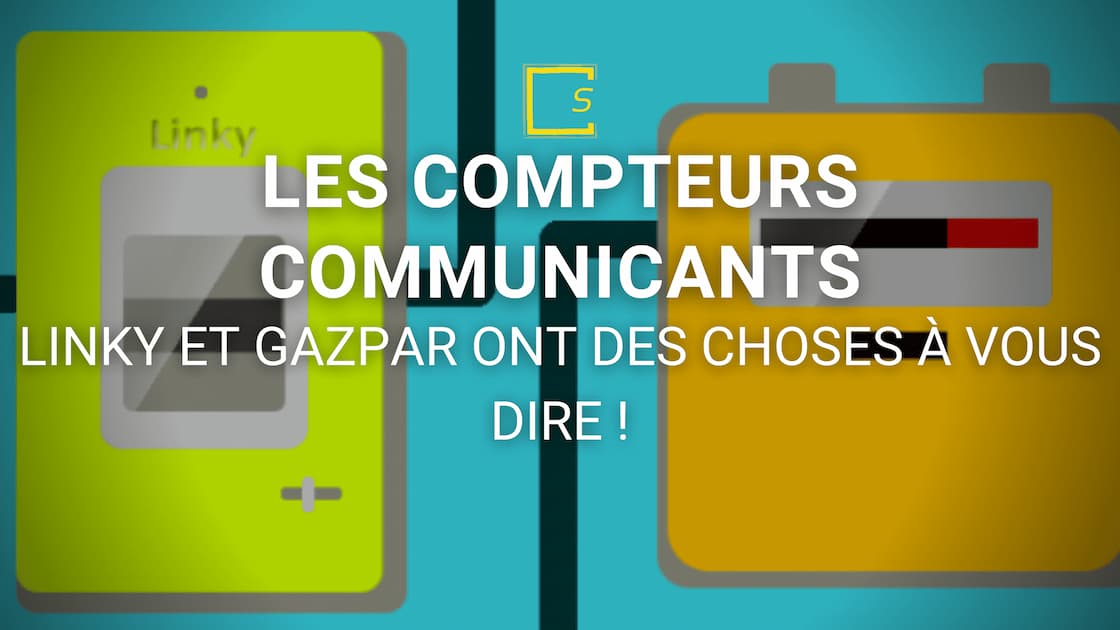
Recently, numerous media have relayed information concerning the deployment of meters Linky. Indeed, recent controversies have shaken up the network manager, Enedis.
Some consumer associations, or public authorities such as mayors, oppose the installation of the famous meter. For example, the mayor of Barsac (in Gironde) is facing trial in Enedis concerning the installation of the Linky. Dominique Cavaillols has passed a deliberation that requires the consent of the inhabitant for the installation of the Linky.
Why is this new generation of counters causing so much distrust? This is the question we are going to try to answer in this article.
So we're going to explore the Operation of smart meters in general. Then we will try to understand The interest of this new technology in the energy transition. Finally, this article will be an opportunity to understand whether hazards of these counters are real and the criticisms justified.
Several criticisms are addressed to these counters, we will try to answer the majority of them.
First of all, it should be remembered that for large consumers, advanced meters are not new.
Indeed, on higher voltage networks, communicating meters are the norm. It is only recently, following the Linky project, that this technology has been democratized to all French people.
For the network operator, it is a question of modernising its meter fleet by sharing the technologies used. It is also the assurance of improving energy metering.
It is important to remember that this technology beyond Linky for electricity also includes gas (under the name of Gazpar).
As we discussed in the introduction, this technology is not new. We often use the term smart meters, it comes from an anglicism: the” Smart Metering ”. This refers to counters that are capable of recording and transmitting information.
Regardless of the energy in question, there are several ways to count energy today. Some meters communicate their information automatically and others are read periodically.
A communicating meter makes it possible to:
The technology used is, as shown in the diagram, the line carrier current (PLC). It is simply a matter of passing information through the electrical network in the form of current. It is a signal with higher frequency and lower energies.
Old-generation counters do not allow you to retrieve as much information as Linky or PME-PMI counters.
The ability to store data and then retrieve it automatically is a real improvement. Current meters only allow you to record consumption between two dates. The customer cannot therefore use his consumption data in order to modulate his behavior.
In this sense, the advanced counter is a real technological innovation. The customer can thus take ownership of their consumption data and thus contribute to reducing their consumption.
The advanced meter thus facilitates the installation of thermostat-type installations or the installation of photovoltaic panels. In this sense, a detailed knowledge of its consumption is very useful. This is allowed thanks to the computer installed in this meter.
As you can see, these advanced metering systems allow us to change the way we count energy and therefore manage the network.
With the consumer having access to more information, it is possible to send relevant economic signals.
It is therefore possible to offer new supply offers that push the customer to reduce consumption during peak periods. It is the responsibility of suppliers to be innovative and to use this opportunity to stand out.
As such, the establishment of new supplier calendars is essential. Indeed, it is by this means that suppliers can offer offers with different prices depending on the time of day.
For the system operator, there are multiple benefits, some of which impact the consumer and the community.
By installing these meters, it is possible to significantly reduce the number of physical interventions. The manager makes them remotely. This reduces costs and can have a positive impact on the game. TURP of our electricity bills.
For the customer, it is no longer necessary to be at home during the intervention, which is carried out remotely.
Fraud detection is also more reliable with these types of models. The advanced meter improves the management activity of distribution networks.
It also becomes easier to integrate renewable energies if the manager has a better vision of consumption in real time. The advanced meter makes it possible to monitor decentralized electricity production more precisely. Wind turbines and photovoltaic power plants will need an efficient network in order to develop. This therefore contributes to the achievement of the objectives of energy transition and demand management.
The development of self-consumption and erasure depends heavily on the massive installation of advanced counters. These methods work to achieve the objectives of energy sobriety.
Thursday 1Er July 2021, thirteen consumer associations launched a collective action against Enedis.
These associations believe that they have the right to choose whether or not to install a Linky in their homes. The energy code states that electric meters belong to the network manager. It is therefore a dialogue of the deaf that often begins and ends in justice.
More than 2,000 people are affected by this collective complaint. As we can see, beyond a distrust of harmful effects on health, it is Enedis's methods that are being singled out.
As mentioned, this meter uses PLC technology. It is therefore the transmission of information via electromagnetic waves directly into the current network. It is the presence of these waves, despite their high frequencies, that raises questions.
ANFR has therefore decided by delivering its analysis. It is the National Frequency Agency that regulates the waves and their frequencies. It turns out that these meters (Linky) emit less waves than the majority of our household appliances. Exposure to devices such as our smartphones is much more harmful than the presence of a Linky.
Enedis recalls that at a distance of 50 cm from the Linky meter, the electromagnetic field is so weak that it cannot even be measured. It is therefore appropriate to put into perspective the alleged health dangers to the exposure of a Linky meter.
During the first poses carried out by Enedis, there were very minute cases of fire that appeared. Despite their very low number, these events continue to fuel the critics of the Linky meter.
After investigation, the problem seemed to come from the tightening of the cables outside the meter. Since then, measures have been in place to avoid this type of disaster. It should be noted, however, that during the test phase, only 8 fires were identified out of more than 300,000 meters.
Numerous cases fuel distrust in energy companies. In fact, the ombudsperson and the Energy Regulatory Commission regularly register complaints from customers complaining about deceptive sales methods. Enedis is not spared by these practices.
Even recently in Poitiers, customers were victims of scams by fake Enedis agents.
What is also pointed out by the associations is the absence of choice in the installation of the famous counter. Enedis then invokes its public service mission, which clearly states that the meters belong to Enedis and not to the customer.
In summary, we can say that advanced meters do not represent any danger except for rare cases of intolerance to electromagnetic waves.
They already exist for a whole range of customers and their democratization is in part beneficial to the energy transition.
The installation of Linky and Gazpar meters is almost complete. In the short and medium term, we will be able to see their effects on French energy networks and households.
The consumption data export feature allows you to closely monitor your electricity consumption with data that is updated daily.
No need to wait until the end of the month to find out how much you consumed, you are now monitoring your consumption in real time!
In a few clicks, organize an exchange with one of our experts.


weekly newsletter subscribers

4.9
