




Summarize with AI

March 6, 2026
5
Min reading
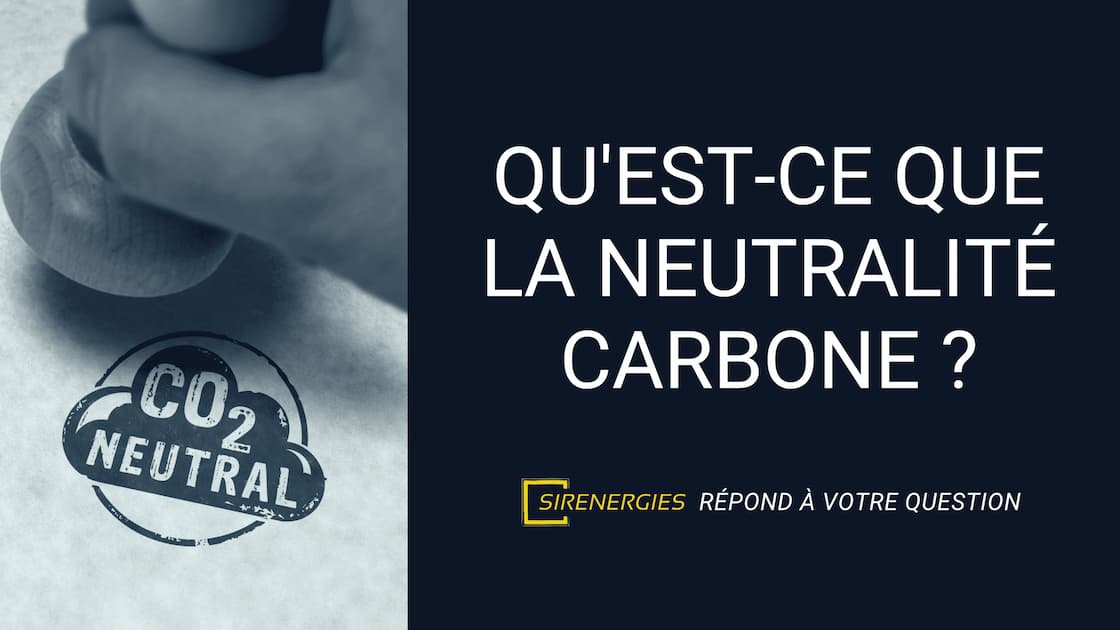
With global warming and the deterioration of air quality as main causes, pollution is reaching new heights. No one is unaware of the need to take actions to reverse the curve in order to preserve nature.
Although industrialized countries have based their economies on the exploitation of fossil fuels, they are increasingly in agreement to reduce greenhouse gas (GHG) emissions. The conferences and international agreements on the environment and climate follow one another with the fight against global warming as the main objective in the short and medium term, to achieve the carbon neutrality. SirEnergies returns to carbon neutrality.
The European Union (EU) has taken stock of the global climate situation, is mobilizing and working to limit the effects of climate change as much as possible. The work of Intergovernmental Panel on Climate Change (IPCC) have allowed the EU to set 1.5°C as the ideal global warming threshold for well-being.
The EU maintains that it is essential toachieve carbon neutrality by 2050. This objective was specified inParis Agreement on climate, signed in April 2016 during COP21 by 195 countries.
Carbon neutrality involves a balance between carbon emissions and the absorption of carbon from the atmosphere by carbon sinks. The atmosphere will thus be relieved of carbon dioxide. Despite the fact that the objective of carbon neutrality mainly refers to CO₂, all other GHGs such as methane and nitrous oxide are concerned. Natural carbon sinks are oceans, forests, peatlands, soils, etc. They would be responsible for the elimination of 9.5 to 11 gigatons of CO₂ annually.
However, in 2019, the volume of CO₂ emitted worldwide was estimated at 38 gigatonnes. Artificial carbon sinks are being created on an experimental basis. They also do not currently allow a significant quantity of carbon dioxide to be trapped to the point of contributing to the fight against climate change. This is why the carbon neutrality objective essentially focuses on the reduction of CO₂ emissions.
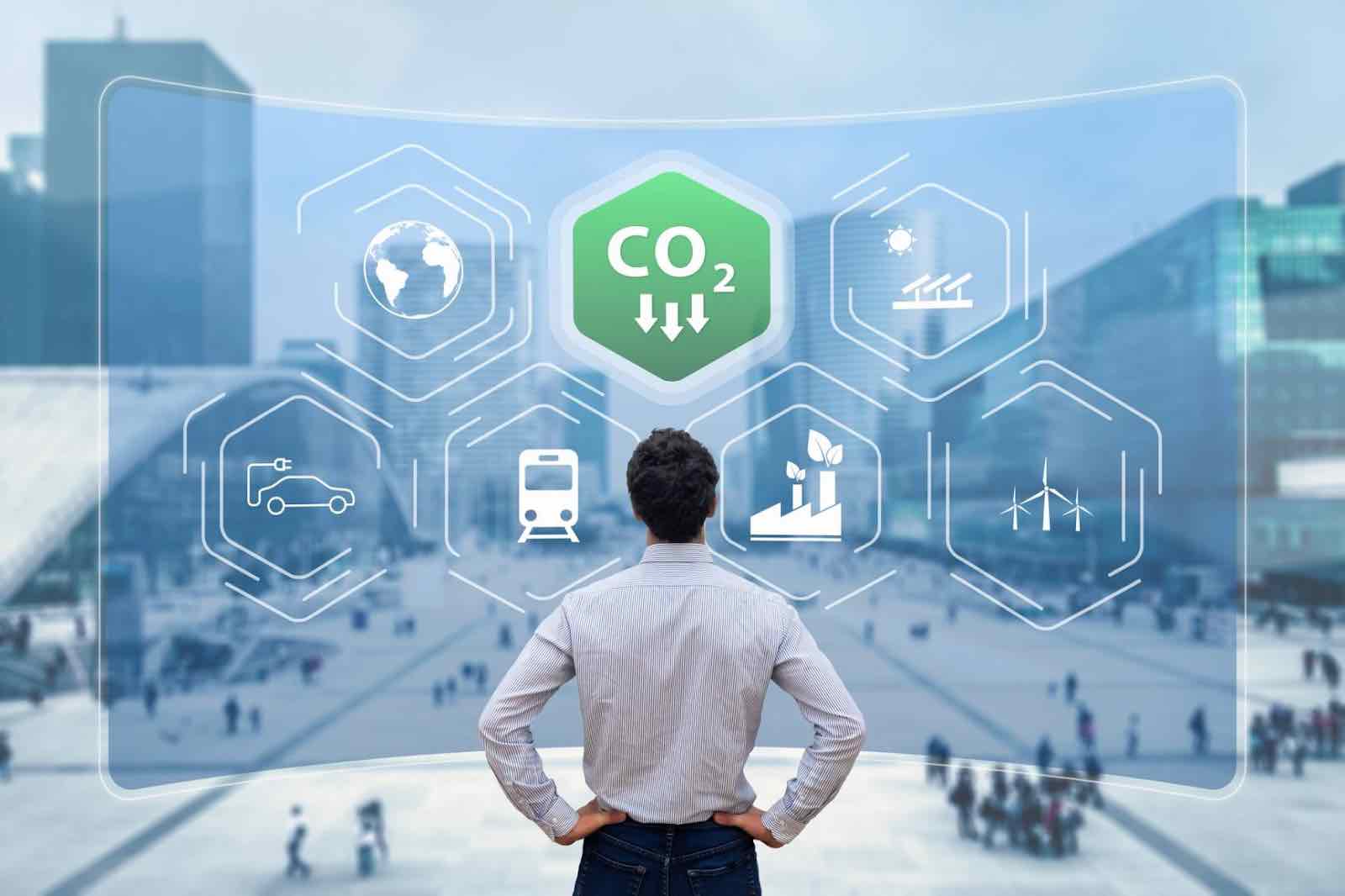
The European Union is committed to an ambitious climate policy. Through the Green Deal, it wants to become the first continent to remove as many CO₂ emissions as it produces by 2050.
It is expected that the grants dedicated to fossil fuels be progressively phased out in the EU by 2025. In June 2021, Parliament voted on a new European climate law. The objective set is reducing carbon emissions by 40 to 55% by 2030. This new law makes the objective of carbon neutrality by 2050 a legal constraint for Member States.
An independent European scientific body will be created to assess progress.
Five EU countries have set themselves the goal of climate neutrality: Sweden has a goal of achieving zero emissions by 2045 and Denmark, France, Germany and Hungary by 2050.
With the aim of achieving zero emissions by the middle of the 21st centuryE century, France established several mechanisms of action at the national level. For example, the National low-carbon strategy (SNBC) was introduced by the Energy Transition for Green Growth Act. It results from the consultation of the ministerial services concerned with parliamentarians, local authorities, businesses, NGOs, consumer representatives, etc.
Adopted in 2015 as a roadmap to combat climate change, the SNBC was revised in 2018-2019 and now defines the ideal trajectory for reducing large-scale emissions of greenhouse gases (GHG). SNBC indicates the guidelines for public policies to change the economic model.
The road map identifies technological barriers and outlines ways to overcome them. Over the following 15 years, starting in 2019, goals called “carbon budgets” are set for the reduction of GHG emissions. They are defined by sector of activity and by GHG.
SNBC applies to everyone: decision-makers at various levels and engages populations. To implement it, the Ministry of Ecological Transition has developed an action plan comprising two axes: the mitigation of greenhouse gas emissions and the adaptation to the effects of climate change. On the one hand, the plan includes a table listing the actions, the corresponding timetables, the expected results and the monitoring indicators. On the other hand, the actions indicated are detailed.
ADEME (Agency for the Environment and Energy Management) is working to achieve carbon neutrality. With this in mind, she carried out a prospective study entitled “Transition (s) 2050. Choose now. Act for the climate”.
She came up with 4 coherent and contrasting scenarios, but which should each help France reach the objective set by 2050.
The first scenario is The frugal generation, which indicates the need to make considerable changes in our consumption patterns. According to ADEME, carbon neutrality will be achieved if French people start to move, eat, heat and equip themselves differently, excluding unapproved technologies that capture and store CO₂.
In its second scenario, ADEME estimates that France will achieve carbon neutrality by focusing on social cohesion. Cooperation between public institutions, NGOs, businesses and other actors will allow society to evolve towards an economic model that is more environmentally friendly. Sharing and responsible consumption are the main challenges in this scenario.
The third scenario is the development of green technologies. It is opposed to the second scenario in that it excludes the sobriety. Climate-friendly technologies must be deployed and made available to populations.
The fourth scenario is based on management and repair. In order to reduce GHG emissions while maintaining the same lifestyles, ADEME believes that limiting consumption will be a lifesaver. In return, it will be necessary to repair social and ecological systems instead.
Like ADEME, RTE (Electricity Transport Network) carried out a prospective study called Energy Futures 2050. According to the network manager, France will have to take advantage of nuclear power and renewable energies to reduce carbon emissions and achieve its goal in future years.
Created by the French government, the Tertiary Eco-Efficiency System (DEET), also called Tertiary decree, requires a gradual reduction in energy consumption for French tertiary buildings greater than 1000 m².
This regulation aims to save 60% of final energy in these buildings by 2050.
We support you in the compliance tertiary buildings in order to comply with the obligations of the tertiary decree.
Click below for more information:
In a few clicks, organize an exchange with one of our experts.


weekly newsletter subscribers

4.9

.png)

Yes. The supplier guarantees an offer 100% renewable via the official Guarantees of Origin (GO) mechanism.
For the most demanding companies, the offer GREENVOLT+ ensures very low carbon intensity electricity, sourced exclusively from independent French producers (hydraulic, wind, solar).
It allows you to prove your commitment to the energy transition and to meet regulatory requirements.
Les coopératives de taille ETI ou grande entreprise peuvent être soumises à l'audit énergétique réglementaire (norme NF EN 16247). Sirenergies n'a ni la compétence ni l'accréditation pour réaliser cet audit : nous vous orientons vers un bureau d'études partenaire accrédité, et vous accompagnons en amont sur vos achats et en aval sur le pilotage.
Le calendrier 2026 impose deux échéances majeures :
Pour simplifier ces démarches, vous pouvez centraliser vos données de consommation avec la plateforme Pilott de Sirenergies, garantissant ainsi la conformité de vos rapports réglementaires.
To calculate Scope 2 emissions, use the following formula:
Energy quantity (kWh) × Emission factor (kg CO₂ e/kWh).
Use databases like ADEME for precision.
La réussite d'un projet collectif énergie repose sur trois piliers fondamentaux :