

Plastics industry: blow molding and extrusion blow molding
Plastic blow molders: lower your compressed air costs
On a plastic blow molding line, it is not always the machine that costs the most, but the air it consumes. From high-pressure compressors, preform ovens, or extruders to gas-fired workshop heating: Sirenergies quantifies the impact of each cost center, adjusts your power capacity, and helps you renegotiate your contracts.



Key industry figures
Compressed air: the hidden cost of bottles, flasks, and containers
In a hollow body production workshop, compressed air costs are often buried within the general electricity bill. Measuring them and integrating them into your purchasing strategy changes both your contract sizing and your choice of hedging.
Share of compressed air in the electricity consumption of French industry
Maximum air pressure required for blow molding a standard PET bottle
Share of compressor energy converted into heat, which can be recovered to heat workshops
The energy profile of a plastic blow molding workshop
Compressors, heating, and cooling: the bill for a hollow body workshop
The situation: three cost centers, one of which is often overlooked
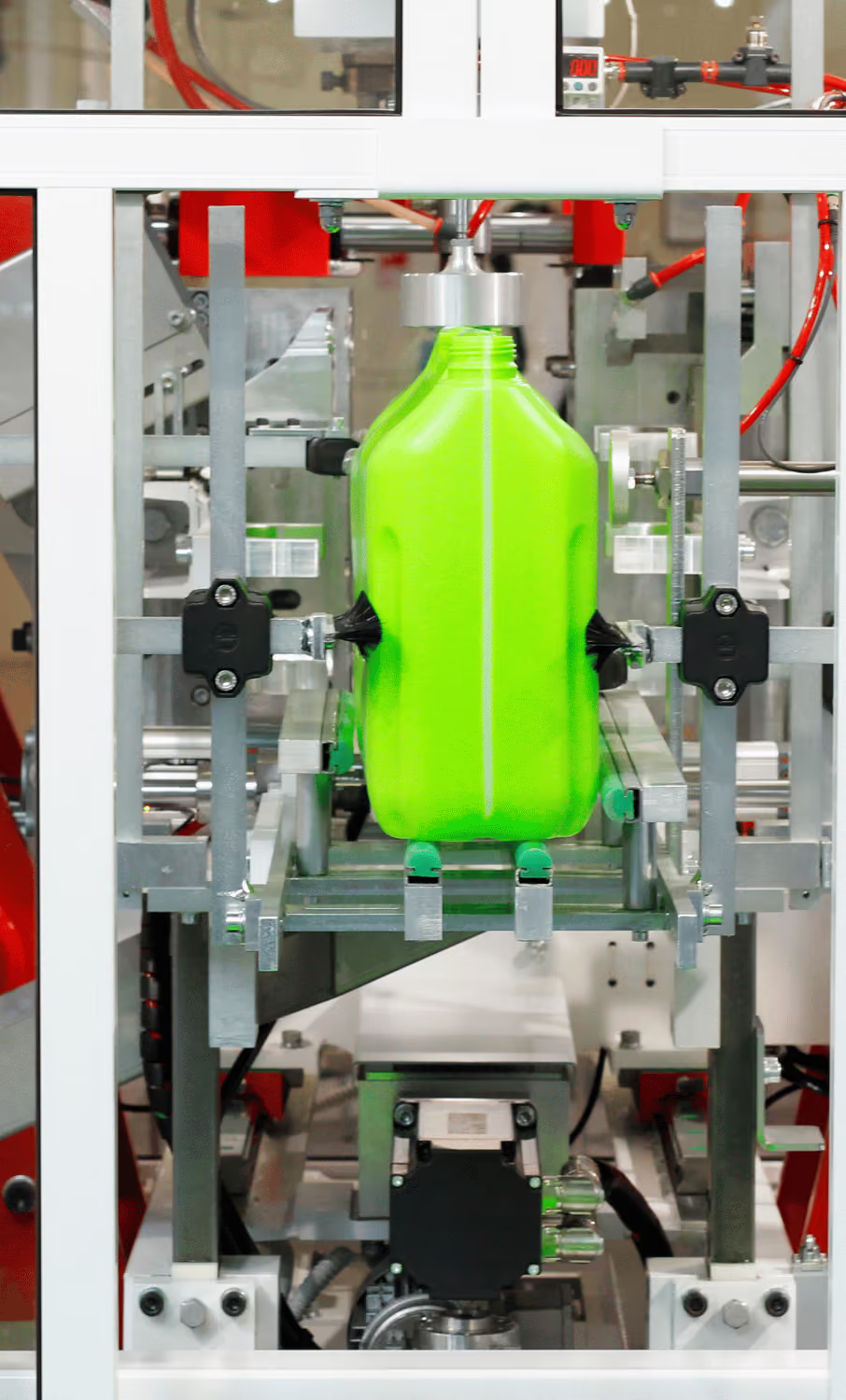
A blow molding line transforms a preform or parison into a bottle, flask, or container. Electricity heats the material (extruders for HDPE, infrared ovens for PET preforms), produces low and high-pressure compressed air, and continuously cools the molds; gas is most often used to heat workshops and offices. Compressed air remains the least monitored cost center, even though 15% to 50% of the air produced can be lost to leaks (ADEME, 2006).
Our role: putting a price on every cubic meter of air
Leaks, pressure settings, and heat recovery systems are the responsibility of your maintenance teams and installers. Sirenergies intervenes on the factors surrounding these choices, providing strategic advice to your management team:
- the portion of compressors isolated in your load profiles, to adjust subscribed power and the TURPE (public electricity network usage tariff) option;
- a gas contract and ATRD (third-party access to gas distribution networks) capacity reviewed when recovered heat replaces part of your heating;
- the impact of each maintenance action tracked at D+1 in Pilott.

Your energy challenges
The 3 energy challenges for blow molding and extrusion-blow molding workshops
Compressors running even when blow molding machines are stopped, heat produced on one side of the site while gas is purchased on the other, factories with mismatched contracts: this is what most hollow body manufacturers face. Sirenergies addresses these three issues through analysis, procurement, and consolidation.
Energy-intensive HP compressors
High-pressure air compressors often run continuously, even outside of production hours, without their actual consumption being isolated from the rest of the site.
Mapping of consumption points
Our consultants determine the actual share of your compressors in your overall bill using your load profiles and Pilott data.

Blow molding cycle consumption peaks
Each blow molding cycle generates a momentary power surge that, when combined across multiple lines, can cause you to exceed your subscribed power capacity.
Subscribed power recalibration
Analysis of actual load profiles to adjust your subscription as closely as possible to your needs.
Unconsolidated multi-site operations
Multi-plant packers often manage disparate contracts from one site to another.
Consolidated multi-supplier sourcing
Grouped competitive bidding and centralized management across all your sites via Pilott.
Contractual and data expertise
Optimization and management of your blow molding workshop contracts
From high-pressure compressors to hall heating, Sirenergies provides advice on electricity and gas for your hollow body workshops. Your teams retain control over the machines and maintenance; we handle the contracts, distribution, and measurement, factory by factory.
Contractual and capacity audit
Review of your electricity and gas contracts, their expiration dates, and your subscribed power levels, annual review of excise duties, and identification of CEE (energy savings certificate) schemes applicable to your compressors.
Purchasing strategy and competitive bidding
Consultation with our partner suppliers for all your factories, multi-criteria analysis of offers and negotiation preparation, followed by market monitoring and advice on your price-fixing throughout the contract term.
Distribution optimization (TURPE / ATRD)
Subscribed power and TURPE options adjusted to the demands of your compressors and ovens, daily ATRD capacity reviewed when recovered heat reduces your gas needs; procedures carried out with network operators.
Tariff modeling for compressed air
Cost of compressed air reconstructed from your load profiles, budget simulation based on your production rates, and price risk analysis, including a study of photovoltaic self-consumption tailored to your production hours.
Pilott software platform
D+1 consumption for each factory, price alerts on electricity and gas markets, budget forecasting, and centralized management of your sites' contracts and invoices.
Expert consulting dedicated to blow molding
A dedicated consultant who monitors your markets and deadlines, informs you of relevant regulatory changes (excise duties, CEE, capacity mechanisms), and builds cost indicators per site with you.
Our platform
Pilott, simplified management to track your consumption
- Consolidate your blow molding factories and their electricity and gas meters
- Check the consumption of each site at D+1, including weekends, to identify compressors running while idle
- Receive an alert when the electricity price reaches your target fixing threshold
- Simulate your budget and manage your contracts from a single platform



Plastics processing
Explore other processes
Un autre secteur ?


Methodology and definitions
What is energy consulting for plastic blow molding?
On a Saturday, the blow molding machines are idle, but the compressors are still running. In a plastic blow molding workshop, energy consulting starts with observations like this to take action on contracts: it calculates the cost of compressed air, links the electricity used to produce it with the gas used to heat the halls, and identifies Energy Savings Certificates (CEE) that can fund heat recovery. Sirenergies consultants carry out this work using the Pilott platform.
The context
In 2024, the collection rate for plastic beverage bottles in France reached only 58.2% (Citeo, ADEME figures, 2026), far from the nine out of ten target set by the European packaging regulation for 2029. Every cost factor, including energy, counts in the price of a preform or a container.
- Measure: the share of compressors isolated and monitored at D+1.
- Finance: the CEE sheets identified before your installer installs a heat recovery unit.
- Adjust: gas capacity and electrical power recalibrated once the equipment is in service.

What portion of your bill goes toward the compressed air for your blow molding machines?
Your load curves and contracts are enough to calculate this and estimate your potential savings. No obligation.

