




Summarize with AI

March 6, 2026
9
Min reading
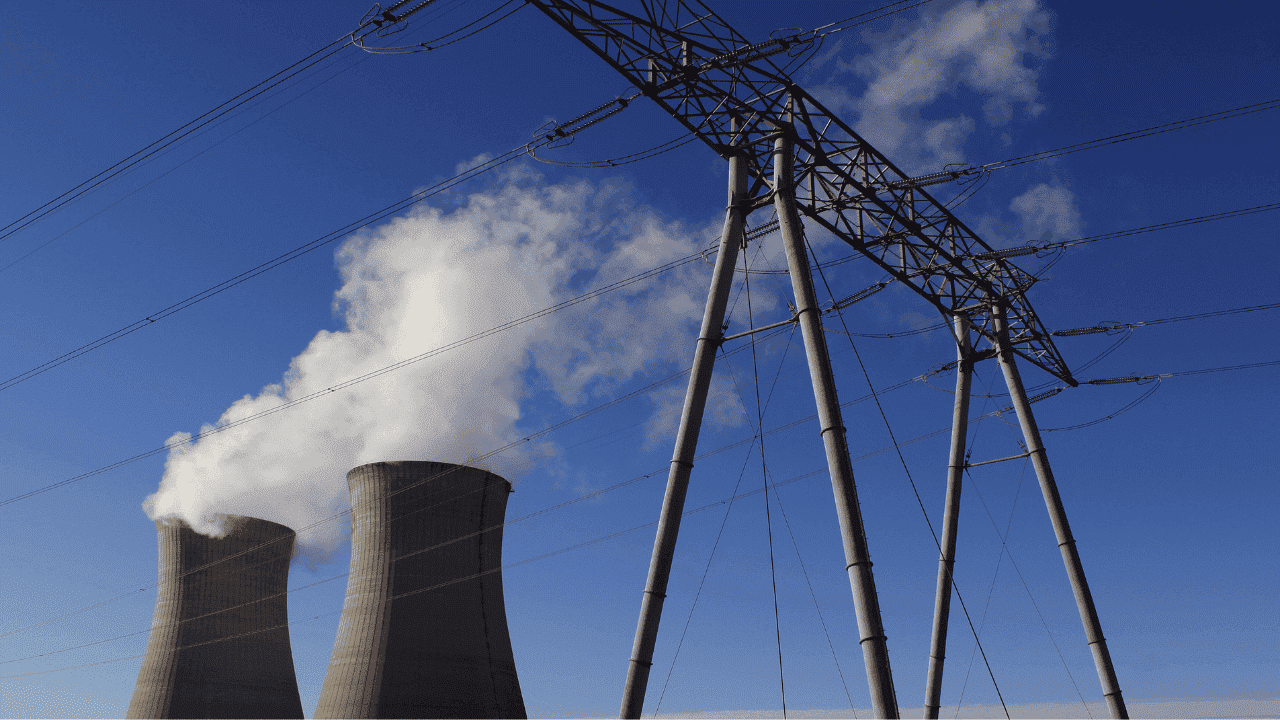
Long dismissed in favor of uranium, thorium is now returning to the energy scene, buoyed by the success of the first Chinese experimental reactor.
Faced with the limitations of the current nuclear model, this abundant metal is attracting renewed interest from scientists and governments, seduced by the prospect of cleaner and more sustainable nuclear energy.
Is thorium really a sustainable alternative to the limits of uranium?
Or is it just a technological mirage?
Sirenergies makes you discover this fuel that brings hope, a symbol of the tensions in the nuclear sector, shared between technological ambitions, financial realities and ecological imperatives.
In a world committed to energy transition, nuclear electricity is attracting states seeking carbon neutrality.
Its main asset?
The low greenhouse gas emissions that its production generates.
However, the current model raises questions, in particular because of its dependence on a single fuel:uranium-235 (a form of uranium used in current nuclear power plants).
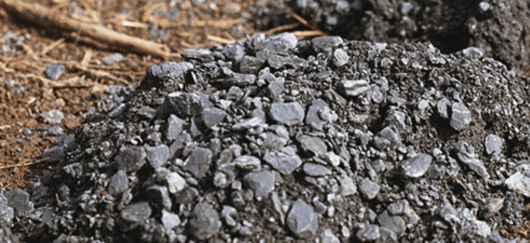
Each year, the world's nuclear fleet generates around 200,000 m³ of low and medium radioactive waste and 10,000 m³ of highly radioactive waste.
In France, the National Agency for the Management of Radioactive Waste (ADRA) identified, in 2023, 1.85 million m³ of French and foreign radioactive waste stored on the territory.
However, no lasting solution has not yet been found to permanently isolate these spent radioactive fuels.
In France, “short-lived” waste (90% of the total volume) is confined to the surface in concrete installations. However, these sites could reach their maximum capacity by 2030.
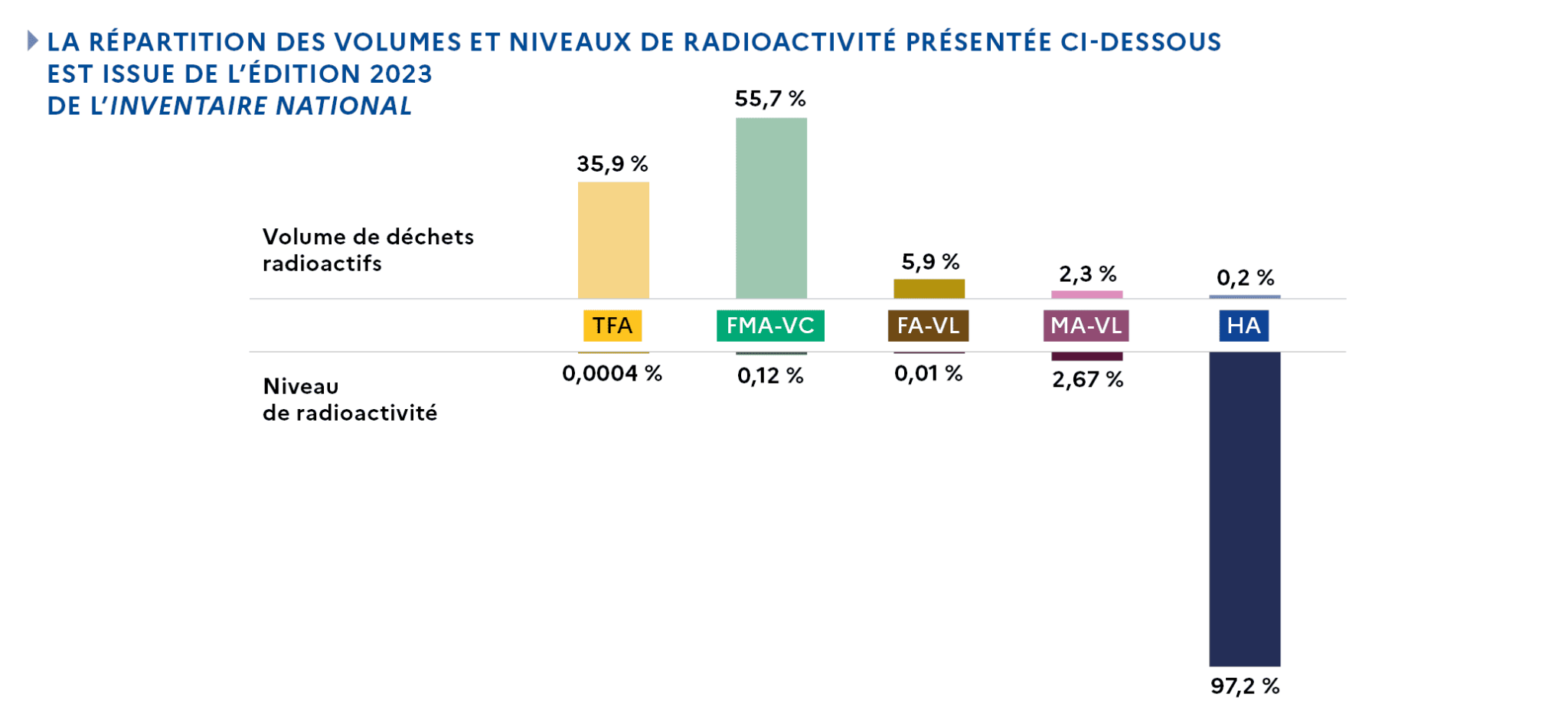
“Long-lived” waste (0.2% of which is classified as highly radioactive) is temporarily stored at the La Hague, Marcoul and Caradache sites.
Their destiny is based on the Cigéo project, a deep geological burial program still under study, inspired by the only model currently operational: the Finnish Onkalo site.
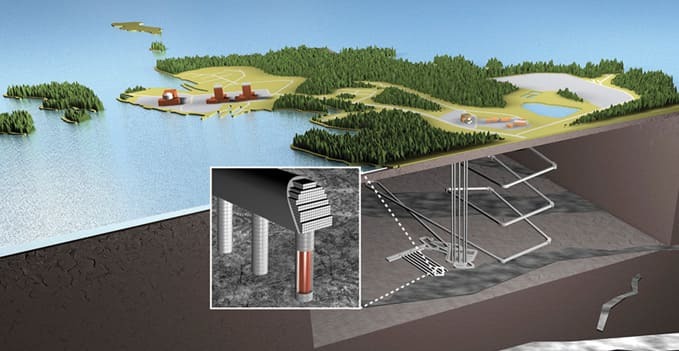
Although nuclear reactors are under the close supervision of theASN and designed according to strict safety standards, the Chernobyl and Fukushima disasters are a reminder that zero risk does not exist.
In the event of a failure, the human, environmental and economic consequences may be Dramatics.
In France, no major accidents have been recorded since the commissioning of the first reactor 60 years ago.
Nevertheless, the trust of citizens remains fragile, in the face of Aging of the national nuclear fleet.
If the Nuclear has a competitive production cost once the power plants are depreciated, the Initial investments are colossal.
The construction of theFlamanville EPR attests to this:
In addition, there is the costly management of radioactive waste.
In 2022, it represented 859 million euros in France, i.e. a increase of 19% in one year. The end of life of nuclear power plants is another financial challenge.
In 2020, the Court of Auditors estimated the cost of dismantling the national nuclear park at more than 46 billion euros.
Since its origins, nuclear energy Arouses resistance.
Brittany illustrates this distrust. with its historical opposition to nuclear power, expressed as early as the years 1970-1980 against the Plogoff power plant project.
Even today, the question of waste treatment and the environmental impact of infrastructures fuel the debates.
At the time of the energy transition, many plead for other ways : the acceleration of renewable energies, exploiting more natural, local and sustainable resources.
Faced with the limitations of the current nuclear model, thorium is attracting growing interest.
More abundant than uranium-235, it produces radioactive waste of shorter duration and reduces the risk of proliferation.
These assets make it a promising path towards nuclear power that is safer, more sustainable and more in line with social and environmental requirements.
Thorium is a slightly radioactive metal, found in large quantity in the earth's crust.
Discovered in the 19th century, it was discarded in favor of uranium for two reasons:
To become a usable fuel, thorium must first be converted to uranium-233 (U-233).
This transformation occurs when a thorium atom captures a neutron, usually released by the fission of a fissile isotope (uranium-235 or plutonium-239).
The exploitation of thorium in solid form requires two types of reactors:
To simplify this process, engineers are developing molten salt reactors (RSF).
Thorium is dissolved in a fluorinated salt in a liquid state.
It is transformed into uranium-233 on site, always by capturing the neutrons released by the fission of uranium or plutonium. This new isotope is immediately consumed in the same circuit to produce electricity. Molten salt plays a double role: it is used to contain and transform thorium, but also to cool the reactor.
Thorium combines numerous advantages over uranium-235:
While thorium has no shortage of assets to support the transition to sustainable and carbon-free energy, its development still faces numerous difficulties: technical, economic and regulatory.
Despite their promises, molten salt reactors still need to overcome several technical obstacles before large-scale use.
The development of the thorium nuclear industry requires massive investments, due to the lack of feedback And of the complexity of technologies. For example, the Chinese experimental reactor would have cost more than 500 million euros.
Other brake : the cost of extracting thorium.
This metal is mainly derived from monazite, a mineral rich in rare earths.
Its extraction and purification are now more expensive than that of uranium.
Faced with the absence of a clear economic model, the sector is also struggling to attract private capital, which is essential for industrial development.
Thorium reactors do not meet current nuclear industry standards, which are largely designed for uranium-based technologies.
Safety standards and test procedures are not adapted to new reactors, including molten salt reactors.
This lack of framework complicates the secure implementation of pilot projects and demonstrators.
Globally, reactor projects using thorium can be counted on the fingers of one hand.
China is a pioneer with the commissioning of an experimental reactor in the Gobi Desert. In 2024, this prototype managed to operate for ten days in a row at full power. This success reinforces China's choice of thorium. Next step: the construction of a 10 MWh demonstrator reactor.

Rich in thorium, India also relies on this natural resource to develop nuclear electricity.
Launched in the 2000s, its program has a clear and ambitious objective: to eventually deploy advanced heavy water reactors capable of operating with a mixture of plutonium and thorium.
Europe is further behind, even though thorium is a promising way to decarbonize.
For the time being, however, European and global momentum remains oriented towards fourth-generation reactors, based on uranium-238 and plutonium-239, which are considered to be more mature.
To conclude...
Thanks to its many advantages, thorium embodies a real technological hope for cleaner, safer and more sustainable nuclear power. However, many uncertainties remain. The obstacles are numerous and no thorium reactor has yet demonstrated its viability on a large scale.
By 2050, thorium is not a credible alternative to uranium. But it represents a promising future that could, at the end of the century or the next, transform the nuclear landscape, by reconciling safety, performance, environmental requirements and societal acceptability.
No miracle solution, no technological illusion, thorium is a very long-term bet for responsible nuclear power.
In a few clicks, organize an exchange with one of our experts.


weekly newsletter subscribers

4.9

.png)

The range E @sy is available in four pricing structures to adapt to each risk profile:
Yes. The supplier guarantees an offer 100% renewable via the official Guarantees of Origin (GO) mechanism.
For the most demanding companies, the offer GREENVOLT+ ensures very low carbon intensity electricity, sourced exclusively from independent French producers (hydraulic, wind, solar).

Sourcing consists in identifying and analysing the offers of several electricity and gas suppliers. This approach makes it possible to obtain contracts adapted to the consumption profile and budgetary constraints of the company.
They present new technologies such as agrivoltaics or smart grids. To explore their implementation, discover our Pilott platform.
Pilott gives access to Spot price and to the European futures markets with a daily update. The user can thus compare, receive alerts and choose the right time to contract. This makes it possible to buy at the best price and to avoid unpleasant surprises.