





Summarize with AI

February 10, 2026
4
Min reading
Electricity is obtained as a result of the transformation of primary energy. It can be wind, water, heat... Depending on the method used, two types of electrical currents are sent to consumers. They move at a speed that varies according to several elements. SirEnergies brings you all the information on different types of currents And on The speed of electricity.
The production of Electricity makes it possible to obtain direct current and alternating current. Both are used every day, but they have different characteristics and uses.
In a direct current, electrons, also called charge carriers, move in the same direction. They all go from the negative terminal to the positive terminal.
When it comes to alternating current, they flow in both directions. A back and forth movement is therefore carried out over a distance of one thousandth of a millimeter. This singular movement allows the energy to gradually bounce back and reach the end of the conductor.
Direct current is produced by batteries, Batteries, solar panels or any type of electronic or electrochemical generators.
Alternating current, on the other hand, comes from power plants that work with an alternator. It is equipped with a Rotor that rotates on itself. It is this device that gives electrons their sine wave motion (zigzag motion). This type of current is the one that is used in homes for heating, lighting, etc.
As for direct current, it is it that makes it possible to operate flashlights, computers, electric cars...
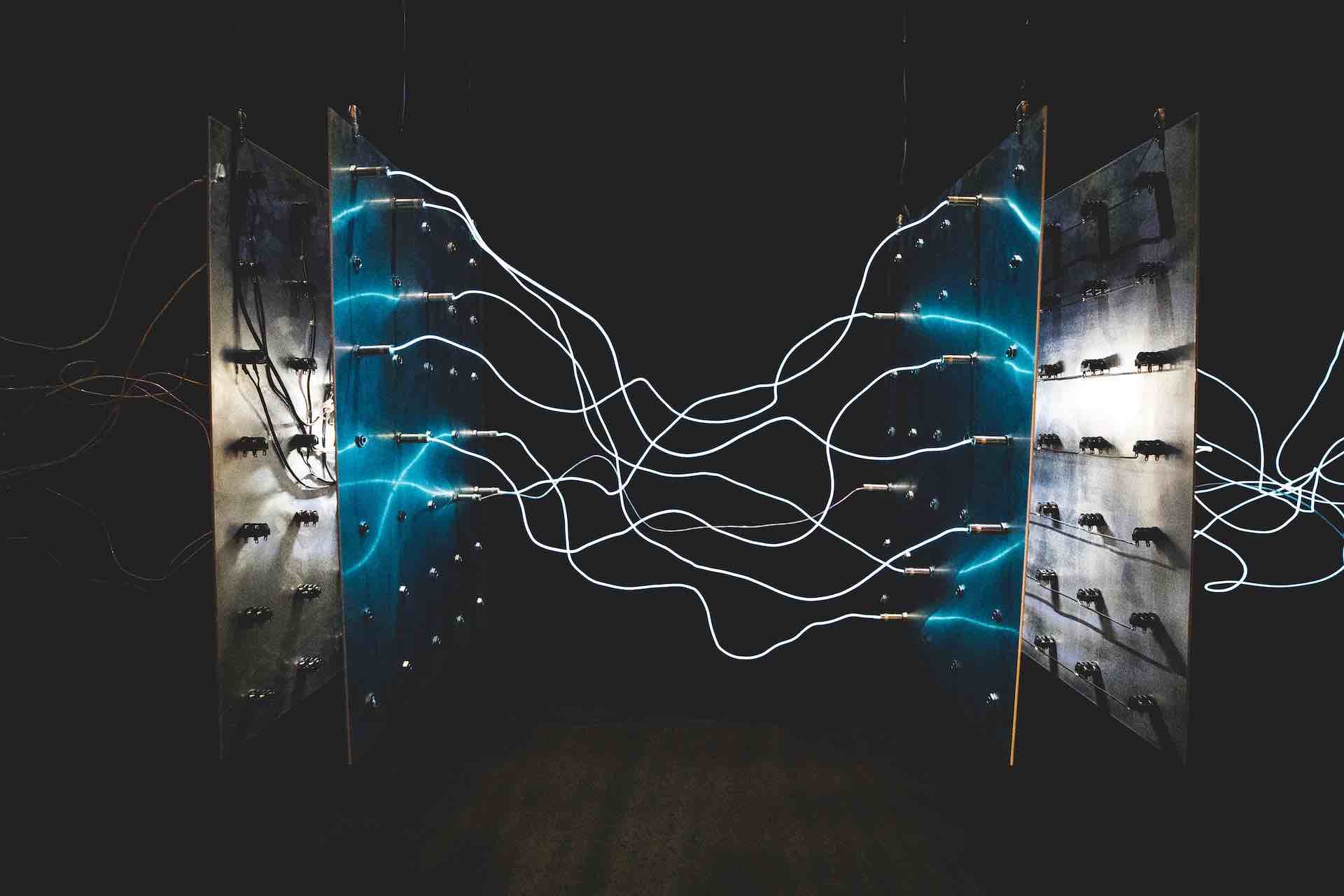
The speed of electricity takes into account the speed of the electrical signal and the speed of the electrical charges. These speeds vary according to the conducting material, the type of current and its intensity which Measured in amperes (A).
The speed of the electrical signal is the speed at which charge carriers are activated along a conducting wire. It corresponds to the time that an electric wave takes to reach a device that it must power. She is also Called information speed or speed of propagation of electricity.
It is very fast and depends on the permeability and dielectric permittivity of the conducting material. When it is in saline water, electricity thus moves at a speed of about 226,000 km per second.
In a vacuum, it evolves at the speed of light and is nearly 300,000 km per second. When it flows through copper wire, it can reach 273,000 km per second. Finally, its speed is between 175,000 and 200,000 km per second in a plastically-insulated circuit.
Electrical charges move very slowly. The speed at which they propagate varies according to the intensity of the current present in the circuit.
In an alternating current, electrons thus move by barely a few hundredths of a millimeter per second. The frequency of this type of current is generally between 50 and 60 Hz. So charge carriers go back and forth 50 or 60 times per second for a tiny distance, giving the impression that they are hardly moving.
Studies and calculations have shown that in an electrical system where the current strength is 1 A, they travel 40 cm per hour.
On the other hand, in a direct current, the speed of the electrons is slightly higher, because they make several meters per second. In an electron tube, also called a vacuum tube or lamp, the speed of movement is often 15 km per second.
The charge carriers follow a given cycle. For this to happen, the circuit must remain open for a sufficiently long time. For example, when you turn on a lamp, a stream of electrons leaves the generator. This electrical charge then goes through the lead wire, the switch, the light bulb and Go back to the generator again.
Because of their slow movement, The electron that held the charge who sent the electrical signal never meets her. The light that comes out instantly as soon as you flip a switch does not come from the movement of electrons. For many people, it is the link that left the electric button that turns on the lamp, which is not the case.
The electrical wire is full of charge carriers from the switch to the light bulb. As soon as you press the button, they all start moving. The one at the end of the switch sends the signal that passes through each of the electrons present along the wire.
In a fraction of a second, it reaches the link at the end of the lamp filament and Create the light. The charge carriers who sent the information will arrive at the lightbulb hours later.
To go further, feel free to read our two related topics:
Today, more than ever, electric mobility is one of the levers for achieving carbon neutrality. As such, businesses have a role to play in the energy transition.
You want to install charging stations and/or convert your company's vehicle fleet to electric? SirEnergies is there to help you and supports you in building an eco-responsible image for your business.
Click below for more information:
In a few clicks, organize an exchange with one of our experts.


weekly newsletter subscribers

4.9

.png)

Farms are subject to taxes such as TICFE or TICGN. Sirenergies verifies their application, identifies cases of exemption and accompanies the procedures to reduce the tax burden.
The €/MWh is a price unit used in wholesale markets, while kWh is the unit visible on your bills.
Le kVA mesure la capacité maximale que votre compteur peut supporter à un instant T, tandis que le kWh mesure la quantité d'énergie consommée sur une durée.
Ce record de 92,3 TWh s'explique par la conjonction de trois facteurs :
Sourcing consists in identifying and analysing the offers of several electricity and gas suppliers. This approach makes it possible to obtain contracts adapted to the consumption profile and budgetary constraints of the company.
Le dispositif ARENH a laissé place au VNU (Versement Nucléaire Universel).
Ce changement structurel expose davantage les entreprises aux prix de gros, rendant la gestion des risques plus complexe qu'auparavant.
Il devient alors indispensable de définir une stratégie d'achat d'électricité avec Sirenergies pour lisser l'impact de la volatilité des marchés sur votre budget.
The industry is concerned by TICFE, TICGN and other contributions that may represent an important part of invoices. Sirenergies identifies cases of exemption and accompanies the procedures to benefit from them.
Tertiary companies are concerned by taxes such as TICFE or TICGN. Sirenergies checks the accuracy of invoices, identifies possible exemptions, and helps correct errors to sustainably reduce costs.
Un appel d’offres permet de mettre en concurrence plusieurs fournisseurs d’électricité et de gaz afin d’obtenir des conditions contractuelles optimisées. C’est une démarche transparente qui permet de choisir l’offre la plus adaptée aux besoins budgétaires et techniques de l’organisation.
C'est l'indicateur d'efficacité d'un appareil électrique ; il représente le ratio entre la puissance active (utile) et la puissance apparente (totale).
This makes it possible to choose the right time to contract, secure your budgets and anticipate increases.
These are signals sent by RTE during periods of tension on the electrical network. The Sirenergies tool informs you in real time to anticipate your uses.
Among the taxes include TICFE, TICGN, CTA, CJA and TURPE. They represent a significant part of the bill and vary according to consumption profiles. Understanding them well is essential to optimize costs.
The subscribed power must be calculated according to the consumption profile and uses (heating, industrial processes, tertiary equipment). One fine analysis makes it possible to ensure the adequacy between real need and contract.
Le processus repose sur l'utilisation de la force de l'eau (énergie cinétique) issue des courants, des chutes d'eau ou des dénivelés. Le fonctionnement suit trois étapes clés :
Communities are subject to taxes such as TICFE or TICGN. Sirenergies analyzes invoices, identifies exemption possibilities and fixes possible errors to reduce the tax burden.
Le transport (RTE) correspond aux "autoroutes" de l’électricité. Il s’agit de transporter de très grandes quantités d'énergie sur de longues distances, depuis les centrales de production (nucléaires, barrages, parcs éoliens offshore) vers les régions de consommation.
La distribution (Enedis) s'apparente aux "routes départementales" et aux rues. Elle récupère l'électricité à la sortie du réseau de transport pour la livrer directement chez le client final, en abaissant la tension pour qu'elle soit utilisable par vos appareils.
Some businesses may obtain a partial or total exemption from the TICFE or the TICGN, depending on their activity and energy intensity. The support of an expert makes it possible to identify the eligibility criteria and to put together the file.
One invoice consists of several elements: consumption, supplier share, taxes and contributions. The analysis of each line makes it possible to identify possible errors and to check the consistency with the signed contract.
Oui, elle est considérée comme une énergie renouvelable à faibles émissions de gaz à effet de serre.
De plus, l'eau ne subit aucune transformation chimique durant le cycle de production et réintègre son milieu naturel en aval.
Cependant, la construction de barrages nécessite des mesures pour protéger les écosystèmes (débit minimum, passes à poissons).
Tertiary companies must manage their energy costs while guaranteeing the comfort of users (offices, shops, services). Consumption is often linked to heating, air conditioning and lighting, which requires precise monitoring to avoid budgetary excesses.
Yes. The supplier guarantees an offer 100% renewable via the official Guarantees of Origin (GO) mechanism.
For the most demanding companies, the offer GREENVOLT+ ensures very low carbon intensity electricity, sourced exclusively from independent French producers (hydraulic, wind, solar).
En 2025, la France a atteint un solde exportateur net de 92,3 TWh, battant le précédent record de 2024 (89 TWh).
L'abondance de production française tire les prix du marché de gros vers le bas.
En vertu du mécanisme de l'Ordre de Mérite (Merit Order), les centrales les moins coûteuses (nucléaire, renouvelables) couvrent la demande plus souvent, évinçant les centrales à gaz ou charbon plus onéreuses.
Cela multiplie les épisodes de prix bas, voire négatifs, sur le marché spot.
Parce que la puissance souscrite en kVA détermine le prix de l'abonnement et que tout dépassement peut entraîner des surcoûts importants.
C'est le levier le plus rapide pour obtenir des résultats visibles. L'éclairage représente environ 40 % de la consommation d'électricité d'une commune.
Passer au LED avec pilotage intelligent permet de réduire la facture de 50 à 80 %, avec un retour sur investissement (ROI) rapide, souvent estimé à 2 ou 3 ans.
In 2025, the supplier had a NPS (Net Promoter Score) of +16 and a note of 4,17/5.
Satisfaction is based on a “zero solicitation” model and 100% in-house customer service in Toulon, guaranteeing proximity and responsiveness that cannot be found with major historical suppliers.
Exceeding capacity leads to financial penalties and can impact the size of the contract. Adjust the correctly subscribed power makes it possible to avoid these additional costs.
The range E @sy is available in four pricing structures to adapt to each risk profile:

Contrairement au signal électrique, la vitesse de l'électron est extrêmement lente, de l'ordre de quelques millimètres par seconde. C'est l'onde électromagnétique qui transporte l'énergie quasi instantanément le long du conducteur, ce qui est fondamental pour la gestion de l'énergie, et non le déplacement physique des particules.
Non, la vitesse du courant électrique varie selon le milieu de propagation. Elle dépend de la constante diélectrique de l'isolant du câble, atteignant généralement 60 % à 90 % de la vitesse de la lumière. Cette efficacité de transport est un enjeu majeur pour le secteur industriel gros consommateur d'électricité haute tension.
Le courant semble instantané car l'onde électromagnétique se propage dès que le circuit est fermé. Ce phénomène est crucial pour les sites du secteur industriel qui nécessitent une alimentation sans interruption.
Le signal est une onde d'énergie, alors que l'électron est une particule de matière. Comprendre cette distinction est la base de la physique pour appréhender l'énergie mécanique et ses transformations.
La météo n'influence pas la vitesse, mais peut impacter la conductivité. Les périodes de canicule et sécheresse sont par exemple critiques pour la stabilité du réseau national.
Plusieurs célèbres inventeurs et scientifiques comme Michael Faraday ont mené des expériences au XIXe siècle pour mesurer cette célérité exceptionnelle.
Oui, le mode de production n'influe pas sur la vitesse. L'histoire du nucléaire en France montre que cette technologie est privilégiée pour sa puissance massive et stable.
La vitesse reste constante, mais la distance entraîne des pertes. Pour limiter cela, les entreprises travaillent sur l'ajustement de l'offre et de la demande d'électricité localement.
Bien que le courant circule vite, les compteurs intelligents permettent un suivi et analyse des consommations en temps réel pour identifier les gaspillages.
Non, le gaz est un fluide physique qui se déplace beaucoup plus lentement. L'histoire du gaz naturel en France détaille comment cette ressource est acheminée par canalisations.
La limite absolue est la vitesse de la lumière (c). Les organismes comme l'ADEME soutiennent la recherche pour optimiser les matériaux conducteurs.
La rapidité des échanges nécessite une grande réactivité. Il est indispensable de suivre les alertes prix du marché pour acheter son électricité au meilleur moment.