





Summarize with AI

March 31, 2026
8
Min reading
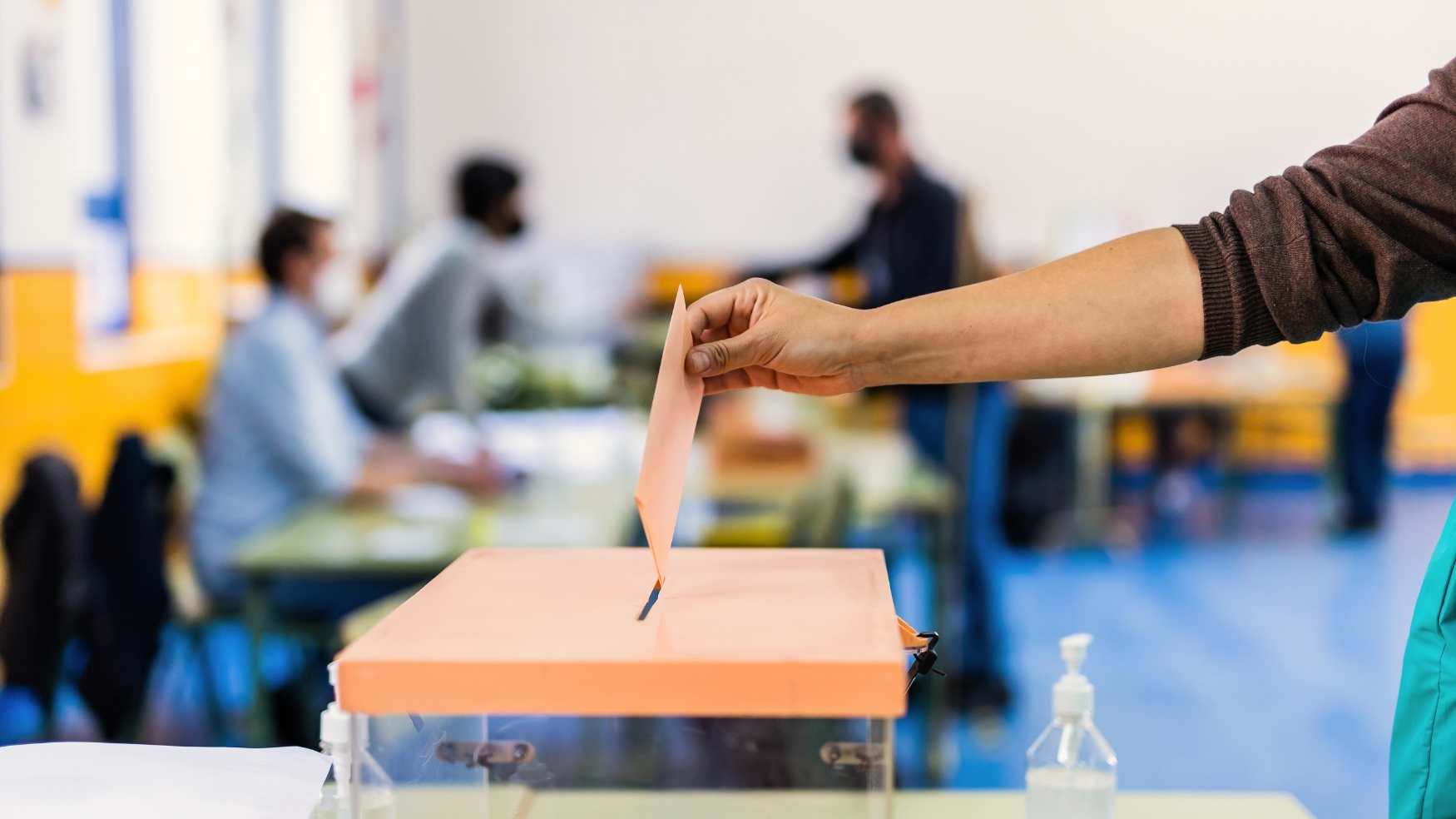
As the 2026 municipal elections approach, one figure is striking: 87% of French people say that the energy transition will influence their vote. However, on the ground, the subject is struggling to establish itself as a central campaign theme.
How can we explain this paradox, when 92% of mayors say they are acting? Why is energy still being politically underexploited?
The answer is in one word: invisibility. Local energy action is perceived as technical, expensive and complex. It is also suffering from an unprecedented reduction in the resources of municipalities.
However, this constraint can become a political and financial opportunity. Well-managed, the energy strategy becomes a powerful tool at the service of the territory.
How to make the energy transition a solid pillar of the future mandate? Here are three levers to activate right now.
The problem of energy transition Local is not not inaction.
It's invisibility.
59% of citizens say they are unaware of the actions of their town hall in the area of energy. And for good reason: you can't see how to insulate an attic or replace a boiler room.
As the 2026 municipal elections approach, the challenge is no longer just to act.
It is necessary to structure and make visible territorial energy action, by combining in-depth work and immediately perceptible initiatives.
Before promising, you have to know.
Schools, town halls, gymnasiums, heritage buildings, village halls...: in many municipalities, the built heritage is ancient, heterogeneous, and sometimes poorly documented.
The energy audit of buildings is the The basis of a credible territorial energy strategy. This precise photograph of the existing makes it possible to:
The objective: to move from reactive management “piecemeal” to a structured multi-year trajectory.
The energy audit then becomes a budgetary and environmental planning tool.
Often perceived as a constraint, the Tertiary decree requires a gradual reduction in the energy consumption of tertiary buildings of more than 1,000 m².
First deadline: - 40% by 2030.
This obligation sets a numerical, dated and measurable trajectory. In other words: a cap. Instead of being subject to regulation, A municipality can take over it for :
The Tertiary Decree offers an opportunity to preserve the municipal budget.
Reducing consumption reduces bills. It also limits exposure to the volatility of energy prices.
Public lighting is the second largest energy source in municipalities after buildings. On average, it represents 37 to 41% of their electricity consumption.
It is also one of the positions where the results are the most visible.
Switching to LED, intensity modulation, intelligent night off and presence detection have immediate effects :
Renovating public lighting sends a clear signal. The municipality's commitment to the energy transition is becoming visible, measurable and concrete.
Installing photovoltaic panels on schools, car parks and administrative buildings transforms public facilities into evidence of environmental exemplarity.
Renewable energies combine numerous advantages:
Beyond financial benefits, a solar roof is a strong political marker. Visible, it embodies the commitment of the municipality and reflects a responsible image.
The first obstacle to the local energy transition is often financial. Raising property taxes is politically risky and socially sensitive.
But it is today possible to finance the transition without additional fiscal pressure.
Solutions to control public spending? Maximize aid, optimize the purchase of energy and negotiate effective partnerships.
Les Energy Saving Certificates (CEE) are one of the main levers for financing energy efficiency.
Insulation of public buildings, modernization of heating systems, energy renovation: many actions are eligible for significant aids. But this device is technical and complex.
Without support, a municipality may under-exploit EECs.
One energy saving consultant helps with:
{{ask-advice=” /ctas "}}
The purchase of energy is a savings driver that is often underestimated. However, an adapted purchasing strategy can generate financial leeway from the first year.
Contractual choices directly influence spending of the municipality. Several options for purchasing energy exist:
Arbitrating between these options requires detailed market analysis and risk forecasting. Well controlled, the purchase of energy:
The energy then becomes a management tool, and no longer a variable experienced.
The energy transition opens the way to new models of cooperation.
For a long time, the alliance with the private sector has long aroused distrust. Today, 77% of mayors are open to public-private partnerships (PPPs) and third party financing.
The principle is simple: sharing or transferring financial risk to a partner. Numerous montages exist:
These devices make it possible to:
The challenge for the elected official is not to delegate blindly, but to build a balanced partnership in the service of the general interest.
For a long time, local energy policy was reduced to a succession of works triggered by the emergency. To convince in 2026, this logic is no longer enough. It's no longer just about renovating buildings. Managing the energy transition is becoming essential.
Heat networks embody this change of scale. More than 1,000 networks are operating today in France, the majority of which are initiated by local authorities.
Rather than equipping each building individually, these networks pool heat production and distribution at the scale of a neighborhood. The same network can supply public buildings and collective housing. It is based on local renewable sources, adapted to the territory:
The interest is threefold:
Heating networks thus become a tool for land use planning and economic attractiveness.
You only pilot well what you measure.
Today, municipalities have a lot of data: invoices, meter readings, consumption per building, use and period. But this information is often scattered, poorly exploited and rarely consolidated.
Centralized and analyzed, they become a powerful decision support tool.
Energy management allows:
The energy transition is becoming legible and verifiable.
This is precisely the mission of Pilott, an energy management platform, developed, hosted and supported in France by Sirenergies.
With Pilott, you track and centralize your energy data in a single management platform, without multiplying dashboards.
Clear, up-to-date dashboards transform decision-making. It is no longer intuitive or responsive.
Thanks to data, the territorial energy strategy is based on reliable, measurable and shared indicators.
{{ask-demo=” /ctas "}}
Energy management is not only technical. It is a political lever and an instrument of democratic transparency.
Thanks to energy management, the municipality can commit to concrete goals.
She can also demonstrate your successes thanks to an indisputable numerical balance sheet:
Energy is a central electoral issue.
Beyond the environmental dimension, it influences:
Structured, intelligently financed and driven by data, it ceases to be a simple expense item. It becomes a strategic lever at the service of the territorial project.
Voters no longer expect intentions. They are waiting for results. For elected officials, energy policy is a demonstration of their capacity for responsible, proactive and future-oriented management.
Elected, is your municipal budget under pressure?
Discover our solutions for financing the energy transition without increasing local taxation.
{{know-more-services=” /ctas "}}
In a few clicks, organize an exchange with one of our experts.


weekly newsletter subscribers

4.9

.png)

La réussite d'un projet collectif énergie repose sur trois piliers fondamentaux :
Farms must deal with high seasonal needs (greenhouse heating, irrigation, storage) and high volatility of prizes. Controlling these costs is essential to maintain profitability and secure the business.
It allows you to prove your commitment to the energy transition and to meet regulatory requirements.
To calculate Scope 2 emissions, use the following formula:
Energy quantity (kWh) × Emission factor (kg CO₂ e/kWh).
Use databases like ADEME for precision.
Les profits include a direct reduction in bills, strengthened budgetary forecasting and better control of consumption. Businesses gain visibility and efficiency thanks to adapted tools.
Pas nécessairement sur votre facture finale. Si les prix de gros (le prix de l'énergie brute) ont baissé, les coûts d'acheminement (TURPE) et certaines taxes augmentent, compensant souvent la baisse de la part énergie.
Sourcing consists in identifying and analysing the offers of several electricity and gas suppliers. This approach makes it possible to obtain contracts adapted to the consumption profile and budgetary constraints of the company.
Tertiary companies must manage their energy costs while guaranteeing the comfort of users (offices, shops, services). Consumption is often linked to heating, air conditioning and lighting, which requires precise monitoring to avoid budgetary excesses.
Tertiary companies are concerned by taxes such as TICFE or TICGN. Sirenergies checks the accuracy of invoices, identifies possible exemptions, and helps correct errors to sustainably reduce costs.
Changing suppliers can allow you to benefit from more competitive prices, adapted services or better contractual conditions. Thanks to sourcing, change is happening without interruption of supply.
Même le bâtiment le plus moderne et le mieux isolé perd son efficacité si ses usages sont inadaptés. La technologie et les normes ne suffisent pas : la transition énergétique est avant tout une transformation humaine.
Derrière chaque kilowattheure consommé se cache une habitude.
Un collaborateur sensibilisé comprend qu'ouvrir une fenêtre alors que le chauffage est allumé ou laisser un ordinateur en veille consomme de l'énergie inutilement. En replaçant l'humain au centre de la stratégie de gestion de l'énergie, l'entreprise s'assure que ses équipements performants sont utilisés de manière optimale, garantissant ainsi une rentabilité durable et un impact environnemental réduit.
Plusieurs leviers existent pour préserver la fiscalité locale :
Exceeding capacity leads to financial penalties and can impact the size of the contract. Adjust the correctly subscribed power makes it possible to avoid these additional costs.
The subscribed power must be calculated according to the consumption profile and uses (heating, industrial processes, tertiary equipment). One fine analysis makes it possible to ensure the adequacy between real need and contract.
Yes. The supplier guarantees an offer 100% renewable via the official Guarantees of Origin (GO) mechanism.
For the most demanding companies, the offer GREENVOLT+ ensures very low carbon intensity electricity, sourced exclusively from independent French producers (hydraulic, wind, solar).
The range E @sy is available in four pricing structures to adapt to each risk profile:
Communities are subject to taxes such as TICFE or TICGN. Sirenergies analyzes invoices, identifies exemption possibilities and fixes possible errors to reduce the tax burden.
En analysant votre courbe de charge pour identifier la puissance réelle appelée, puis en demandant un ajustement à votre fournisseur ou via un expert en énergie.
L'ARENH est remplacé par le VNU (Versement Nucléaire Universel), un mécanisme de redistribution des revenus excédentaires d'EDF en cas de prix très élevés, et par les CAPN, des contrats long terme pour les gros industriels.
The industry is concerned by TICFE, TICGN and other contributions that may represent an important part of invoices. Sirenergies identifies cases of exemption and accompanies the procedures to benefit from them.
Un appel d’offres permet de mettre en concurrence plusieurs fournisseurs d’électricité et de gaz afin d’obtenir des conditions contractuelles optimisées. C’est une démarche transparente qui permet de choisir l’offre la plus adaptée aux besoins budgétaires et techniques de l’organisation.
En 2026, les principaux leviers sont : la renégociation de votre contrat de fourniture au bon moment, l'optimisation de votre tarif d'acheminement (TURPE), la vérification de votre éligibilité aux taux réduits de taxes (Accise), et la réduction de votre consommation (efficacité énergétique, autoconsommation).
One invoice consists of several elements: consumption, supplier share, taxes and contributions. The analysis of each line makes it possible to identify possible errors and to check the consistency with the signed contract.
Farms are subject to taxes such as TICFE or TICGN. Sirenergies verifies their application, identifies cases of exemption and accompanies the procedures to reduce the tax burden.
Sourcing offers better visibility on the market and promotes the selection of competitive contracts. It helps to reduce the risks associated with price volatility and to optimize the energy budget.
Le calendrier 2026 impose deux échéances majeures :
Pour simplifier ces démarches, vous pouvez centraliser vos données de consommation avec la plateforme Pilott de Sirenergies, garantissant ainsi la conformité de vos rapports réglementaires.
Idéalement entre 6 et 12 mois avant l'échéance, de préférence au printemps ou au début de l'été lorsque la demande est plus faible.
Les caves coopératives de taille ETI ou grande entreprise peuvent être soumises à l'audit énergétique réglementaire (norme NF EN 16247). Sirenergies n'a ni la compétence ni l'accréditation pour réaliser cet audit : nous vous orientons vers un bureau d'études partenaire accrédité, et vous accompagnons en amont sur vos achats et en aval sur le pilotage.
The €/MWh is a price unit used in wholesale markets, while kWh is the unit visible on your bills.
Industrial companies consume large volumes of energy for their production processes. They have to deal with the volatility of prizes, multi-site management and specific taxes. Controlling costs is essential to remain competitive.
All businesses, from SMEs to large organizations, can benefit from this service. Les local authorities also find it a lever to better control their budgets.
Some businesses may obtain a partial or total exemption from the TICFE or the TICGN, depending on their activity and energy intensity. The support of an expert makes it possible to identify the eligibility criteria and to put together the file.
Le dispositif ARENH a laissé place au VNU (Versement Nucléaire Universel).
Ce changement structurel expose davantage les entreprises aux prix de gros, rendant la gestion des risques plus complexe qu'auparavant.
Il devient alors indispensable de définir une stratégie d'achat d'électricité avec Sirenergies pour lisser l'impact de la volatilité des marchés sur votre budget.
This makes it possible to choose the right time to contract, secure your budgets and anticipate increases.
Among the taxes include TICFE, TICGN, CTA, CJA and TURPE. They represent a significant part of the bill and vary according to consumption profiles. Understanding them well is essential to optimize costs.
C'est le levier le plus rapide pour obtenir des résultats visibles. L'éclairage représente environ 40 % de la consommation d'électricité d'une commune.
Passer au LED avec pilotage intelligent permet de réduire la facture de 50 à 80 %, avec un retour sur investissement (ROI) rapide, souvent estimé à 2 ou 3 ans.
Les coopératives de taille ETI ou grande entreprise peuvent être soumises à l'audit énergétique réglementaire (norme NF EN 16247). Sirenergies n'a ni la compétence ni l'accréditation pour réaliser cet audit : nous vous orientons vers un bureau d'études partenaire accrédité, et vous accompagnons en amont sur vos achats et en aval sur le pilotage.

L’action énergétique locale est souvent technique et structurelle (isolation, changement de chaufferie, réseaux enterrés). Bien que 92 % des maires déclarent agir, près de 60 % des citoyens ignorent ces actions.
Pour briser cette invisibilité, il est crucial de combiner les travaux de fond avec des marqueurs visuels forts, comme la solarisation des toitures ou la modernisation de l'éclairage public.
C'est le levier le plus rapide pour obtenir des résultats visibles. L'éclairage représente environ 40 % de la consommation d'électricité d'une commune.
Passer au LED avec pilotage intelligent permet de réduire la facture de 50 à 80 %, avec un retour sur investissement (ROI) rapide, souvent estimé à 2 ou 3 ans.
Plusieurs leviers existent pour préserver la fiscalité locale :