




Summarize with AI

March 6, 2026
5
Min reading
The use of fossils to produce energy has already become a major problem for several decades. The voices are constantly being raised in favor of its replacement by renewables that do not promote global warming.
Around the world, governments are becoming more and more aware of the importance of making an energy transition as soon as possible. The wish of many countries is to achieve, within a few years, carbon neutrality. Is that possible? Can you supply an entire country with renewable energy?
In order to considerably limit the CO emissions2 due to the production of electricity, inexhaustible energy sources must be used.
Solar energy has the advantage of being able to be produced by households, businesses, businesses, institutions, local authorities... In reality, there are two types of energy From the Sun, namely: solar photovoltaic energy and solar thermal energy.
As its name suggests, photovoltaic energy is produced through the installation of photovoltaic panels and is suitable for domestic or professional use. As for solar thermal energy, it is produced by using the energy of solar radiation to heat a fluid. It is suitable for a large-scale feeding.
Companies, associations and local authorities committed to the fight against global warming make use of it in France. Solar energy is one of the green energies that states, in this case the French state, rely on for achieve carbon neutrality. Financial assistance is being put in place to encourage the installation of solar panels.
Wind energy is obtained through the use of the kinetic energy (the movement) of the wind. To produce it, it is necessary to install wind turbines on land or at sea. To supply consumers on a large scale, offshore wind power installations are the most appropriate.
Although it is intermittent, Wind energy has a very significant proportion in electricity production in some countries such as Denmark. In France, according to the objectives of the 2015 law on energy transition, this type of energy should constitute 40% of green energy production in France by 2030.
Biomass energy is generated from the combustion of wood or the methanization of organic materials. The particularity of Biomass is that it can produce electricity, fuel or heat (for heating). She is used in France to heat the interior of homes.
Derived from the exploitation of water through marine currents, hydraulic energy is widely consumed around the world. In France, it is the first source of renewable electricity and the second most common source, after Nuclear energy. In the near future, the latter could be supplanted by marine energies.
Like the sun, wind, water, and organic matter, Earth is also a renewable source of energy. The heat it contains is used to produce electricity or heat. Generally, the geothermal energy is put to use in homes through The installation of a heat pump.
The various renewable energy sources mentioned are likely to replace polluting energies in the long term.
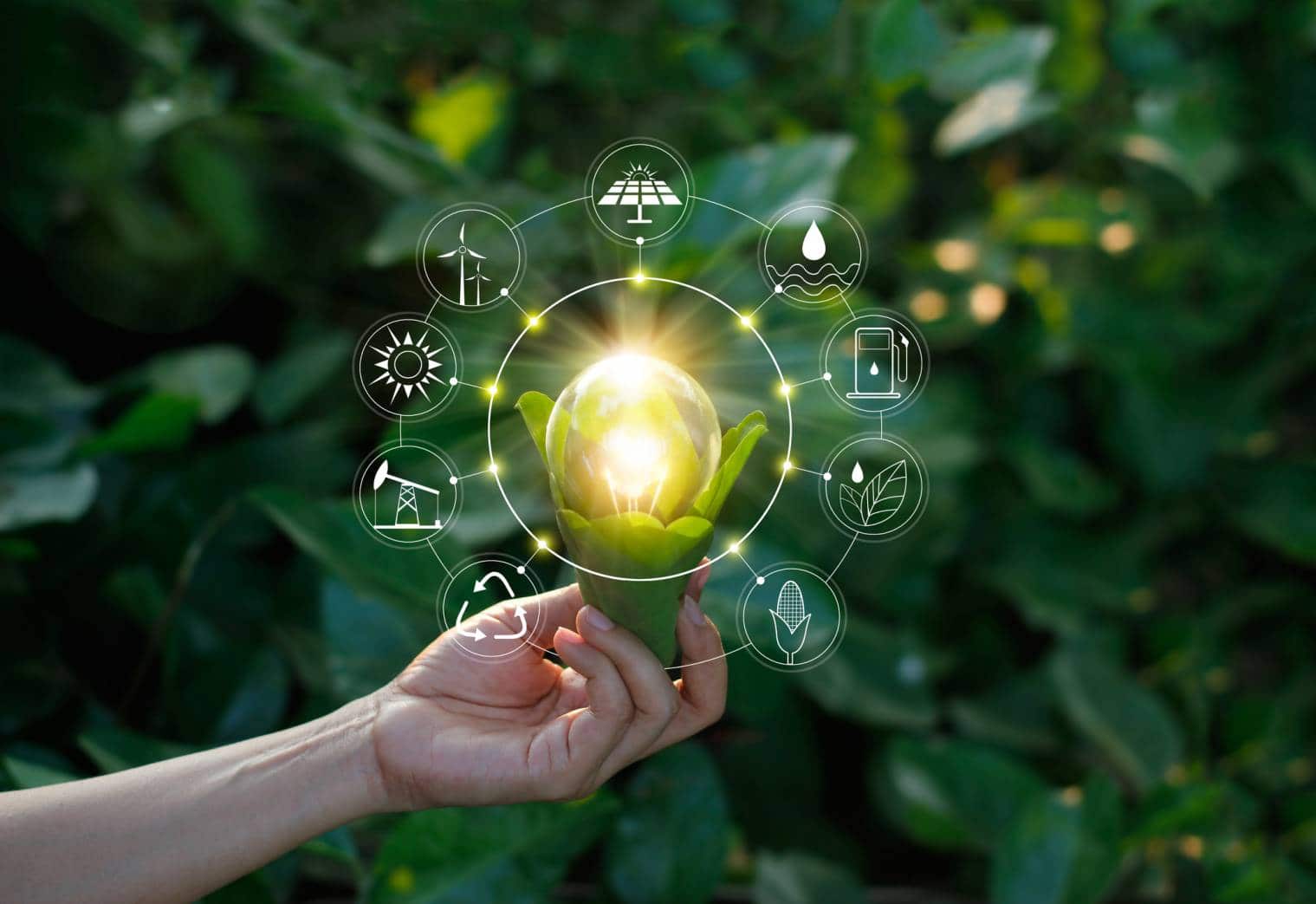
If you have read this article so far, you are probably guessing that it is possible to produce energy for an entire country. with no emission of greenhouse gases. Yes, the whole of France can be supplied with green energy. Right now, right now? No.
The energy transition can be effective by around 2050. This is the conclusion of a report by the operator of the RTE (Electricity Transmission Network) and the IEA (International Energy Agency) on carbon neutrality. Nevertheless, certain conditions must be met.
Submitted to the government on 27 January 2021, the report produced jointly by the RTE manager and the IEA recommends, among other things, the management of The intermittency of renewable energies. In fact, solar energy can only be produced during the day and wind energy can only be obtained when there is wind. To better manage the production of these energies, large-scale storage is required.
Another condition for covering French territory with 100% clean energy is the stabilization of the electrical network frequency. Solar and wind energies are highly fluctuating, which does not facilitate the balance between electricity production and consumption. In addition, The development of energy mix is essential to move progressively towards the energy transition. The aim is to distribute renewable energies in the production of electricity and heat on a national scale.
The consumption of green energy is no longer a dream and even less a secret in many countries. Apart from France, other countries have given themselves to objective of cleaning up their energy production to make it as less polluting as possible. Some are a step ahead of France and are genuinely tending towards carbon neutrality.
The Climate Council, an Australian NGO, regularly lists countries that stand out for their actions to have completely green electricity. At the end of 2019, the structure indicated that in Costa Rica, 95% of electrical energy is produced from renewable sources. In Uruguay, almost all electricity is green.
In Europe, Scotland is a locomotive for ecological transition. As proof, in October 2019, wind energy represented 98% of electricity production. In Africa, Kenya has taken advantage of geothermal energy to satisfy more than 50% of its electricity needs. These are key figures that show that renewable energies can cover the energy demand of an entire country.
In short, the production of green energy is a challenge that all states in the world must meet. More and more efforts are being made in countries to consume clean energy. In 2020, for the first time in the European Union, electricity production via renewable sources was 38% compared to 37% for fossil sources (Source: bfmtv.com). It is already a good start!
Do not hesitate to read our article that answers the question: Why is energy storage necessary?
In a few clicks, organize an exchange with one of our experts.


weekly newsletter subscribers

4.9

.png)

The range E @sy is available in four pricing structures to adapt to each risk profile:
Les caves coopératives de taille ETI ou grande entreprise peuvent être soumises à l'audit énergétique réglementaire (norme NF EN 16247). Sirenergies n'a ni la compétence ni l'accréditation pour réaliser cet audit : nous vous orientons vers un bureau d'études partenaire accrédité, et vous accompagnons en amont sur vos achats et en aval sur le pilotage.
Yes. The supplier guarantees an offer 100% renewable via the official Guarantees of Origin (GO) mechanism.
For the most demanding companies, the offer GREENVOLT+ ensures very low carbon intensity electricity, sourced exclusively from independent French producers (hydraulic, wind, solar).