




Summarize with AI

March 6, 2026
4
Min reading
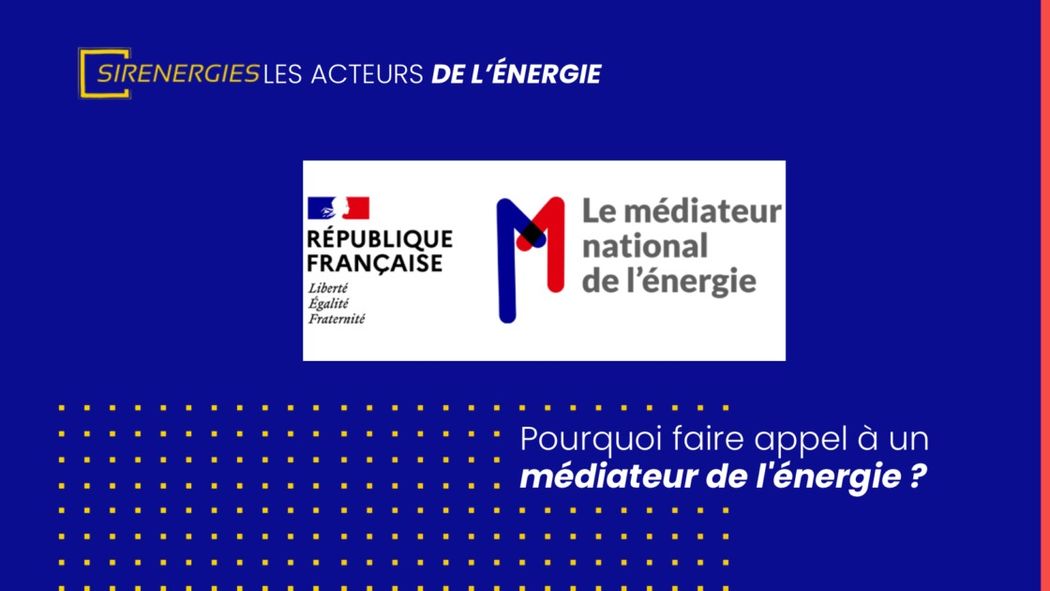
In the current context of tension on the energy markets, the National Energy Ombudsman (MNE) has never been so much in demand by consumers to resolve disputes. Its role is essential to maintain quality customer service among suppliers and to prevent them from taking advantage of market volatility at the expense of their customers.
The National Energy Ombudsman (MNE) is a independent public authority which provides information to consumers and attempts to resolve disputes between companies in the energy sector.
The National Energy Ombudsman has a twofold mission: first of all a Information mission of energy consumers then the amicable settlement of disputes involving companies in the energy sector. By carrying out its public service mission, it contributes to the smooth functioning of energy markets.
Its financing is provided by the State and its budget is voted each year by Parliament in a finance law.
The profiles of consumers who can use the MNE are varied: individuals, self-consumers individuals (electricity producers who consume part of it and resell the surplus), small businesses (artisans, traders, liberal professions and small professionals), as well as non-professional actors (condominiums, associations, local authorities...).
Consumer litigation can be with:
Several decrees detail the impartiality of this body, an imperative condition for the smooth running of the activities of the MNE.
Indeed, whether they act as part of the MNE's mission to provide information or to resolve disputes, the mediator and his agents must not favour one party over another.
The mediator must perform his duties without giving in to possible external pressures and without bias. He therefore takes care to prevent any conflict of interests so that his impartiality is never questioned.
Through its communication and mediations, the MNE has a positive influence on the service provided by electricity and gas suppliers to small consumers. They are better informed and therefore better able to understand their energy contract. Therefore, suppliers need to be more transparent and educational with their customers.
The litigation must of course fall within the remit of the national energy ombudsman. He intervenes for all disputes arising from contracts concluded with a company in the energy sector.
There are other important conditions that must be met:
If a satisfactory agreement is reached by the MNE and accepted by all parties, the mediator certifies the end of the conflict by setting up a formalization.
If the dispute with a company complies with the conditions established by the MNE, the dispute is referred to mediation. The consumer is then informed of the progress and deadlines of the instruction. It is important to note that consumers can opt out of the mediation process at any time without cost or penalty.
Consumers and operators are involved throughout the investigation of the dispute in order to reach a mediation solution. In this sense, a dialogue is established between operators (supplier, distribution network manager and/or buyer) and consumers, in order to reach a compromise.
Operators are invited to submit a solution within a deadline set by the energy ombudsman. The MNE can itself propose a solution if the parties are at an impasse. Finally, if a satisfactory solution for all parties involved is found, the mediator takes note of the end of the dispute through the conclusion of an amicable agreement.
If, as a consumer, you want information about energy markets or the litigation process, the site energy-info.fr is available.
To contact a mediator, it's very simple:
The existence of the energy mediator allows the most exposed small consumers, due to their limited knowledge of the market and their low interest in energy, to getting out of inequitable contract situations.
The role of the MNE has been consistent with French energy policy since the beginning of market liberalization, the protection of small consumers remains a priority for the authorities. It is necessary that the consumer has tried to resolve disputes with the professional before contacting the national ombudsman. This attempt must be made in writing within a period of between two months and one year.
💡 To support businesses impacted by the rise in energy prices, the Government has set up various assistance mechanisms. SirEnergies helps you see things more clearly in this article: Rising energy prices: What aid for businesses in 2023?
In a few clicks, organize an exchange with one of our experts.


weekly newsletter subscribers

4.9

.png)

L'impact dépendra des prix de marché. Le mécanisme prévoit une redistribution si les prix dépassent 78 €/MWh. Cependant, si les cours restent bas (actuellement autour de 60 €/MWh), le dispositif ne s'activera pas. La facture sera alors indexée à 100% sur les prix de marché, rendant le choix du fournisseur et du moment d'achat critiques.
In 2025, the supplier had a NPS (Net Promoter Score) of +16 and a note of 4,17/5.
Satisfaction is based on a “zero solicitation” model and 100% in-house customer service in Toulon, guaranteeing proximity and responsiveness that cannot be found with major historical suppliers.
The range E @sy is available in four pricing structures to adapt to each risk profile:
Absolument. La réforme des heures creuses vise à absorber la surproduction solaire en milieu de journée. Les créneaux d'heures creuses se déplacent progressivement vers la plage 11h00 – 17h00, notamment en été. C'est une opportunité majeure pour les sites industriels ou tertiaires capables de flexibilité.
Conseil stratégique :
Ce seuil est jugé élevé par rapport aux prévisions actuelles du marché. Si le prix de l'électricité reste en dessous de 78 €/MWh, les entreprises ne bénéficieront d'aucune redistribution. Cela signifie que la protection promise par la réforme pourrait être inexistante dans un marché baissier, d'où l'importance de stratégies de sourcing agiles et d'outils de monitoring comme Pilott.
La fin de l'ARENH (Accès Régulé à l'Électricité Nucléaire Historique) marque l'arrêt de la fourniture d'électricité à prix fixe garanti (42 €/MWh).
Dès le 1er janvier 2026, les entreprises sont exposées aux prix de marché, mais deux nouveaux mécanismes de régulation prennent le relais, bien que leur logique soit différente :
Conseil stratégique : Ne comptez pas sur le VNU pour réduire votre facture en 2026 si les marchés restent stables. Auditez vos contrats dès maintenant pour intégrer une part de prix fixe ou explorer des "Power Purchase Agreements" (PPA) pour sécuriser vos coûts sur le long terme.
La Multiannual Energy Programming (PPE) is the strategic management tool for France's energy policy. Established by the 2015 law on energy transition for green growth (LTECV), it serves as a compass for the State, communities and businesses.
Concretely, the PPE sets the priorities for action of the public authorities for the management of all forms of energy on the national territory. It covers a period of ten years, divided into two periods of five years, and must be revised periodically to adapt to technological and economic developments.
It deals with major topics such as:
It is crucial not to confuse it with National Low Carbon Strategy (SNBC). While SNBC sets carbon budgets (the ceilings for greenhouse gas emissions by sector), the PPE determines the technical and energy resources to achieve them.
Non. L'IA traite la donnée (data processing), mais l'analyste apporte la compréhension du contexte (market sentiment) et la prise de décision stratégique.
Car les marchés dépendent de facteurs exogènes imprévisibles (géopolitique, météo soudaine, politique) que les modèles basés sur l'historique ne peuvent pas anticiper, tout comme on ne prédit pas le Loto.
La Vente de Nucléaire Universelle (VNU) est le nouveau mécanisme de régulation des prix de l'électricité en France. Contrairement à l'ARENH, il ne s'agit plus d'un volume fixe à prix réduit, mais d'une redistribution financière des revenus excédentaires d'EDF aux consommateurs, basée sur les prix de marché et les coûts de production du nucléaire historique.
The central objective of PPE 3 is to engage France towards carbon neutrality by 2050 by breaking the country's historical dependence on fossil fuels.
Today, approximately 60% of final energy consumption in France still relies on imported oil and natural gas. PPE 3 aims to radically reverse this trend by setting an ambitious target: to reach 60% of carbon-free energies in final consumption by 2030.
To achieve this, PPE 3 pursues three major sub-objectives:
Chaque modèle d'IA répond à un besoin spécifique du cycle d'achat :
L'expertise humaine reste néanmoins indispensable.
Le prix Forward est fixé à l'avance (sécurité budgétaire), tandis que le prix Spot varie heure par heure selon le marché (opportunité mais risque élevé).
Instauré en 2017, ce dispositif répond à un enjeu de sécurité nationale.
L'électricité ne se stockant pas à grande échelle, le réseau doit être capable de répondre instantanément à la demande, même lors des pics de froid hivernaux. Le mécanisme incite financièrement les producteurs à maintenir leurs centrales disponibles et les entreprises à réduire leur consommation (effacement) lors de ces périodes critiques.