





Summarize with AI

March 4, 2026
6
Min reading
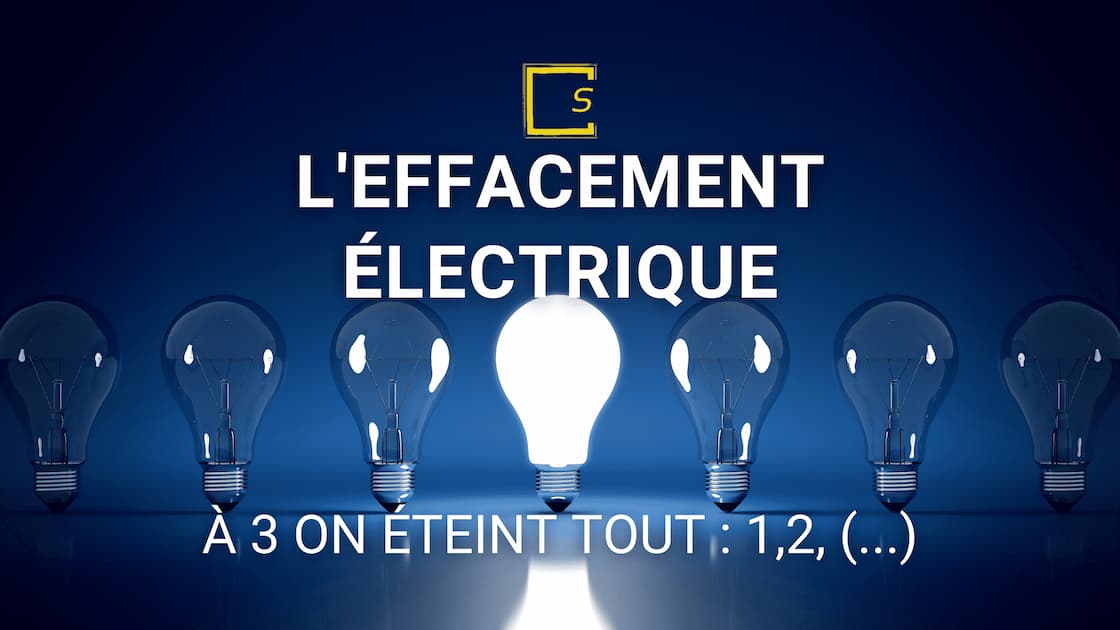
“One, two, three, let's turn off the lights”, Roger Gicquel told viewers of the 8 p.m. newspaper on Thursday, March 17, 1977, on TF1. “What do we see now? ”, he asks Michel Chevalet, who was present at the same moment at the center of Dispatching National : “Well, it's very clear”, replies the latter, “the balance sheet for all of France at the moment (.../...) is almost 175 thousand kW (175 MW) in electricity savings”.
Through this experiment conducted in real time, the French were shown the usefulness of reducing consumption on the electrical system and the benefits of a sober energy system in the face of soaring oil prices. Every viewer in front of their small screen that evening was able to feel responsible for their energy consumption.
For those of you who turned off switches at the invitation of Roger Gicquel, know that you participated in the first large-scale diffuse erasure experiment.
One Electrical erasure therefore consists, for a consumer, in reducing consumption by turning off electrical equipment, for example an electric heater or a water heater, on a signal sent by the dispatching of the national electrical network.
The objective of the operation is to reduce or stop the electricity drawn from the network at a given moment during a defined period of time. In return for his action, the consumer receives A remuneration Or gets a reduction in his subscription, which is the same thing.
Electrical erasure is not a new idea. As early as the 1950s, EDF signed contracts with major metallurgical manufacturers in order to encourage them to consume when hydroelectric power plants produce more than needed, and conversely to reduce the consumption of their industrial equipment, or even to stop it, during peak consumption. At the time, hydroelectric power plants produced 50% of the electrical energy in France.
Today, with the development of renewables, wind farms and photovoltaic power plants, the electrical system again needs to develop erasure capabilities to cope with The intermittency of renewable energies without using thermal power plants state of the art.
The challenge is the development of a low-energy system, not to deal with soaring oil prices, but to reduce CO2 emissions and limit climate change.
There are essentially two types of erasure: industrial erasures And the diffuse erasures.
The first, as indicated above, were created in the 1950s to compensate for the intermittency of the majority of hydroelectric power plants in the installed park. The latter were created in 1965 with the EDF Tempo rate, which is an off-season rate of Type: full hours/off-peak hours, and developed in 1982 with EJP rates (Erasing Peak Days), an option of EDF's historic rates.
It should be noted that at their peak, EJP tariffs made it possible to contract an erasable capacity of 6,500 MW thanks to strong pricing incentives that have since passed.
The gradual opening of energy markets to competition starting in February 1999 and the creation of the Electricity Transmission System Operator, RTE, were carried out under the impetus of the European Commission and its directive 2003-54-EC.
RTE inherited the skills of dispatching and balancing the network, previously provided by EDF, and therefore needed to be able to mobilize energy reserves to manage the electrical system.
That is why the adjustment mechanism was created at that time to allow RTE to buy energy from producers or large consumers. Thanks to this device, On a day-to-day basis, RTE buys the energy capacities necessary for the balance between production and consumption of the network.
With the gradual end of EDF's historic tariffs and the implementation of the Energy exchange Powernext in 2001, then its takeover by EEX in 2008, the valorization of production was mainly achieved through the sale of energy in MWh.
The need then emerged to valorize installed production capacities and no longer just to valorize the energy traded on the markets. Indeed, with the evolution of electricity uses, peaks in electricity consumption were becoming more and more important.
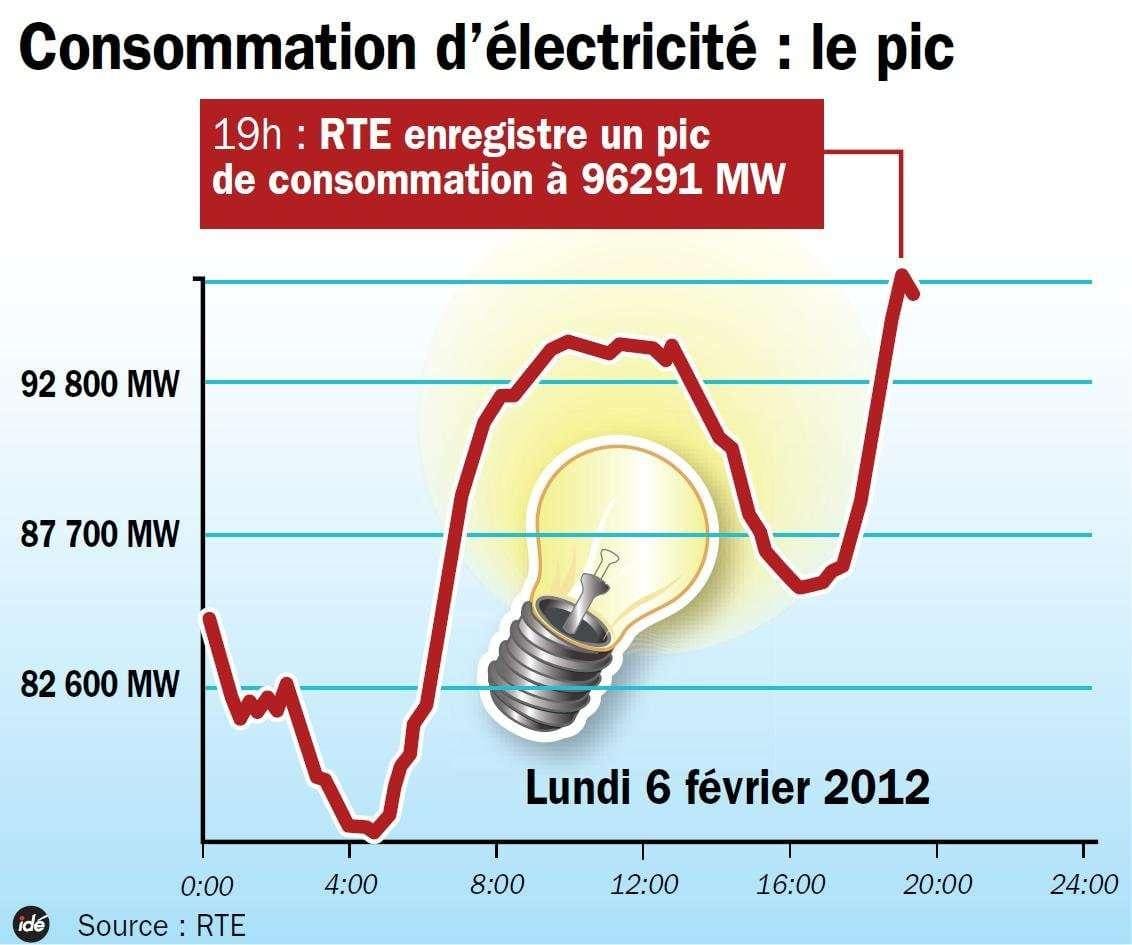
On February 6, 2012, a historic record was reached with 96,291 MW, then again on February 8 with 102,098 MW of extracted power, for an installed production park of 128,680 MW.
However, at the same time, the absence of explicit remuneration (Missing Money) of installed capacity has led to a decrease in investments in state-of-the-art power plants and therefore to an increase in the risk to network security.
Source: Futura-Sciences
That is why, in 2008, the Champsaur Commission was created to propose changes to these liberalized electricity markets. Jean Bergougnoux, former CEO of EDF, participated in this commission, who, in the 1980s, was responsible for creating the EJP tariffs.
For example, in its 2010 report, the Commission proposed the establishment of new mechanisms, including the creation of a erasure capabilities market, which, after more than five years of gestation, was born in 2016.
However, in 2012, RTE faced strong tensions with four consumption peaks of more than 96,000 MW. And as a result, without waiting for the capacity market, RTE launched calls for tenders in winter 2012 to cancel consumption and local production, first in Brittany, then at the national level.
The objective for RTE is to increase the volume of tenders submitted to the adjustment mechanism, mentioned above, via calls for tenders by paying a capacity bonus in €/MW in addition to the energy remuneration in €/MWh offered on the adjustment mechanism.
Since then, every year, RTE has been organizing tenders to meet its own needs for balancing the electrical system, in particular: the cancellation tender (AOE), the rapid and complementary reserve tender (RR/RC).
It is important to specify here that the capacity market, for its part, addresses the entire market and not only the need for RTE. In fact, all so-called mandatory actors, typically suppliers, must acquire or possess as many capacity certificates as required by regulations in view of the abundant energy consumption of their customers.
The Effacement 2022 Call for Tenders, the results of which were published on 8 November last year, allowed RTE to contract 2,403 MW. A volume up sharply compared to previous years: 1,509 MW in 2021 and 770 MW in 2020. This growth is explained by the decrease in the number of thermal power plants and by the desire to accelerate the energy transition.
In conclusion, it should be noted that all consumers, individuals, professionals or very large consumers, can participate in these tenders organized by RTE, even those connected to public distribution networks.
The Linky counter In particular, allows consumers who are equipped with it to subscribe, with certain suppliers, to offers adapted to the erasure of consumption. To do this, do not hesitate to contact SirEnergies who will assist you in choosing the best operator taking into account your consumption habits.
In a few clicks, organize an exchange with one of our experts.


weekly newsletter subscribers

4.9

.png)

En 2025, la France a atteint un solde exportateur net de 92,3 TWh, battant le précédent record de 2024 (89 TWh).
The subscribed power must be calculated according to the consumption profile and uses (heating, industrial processes, tertiary equipment). One fine analysis makes it possible to ensure the adequacy between real need and contract.
The €/MWh is a price unit used in wholesale markets, while kWh is the unit visible on your bills.
One invoice consists of several elements: consumption, supplier share, taxes and contributions. The analysis of each line makes it possible to identify possible errors and to check the consistency with the signed contract.
Among the taxes include TICFE, TICGN, CTA, CJA and TURPE. They represent a significant part of the bill and vary according to consumption profiles. Understanding them well is essential to optimize costs.
Le processus repose sur l'utilisation de la force de l'eau (énergie cinétique) issue des courants, des chutes d'eau ou des dénivelés. Le fonctionnement suit trois étapes clés :
Un appel d’offres permet de mettre en concurrence plusieurs fournisseurs d’électricité et de gaz afin d’obtenir des conditions contractuelles optimisées. C’est une démarche transparente qui permet de choisir l’offre la plus adaptée aux besoins budgétaires et techniques de l’organisation.
C'est l'indicateur d'efficacité d'un appareil électrique ; il représente le ratio entre la puissance active (utile) et la puissance apparente (totale).
Some businesses may obtain a partial or total exemption from the TICFE or the TICGN, depending on their activity and energy intensity. The support of an expert makes it possible to identify the eligibility criteria and to put together the file.
Exceeding capacity leads to financial penalties and can impact the size of the contract. Adjust the correctly subscribed power makes it possible to avoid these additional costs.
These are signals sent by RTE during periods of tension on the electrical network. The Sirenergies tool informs you in real time to anticipate your uses.
Ce record de 92,3 TWh s'explique par la conjonction de trois facteurs :
This makes it possible to choose the right time to contract, secure your budgets and anticipate increases.
Oui, elle est considérée comme une énergie renouvelable à faibles émissions de gaz à effet de serre.
De plus, l'eau ne subit aucune transformation chimique durant le cycle de production et réintègre son milieu naturel en aval.
Cependant, la construction de barrages nécessite des mesures pour protéger les écosystèmes (débit minimum, passes à poissons).
Le transport (RTE) correspond aux "autoroutes" de l’électricité. Il s’agit de transporter de très grandes quantités d'énergie sur de longues distances, depuis les centrales de production (nucléaires, barrages, parcs éoliens offshore) vers les régions de consommation.
La distribution (Enedis) s'apparente aux "routes départementales" et aux rues. Elle récupère l'électricité à la sortie du réseau de transport pour la livrer directement chez le client final, en abaissant la tension pour qu'elle soit utilisable par vos appareils.
In 2025, the supplier had a NPS (Net Promoter Score) of +16 and a note of 4,17/5.
Satisfaction is based on a “zero solicitation” model and 100% in-house customer service in Toulon, guaranteeing proximity and responsiveness that cannot be found with major historical suppliers.
Communities are subject to taxes such as TICFE or TICGN. Sirenergies analyzes invoices, identifies exemption possibilities and fixes possible errors to reduce the tax burden.
Tertiary companies must manage their energy costs while guaranteeing the comfort of users (offices, shops, services). Consumption is often linked to heating, air conditioning and lighting, which requires precise monitoring to avoid budgetary excesses.
Yes. The supplier guarantees an offer 100% renewable via the official Guarantees of Origin (GO) mechanism.
For the most demanding companies, the offer GREENVOLT+ ensures very low carbon intensity electricity, sourced exclusively from independent French producers (hydraulic, wind, solar).
L'abondance de production française tire les prix du marché de gros vers le bas.
En vertu du mécanisme de l'Ordre de Mérite (Merit Order), les centrales les moins coûteuses (nucléaire, renouvelables) couvrent la demande plus souvent, évinçant les centrales à gaz ou charbon plus onéreuses.
Cela multiplie les épisodes de prix bas, voire négatifs, sur le marché spot.
Tertiary companies are concerned by taxes such as TICFE or TICGN. Sirenergies checks the accuracy of invoices, identifies possible exemptions, and helps correct errors to sustainably reduce costs.
Farms are subject to taxes such as TICFE or TICGN. Sirenergies verifies their application, identifies cases of exemption and accompanies the procedures to reduce the tax burden.
C'est le levier le plus rapide pour obtenir des résultats visibles. L'éclairage représente environ 40 % de la consommation d'électricité d'une commune.
Passer au LED avec pilotage intelligent permet de réduire la facture de 50 à 80 %, avec un retour sur investissement (ROI) rapide, souvent estimé à 2 ou 3 ans.
Le dispositif ARENH a laissé place au VNU (Versement Nucléaire Universel).
Ce changement structurel expose davantage les entreprises aux prix de gros, rendant la gestion des risques plus complexe qu'auparavant.
Il devient alors indispensable de définir une stratégie d'achat d'électricité avec Sirenergies pour lisser l'impact de la volatilité des marchés sur votre budget.
Parce que la puissance souscrite en kVA détermine le prix de l'abonnement et que tout dépassement peut entraîner des surcoûts importants.
Le kVA mesure la capacité maximale que votre compteur peut supporter à un instant T, tandis que le kWh mesure la quantité d'énergie consommée sur une durée.
The industry is concerned by TICFE, TICGN and other contributions that may represent an important part of invoices. Sirenergies identifies cases of exemption and accompanies the procedures to benefit from them.
Sourcing consists in identifying and analysing the offers of several electricity and gas suppliers. This approach makes it possible to obtain contracts adapted to the consumption profile and budgetary constraints of the company.
The range E @sy is available in four pricing structures to adapt to each risk profile: