

Metallurgy, melting, and hot processing: wire drawing and rolling
Rolling mill and wire drawing operators: lower your production line costs
The billet leaves the reheating furnace at around 1,200°C, passes through the rolling mill stands, and the wire is then cold-drawn on wire drawing benches. Gas for reheating, electricity for rolling and drawing: energy costs for a wire drawing plant come from two separate bills. Sirenergies provides purchasing advice and reviews your TURPE.


Key industry figures
Reheating furnace, grid, and rebates: three key benchmarks for your lines
On a rolling line, the reheating furnace burns gas before the mill stand motors draw power from the electrical grid. These two areas, along with the applicable grid access rules, guide the purchasing strategy for a continuous-operation site.
High end of the typical energy range for a reheating furnace per ton of rolled steel
Average increase in the HTB (high-voltage) TURPE as of August 1, 2026, as decided by the CRE
Minimum annual withdrawal required to qualify for the TURPE rebate for electro-intensive sites
The energy profile of a wire drawing plant and rolling mill
Reheating with gas, rolling and drawing with electricity: the dual-energy bill
The reality: a line that almost never stops
- Hot rolling: billets are reheated with natural gas, then passed through stands driven by powerful electric motors.
- Cold rolling and wire drawing: strip or wire is drawn by electric motors, often operating in two or three shifts.
- Annealing and preparation: furnaces and baths heated by gas or electricity, depending on the site.
In the Grand Est region, gas accounts for half of the energy consumed by the metallurgy industry (Insee Analyses Grand Est, EACEI 2023); electricity takes the lead as soon as a site is limited to cold wire drawing.
Our role: aligning contracts with production line rhythms
Furnaces, stands, and benches remain the responsibility of your teams. Sirenergies advises your management on three levers: gas and electricity procurement, with hedging adapted to a continuous profile; transmission, with the TURPE (public electricity network usage tariff) option and HTA or HTB power levels on one side, and ATRD or ATRT (third-party access to gas distribution or transport networks) capacity on the other; and finally, the TURPE reduction reserved for electro-intensive sites, for which we verify your eligibility.


Your energy challenges
The 3 energy challenges for wire drawing plants and rolling mills
A reheating furnace with high-cost gas, a TURPE reduction that a site could have obtained without even asking, market-indexed prices without a schedule for deciding when to lock in rates: these are three situations encountered by rolling and wire drawing lines. Sirenergies handles them contract by contract.
24/7 continuous process, very high consumption
Wire mills and rolling mills operate 24/7, resulting in high electricity consumption and a subscribed power contract that dictates the entire bill.
Energy audit and procurement structuring
Sirenergies analyzes your continuous consumption profile and puts our trusted partner suppliers in competition for your HTA or HTB volumes.

HTB grid access tariffs and underutilized heat
Rolling mills and wire drawing plants connected to the high-voltage (HTB) grid generate heat that few facilities recover, even though grid access tariffs represent a significant portion of their delivery costs.
Grid tariff analysis
Sirenergies reviews your grid access contract settings to identify any potential overpayments.
Wire drawing SMEs lack support, flexibility remains undervalued
Large corporations are usually served directly by their long-standing suppliers, but wire drawing SMEs remain underserved, despite their continuous processes offering significant potential for industrial demand response, as recognized by the NEBEF mechanism managed by RTE.
Monetizing industrial demand response
Sirenergies connects you with an aggregator or a balance responsible party to turn your continuous process into an additional revenue stream.
Contractual and data expertise
Optimization and management of your rolling mill and wire drawing plant contracts
From billet reheating furnaces to wire drawing benches, Sirenergies provides advice on the gas and electricity for your lines. Operations remain in the hands of your teams; our consultants handle the contracts, transmission settings, and specific arrangements for electro-intensive sites.
Contractual and capacity audit
Review of your electricity and gas contracts and their deadlines, monitoring of subscribed power in HTA or HTB and daily gas capacity, annual analysis of excise duties, eligibility for reduced rates, and CEE (energy savings certificate) documentation.
Purchasing strategy and competitive bidding
Tendering based on a continuous and predictable profile, multi-criteria analysis of offers, negotiation prepared and conducted alongside you until signature, and subsequent execution of the price-fixing decisions you make.
Distribution optimization (TURPE / ATRD)
Electricity: TURPE option, power levels by period, and verification of the reduction reserved for electro-intensive sites. Gas: ATRD capacity for the reheating furnace, or ATRT for a site connected to the transport network. We handle the procedures with network operators.
Tariff modeling for continuous profiles
Cost per rolled or drawn ton simulated according to energy and period, budget projections based on various hedging strategies, study of PPAs (power purchase agreements) and flexibility, with support for demand response valuation.
Pilott software platform
Load curves for each site at D+1, price alerts for electricity, gas, and CO₂, centralized contracts, carbon footprint tracking, and CSV or API exports to your management tools.
Expert consulting dedicated to wire drawers
A consultant who understands continuous profiles, monitors your coverage levels and deadlines, keeps watch on electro-intensive status, transmission, and excise duties, and works with you to build energy cost-per-ton indicators.
Our platform
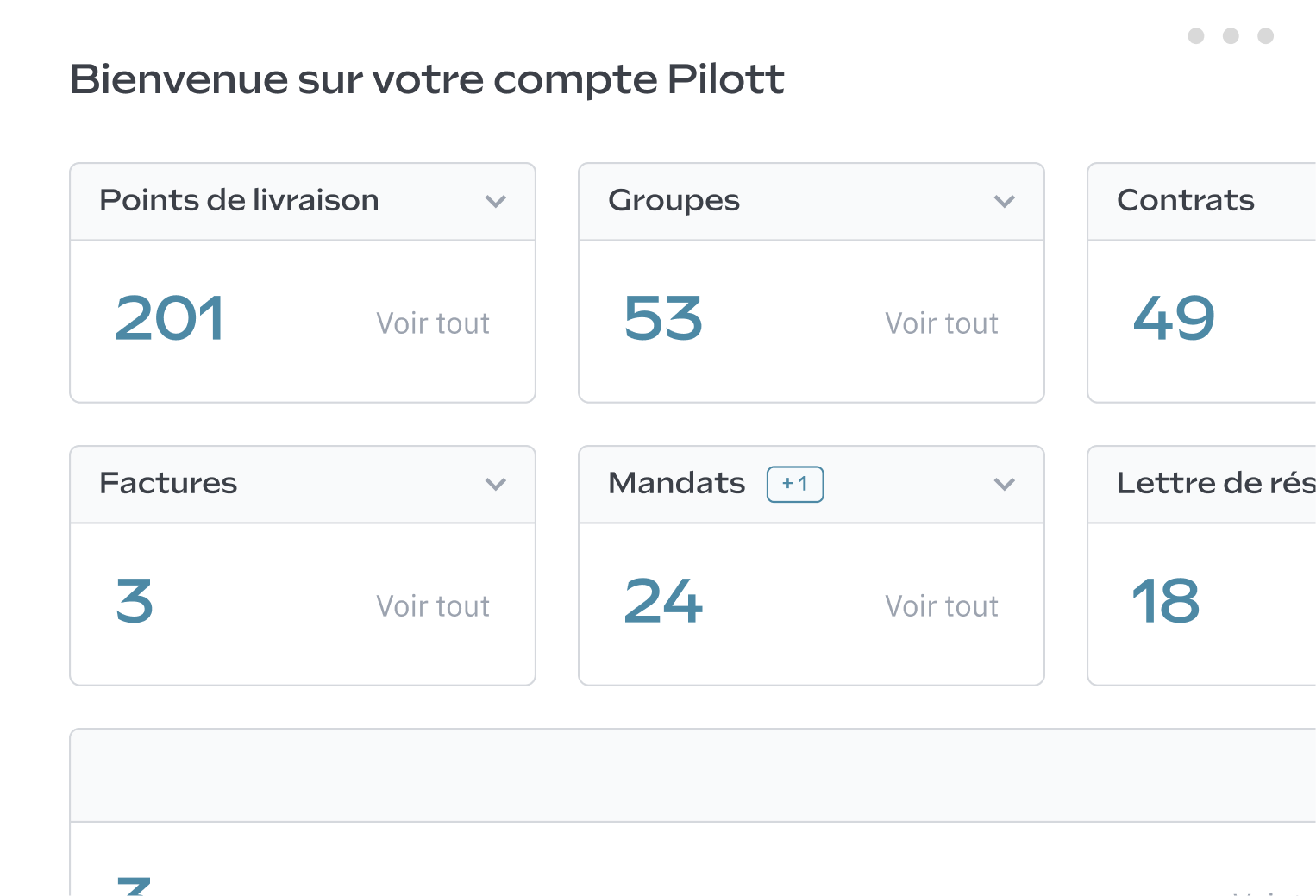
Pilott, simplified management to track your consumption
- Bring your rolling mills, wire drawing plants, and their meters together in a single interface
- Check every morning that the previous day's profile remains consistent
- Receive an alert when electricity, gas, or CO₂ levels reach your threshold
- Simulate your energy budget and manage your contracts in one place



Metallurgy, smelting, and hot processing
Explore other processes
Un autre secteur ?


Methodology and definitions
What does energy consulting involve for a wire mill or rolling mill?
For a wire mill or rolling mill, transmission costs weigh heavily on the bill, especially when the line runs continuously. Energy consulting here involves verifying the TURPE (public electricity network usage tariff) rebate available to electro-intensive sites, sizing the ATRT or ATRD (third-party access to gas transport or distribution networks) capacity for the reheating furnace, and then providing support for the procurement of both energy sources. Sirenergies consultants carry this out using the Pilott platform.
The context
In 2024, 43% of industrial facilities consuming more than 20,000 MWh of electricity had a market-price contract, compared to 7% of those consuming less than 2,000 (Insee Première No. 2095, February 2026).
- The grid: withdrawal profile checked annually against the criteria of articles L. 341-4-2 and D. 341-9 of the Energy Code.
- Gas: daily capacity reviewed based on the furnace's actual consumption.
- The market: price fixing in tranches according to a schedule decided with you, with the profile monitored at D+1.

Is your rolling line paying the right price for its energy?
Your contracts, transmission invoices, and withdrawal profile reveal potential savings. No obligation.

