

Metallurgy, shaping, and machining: locksmithing and metalworking
Metalworkers, take control of energy in every workshop
Whether for railings, stairs, metal joinery, or structural steel: welding stations, plasma cutters, shears, and compressors draw on electricity, while gas heats the workshop and sometimes the powder coating oven. Sirenergies optimizes energy for your locksmithing and metalworking business, workshop by workshop.


Key industry figures
Small workshops, high prices: the metalworking landscape
Many small establishments pay more for their energy than large sites: a well-chosen and monitored contract quickly impacts the margins of every project the company undertakes.
Building metalworking establishments recorded in France at the end of 2021.
Share of metalworking establishments with employees that have fewer than 10 staff members.
Average price per MWh of gas paid in 2024 by industrial sites consuming under 2 GWh.
The energy profile of a locksmithing and metalworking workshop
Welding, cutting, and powder coating: small bills that add up
The reality: modest workshops, often multiple locations
A metalworking workshop primarily consumes electricity: welding stations, plasma or laser cutters, shears, press brakes, compressors, and lighting. Gas heats the premises and, for those who do their own coating, the powder paint curing oven. Many companies add a warehouse or a second workshop, each with its own meter and contract. The industry employs approximately 88,000 people, with an average of 7.4 employees per employer establishment (Constructys, Insee, and Urssaf, March 2025): each contract remains small, but they add up.
Our role: bringing order to your contracts
Manufacturing, installation, and equipment selection are handled by your teams and suppliers. Sirenergies advises management—often the business owner directly—on three key levers:
- an inventory of your meters and contract deadlines, so you are no longer caught off guard by automatic renewals;
- an electricity and gas tender that groups your workshops together, compared against the regulated tariff whenever it remains available;
- consolidated tracking in Pilott, where each site retains its own meter and history.


Your energy challenges
The 3 energy challenges for locksmithing and metalworking companies
Contracts renewed without being reviewed, a choice between regulated tariffs and market offers that is rarely considered, and workshops managed individually: these are three common situations for metalworkers. Sirenergies addresses them through contract auditing, offer comparison, and consolidation.
Moderate but unmanaged consumption
In isolation, the energy consumption of a locksmith's workshop remains moderate, which often leads to this area being overlooked, even though lighting, compressors, and welding or plasma cutting stations still have a significant impact on the bill.
Energy audit
Sirenergies analyzes your contracts and invoices to provide an objective assessment of what your energy usage actually represents, workshop by workshop.

Multiple, poorly centralized sites
Locksmithing and metalworking groups operating multiple workshops often manage their contracts site by site, without a consolidated view of their total consumption.
Centralized management via Pilott
Sirenergies centralizes the monitoring of all your sites on a single platform, with alerts in the event of any discrepancies at any of them.
SMEs underserved by brokers
The locksmith and metalwork sector is largely ignored by generalist energy brokers, who rarely target SMEs with modest individual consumption levels.
Procurement and supplier tendering
Sirenergies puts our trusted partner suppliers in competition to secure a tailored contract, even for sites with moderate consumption.
Contractual and data expertise
Optimizing and managing contracts for your metalworking workshops
From welding stations to powder coating ovens, Sirenergies supports you with the electricity and gas needs of your locksmith and metalworking workshops. Your teams handle manufacturing and installation; our consultants take care of the contracts, deadlines, and site-by-site monitoring.
Contractual and capacity audit
Inventory of your meters, contracts, and their deadlines, monitoring of subscribed power levels and options, annual analysis of excise duties, and verification of your eligibility for the regulated electricity tariff.
Purchasing strategy and competitive bidding
Tendering your requirements to our partner suppliers for all your workshops, comparing results with your current rates or contracts, providing a recommendation report that may conclude with keeping your current supplier, and then tracking deadlines.
Distribution optimization (TURPE / ATRD)
Electricity: TURPE options and power levels for each meter adjusted to the actual usage of welding and cutting stations. Gas: ATRD options reviewed for heating and powder coating. Procedures handled directly with network operators.
Multi-workshop tariff modeling
Simulated consolidated budget for all your workshops based on various hedging strategies, a quantitative comparison between regulated tariffs and market offers, and a feasibility study for rooftop solar self-consumption.
Pilott software platform
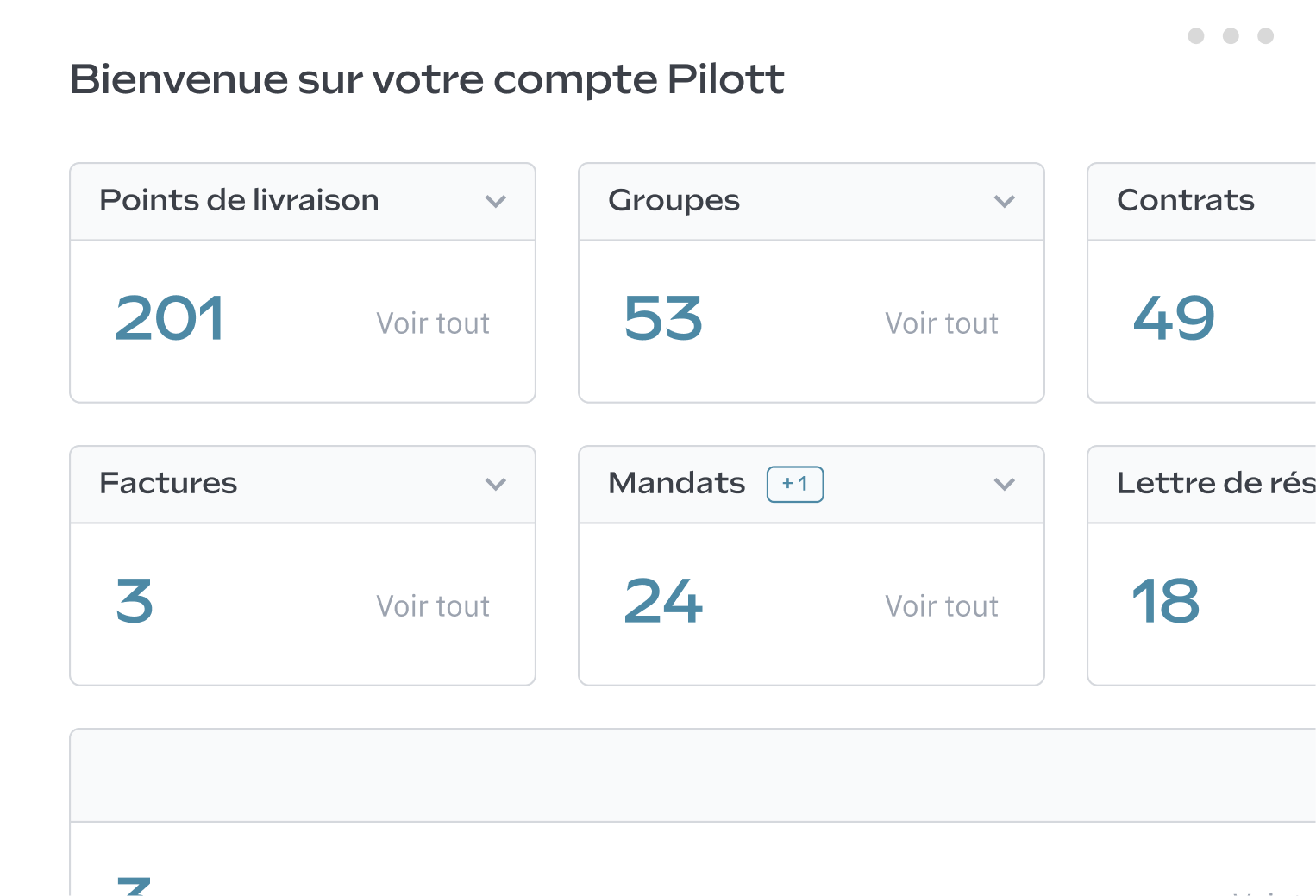
All your workshops in one place, consumption data updated daily, price alerts for electricity and gas, budget forecasting, and centralized contracts accessible to both management and the accounting department.
Expert consulting dedicated to metalworking
A dedicated consultant tracks your deadlines, market conditions, and relevant regulations, and works with you to build a simple energy cost indicator per workshop, useful for pricing your projects.
Our platform
Pilott, simplified management to track your consumption
- Group all your workshops and their meters in a single space
- Compare consumption between workshops with daily updates
- Get alerted when the price of electricity reaches your threshold
- Forecast a consolidated budget and keep all your contracts in one place



Metallurgy, forming, and machining
Explore other processes
Un autre secteur ?


Methodology and definitions
What is energy consulting for locksmithing and metalworking?
Energy consulting for locksmithing and metalworking starts with a simple observation: each workshop has its own meter, contract, and deadline. The goal is to consolidate these contracts, manage electricity and gas procurement for all sites, verify distribution costs for each meter, and study the potential output of rooftop solar panels for the workshop. Sirenergies guides you through this process, with all your meters gathered in the Pilott platform.
The context
In 2024, the smallest industrial facilities paid 2.6 times more per megawatt-hour for their electricity than the largest ones (Insee Première No. 2095, February 2026). Consolidating workshops and generating some of your own electricity are two ways to bridge this gap.
- Consolidate: all workshops and depots into a single supplier tender.
- Generate: photovoltaic self-consumption assessed for your rooftops, during the day, during welding hours.
- Centralize: every meter tracked on a D+1 basis within a shared budget.

How much are your workshops overpaying on their energy contracts?
Your latest invoices and contracts are all we need to calculate the gap, site by site. No obligation.

