

Pharmaceuticals and biotechnology: cleanrooms
Pharmaceutical sites: calculate the costs of your cleanrooms
Air handling units running day and night, terminal filtration, temperature and humidity control, and pressure cascades between grades: a cleanroom primarily consumes electricity, with gas used to heat fresh air. Sirenergies optimizes your cleanroom energy usage without affecting their qualification.


Key industry figures
Air treatment and quality: orders of magnitude for cleanrooms
A cleanroom consumes significantly more energy than a standard facility, with air treatment accounting for the majority of this usage. Measuring this specific load at your site, rather than applying a generic ratio, is the foundation for an effective procurement strategy.
Average kWh consumed per square meter per year by a cleanroom.
High-end share of air treatment in the energy consumption of a cleanroom site, according to ISPE.
Ktoe of gas consumed in 2024 by the French pharmaceutical industry.
The energy profile of a pharmaceutical cleanroom
Continuous air treatment: the primary driver of cleanroom energy bills
The reality: air is treated around the clock
Air handling unit fans, cooling and heating coils, humidification, and terminal filters: a cleanroom maintains its cleanliness classes and pressure cascades without interruption. Electricity is the dominant energy source, while gas—or the steam it produces—heats fresh air in winter. Annex 1 of the EU GMP guidelines specifies a recovery time for cleanliness rather than a fixed air change rate; at one US site, reducing these rates during production lowered consumption by 14% (ISPE, Pharmaceutical Engineering, 2023).
Our role: starting with your data, not a ratio
Published ratios vary too much from one site to another to serve as a basis for a contract. Sirenergies builds your baseline using your own meter data; the qualification remains the responsibility of your quality teams and engineering consultants.
- Measure: base load of air treatment isolated within your load profiles.
- Buy: electricity and gas reviewed against this continuous profile.
- Distribute: subscribed power, TURPE (public electricity network usage tariff) options, and ATRD (third-party access to gas distribution networks) capacity reviewed.


Your energy challenges
The 3 energy challenges for cleanroom sites
Air treatment that never stops, flow rates set for safety, and consumption that is never isolated from the rest of the site: these are three issues well known to technical management at pharmaceutical sites. Sirenergies addresses them through procurement, measurement, and ongoing dialogue with your quality teams.
HVAC with very high air change rates
Pharmaceutical cleanroom HVAC systems operate 24/7 with high air change rates, as required by their ISO classification and GMP grade.
Cleanroom energy audit
Sirenergies analyzes your contracts and load profiles to identify optimization opportunities that maintain your classification.

HVAC systems are often oversized out of caution
In the absence of regulatory air change rates, many operators oversize their HVAC systems as a precaution, which increases costs without providing any additional compliance benefits.
Optimizing HVAC without compromising compliance
Sirenergies guides you toward industry-standard best practices for adjusting your HVAC system, in consultation with your quality teams, without ever jeopardizing your GMP compliance.
Market segment underserved by brokers
No generalist energy broker specifically targets pharmaceutical cleanrooms, even though their high, continuous consumption profile makes them high-stakes sites.
Procurement and supplier tendering
Sirenergies puts our trusted partner suppliers in competition to secure a contract tailored to the absolute continuity of your site.
Contractual and data expertise
Optimizing and managing contracts for your cleanroom sites
From the air handling unit to the boiler heating fresh air, Sirenergies supports you with the electricity and gas for your controlled atmosphere zones. Your quality teams maintain the grades; our consultants handle the contracts, distribution, and measurement.
Contractual and capacity audit
Reviewing your electricity and gas contracts, their expiration dates, your subscribed power levels, and your daily gas capacity against a continuous profile, along with annual excise duty analysis and identifying CEE certificates for air treatment.
Purchasing strategy and competitive bidding
Consulting our partner suppliers based on a base profile that is stable day and night, multi-criteria offer analysis, preparation of negotiations alongside you, and execution of the price fixings you decide upon, under mandate.
Distribution optimization (TURPE / ATRD)
Electricity: TURPE options and power levels per period calibrated for continuous operation, for both HTA and HTB voltage levels. Gas: ATRD options, or access to the transport network for larger sites, and capacity reviews. Procedures carried out with network operators.
Tariff modeling for air treatment
Energy budget simulated for a reduction in air flow rates decided by your quality teams, an unoccupied mode, or heat recovery, including the impact on subscribed power and various hedging strategies.
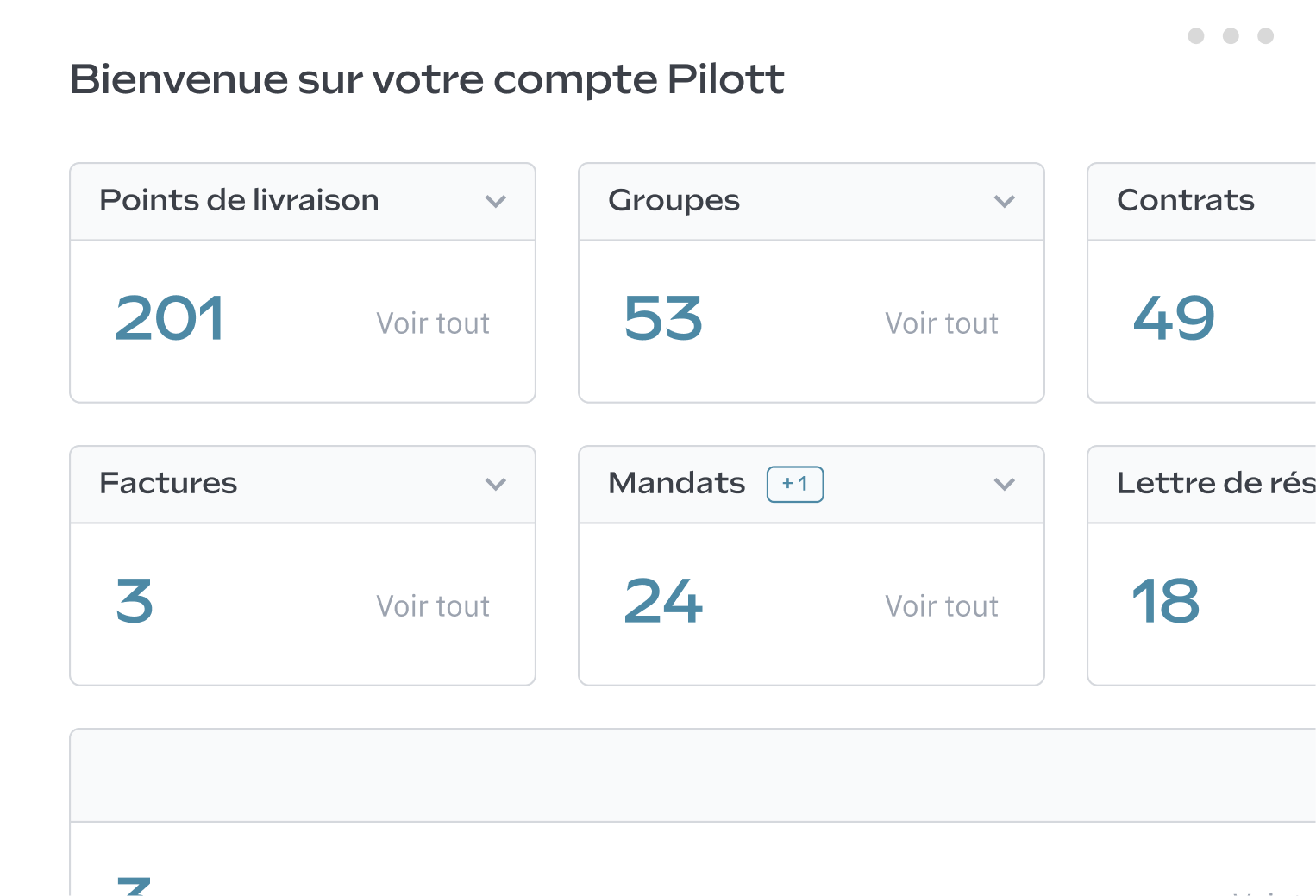
Pilott software platform
Consumption data at D+1 by meter and sub-metered zone, price alerts for electricity and gas, budget forecasting, and centralized contractual documents, with CSV export or API integration for your reporting tools.
Expert consulting dedicated to cleanrooms
A dedicated consultant monitors your markets, deadlines, and relevant regulations, then works with you to build energy cost indicators by zone and batch, shared with your technical and quality teams.
Our platform
Pilott, simplified management to track your consumption
- Centralize your sites and their controlled atmosphere zones
- Monitor the night and weekend baseline of your air treatment at D+1
- Get an alert when electricity reaches your price threshold
- Simulate your budget and manage your contracts on a single platform



Pharmaceuticals and biotechnology
Explore other processes
Un autre secteur ?


Methodology and definitions
What is energy consulting for pharmaceutical cleanrooms?
A cleanroom consumes almost as much energy at night as it does during the day, as its air handling systems must maintain specific grades around the clock. For a pharmaceutical site, energy consulting involves purchasing this base load of electricity and gas as a stable block at the right coverage level, then sizing transmission costs and monitoring each zone. This is the core of Sirenergies' work for these sites, with the Pilott platform serving as the measurement tool.
The context
In 2024, 43% of industrial facilities consuming more than 20 GWh of electricity had a contract indexed to the wholesale market (Insee Première No. 2095, February 2026): at this level, the split between fixed and indexed pricing becomes a management decision, which the highly consistent profile of a cleanroom makes easier to clarify.
- Hedge: the continuous base load fixed in tranches, according to the schedule you approve.
- Index: the variable portion left to the market based on your risk tolerance and budget.
- Measure: each zone monitored at D+1 to verify that the purchased profile remains the right one.


How much does your cleanroom air handling cost every night?
One year of load curves and your contracts are all we need to calculate this base load. No obligation.

