





Summarize with AI

March 5, 2026
6
Min reading

Last chapter in our series devoted to carbon balance: scope 3.
This category lists all indirect greenhouse gas (GHG) emissions produced by an organization's activities.
Generated upstream and downstream of the company, these carbon emissions are the most difficult to measure and control. However, they represent 80 to 90% of a company's total GHG emissions. It is therefore urgent to reduce them in order to meet the climate challenge and reach the objective set by the Paris Agreement.
To reduce your company's carbon emissions and limit the rise in global temperature to 1.5°C by 2050, solutions exist.
Overview.
In the carbon balance, scope 3 measures quantities of greenhouse gases emitted indirectly by the organization, with the exception of indirect emissions related to energy consumption. The latter fall within the scope of the Scope 2.
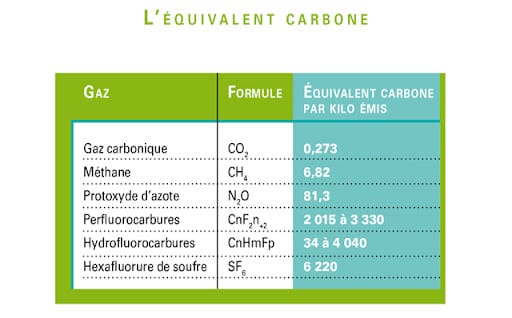
Greenhouse gases - Les Cahiers du Développement Durable
Scope 3 is the the broadest carbon emissions perimeter and the most complex to assess. It concerns a multitude of actors throughout the value chain of goods and services produced by the company.
In total, 15 broadcast stations are identified, including:
Good to know: since Decree No. 22-982 of 1Er July 2022, scope 3 is included in the greenhouse gas emissions report (BEGES) mandatory for companies with more than 500 employees.
Calculating carbon footprint 3 greenhouse gas emissions requires combining several methods and information sources. While it is impossible to know exactly what indirect carbon emissions are, the challenge is to obtain the most accurate and exhaustive estimate possible.
Indirect carbon emissions are generated by third parties in the company. La cooperation with suppliers, customers and other partners is essential for collecting the most accurate and complete data.
Sending standardized questionnaires, audits, site visits are all tools available to businesses to gather information on carbon emissions from stakeholders. Beforehand, the A comprehensive mapping of activities and suppliers must be drawn up so as not to forget any link in the value chain.
In the absence of accurate data on the greenhouse gas emissions of an activity, product, service, or material, businesses can Do the calculation themselves.
To do this, they must know the quantity and the sectoral emission factor, then apply the Next formula :
Quantity of GHG emissions = quantity consumed (expressed in the unit of the product) x physical emission factor (quantity of CO2 issued by a unit).
For intangible services, the monetary emission factor applies to:
Quantity of GHG emissions = price of the product or service x monetary emission factor (expressed in KGCo2e per k€ (excl. VAT)
Sectoral emission factors are available in Imprint Base® Of theADEME, or in international sectoral databases such as the Green Gas Protocol (GHG Protocol), the Carbon Disclosure Project (CDP), or the Science-Based Targets Initiative (SBTi).
Life Cycle Assessment (LCA) measures the environmental impact of a product or service throughout its life cycle. The calculation includes the extraction, processing, and transportation of raw materials, product manufacturing, distribution, use, and end-of-life management.
The company can rely on existing software, databases and studies to estimate greenhouse gas emissions generated by products manufactured or services provided.
The company can also use specialized software and tools based on economic and sectoral models. To calculate its indirect carbon emissions, it can, for example, reduce to its scale the greenhouse gas emissions observed at the national or sectoral level.
Scope 3 greenhouse gas emissions represent up to 80% to 90% of an organization's carbon footprint. Scope 3 identifies opportunities to reduce them and deploying sustainable value chain management. The company can act directly on certain emission stations. Other actions require close cooperation with its stakeholders, in particular suppliers.
Travel is a major source of carbon emissions in scope 3 on which the company can act directly. There are multiple solutions to reduce the carbon footprint of transport:
Upstream and downstream transport weighs heavily on a company's carbon footprint. This weight can be reduced via a more sustainable transport policy :
Greenhouse gas emissions throughout the supply chain are not directly dependent on the business. But it can limit them by deploying a sustainable purchasing policy:
Another greenhouse gas emission item on which the company can act directly: the reduction of waste through promotion of the circular economy :
Scope 3 of the carbon footprint measures the company's indirect greenhouse gas emissions.
Do you want to significantly control the environmental impact of your company? If the spectrum is broad and the calculation complex, it is imperative that you reduce scope 3 carbon emissions.
You can take action through the implementation of sustainable and innovative practices and close partnerships with the actors in your value chain. Reducing carbon emissions is also an opportunity for you to save energy.
SirEnergies supports you in meeting this major challenge. Affirm your commitment to the fight against climate change and contact our experts to build a tailor-made energy strategy.
In a few clicks, organize an exchange with one of our experts.


weekly newsletter subscribers

4.9

.png)

Les coopératives de taille ETI ou grande entreprise peuvent être soumises à l'audit énergétique réglementaire (norme NF EN 16247). Sirenergies n'a ni la compétence ni l'accréditation pour réaliser cet audit : nous vous orientons vers un bureau d'études partenaire accrédité, et vous accompagnons en amont sur vos achats et en aval sur le pilotage.
Yes. The supplier guarantees an offer 100% renewable via the official Guarantees of Origin (GO) mechanism.
For the most demanding companies, the offer GREENVOLT+ ensures very low carbon intensity electricity, sourced exclusively from independent French producers (hydraulic, wind, solar).
To calculate Scope 2 emissions, use the following formula:
Energy quantity (kWh) × Emission factor (kg CO₂ e/kWh).
Use databases like ADEME for precision.
Les caves coopératives de taille ETI ou grande entreprise peuvent être soumises à l'audit énergétique réglementaire (norme NF EN 16247). Sirenergies n'a ni la compétence ni l'accréditation pour réaliser cet audit : nous vous orientons vers un bureau d'études partenaire accrédité, et vous accompagnons en amont sur vos achats et en aval sur le pilotage.
La réussite d'un projet collectif énergie repose sur trois piliers fondamentaux :
The range E @sy is available in four pricing structures to adapt to each risk profile:
It allows you to prove your commitment to the energy transition and to meet regulatory requirements.
Le calendrier 2026 impose deux échéances majeures :
Pour simplifier ces démarches, vous pouvez centraliser vos données de consommation avec la plateforme Pilott de Sirenergies, garantissant ainsi la conformité de vos rapports réglementaires.