




Summarize with AI

March 6, 2026
7
Min reading

On November 10, the 30th edition of the Conference of Parties on Climate Change (COP 30) opened in Belém, in the heart of the Brazilian Amazon, in the heart of the Brazilian Amazon.
Ten years after the Paris Agreement, what is left of the hope generated by this historic advance?
At a time when the United States is leaving the climate scene, when Europe is struggling to agree and when climate scepticism is on the rise, Humanity is at a crossroads.
Can COP30 restore confidence in the collective capacity to respect climate goals,?
Can she “changing the perception that we cannot fight climate change” and “strengthening multilateralism”, as its president André Corréa do Lago hopes?
Our deciphering of COP30, between global tensions and encouraging progress.
COP30 is opening in an unfavorable context, marked by alarming figures, discommitments and a rise in climate scepticism.
Limiting global warming to 1.5°C: this central objective of the Paris Agreement seems out of reach today.
The World Meteorological Organization (WMO) is formal: this threshold has been crossed in 2024, the hottest year ever recorded.
On the global greenhouse gas emissions side, the results are worrisome.
In 2024, they reached 53.2 gigatons, in increase of 1.3% in one year.
Since 1990, the increase has been 65%, with four major emitters in mind:
On 15 October, the UN sounded the alarm about the record global concentration of CO2 in the atmosphere.
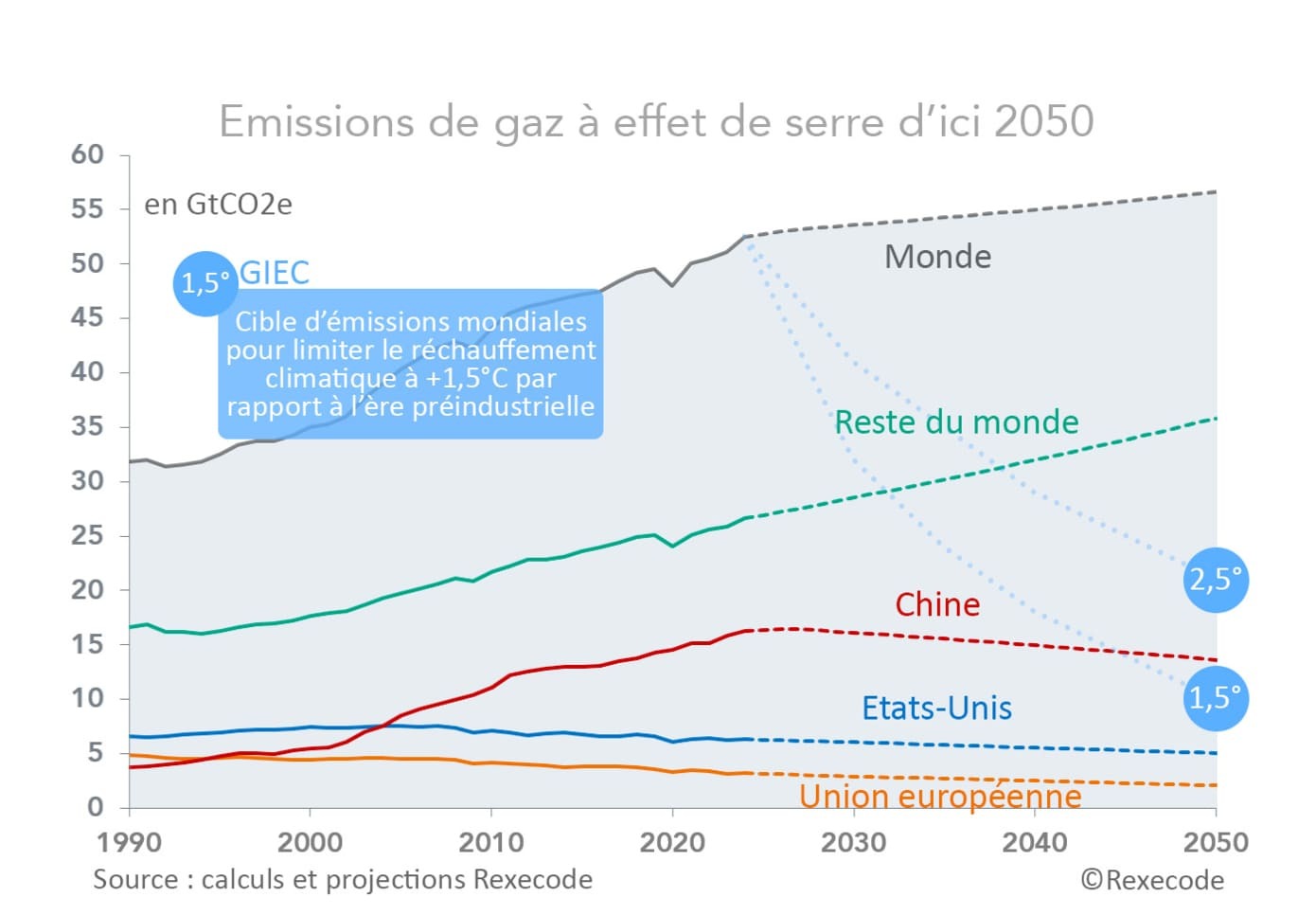
Another worrying statistic: the Slowdown in the progress of countries' climate action, observed by the OECD in 2024.
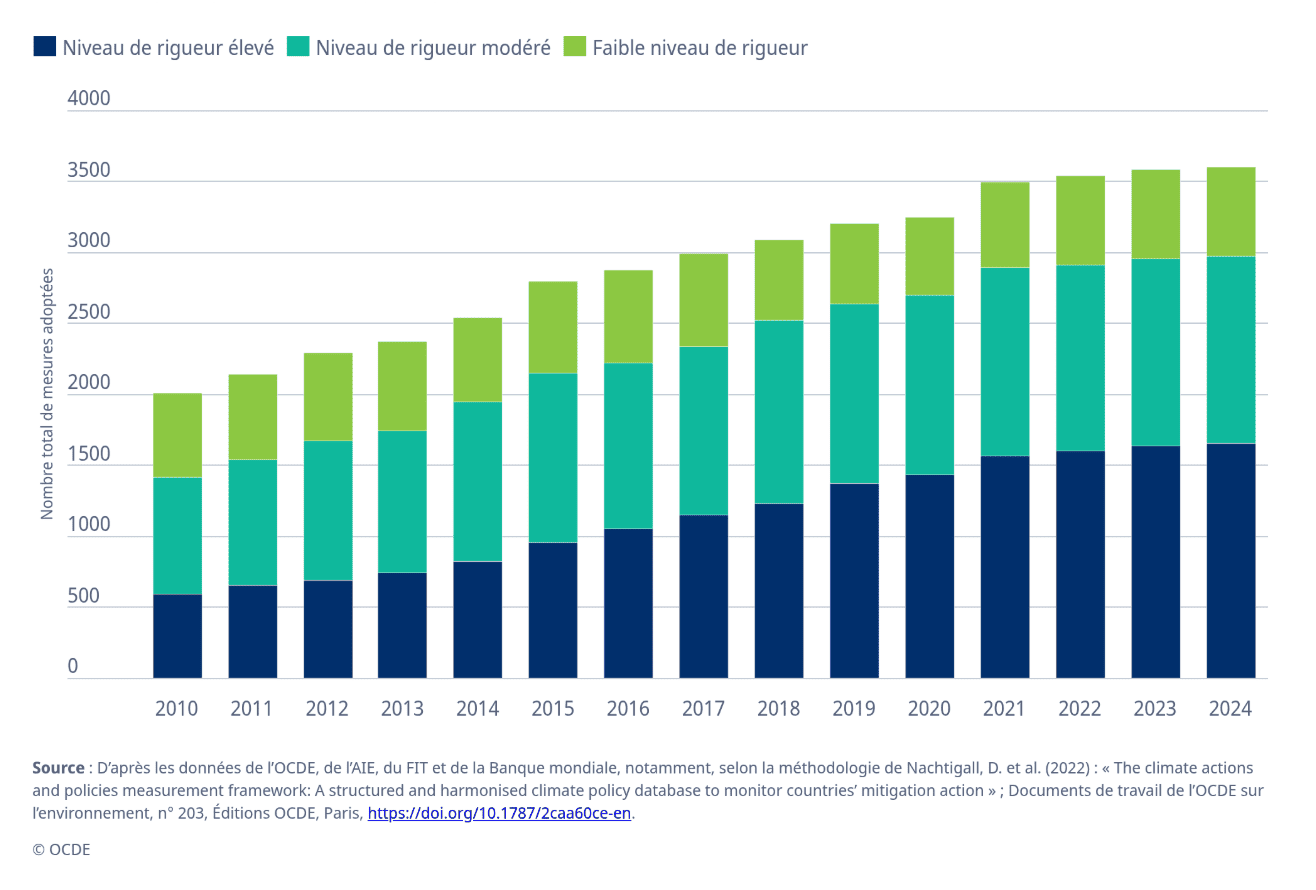
Since 2020, climatoscepticism has been on the rise, fuelled by social networks and the uninhibited posture of some leaders.
At the head of this movement, Donald Trump, whose first decisions validated the American withdrawal from the Paris Agreement in January 2026.
Since then, the American President has been waging an anti-climate offensive, describing climate change to the UN as :
The biggest scam ever carried out against the world,
The carbon footprint of “trickery” and the renewable energies of “joke”.
Prioritizing fossil fuels over human and environmental rights, United States is questioning international and trade agreements to protect their economic interests.
This discourse is being echoed worryingly around the world.
In France, the ADEME 2024 barometer shows that 30% of those interviewed consider climate change “as a natural phenomenon, as there has always been.”
The European continent is warming Twice as fast than the rest of the world.
However, in the face of the Rise of conservative and nationalist currents, economic and industrial challenges are taking precedence over the climate.
A few days before COP30, it was not without difficulty that the 27 countries voted for an ambitious but prudent European climate objective: reduce greenhouse gas emissions by 66.25% to 72.5% by 2035 (compared to 1990).
This wide range, which allowed unanimity, reveals the continuing tensions on the climate issue.
A positive note remains: the European Union has reaffirmed its commitment to achieve carbon neutrality in 2050, with a 90% reduction in its net greenhouse gas emissions by 2040.
Signed by all countries in 2015, the Paris Agreement raised great hopes.
Ten years later, has the enthusiasm subsided?
While many signals are flashing red, the record of the fight against global warming seems more nuanced than it seems.
If greenhouse gas emissions continue to rise, their increase is slowing, with a Rhythm divided by three compared to the years 2010.
The United States and Europe seem to have Past their peak in emissions.
China and India are approaching this, with CO2 emissions per inhabitant lower than those of ancient developed countries (9 and 4 tons per inhabitant respectively, compared to 20 in the United States and 11 in Europe).
In 2023, renewable energies represented almost a third of global electricity production.
According to the 2025 report of the International Agency for renewable energies (IRENA), renewable capacity Global jumped 15.1% in 2024, a record increase.
It reaches 4,443 GW, driven by solar (1,866 GW), hydroelectricity (1,277 GW) and wind energy (1,133 GW).

“Leaders around the world have come together to show that even in this time of division and uncertainty, the will and determination to fight the climate crisis is alive and well.”
This conclusion of the September 2025 Climate Summit, delivered by the Deputy Secretary-General of the United Nations, Amina Mohammed, illustrates the Resilience of the multilateral momentum, despite the salvo of the American president.
In Europe, optimism also prevails.
While the European Union is struggling to chart its climate course, the continent continues to position itself as engine of the energy transition.
The President of the European Commission, Ursula von der Leyen, states:
At COP30, we will underline our strong commitment to the Paris Agreement. The global transition to a clean economy is ongoing and irreversible. Our priority is to ensure that this transition is fair, inclusive, and equitable.
European efforts are bearing fruit: since 1990, European greenhouse gas emissions have fallen by 37%.
La china is also positioned as a key player in renewable energies. In 2024, 71% of new renewable capacities were installed in Asia, mostly in China.
If the inertia of the CO2 stock and the slow pace of climate action compromise the objective of limiting global warming to 1.5°C, Respecting the second objective is still possible : keep the temperature rising “clearly below 2°C” by 2100.
According to the Global Carbon Project, the world could still emit 1,110 Gt of CO2 to hope to limit global warming to below 2°C.
This represents a residual carbon budget of 27 years at the current rate.
The condition for success?
Drastically accelerate the reduction of CO2 emissions as soon as the global peak is reached.
Host country of COP30, Brazil launched a call for a “COP of truth”.
In its statement, the UN urges nations to open “a decade of acceleration.”
But faced with the mixed results of the Paris Agreement, what can the world really expect from this conference?
In the run-up to COP30, all countries were invited to present strengthened climate goals, by updating their Nationally Determined Contributions (NDCs).
For the first time, China has revealed its figures :
United Nations Secretary-General António Guterres summarizes the global ambition:
Achieve a credible global action plan to put us on the right track.
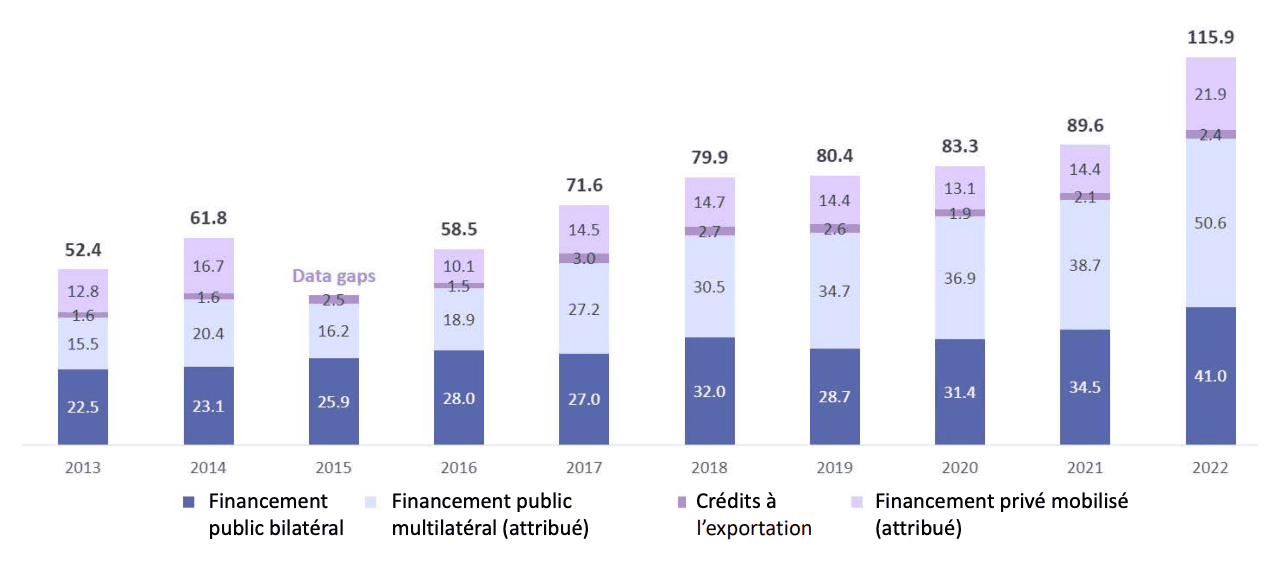
The Paris Agreement provides for a minimum of $100 billion per year in funding from developed countries, aimed at nations that are most vulnerable to climate change. The COP 29 in Baku has tripled this objective, carrying it unto 300 billion, via the Baku to Belém Roadmap.
In total, there are no less than 1.3 trillion dollars per year who should be mobilized by 2035!
There is no doubt that the financial issue will once again be at the heart of the debates. Because the count is far from good.
According to the OECD, The 100 billion target was exceeded for the first time in 2022, with $115.9 billion mobilized.
The 2023 and 2024 statistics will only be known in 2026, and the distribution of funding and the financial instruments used is unclear.
Experts agree that COP30 should not announce spectacular political or financial commitments.
The explicit announcement of the exit from fossil fuels should still await.
The focus will be on concrete solutions and their implementation, with conferences on climate adaptation, industrial decarbonization, methane, warning systems, etc.
Symbol of this pragmatic approach: the expected launch of Tropical Forest Forever Facility (TFFF), a $125 billion fund to protect tropical forests and end deforestation by 2030.
To conclude...
Ten years after the Paris Agreement, the President of COP30, André Corréa do Lago,”hopes“and”believes“into a new scale. C
Will this thirtieth conference reach”strengthening multilateralism and cooperation to reduce emissions“?
Will the Amazon, the planet's green lung, become the symbol of a renewed commitment to climate, biodiversity and the future of man?
Will COP30 be able to relight the climate flame, as did the Paris Agreement?
Despite international challenges and tensions, hope is tangible, driven by promising advances, individual and collective will and the implementation of concrete solutions.
What if you were working with Sirenergies today?
{{ask-demo=” /ctas "}}
In a few clicks, organize an exchange with one of our experts.


weekly newsletter subscribers

4.9

.png)

It allows you to prove your commitment to the energy transition and to meet regulatory requirements.
La réussite d'un projet collectif énergie repose sur trois piliers fondamentaux :
Yes. The supplier guarantees an offer 100% renewable via the official Guarantees of Origin (GO) mechanism.
For the most demanding companies, the offer GREENVOLT+ ensures very low carbon intensity electricity, sourced exclusively from independent French producers (hydraulic, wind, solar).
Le calendrier 2026 impose deux échéances majeures :
Pour simplifier ces démarches, vous pouvez centraliser vos données de consommation avec la plateforme Pilott de Sirenergies, garantissant ainsi la conformité de vos rapports réglementaires.
To calculate Scope 2 emissions, use the following formula:
Energy quantity (kWh) × Emission factor (kg CO₂ e/kWh).
Use databases like ADEME for precision.

Sirenergies is a consulting firm connected to the energy market. Discover our services to manage your energy.
Sirenergies Compare offers of the market, identifies economic levers and assists in the renegotiation of contracts. SMEs thus benefit from quick and concrete solutions without increasing their workload.