




Summarize with AI

March 6, 2026
7
Min reading
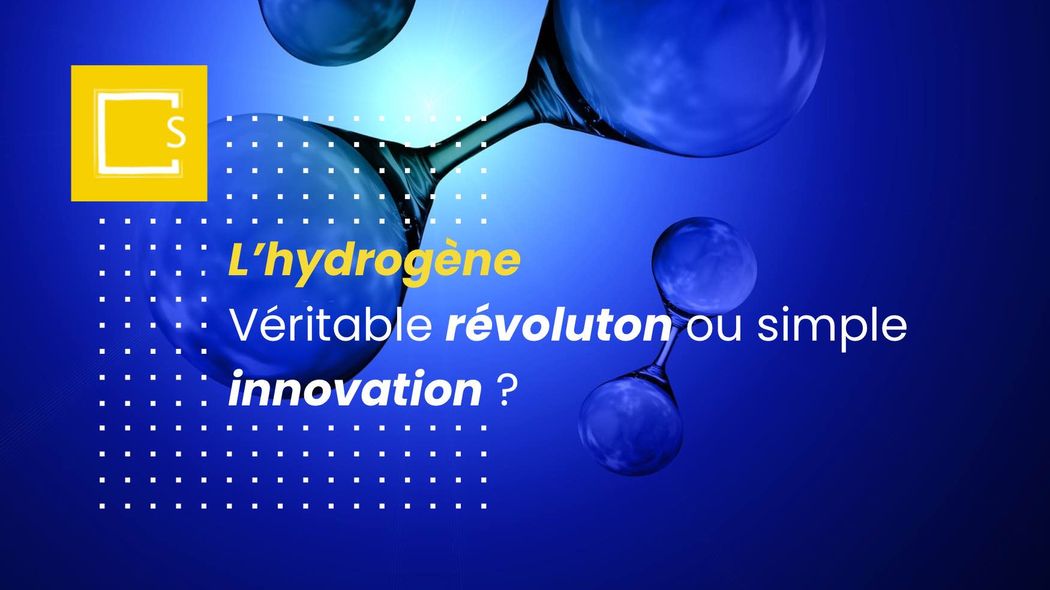
Making France the leader in carbon-free hydrogen: this is the government's ambition announced in 2020 with the launch of the national strategy for the development of carbon-free hydrogen.
It was reaffirmed in 2022 as part of the France 2030 investment plan. 9.1 billion euros in public aid were approved and the first ten projects selected to create a hydrogen sector in France.
But why is France betting on hydrogen? What is hydrogen and what are its uses? Is it a promising path to a sustainable future?
What are the challenges to be met for hydrogen to assert itself as an energy of the future? SirEnergies takes stock.
Hydrogen is not an energy source. It is a energy vector, in the same way as electricity, produced from natural resources.
Hydrogen is a chemical element, very abundant in the universe. Without him, the Soleil and stars would not exist. It is their main component.
On the other hand, on Earth, it is Very little present in the natural state, except for a few unexploitable underwater fields. Clues ofwhite hydrogen However, pure ones would have been found in several parts of the world, including France. Their exploitation potential has yet to be proven.
Hydrogen is a component of many chemical elements. It is present in thewater. It is composed of two hydrogen atoms for one oxygen atom, hence the famous formula H2O. It is also found in methane, a combination of four hydrogen atoms and one carbon atom (CH4), or in the hydrocarbons (CH).
Hydrogen also makes up nearly 10% of the human body. More generally, all living animal and plant organisms are partly made up of hydrogen, making biomass an inexhaustible potential source of hydrogen.
Hydrogen is extracted from water, hydrocarbons, or biomass by chemical processes aimed at separating hydrogen atoms from other atoms.
Very polluting, the production of hydrogen is its Achilles heel. 96% of hydrogen comes from fossil resources, mainly gas (48%), oil (30%) and coal (18%).
In addition, production techniques such as the steam reforming of natural gas or the gasification of coal emit significant quantities of CO₂. It is estimated that on average 1 kg of hydrogen produced releases between 10 and 15 kg of CO₂. That's why it's nicknamed” grey hydrogen ”.
Less polluting, electrolysis consists in extracting hydrogen from water by separating hydrogen and oxygen atoms. The disadvantage: it requires a lot of electricity, most often from fossil fuels...
Hydrogen is a highly volatile and highly flammable gas. If its storage is today well controlled, zero risk does not exist.
The storage in gaseous form is the most popular. However, the low energy density of hydrogen requires the use of high pressures to reduce storage volumes. TO 700 bars, the compression is optimal. This poses several disadvantages: the use of robust and durable materials, strict control of the tanks and the cooling of hydrogen to avoid overheating.
Storing hydrogen in liquid form at very low pressure is the ideal solution for reducing volumes. However, this process requires temperatures below −253°C and the slightest leak is synonymous with explosion. This is why it is reserved for very specific uses such as space propulsion.
An innovation could well offer the perfect alternative: the hydride storage. This consists of storing hydrogen in a solid material such as magnesium. In France, research is carried out by two teams, finalists of the 2023 European Inventor Award.
Hydrogen is Relatively easy to transport. It is transported in compressed form via pipelines. While China is a pioneer in the field, a European pipeline project of hydrogen connecting Spain and Germany via France should be completed in 2030.
Today, the preferred transport solution remains the sea or road transport, via compressed hydrogen tube trailers.
Discovered in the 19th century, hydrogen has seen its uses multiply in recent years. Powerful, inexhaustible and non-toxic, it offers a wide range of possibilities, ranging from industry to mobility, including electricity storage.
The industry remains the main consumer of the 900,000 tons of hydrogen produced annually in France. They are used in particular for the production of ammonia, methanol or nitrogen fertilizers, for the manufacture of steel and cement or for the refining of petroleum products, fuels and biofuels.
The carbon footprint of these uses is very high. On the one hand, the gray hydrogen exploited is very carbonaceous; on the other hand, high quantities of greenhouse gases are emitted by these industrial processes.
Decarbonizing the industry is a priority for the energy transition. It is based on two levers: green hydrogen And the Process of CO₂ capture.
Absence of CO₂ emissions and fine particles, power three times greater than gasoline, reduced recharging times: hydrogen is often presented as a future-proof solution for clean mobility. However, the hydrogen-powered car is struggling to find its place on the market, in the face of electric vehicle. Its highly flammable nature and the fuel cell complicate vehicle manufacturing.
On the other hand, hydrogen is a solution adapted to heavy transport, the most CO₂ emitters and difficult to decarbonize. It meets their needs for high power and/or autonomy. In France, the supply of hydrogen is encouraged for heavy goods vehicles and regional trains. SNCF announces the first hydrogen-powered TER trains in stations in 2025.
In The aviation sector , the technologies are not mature. However, there is no shortage of ideas between the manufacture of synthetic fuels from hydrogen, engines powered by hydrogen propulsion or electric motors powered by electricity from hydrogen.
However, the airline industry remains cautious. The storage volumes required for hydrogen are questionable. Tourism aviation could pave the way. A first French prototype equipped with a fuel cell Hydrogen is announced for 2026.
The maritime sector is one step ahead of aviation. The first boats sailing with e-methanol (produced from hydrogen and CO₂), or e-ammonia (a mixture of hydrogen and nitrogen), should go to sea by 2025. For its part, the first autonomous hydrogen vessel Energy Observer is continuing its observations.
If there is one field where hydrogen seems to be an essential solution for the future, it is that of electricity storage. It offers a relevant response to the intermittency of renewable energies and to the problem of electricity storage.
The principle? Store surplus renewable electricity production in the form of hydrogen via electrolysis.
During peak consumption, hydrogen can be reinjected into public networks in two forms: either in the form of electricity after transformation via a fuel cell, or directly in the form of hydrogen into the gas network.
Hydrogen, The energy of the future ? This is what many experts say. In France, it is clearly designated as a priority axis to achieve carbon neutrality in 2050. The only downside is the carbon footprint of its production, which reduces its environmental benefits..
To offer a promising path to a sustainable energy future, hydrogen production must be decarbonized.
All hopes are focused on theelectrolysis using low-carbon electricity from renewable sources or nuclear.
According to ADEME, thanks to nuclear power, the electrolysis of water emits four times less CO₂ than the steam reforming of natural gas. However, its production costs are three to six times higher. Reducing these costs is one of the keys to industrializing low-carbon electrolysis.
Hydrothermal methanization or gasification are also presented as low-carbon hydrogen production solutions. The principle: generate a synthesis gas composed of carbon monoxide and hydrogen from fermentable waste. The carbon balance is considered neutral, because biomass emits in its natural state the same level of carbon dioxide as that generated by these transformation processes.
If we created hydrogen from microalgae ? This is the idea pursued by several teams of researchers around the world. It is inspired by photosynthesis. The idea: use the sun to separate oxygen and hydrogen from water.
If France wants to be a pioneer in carbon-free hydrogen, the whole of Europe is committed.
One important project of common European interest (IPIEC) is now committed to supporting research, development and the first industrial deployment of technologies related to carbon-free hydrogen.
Ten projects of the 41 selected are French. The ambition: deploy up to 6.5 GW of electrolysis capacity to produce more than 600,000 tons of low-carbon hydrogen each year. Concretely, this should result in the construction in France of four gigafactories of electrolysers, hydrogen tanks, fuel cells for sustainable mobility, hydrogen trains and the materials necessary for the production of this equipment.
Hydrogen is an energy of the future. Already in 2019, The International Energy Agency affirmed it. Five years later, the enormous potential of hydrogen has been proven. It will undoubtedly be an essential component of the energy transition and energy mix of tomorrow.
But while the path has been brightened thanks to technological progress, it is still full of pitfalls. The main challenge? Succeed in decarbonizing its production at reduced costs.
Read on with this article: Can we really do without oil?
In a few clicks, organize an exchange with one of our experts.


weekly newsletter subscribers

4.9

.png)

This makes it possible to choose the right time to contract, secure your budgets and anticipate increases.
Communities are subject to taxes such as TICFE or TICGN. Sirenergies analyzes invoices, identifies exemption possibilities and fixes possible errors to reduce the tax burden.
Le dispositif ARENH a laissé place au VNU (Versement Nucléaire Universel).
Ce changement structurel expose davantage les entreprises aux prix de gros, rendant la gestion des risques plus complexe qu'auparavant.
Il devient alors indispensable de définir une stratégie d'achat d'électricité avec Sirenergies pour lisser l'impact de la volatilité des marchés sur votre budget.
Some businesses may obtain a partial or total exemption from the TICFE or the TICGN, depending on their activity and energy intensity. The support of an expert makes it possible to identify the eligibility criteria and to put together the file.
Le transport (RTE) correspond aux "autoroutes" de l’électricité. Il s’agit de transporter de très grandes quantités d'énergie sur de longues distances, depuis les centrales de production (nucléaires, barrages, parcs éoliens offshore) vers les régions de consommation.
La distribution (Enedis) s'apparente aux "routes départementales" et aux rues. Elle récupère l'électricité à la sortie du réseau de transport pour la livrer directement chez le client final, en abaissant la tension pour qu'elle soit utilisable par vos appareils.
Yes. The supplier guarantees an offer 100% renewable via the official Guarantees of Origin (GO) mechanism.
For the most demanding companies, the offer GREENVOLT+ ensures very low carbon intensity electricity, sourced exclusively from independent French producers (hydraulic, wind, solar).
It allows you to prove your commitment to the energy transition and to meet regulatory requirements.
The industry is concerned by TICFE, TICGN and other contributions that may represent an important part of invoices. Sirenergies identifies cases of exemption and accompanies the procedures to benefit from them.
Le processus repose sur l'utilisation de la force de l'eau (énergie cinétique) issue des courants, des chutes d'eau ou des dénivelés. Le fonctionnement suit trois étapes clés :
The €/MWh is a price unit used in wholesale markets, while kWh is the unit visible on your bills.
In 2025, the supplier had a NPS (Net Promoter Score) of +16 and a note of 4,17/5.
Satisfaction is based on a “zero solicitation” model and 100% in-house customer service in Toulon, guaranteeing proximity and responsiveness that cannot be found with major historical suppliers.
En 2025, la France a atteint un solde exportateur net de 92,3 TWh, battant le précédent record de 2024 (89 TWh).
Le calendrier 2026 impose deux échéances majeures :
Pour simplifier ces démarches, vous pouvez centraliser vos données de consommation avec la plateforme Pilott de Sirenergies, garantissant ainsi la conformité de vos rapports réglementaires.
To calculate Scope 2 emissions, use the following formula:
Energy quantity (kWh) × Emission factor (kg CO₂ e/kWh).
Use databases like ADEME for precision.
Farms are subject to taxes such as TICFE or TICGN. Sirenergies verifies their application, identifies cases of exemption and accompanies the procedures to reduce the tax burden.
Le kVA mesure la capacité maximale que votre compteur peut supporter à un instant T, tandis que le kWh mesure la quantité d'énergie consommée sur une durée.
The subscribed power must be calculated according to the consumption profile and uses (heating, industrial processes, tertiary equipment). One fine analysis makes it possible to ensure the adequacy between real need and contract.
Oui, elle est considérée comme une énergie renouvelable à faibles émissions de gaz à effet de serre.
De plus, l'eau ne subit aucune transformation chimique durant le cycle de production et réintègre son milieu naturel en aval.
Cependant, la construction de barrages nécessite des mesures pour protéger les écosystèmes (débit minimum, passes à poissons).
Tertiary companies are concerned by taxes such as TICFE or TICGN. Sirenergies checks the accuracy of invoices, identifies possible exemptions, and helps correct errors to sustainably reduce costs.
Parce que la puissance souscrite en kVA détermine le prix de l'abonnement et que tout dépassement peut entraîner des surcoûts importants.
C'est l'indicateur d'efficacité d'un appareil électrique ; il représente le ratio entre la puissance active (utile) et la puissance apparente (totale).
Exceeding capacity leads to financial penalties and can impact the size of the contract. Adjust the correctly subscribed power makes it possible to avoid these additional costs.
L'abondance de production française tire les prix du marché de gros vers le bas.
En vertu du mécanisme de l'Ordre de Mérite (Merit Order), les centrales les moins coûteuses (nucléaire, renouvelables) couvrent la demande plus souvent, évinçant les centrales à gaz ou charbon plus onéreuses.
Cela multiplie les épisodes de prix bas, voire négatifs, sur le marché spot.
Sourcing consists in identifying and analysing the offers of several electricity and gas suppliers. This approach makes it possible to obtain contracts adapted to the consumption profile and budgetary constraints of the company.
These are signals sent by RTE during periods of tension on the electrical network. The Sirenergies tool informs you in real time to anticipate your uses.
Les coopératives de taille ETI ou grande entreprise peuvent être soumises à l'audit énergétique réglementaire (norme NF EN 16247). Sirenergies n'a ni la compétence ni l'accréditation pour réaliser cet audit : nous vous orientons vers un bureau d'études partenaire accrédité, et vous accompagnons en amont sur vos achats et en aval sur le pilotage.
Among the taxes include TICFE, TICGN, CTA, CJA and TURPE. They represent a significant part of the bill and vary according to consumption profiles. Understanding them well is essential to optimize costs.
C'est le levier le plus rapide pour obtenir des résultats visibles. L'éclairage représente environ 40 % de la consommation d'électricité d'une commune.
Passer au LED avec pilotage intelligent permet de réduire la facture de 50 à 80 %, avec un retour sur investissement (ROI) rapide, souvent estimé à 2 ou 3 ans.
One invoice consists of several elements: consumption, supplier share, taxes and contributions. The analysis of each line makes it possible to identify possible errors and to check the consistency with the signed contract.
Les caves coopératives de taille ETI ou grande entreprise peuvent être soumises à l'audit énergétique réglementaire (norme NF EN 16247). Sirenergies n'a ni la compétence ni l'accréditation pour réaliser cet audit : nous vous orientons vers un bureau d'études partenaire accrédité, et vous accompagnons en amont sur vos achats et en aval sur le pilotage.
La réussite d'un projet collectif énergie repose sur trois piliers fondamentaux :
Tertiary companies must manage their energy costs while guaranteeing the comfort of users (offices, shops, services). Consumption is often linked to heating, air conditioning and lighting, which requires precise monitoring to avoid budgetary excesses.
Ce record de 92,3 TWh s'explique par la conjonction de trois facteurs :
The range E @sy is available in four pricing structures to adapt to each risk profile:
Un appel d’offres permet de mettre en concurrence plusieurs fournisseurs d’électricité et de gaz afin d’obtenir des conditions contractuelles optimisées. C’est une démarche transparente qui permet de choisir l’offre la plus adaptée aux besoins budgétaires et techniques de l’organisation.