





Summarize with AI

March 31, 2026
6
Min reading
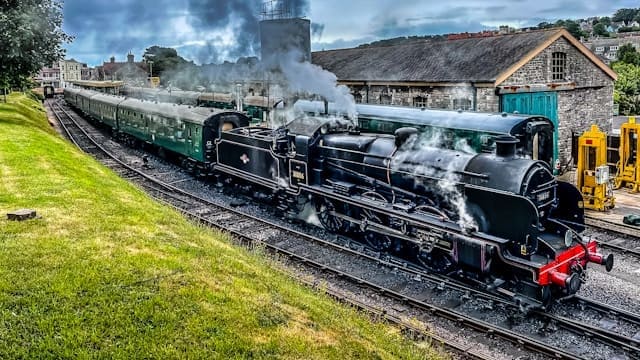
Created during the 18th century, the steam engine was considered to be a great technological advance. In particular, it had a significant impact during the industrial revolution.
Many people have looked into the creation of this internal combustion engine. The creations of the English Thomas Newcomen and the Scot James Watt revolutionized the history of thermal energy. To find out more about the creation of the steam engine, SirEnergies takes you through its journey.
Since ancient times, many men have studied steam and its use. They wanted to improve mechanical production, which at the time was limited to human or animal energy, but also to natural strength of elements like wind and water.
Heron of Alexandria was the first to constitute a steam engine that he called Eolipyle. It was only years later that the idea of the power of water vapor resurfaced.
The 17th century saw numerous attempts to improve the expansion force of water vapor. Giambattista della Porta in 1601, then Jéronimo de Ayanz y Beaumont in 1606 and Salomon de Caus in 1615 put all their energy into using water vapor as industrial power source.
In 1679, the French Denis Papin built a boiler which was closed by the first valve. Developing his project in a book entitled “Description and use of the new water raising machine”, Papin put forward the idea that a machine could operate using a piston. This could move in an alternating movement in the heart of a cylinder, pushed as it was by the steam created by the heating of water. Its piston engine was created in 1690, but only worked under atmospheric pressure.
In 1698, with the same idea, the Englishman Thomas Savery filed a patent for a steam pump and which would be used for mining. He developed this project with the help of another compatriot, Thomas Newcomen, in order to be able to allow use as early as 1712 in a mine of coal of his steam engine.
Used in all wet mines in Europe, this machine by Thomas Newcomen and Thomas Savery operated the pump using a vacuum in a closed chamber. Inside it, a jet of water caused steam to condense. Although automated some time later, these machines were very expensive because of the heating of the cylinder each time steam was admitted.
After the creation of Thomas Newcomen's machine, the Scotsman James Watt took over one of his engines in order to rework it and see how he could improve it. With the help of the entrepreneur Matthew Boulton, he then created its own steam engine while building on the work of its predecessors.
In order to improve the condensation of the machine, the Scotsman decided to install a new compartment called the condenser. Thanks to this new device, he was able to increase engine power from 6 to 15 horsepower. After filing a patent in 1769, he continued his improvements in order to give more power and efficiency to his machine.
He then developed in 1782 The double-acting machine where the piston no longer acts as a brake, but as a motor, both on the way out and back. Vapour is admitted, regardless of the face of the piston. This allowed the machine to gain in power. The inventor continued to develop his machine by creating an articulated parallelogram or even a ball regulator.
The Industrial Revolution was considered at the time as a race for ever greater returns. James Watt's steam engine was one of the key elements in terms of driving forces.
The steam engine was the first device that made it possible to transform thermal energy into mechanical energy. This shows how much Watt had a colossal impact during the industrial revolution. As proof, between 1776 and 1800, nearly 500 machines were built, giving Watt and Boulton a virtual monopoly situation.
The machines were used in mines, but also in workshops and mills (cotton, distillery, flour, iron...). They were very practical in order to allow easier extraction of coal in mines or even faster production in the metallurgical or textile industries. For the latter, factories and factories developed considerably at the expense of artisans and family businesses thanks to the steam engine. The latter has in fact replaced little by little Hydraulic power.
In social terms, the steam engine has made it possible to have a more qualified workforce, which has been beneficial for the industrial sector. She thus developed the skills of the employees, who then chose the rural exodus in order to be able to share their know-how with manufacturers. Watt and Boulton also revolutionized industrial organization by creating The drawing office. The sketch then represented both a contractual document and a manufacturing tool.
The steam engine Took some time to emancipate of the sectors for which it was used the most:
Except in Great Britain, where The expansion of the steam engine was important, countries such as France, Germany or even the United States took some time to install this device in their factories.
At the same time, the English engineer Richard Trevithick invented a high-pressure steam engine where he eliminated the condenser. The machines then became more compact and more easily transportable. Continuing with his project, he developed The first steam locomotive on rails in 1803 before starting it the following year. George Stephenson then created the first railway line to operate steam locomotives.
It was not until the end of the 19th century that the steam engine became the norm in terms of productivity. Manufacturers then took advantage of the very low cost of machines, which allowed them to save money. However, France is still lagging behind due to the cost of maintaining the steam engine. In 1880, there were 500,000 machines in France while Great Britain had 2 million and Germany 1.7 million.
It was only in the 1920s that France had as industrial reference motor the steam engine. This lasted until the 1930s with the arrival of the machines of thermal power plants of electricity production.
Despite all the inventions and creations, the steam engine has always maintained the same function in order to transform thermal energy into mechanical energy. The external combustion engine generates steam by heating water in a closed, airtight boiler. By pushing a piston, this has the consequence The expansion of the volume of a cylinder. For its part, the piston has a rotational movement that drives the rotor of an electrical generator or the rotation of the wheels.
Once the movement is over, the piston returns to its place and expels the steam using kinetic energy. To control steam pressure, inlet and outlet valves regulate the renewal of the charge. This allows steam to flow into the cylinder.
This external combustion engine had and still has influence in the industrial world. Some principles of the steam engine are used in processes for the internal combustion of an engine, whether it is the crankcase or the star cylinder system in aircraft engines.
However, electricity production is the field where the application of the steam engine is the most significant. Many thermal power plants use boiling water to run steam turbines. Connected to a generator, they thus make it possible to obtain electrical energy.
The only difference between these different thermal power plants is where the heat source comes from. To reach the steam stage, water is heated by:
While they were Great Players in the Industrial Revolution in the 18th Century, the steam engine and some of these processes are still present today. This external combustion engine allowed the industrial sector to develop before giving way to the internal combustion engine, electric and steam turbine. Scotsman James Watt will remain the person who will have an important impact during the industrial revolution, whether from a social or economic point of view.
Do not hesitate to read our article on The history of natural gas in France.
In a few clicks, organize an exchange with one of our experts.


weekly newsletter subscribers

4.9

.png)

It allows you to prove your commitment to the energy transition and to meet regulatory requirements.
Le calendrier 2026 impose deux échéances majeures :
Pour simplifier ces démarches, vous pouvez centraliser vos données de consommation avec la plateforme Pilott de Sirenergies, garantissant ainsi la conformité de vos rapports réglementaires.
La réussite d'un projet collectif énergie repose sur trois piliers fondamentaux :
To calculate Scope 2 emissions, use the following formula:
Energy quantity (kWh) × Emission factor (kg CO₂ e/kWh).
Use databases like ADEME for precision.
Yes. The supplier guarantees an offer 100% renewable via the official Guarantees of Origin (GO) mechanism.
For the most demanding companies, the offer GREENVOLT+ ensures very low carbon intensity electricity, sourced exclusively from independent French producers (hydraulic, wind, solar).

Avant James Watt, l'Anglais Thomas Newcomen a créé en 1712 la première machine à vapeur réellement exploitée. Co-développée avec Thomas Savery, cette pompe à feu permettait d'extraire l'eau des mines de charbon, marquant les prémices de la révolution industrielle.
Son principe de transformation de l'énergie thermique en énergie mécanique reste central. Aujourd'hui, les centrales thermiques et nucléaires utilisent des turbines à vapeur pour faire tourner des générateurs et produire la majorité de notre électricité à l'échelle mondiale.
Bien que Newcomen ait créé la première pompe, James Watt a transformé une machine inefficace en un moteur universel. Ses brevets ont permis aux entreprises de l'époque d'automatiser leur production, une logique de performance que l'on retrouve aujourd'hui dans le secteur industriel moderne.
Le charbon était le combustible indispensable pour chauffer l'eau et produire la vapeur. Cette dépendance historique a marqué le début de l'ère des énergies fossiles. Pour comprendre l'évolution de cette ressource, découvrez notre dossier sur l'histoire du charbon.
Elle utilise la pression de la vapeur pour faire osciller un piston ou tourner une turbine. Ce mouvement mécanique est couplé à un alternateur. Aujourd'hui, ce principe est toujours utilisé dans l'histoire du nucléaire en France pour produire de l'électricité en masse.
L'invention du train à vapeur et des bateaux à vapeur a permis le transport massif de marchandises et de passagers, accélérant le commerce mondial. Pour les entreprises actuelles, sécuriser son sourcing d'énergie reste un enjeu de compétitivité aussi crucial qu'à l'époque du rail.
Le Français Denis Papin a inventé le "digesteur" (ancêtre de la cocotte-minute) et le premier cylindre à piston à vapeur dès 1690. Ses travaux pionniers sur la pression ont posé les bases de la physique énergétique moderne et de la gestion de l'énergie mécanique.
La gestion était rudimentaire et dépendante du stock de charbon. Aujourd'hui, les ETI et grandes entreprises utilisent des outils digitaux avancés de suivi et analyse des consommations pour optimiser chaque kWh consommé.
Si la machine à vapeur a lancé l'ère industrielle, la transition actuelle vise à s'en détacher. L'ADEME accompagne aujourd'hui les entreprises pour remplacer les anciens procédés thermiques par des solutions bas-carbone et renouvelables.
Non, car elle dépendait majoritairement du charbon. Cependant, on peut produire de la vapeur avec de la biomasse ou du solaire thermique. Avant la vapeur, la France s'appuyait sur l'histoire de l’énergie hydraulique, une ressource qui reste aujourd'hui un pilier du mix renouvelable.
C'est James Watt qui a inventé cette unité pour comparer la puissance de ses machines à celle des chevaux de trait. Cette volonté de mesurer l'efficacité énergétique est l'ancêtre du conseil en stratégie énergie que nous proposons aux professionnels.
Depuis la révolution industrielle, la fiscalité énergétique n'a cessé d'évoluer. Aujourd'hui, les entreprises peuvent bénéficier d'une optimisation des taxes (comme la TICFE) pour réduire le poids financier de leur consommation d'énergie sur leur bilan.