




Summarize with AI

February 13, 2026
8
Min reading
France must get out of its dependence on fossil fuels and reduce its energy consumption by 40% by 2050. This means permanently transforming our habits and behaviors.
That is the meaning of energy sobriety plan announced by the Prime Minister, Élisabeth Borne, and the Minister for Energy Transition, Agnès Pannier-Runacher, on June 23, 2022.
During his speech on July 14, 2022, Emmanuel Macron announced the preparation of an energy sobriety plan during the summer. As early as July 20, the National Assembly's sustainable development committee organized a hearing on the challenges of energy sobriety.
Not to be confused with energy efficiency or rationing, energy sobriety invites us to consider our lifestyles, needs and energy uses differently.
SirEnergies returns to this notion that encourages us to change our behaviors and our way of life, individual and collective.
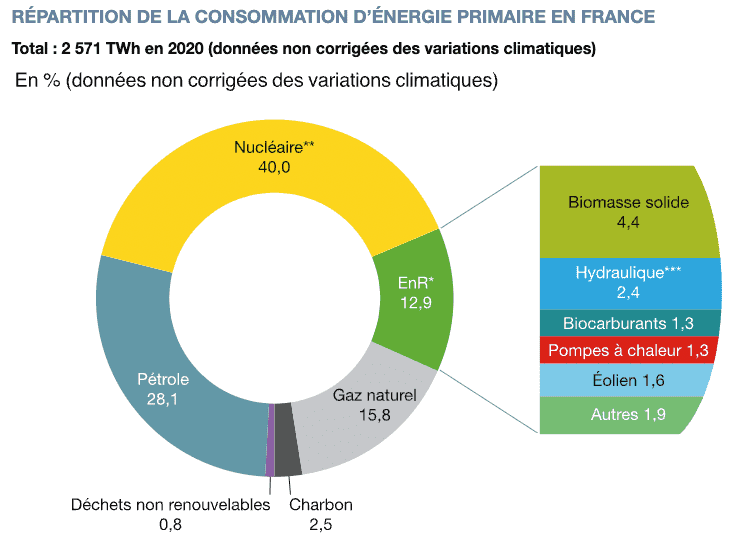
Source: SDES, France's energy balance
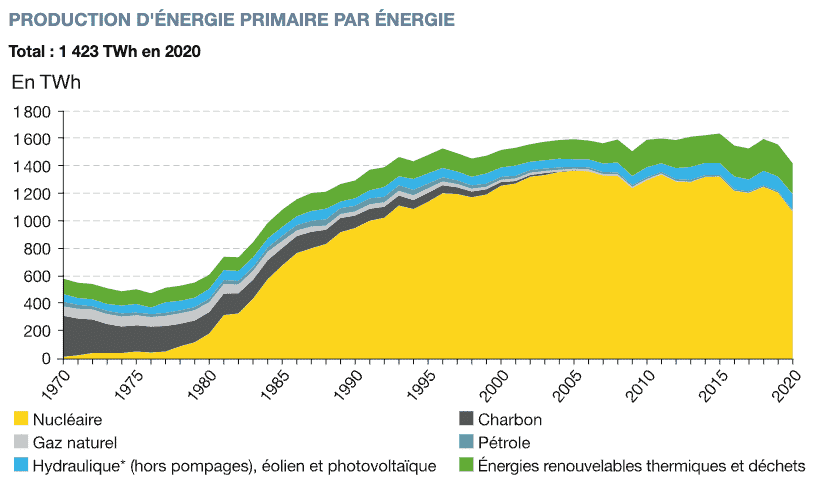
Source: SDES, France's energy balance
To set ideas, some significant figures on energy in France, before the COVID period:
In 2019, Oil is, by far, the main source of primary energy consumed in the world (33.1%), ahead of Coal (27%) and natural gas (24.2%).
In total, fossil fuels accounted for 84.3% of energy mix World Cup in 2019.
In 2019, the average energy consumption of a French person is:
Energy sobriety, because it encourages limitation of energy consumption, makes it possible to limit the rise in prices of fossil fuels ; resources that are becoming increasingly rare in a context of global growth in demand and frequent geopolitical tensions between producing countries and consuming countries.
This is why the public authorities, very sensitive to the fuel poverty of households, have set up a discount of 15 cents € excluding VAT per liter of fuel between 1Er April and August 31, 2022.
Energy sobriety is a major political issue:
The ambition of the European Union is to decorrelate the evolution of its GDP from that of greenhouse gas emissions. But since these gases do not know borders, decoupling must take place at the global level.
However, in 2019, even if the electrification rate in the world is 89%, strong disparities persist between rich and poor countries in terms of access to energy. And these disparities could increase with the current energy crisis and lead to conflicts between fossil fuel producing countries and consumer countries.
In the current context of the Russia/Ukraine conflict, it is clear that natural gas from Russia has become a An unavoidable geopolitical issue. The French government is therefore committed to An energy sobriety plan for the winter of 2022 - 2022 in order to limit its dependence on Russian gas.
Energy sobriety, which encourages the reduction of energy consumption by a change in behavior in order to limit all forms of energy intoxication and waste, participate fully in the achievement of ecological goals.
Consuming less energy means:
In this sense, energy sobriety also makes it possible to fight against:
Energy sobriety directly translates into financial gain, that of The energy we don't consume, and indirectly through an ecological and environmental gain that improves our lives.
Energy sobriety and energy efficiency are two approaches that lead to a reduction in energy consumption but in a different way:
In practice, in the case of a building:
Modifying the performance of a system or modifying its use are two approaches to reduce energy consumption.
Energy sobriety is an approach aimed at changing our behaviors and uses of energy. It can be implemented individually and collectively, in public or private buildings, in maritime, land or air transport.
Public transport, such as the train, or the carpooling like BlaBlaCar, contribute to energy sobriety.
Energy sobriety is a goal that can be achieved by modification of our behaviors and our uses, but also through building engineering, which must be thought out beforehand, during construction. This can, for example, lead to the optimization of living areas for optimize heating, or by sharing spaces and equipment in collective housing, including Heating networks.
It should be noted with interest that the Energy Sobriety Plan currently being developed by the government is based on 4 pillars: energy efficiency, energy efficiency, renewable energies and nuclear power plants.
Apart from the last pillar, sobriety, efficiency, renewables constitute the triptych of the NégaWatt association's approach to supporting the energy transition.
Dimensional simplicity consists in utilize equipment adapted to the need, for example:
Cooperative sobriety consists in Mutualize the uses of goods and spaces:
Simplicity of use consists in monitor the operation or use of an appliance consuming energy in order to limit its consumption and to prevent premature wear and tear:
Organizational sobriety consists in revamp activities for en optimizing use in space and time:
Material sobriety consists in lessen the consumption of goods and products:
Until now, energy policy consisted in adapting supply to demand:
Whatever the answer to these questions, France must develop different scenarios to:
Energy sobriety will play an increasingly important role in our energy future, starting today to guide our uses and tomorrow to rethink and adapt the objects and goods that surround our daily lives.
For Bruno Le Maire, Minister of Economy, Finance and Industrial and Digital Sovereignty, the current energy crisis is comparable to oil shocks such as that of 1973.
In our country, where GDP growth is the main indicator of economic health and where this is closely correlated with energy expenditure, it is difficult for a government to talk about degrowth or even a recession.
Globalization has led to a acceleration of energy consumption, to Exhaustion fossil resources, and especially climate change.
In this context, it should also be remembered that the COVID health crisis has slowed down the maintenance of nuclear power plants, that the Russia/Ukraine conflict has led to a global gas energy crisis, and that corrosion problems have led to a strong unavailability of the French nuclear power plant.
It is to all these challenges that the Energy Sobriety Plan will have to respond, and in particular for the smooth passage of the winter of 2023 and 2023. In fact, isn't France really entering into the energy transition that we've been talking about for a decade?
Resulting from a desire of the French government, the Tertiary Eco-Efficiency System (DEET), also called Tertiary decree, requires a gradual reduction in energy consumption for French tertiary buildings greater than 1,000 m².
This regulation aims to save 60% of final energy in these buildings by 2050.
We support you in the compliance tertiary buildings in order to comply with the obligations of the tertiary decree.
Click below for more information:
In a few clicks, organize an exchange with one of our experts.


weekly newsletter subscribers

4.9

.png)

Le calendrier 2026 impose deux échéances majeures :
Pour simplifier ces démarches, vous pouvez centraliser vos données de consommation avec la plateforme Pilott de Sirenergies, garantissant ainsi la conformité de vos rapports réglementaires.
To calculate Scope 2 emissions, use the following formula:
Energy quantity (kWh) × Emission factor (kg CO₂ e/kWh).
Use databases like ADEME for precision.
Yes. The supplier guarantees an offer 100% renewable via the official Guarantees of Origin (GO) mechanism.
For the most demanding companies, the offer GREENVOLT+ ensures very low carbon intensity electricity, sourced exclusively from independent French producers (hydraulic, wind, solar).
La réussite d'un projet collectif énergie repose sur trois piliers fondamentaux :
It allows you to prove your commitment to the energy transition and to meet regulatory requirements.