






Summarize with AI

March 31, 2026
4
Min reading

For uninitiated people, kilowatt (kW) and kilovolt ampere (kVA) may seem to mean the same thing. However, understanding the difference between these two power units that characterize our daily electricity consumption is very important. This allows you to choose The electricity supply the most adapted to your needs while controlling your costs.
SirEnergies distinguishes between these two units of measurement for you.
kW indicates the power used by an electrical appliance to function normally. For its part, kVA allows you to specify the power of the electric meter that you have chosen.
Let's do a quick reminder of your distant physics lessons that you must have forgotten. The symbol kW Refers to kilowatt. One kilowatt is equal to 1,000 watts. It's about Of the multiple of the most used watt.
This unit of measurement is associated with the nominal power of each of your household electrical appliances. Technically, the power (watt) is equal to the product of the voltage (volt) and the intensity of the current (ampere) that passes through the device.
Unlike kVA, kW does not take reactive power into account. Thus, kW measures only how much energy is actually consumed to do a specific job.
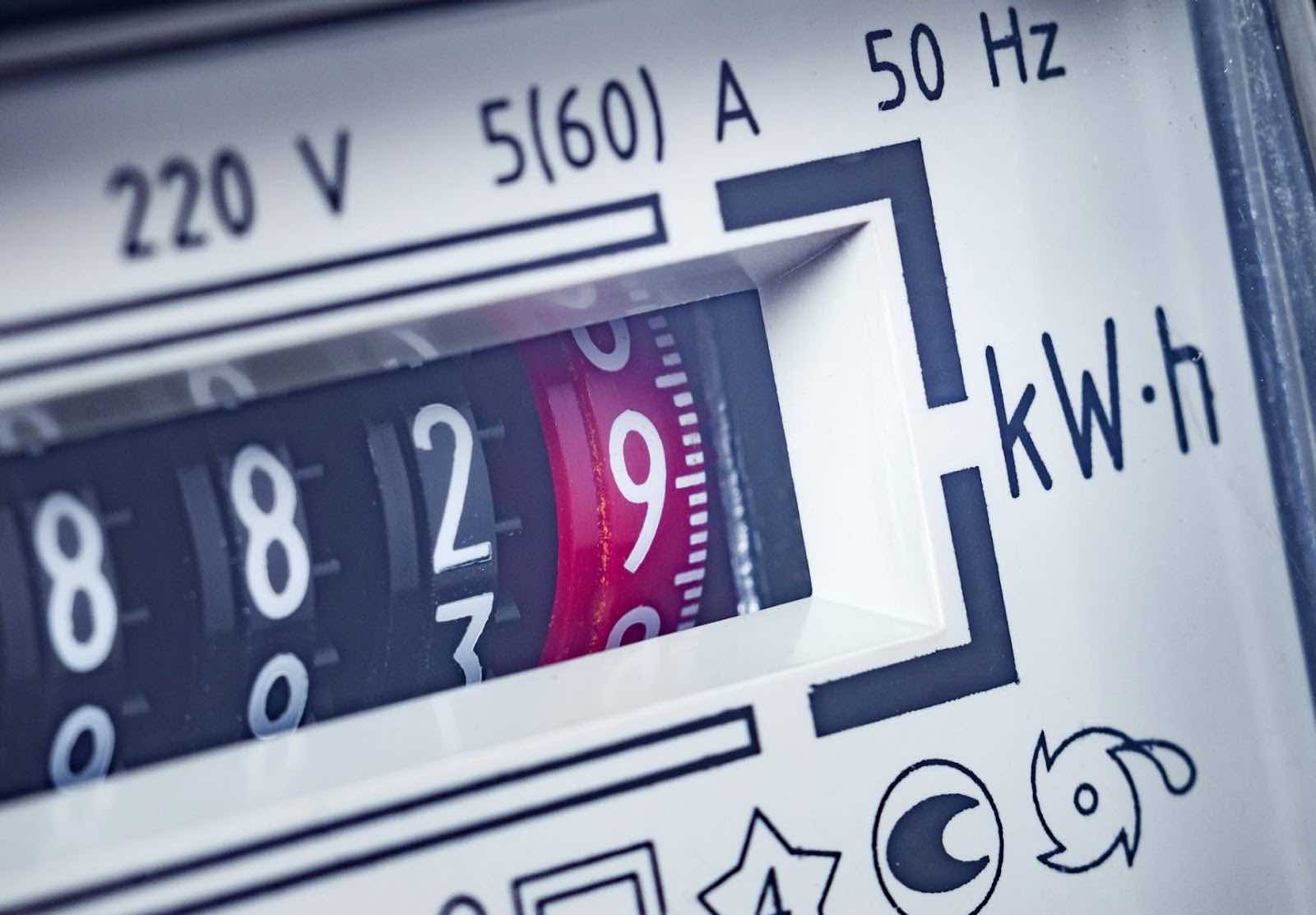
The symbol kVA refers to kilovolt ampere. The kVA is a multiple of the volt ampere (VA) and is equivalent to 1,000 VA. This unit of measurement characterizes apparent electrical power. We also talk of subscribed power Of the counter.
To put it simply, the kilovolt ampere measures the power actually made available by the network to operate your electrical installation. It's the maximum load of your meter for optimal functioning of all your electrical devices.
The main difference between kVA and kW is that the kVA takes into account both active power and reactive power, while the kW only measures active power.
This means that the kVA value is always equal to or greater than the kW value, due to the addition of reactive power in the kVA calculation.

Key differences kW vs kVA - Source: SirEnergies
It is considered that 1 kVA electricity is equal to 1 kW, which makes the calculation very simple. For example, 9 kVA in kW gives 9 kVA = 9 kW.

kVA to kW and W conversion table - Source: Engie
While kilowatts allow you to quantify all of your effective operating electrical power needs, kilovolt amperes tell you how many resources are available to meet these needs. There is therefore an arbitration to be made for the consumer when subscribing to his electricity offer.
Ideally, The power of an electric meter in kVA must at least equal the cumulative nominal power of all your electrical devices operating simultaneously at any given time.
A meter whose subscribed power is for example 3 kVA will only tolerate the use of devices whose cumulative active power is 3 kW. If the power of the electric meter is insufficient at an instant T, it is Breaks off automatically. This can be really annoying, especially if cases of disjunction are repeated frequently.
Before choosing the power of your electric meter, it is therefore a good idea to carefully assess your consumption with your supplier or electrician taking into account certain factors: number and electrical appliances used, use of electric heating, size of the home, size of the home, frequency of use and nominal power of each element...
The higher the number of kVA on your meter, the higher the price of your subscription is also. If a subscribed power of 9 kVA is sufficient to meet all of your electrical consumption needs at all times, choosing a 12 kVA meter is not economically advantageous for you. You will pay more for nothing, because, by excess, active power is not as close as possible to your real needs.
So you have to estimate the number of kilowatts needed before any action at the risk of seeing your electricity bill increase.
The kW allows quantify the nominal power of your electrical devices, while kVA refers to The subscribed power of the electric meter.
To be sure to draw on the electrical network the power necessary for smooth and secure consumption, you can count on the support of SirEnergies. After analyzing your consumption profile, we show you the ways to consume better in order to make significant savings. With a reliable electricity supplier, we will also help you take out the contract that best suits your situation.
You are a venture and do you feel lost in the jungle of natural gas and electricity offers? Are you wondering what is the best energy contract for your business?
SirEnergies offers you an offer adapted to the specificity of your business, regardless of your size.
Click below for more information:
In a few clicks, organize an exchange with one of our experts.


weekly newsletter subscribers

4.9

.png)

Parce que la puissance souscrite en kVA détermine le prix de l'abonnement et que tout dépassement peut entraîner des surcoûts importants.
The industry is concerned by TICFE, TICGN and other contributions that may represent an important part of invoices. Sirenergies identifies cases of exemption and accompanies the procedures to benefit from them.
Among the taxes include TICFE, TICGN, CTA, CJA and TURPE. They represent a significant part of the bill and vary according to consumption profiles. Understanding them well is essential to optimize costs.
Sourcing consists in identifying and analysing the offers of several electricity and gas suppliers. This approach makes it possible to obtain contracts adapted to the consumption profile and budgetary constraints of the company.
Tertiary companies are concerned by taxes such as TICFE or TICGN. Sirenergies checks the accuracy of invoices, identifies possible exemptions, and helps correct errors to sustainably reduce costs.
Le transport (RTE) correspond aux "autoroutes" de l’électricité. Il s’agit de transporter de très grandes quantités d'énergie sur de longues distances, depuis les centrales de production (nucléaires, barrages, parcs éoliens offshore) vers les régions de consommation.
La distribution (Enedis) s'apparente aux "routes départementales" et aux rues. Elle récupère l'électricité à la sortie du réseau de transport pour la livrer directement chez le client final, en abaissant la tension pour qu'elle soit utilisable par vos appareils.
Farms are subject to taxes such as TICFE or TICGN. Sirenergies verifies their application, identifies cases of exemption and accompanies the procedures to reduce the tax burden.
Communities are subject to taxes such as TICFE or TICGN. Sirenergies analyzes invoices, identifies exemption possibilities and fixes possible errors to reduce the tax burden.
The range E @sy is available in four pricing structures to adapt to each risk profile:
In 2025, the supplier had a NPS (Net Promoter Score) of +16 and a note of 4,17/5.
Satisfaction is based on a “zero solicitation” model and 100% in-house customer service in Toulon, guaranteeing proximity and responsiveness that cannot be found with major historical suppliers.
Exceeding capacity leads to financial penalties and can impact the size of the contract. Adjust the correctly subscribed power makes it possible to avoid these additional costs.
This makes it possible to choose the right time to contract, secure your budgets and anticipate increases.
En 2025, la France a atteint un solde exportateur net de 92,3 TWh, battant le précédent record de 2024 (89 TWh).
The subscribed power must be calculated according to the consumption profile and uses (heating, industrial processes, tertiary equipment). One fine analysis makes it possible to ensure the adequacy between real need and contract.
Ce record de 92,3 TWh s'explique par la conjonction de trois facteurs :
Tertiary companies must manage their energy costs while guaranteeing the comfort of users (offices, shops, services). Consumption is often linked to heating, air conditioning and lighting, which requires precise monitoring to avoid budgetary excesses.
Yes. The supplier guarantees an offer 100% renewable via the official Guarantees of Origin (GO) mechanism.
For the most demanding companies, the offer GREENVOLT+ ensures very low carbon intensity electricity, sourced exclusively from independent French producers (hydraulic, wind, solar).
Le kVA mesure la capacité maximale que votre compteur peut supporter à un instant T, tandis que le kWh mesure la quantité d'énergie consommée sur une durée.
These are signals sent by RTE during periods of tension on the electrical network. The Sirenergies tool informs you in real time to anticipate your uses.
C'est l'indicateur d'efficacité d'un appareil électrique ; il représente le ratio entre la puissance active (utile) et la puissance apparente (totale).
One invoice consists of several elements: consumption, supplier share, taxes and contributions. The analysis of each line makes it possible to identify possible errors and to check the consistency with the signed contract.
Some businesses may obtain a partial or total exemption from the TICFE or the TICGN, depending on their activity and energy intensity. The support of an expert makes it possible to identify the eligibility criteria and to put together the file.
L'abondance de production française tire les prix du marché de gros vers le bas.
En vertu du mécanisme de l'Ordre de Mérite (Merit Order), les centrales les moins coûteuses (nucléaire, renouvelables) couvrent la demande plus souvent, évinçant les centrales à gaz ou charbon plus onéreuses.
Cela multiplie les épisodes de prix bas, voire négatifs, sur le marché spot.
The €/MWh is a price unit used in wholesale markets, while kWh is the unit visible on your bills.
Le processus repose sur l'utilisation de la force de l'eau (énergie cinétique) issue des courants, des chutes d'eau ou des dénivelés. Le fonctionnement suit trois étapes clés :
C'est le levier le plus rapide pour obtenir des résultats visibles. L'éclairage représente environ 40 % de la consommation d'électricité d'une commune.
Passer au LED avec pilotage intelligent permet de réduire la facture de 50 à 80 %, avec un retour sur investissement (ROI) rapide, souvent estimé à 2 ou 3 ans.
Oui, elle est considérée comme une énergie renouvelable à faibles émissions de gaz à effet de serre.
De plus, l'eau ne subit aucune transformation chimique durant le cycle de production et réintègre son milieu naturel en aval.
Cependant, la construction de barrages nécessite des mesures pour protéger les écosystèmes (débit minimum, passes à poissons).
Un appel d’offres permet de mettre en concurrence plusieurs fournisseurs d’électricité et de gaz afin d’obtenir des conditions contractuelles optimisées. C’est une démarche transparente qui permet de choisir l’offre la plus adaptée aux besoins budgétaires et techniques de l’organisation.
Le dispositif ARENH a laissé place au VNU (Versement Nucléaire Universel).
Ce changement structurel expose davantage les entreprises aux prix de gros, rendant la gestion des risques plus complexe qu'auparavant.
Il devient alors indispensable de définir une stratégie d'achat d'électricité avec Sirenergies pour lisser l'impact de la volatilité des marchés sur votre budget.

Parce que la puissance souscrite en kVA détermine le prix de l'abonnement et que tout dépassement peut entraîner des surcoûts importants.
Le kVA mesure la capacité maximale que votre compteur peut supporter à un instant T, tandis que le kWh mesure la quantité d'énergie consommée sur une durée.
C'est l'indicateur d'efficacité d'un appareil électrique ; il représente le ratio entre la puissance active (utile) et la puissance apparente (totale).
Dans une installation domestique standard, 1 kW équivaut généralement à 1 kVA car le facteur de puissance est proche de 1. Cependant, pour des appareils complexes (moteurs), le kVA est souvent supérieur au kW, car il inclut l'énergie non convertie en travail. Pour optimiser vos coûts, n'hésitez pas à demander une offre conseil.
Le kVA, ou kilovoltampère, représente la puissance "apparente". C'est la puissance totale fournie par le réseau. Elle diffère de la puissance "active" (kW) réellement utilisée par vos équipements. Cette distinction est cruciale dans le secteur industriel où les moteurs influencent fortement ce déphasage.
La conversion utilise la formule $P(kW) = S(kVA) \times \cos(\phi)$. Le $\cos(\phi)$ est le facteur de puissance. Plus il est proche de 1, plus votre installation est efficace. Les grands comptes et ETI surveillent ce ratio pour éviter des pénalités sur l'énergie réactive.
Votre abonnement est souscrit en kVA. Si vous utilisez des appareils avec un mauvais facteur de puissance, la puissance apparente (kVA) dépasse la puissance active (kW) et fait sauter l'installation. Une optimisation des taxes et factures peut révéler si votre abonnement est mal calibré.
Le choix dépend du pic de consommation simultanée et non de la consommation annuelle. Une évaluation précise via une offre sourcing achat d'énergie permet d'ajuster votre puissance souscrite au plus juste de vos besoins réels.
Pour un onduleur, le kVA indique la charge maximale supportée, tandis que le kW indique la puissance réelle que l'onduleur peut délivrer. C'est un point de vigilance majeur pour les responsables dans le secteur tertiaire gérant des parcs informatiques.
Non, le kVA influence la part fixe de votre facture (l'abonnement). Cependant, une puissance souscrite trop élevée par rapport à vos besoins réels gonfle inutilement vos charges fixes. Consultez notre synthèse des offres énergie pour auditer vos contrats.
Les besoins varient selon les équipements (pompes, froid, automatisation). Le secteur agriculture nécessite souvent une analyse fine pour éviter les dépassements de puissance lors des pics saisonniers.
En utilisant un outil de monitoring comme la plateforme Pilott, vous identifiez vos talons de consommation et vos pointes, permettant ainsi de réduire les kVA souscrits sans impact opérationnel.
Le kVA est la puissance totale, tandis que le kVAR mesure la puissance réactive (non productive mais nécessaire aux champs magnétiques). Un excès de kVAR dégrade votre facteur de puissance. Pour comprendre ces enjeux techniques, consultez nos guides experts.
La puissance de raccordement (en kVA) définit la capacité maximale physique du branchement. C'est un élément clé lors d'un appel d'offres énergie pour les collectivités locales.