




Summarize with AI

March 12, 2026
8
Min reading

Responsible for 30% of CO2 emissions in the world (excluding LULUCF) — Land Use, Land Use Change, and Forestry), oil is in the sights of energy policies. In France, the multiannual energy programming (PPE) 2019-2028 aims to reduce primary fossil fuel consumption by 35% in 2028 compared to 2012.
The announced objective? Reach carbon neutrality in 2050 to fight against pollution and global warming. It is also urgent to reduce dependence on this polluting resource, which is threatened by the risk of exhaustion.
But can we really do without oil? Global statistics suggest that it is not. Since 1970, consumption has continued to increase.
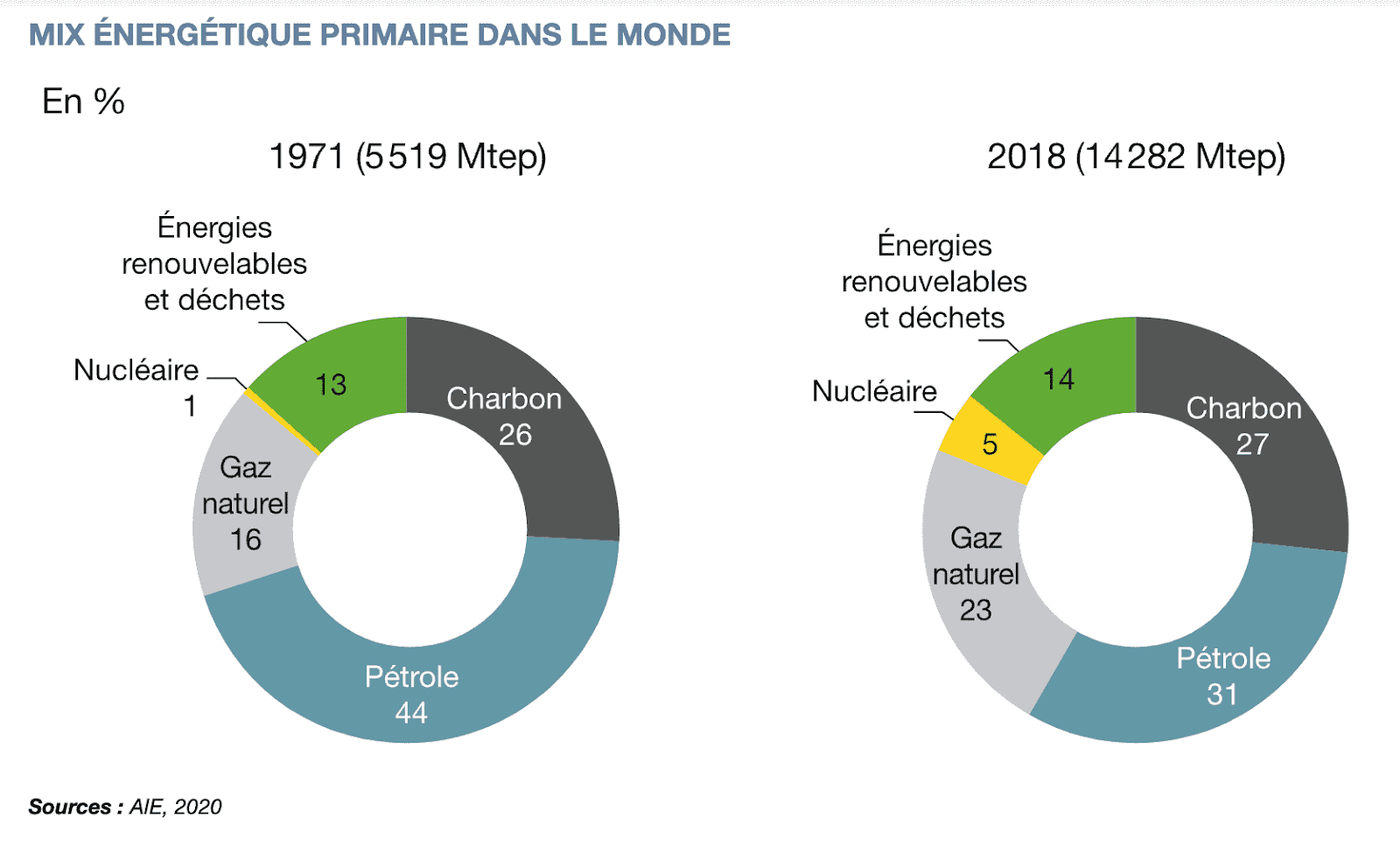
Primary energy mix in the world - Source: AIE
For 2023, the International Energy Agency (IEA) Sound the alarm. In a report published in February, it forecasts a new record in oil demand, estimated at 101.9 million barrels per day, an increase of 2 million compared to 2022.
In question? Economic growth, driven by China. Oil is the most consumed energy in the world. “Black gold” remains indispensable in many economic sectors, such as transport, industries or agriculture. It now meets more than 30% of the world's energy needs.
Getting rid of all oil requires action on two levels: replacing oil with inexhaustible resources and reducing energy needs at the source.
Are renewable energies, decarbonized industrial solutions and energy efficiency the winning trio to really do without oil one day? An overview of alternatives to oil and the challenges they pose.
Oil has three main uses. It is the main raw material for fuels. It is also predominant in petrochemicals to manufacture numerous products. To a lesser extent, it can be used as a heat source.
The transport industries are the main consumers of oil in the world.
According to the 2018 World Energy Outlook study conducted by the International Energy Agency, transport represents 56% of global oil consumption, divided between road transport (44%) and the aviation and maritime sectors (12%).
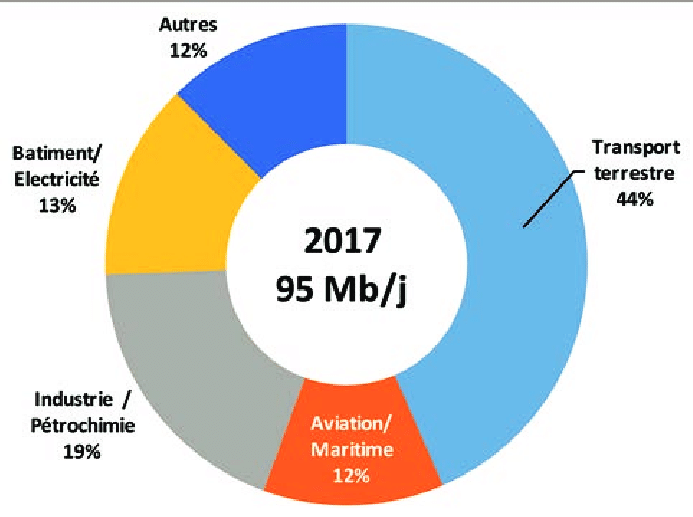
Breakdown of world oil consumption by sector in 2017 - Source: IFPEN
In France, 98% of fuels are of petroleum origin. Oil is the main raw material for gasoline, diesel, diesel, fuel oil, and kerosene.
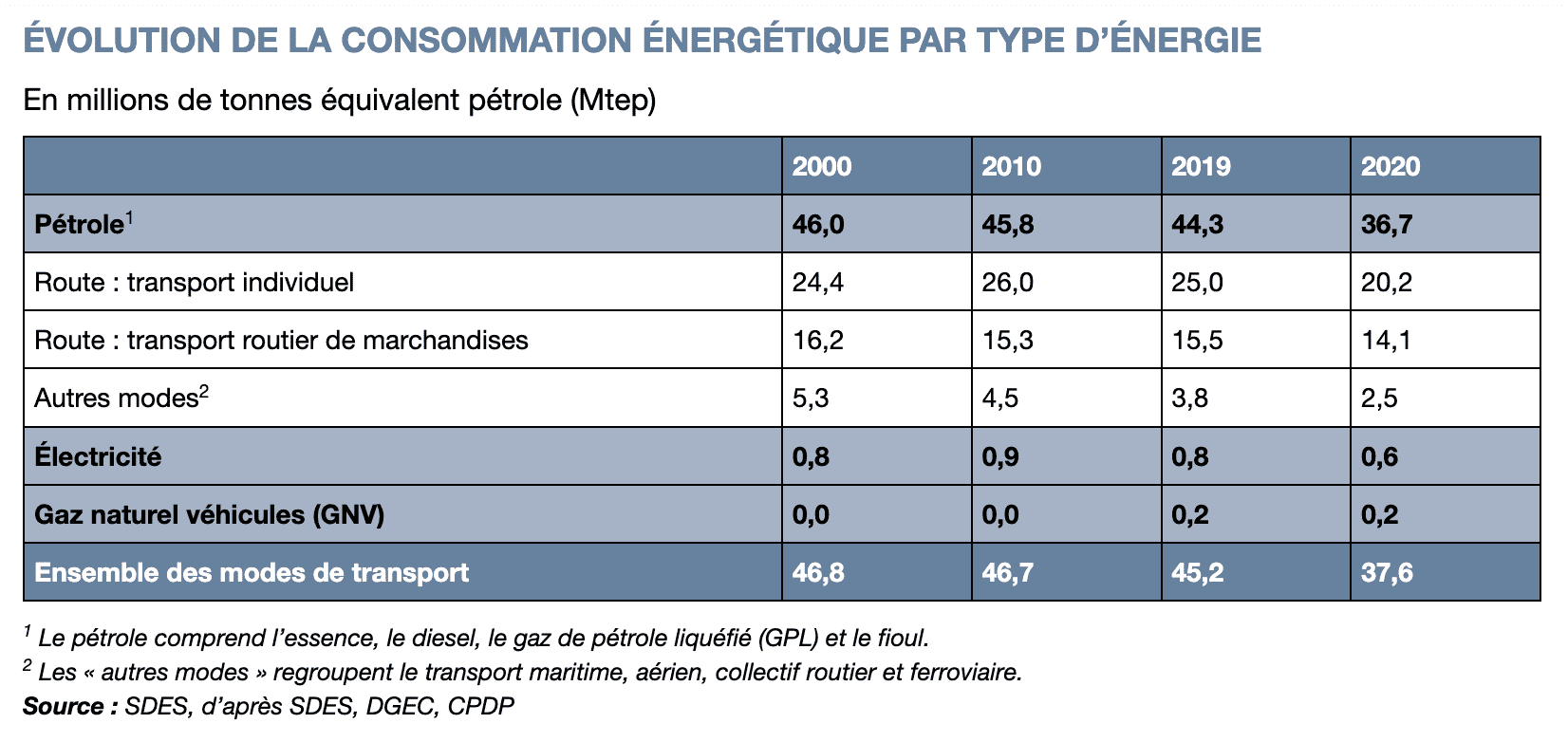
Evolution of energy consumption by type of energy - Source: SDES
19% of global oil consumption are linked to industry and petrochemicals. Plastics, paints, cosmetics, dyes, etc.: petroleum is the main raw material for multiple products.
PVC, polyethylene, polyamide, polyester, polyester, polyester, PET, polyurethane and polycarbonate are among its many derivatives. Oil is everywhere. In plastic bottles, clothing, toys, furniture, furniture, furniture, the automotive industry, windows, trash bags, adhesives, eyeglass lenses, and other everyday objects.
Oil represents 4.6% of the world's electricity. It is sometimes used as home heating fuel or as a heat source in industry. But it remains a secondary source of energy, far behind nuclear power, Coal, gas and renewable energies.
In all these sectors, alternatives to oil are developing. The objective? Replacing fossil fuels with sustainable solutions that emit less greenhouse gases and inexhaustible. However, each option has its own limitations that must be overcome in order to hope one day to free oneself from dependence on oil.
In the transport sector, research is carried out in several directions: biofuels and electricity.
In aviation, some airlines are testing the kerosene integration of biofuels sustainable products made from biological materials (trees, agricultural waste, cooking oils, etc.). That is the whole point of the “plant chemistry”. The aim of the researchers? Succeed in industrializing the processing of Biomass in alternative fuels as efficient as oil.
Research is also under way to develop synthetic fuels in the aviation and maritime sectors.
To replace petroleum fuels, hopes are now turning to Hydrogen And theelectricity. This is the choice that France has made for its road transport.
However, replacing oil with electricity from fossil fuels such as coal or The gas would not solve the environmental issue. To offer a sustainable long-term solution, electricity must come from renewable energies.
Solar energy, wind, hydroelectricity and geothermal energy Are they up to speed to hope to produce enough electricity and replace oil in transport?
Renewable energies combine advantages. They are natural, local, low greenhouse gas emitters and inexhaustible. However, their development faces several obstacles that must be overcome in order to increase global production and offer a credible alternative to oil.
The first hurdle? The intermittency of production. Solar energy, Wind energy and hydroelectricity are respectively dependent on sunlight, wind strength or water flow.
Repeated episodes of drought could threaten hydroelectric production. In winter, photovoltaic production slows down. As for production peaks, they do not always coincide with peaks in electricity consumption. Renewable energies rhyme with storing, which raises the question of batteries and the use of rare metals like lithium.
Renewable energies also raise the question ofsocial acceptability. Unlike oil refineries that are often far away, power generation facilities are nearby. Respect for landscapes, preservation of biodiversity and land use are invited to the table for exchanges with local residents. Geothermal energy, on the other hand, is scary with its deep drilling.
Last obstacle: the investment and operating costs of energy installations are high for a long-term profitability.
To do without oil and produce enough to meet needs, carbon-free energies must remove these obstacles in order to make progress in the world.
In the field of petrochemicals, innovations are multiplying to find alternatives to oil. However, all of this promising research comes up against a challenge: the cost and complexity of industrializing them on a larger scale.
Research is mobilizing the talents of chemical engineers to replace petroleum-based components derived from fossil resources with biobased molecules. Here are two examples of innovations among the many experiments in progress in the field of biochemistry.
In the pharmaceutical sector, a team of Belgian researchers is working on the development of the production ofaniline using lignin, a wood compound, to replace petroleum derivatives that are very present in medicines.
Studies also focus onlevulinic acid, a biobased molecule that could offer a biobased alternative to produce solvents and plasticizers. It is obtained from the glucose present in agricultural waste from biomass such as wood or sugar cane.
Researchers are exploring the possibility of plants. The objective of the bioeconomy ? Exploiting biomass and waste from food and agriculture to create recyclable or biodegradable materials capable of replacing molecules derived from petroleum.
In France, INRAE (National Research Institute for Agriculture, Food and the Environment) focuses on tomato skin with waterproof and flexible properties.
For example, a stretchable polymer, a type of rubber, can be extracted from its cuticle. Other researchers have used the lin to create insulation for a car roof. La wood cellulose could replace surfactants in cosmetics, paints, pesticides and bitumens.
Going without oil also means reducing your need for oil at the source. Businesses, individuals, communities: everyone can act at their own level, individually and collectively.
To reduce the use of oil in transport, the best solution is to reduce the number and length of its trips to reduce its fuel needs. How? For example, by grouping your trips, by promoting nearby shops, by completing your procedures online or by preferring the train to the plane.
If displacement cannot be avoided, the adoption of sustainable mobility solutions — when possible — makes it possible to limit the use of oil and its environmental impacts. Public transport, cycling, carpooling, scooter offer multiple possibilities.
Everyone can take action by applying the 5 R's rule : Refuse, Reduce, Reuse, Reuse, Recycle and Give Back to Earth. Mechanically, recycling and second-hand reduce the environmental impacts of products made from petroleum, such as plastic toys or polyester clothing.
If the purchase is unavoidable, the consumer can opt for recycled, recyclable, and bio-based materials to reduce oil needs.
Businesses can also take action to reduce oil needs.
In terms of mobility, they can participate in the collective effort by offering their employees the teleworking, a concrete solution to reduce daily mobility between home and work.
At the time of the video, they can promote remote meetings to limit business travel. They can also support carsharing and gradually replace their car fleet by investing in electric vehicles.
Like any individual consumer, they can give priority to responsible purchasing, use second-hand or refurbished equipment, encourage recycling and reduce their energy consumption.
More generally, industries and cities can act on a large scale to move towards a more sustainable world that consumes less oil.
Sustainable industry is an industry that innovates for green growth. It's not just about making products that are more sustainable. Sustainable industry means acting at all levels of the production chain to adopt processes and technologies that respect the environment and consume less energy.
The sustainable city takes into account in all its arrangements and operation thesocial, economic and environmental balance in particular to reduce pollution and the consumption of fossil fuels such as oil. A sustainable city promotes ecological urbanism, promoting proximity and green mobility, in application of sustainable development concepts.
Today, oil is still the most consumed energy in the world. Many economic sectors depend on it, including transport and petrochemicals.
On paper, getting out of oil is possible. From renewable energies to bio-based biochemical solutions through plant materials, alternative solutions exist.
However, they face numerous obstacles in order to develop sufficiently to be able to replace oil. Going without oil is possible provided that everyone's efforts to reduce energy needs are combined with high investments to develop alternative solutions.
To go further, do not hesitate to consult our article on biopetroleum.
In a few clicks, organize an exchange with one of our experts.


weekly newsletter subscribers

4.9

.png)

Le calendrier 2026 impose deux échéances majeures :
Pour simplifier ces démarches, vous pouvez centraliser vos données de consommation avec la plateforme Pilott de Sirenergies, garantissant ainsi la conformité de vos rapports réglementaires.
It allows you to prove your commitment to the energy transition and to meet regulatory requirements.
La réussite d'un projet collectif énergie repose sur trois piliers fondamentaux :
Yes. The supplier guarantees an offer 100% renewable via the official Guarantees of Origin (GO) mechanism.
For the most demanding companies, the offer GREENVOLT+ ensures very low carbon intensity electricity, sourced exclusively from independent French producers (hydraulic, wind, solar).
To calculate Scope 2 emissions, use the following formula:
Energy quantity (kWh) × Emission factor (kg CO₂ e/kWh).
Use databases like ADEME for precision.

Le pétrole n'est pas qu'une source d'énergie, c'est une base de production. Si le secteur des transports peut basculer vers l'électrique, le plus grand défi réside dans la pétrochimie. À ce jour, il est extrêmement complexe de remplacer le pétrole pour la fabrication à grande échelle de plastiques, de solvants, de lubrifiants industriels et de certains composants pharmaceutiques sans augmenter drastiquement les coûts de production.
Le marché de l'énergie est interconnecté. Une crise en Iran ou au Moyen-Orient réduit l'offre mondiale de brut, faisant grimper le prix du baril de Brent. Par effet de corrélation, cela entraîne souvent une hausse du prix du gaz naturel et, par extension, de l'électricité. Pour une entreprise, cela signifie qu'une crise géopolitique lointaine peut impacter directement ses coûts d'exploitation et sa marge financière.
La transition d'une PME repose sur trois piliers :