

Fine chemicals: reactors and synthesis
Synthesis sites: calibrate the energy of your reactors
In the morning, the reactor jacket receives steam; in the afternoon, the same circuit switches to the cooling unit. From gas for the boiler to electricity for agitation, vacuum, and cooling: Sirenergies optimizes your chemical reactor energy, assists you in purchasing both, and recalibrates your distribution.


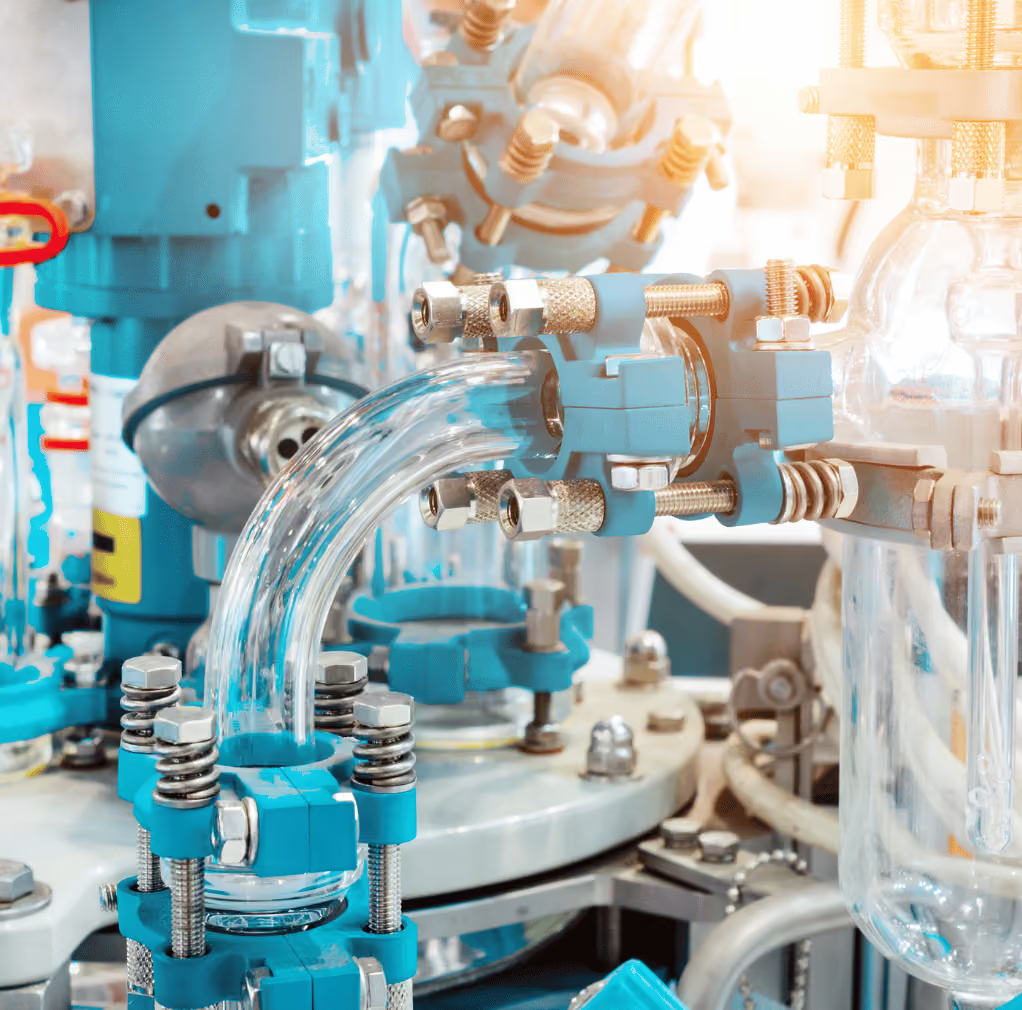
Key industry figures
Steam, cooling, and agitation: what a synthesis batch really consumes
A fine chemical reactor has no typical profile: every recipe requires its own share of heat, cold, and electrical power. Measuring these variations between products allows you to purchase gas and electricity in line with your production campaigns.
Share of steam at an active ingredient site consumed by its processes
Energy saved per ton on a hydrogenation reactor through optimized agitation
Energy per kilo produced in fine chemicals, compared to basic chemicals
The energy profile of a synthesis workshop
Heating then cooling the same reactor: the core of the synthesis bill
The observation: heat and cold passing through the same jacket
In a fine chemical workshop, reactors operate in batches: loading, heating, holding, cooling, draining, and cleaning. Heat usually comes from steam generated by a gas boiler, cooling from electric refrigeration units, and electricity also powers agitators, pumps, and vacuum systems. When a single loop handles both heating and cooling, the fluid sometimes reaches the chiller at over 100°C (Wallonia Public Service, 2010): the same calorie is then paid for twice.
Our role: linking every batch to its cost
Formulas and thermal integration remain the responsibility of your chemists and engineering departments; Sirenergies advises your management on the contracts that fund these batches.
- Procurement: boiler gas and cooling electricity considered within a single strategy, which you define.
- Distribution: daily ATRD capacity (third-party access to gas distribution networks) and subscribed power for the TURPE (tariff for the use of public electricity networks) aligned with your campaigns.
- Arbitration: every heat electrification project simulated on both your bills before being committed to.

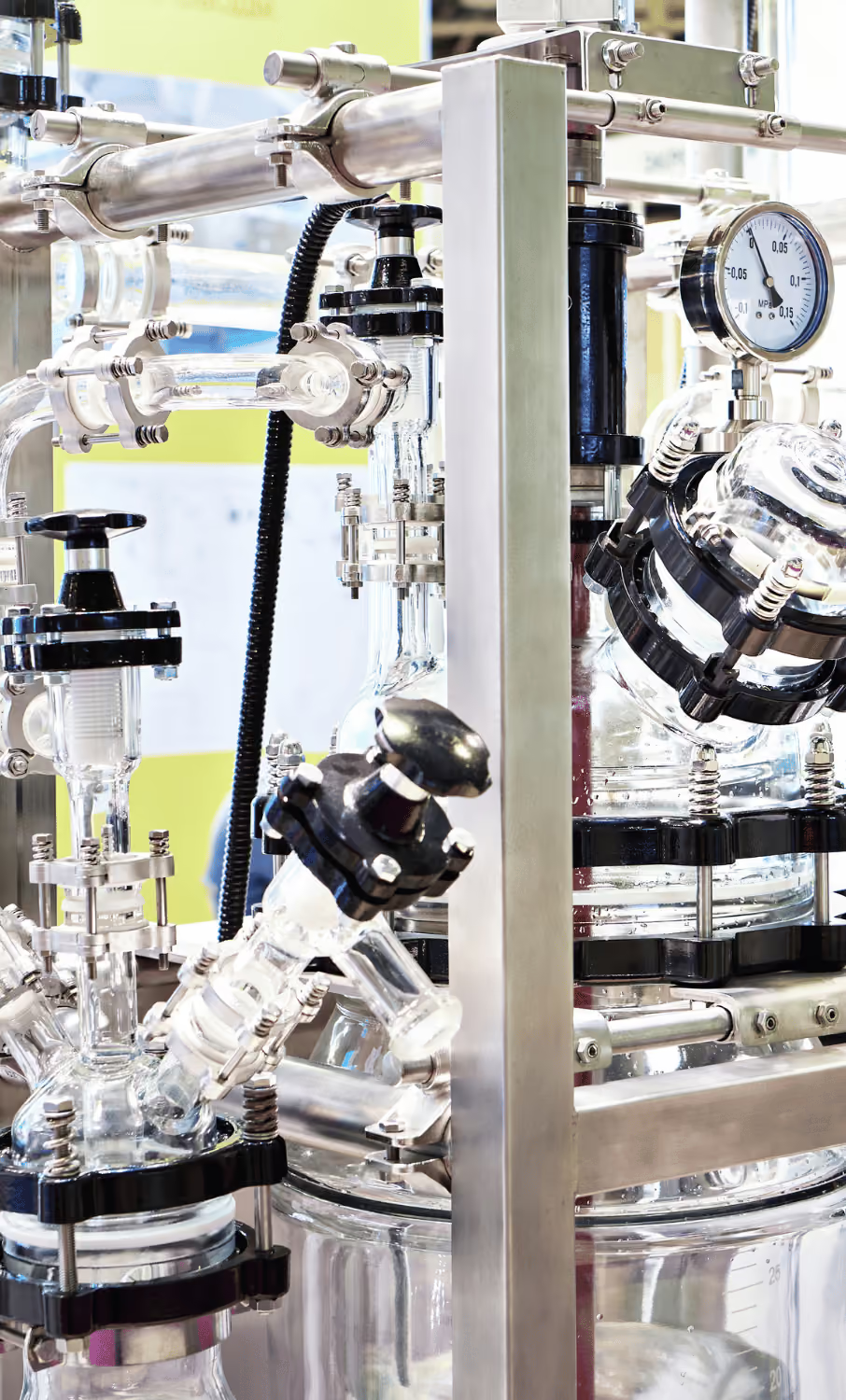
Your energy challenges
The 3 energy challenges for fine chemical and synthesis reactors
Buying the same calorie twice, electrification that shifts costs from gas to electricity, and contracts aligned with a product portfolio that has changed since they were signed: these three situations occur in most multi-product synthesis workshops. Sirenergies addresses them through procurement, simulation, and consumption monitoring.
Multi-energy sites connected to the high-voltage (HV) grid
A chemical reactor site combines electricity for agitation and cooling with steam for heating, utilizing a high-voltage connection with a complex TURPE tariff structure.
TURPE optimization and subscribed power adjustment
Sirenergies optimizes your grid access tariff (TURPE) to calibrate your subscribed power based on your actual consumption.

Unmonetized industrial demand response
Along with metallurgy, mechanical engineering, and paper, the chemical industry is one of the four sectors that account for 70% of the technical and economic potential for industrial demand response identified by ADEME.
Monetizing industrial demand response
Sirenergies connects you with an aggregator or a balance responsible party to monetize the flexibility of your reactors through the NEBEF mechanism managed by RTE.
Under-managed steam utilities
On many sites, low-pressure steam production for reactor heating is still tracked separately from electricity, without a consolidated view of total energy costs.
Multi-energy management via Pilott
Sirenergies centralizes the monitoring of your electricity, steam, and gas on a single platform, with alerts for any deviations.
Contractual and data expertise
Optimizing and managing contracts for your synthesis workshops
From steam-based temperature increases to cold crystallization phases, Sirenergies advises you on the gas and electricity for your reactors. The chemistry remains the responsibility of your teams; ours is the contracts, the delivery, and the data that links them to your campaigns.
Contractual and capacity audit
Review of your gas and electricity contracts and their deadlines, monitoring of subscribed power and capacities against your campaigns, annual excise duty analysis, and identification of relevant CEE (energy savings certificate) schemes.
Purchasing strategy and competitive bidding
Consulting our partner suppliers based on specifications that describe your batches, not just your volumes; multicriteria analysis of offers, negotiation prepared alongside you, and execution on your behalf for price fixing or advice on proposed rates.
Distribution optimization (TURPE / ATRD)
For electricity, TURPE options and subscribed power adjusted for cooling units and agitation, in HTA or HTB. For gas, daily ATRD capacity reviewed for the boiler room, or ATRT if the site is connected to the transport network. All procedures are handled by us.
Utility tariff modeling
Energy cost of a batch simulated according to the formula and season, numerical comparison between gas-based steam and electric heat, budgetary projection based on several hedging strategies, and flexibility studies when your campaigns allow.
Pilott software platform
Consumption data at D+1 for every meter, price alerts for gas and electricity, carbon footprint tracking, centralized contracts and documents, and CSV or API exports to reconcile your data with production scheduling.
Expert consulting dedicated to fine chemicals
A consultant who monitors your markets and deadlines, keeps you informed on issues affecting a chemical site (excise duties, capacity mechanisms, CEE), and builds energy indicators with you by batch or by product.
Our platform
Pilott, simplified management to track your consumption
- Consolidate the gas and electricity meters for your synthesis workshops
- See the impact of a campaign on your consumption the very next day
- Get notified when the price of gas or electricity crosses your threshold
- Simulate your annual budget and keep your contracts at your fingertips


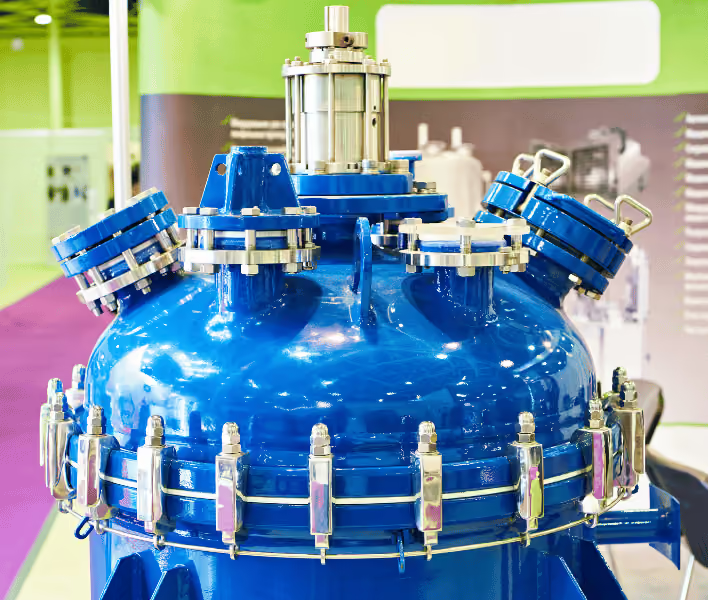
Fine chemicals
Explore other processes
Un autre secteur ?


Methodology and definitions
What is energy consulting for fine chemical reactors?
For a synthesis workshop, energy consulting first involves breaking down the bill for each energy source: the supply we purchase, the distribution costs we pay, and the taxes we verify. Applied to the gas used to heat batches and the electricity used to stir and cool them, this breakdown shows where to take action, campaign by campaign. Sirenergies consultants carry this out with you, then track the impact of each decision in the Pilott platform.
The context
In 2024, the pharmaceutical industry, which includes the manufacturing of active ingredients, consumed approximately 1.4 times more electricity than gas (Insee, EACEI survey, June 2026): neither energy source can be treated as a secondary priority.
- Supply: gas and electricity consulted within a single strategy, fixed at market pace.
- Distribution: subscribed power and gas capacity reviewed as soon as the product portfolio changes.
- Taxes: excise duty on electricity (formerly TICFE) and excise duty on natural gas (formerly TICGN) checked annually.

How much does each batch from your reactors cost in terms of gas and electricity?
Your invoices, contracts, and load curves are enough to estimate the room for improvement. No obligation.

