

Warehouses and 3PL: cold storage
Cold storage operators, secure your energy
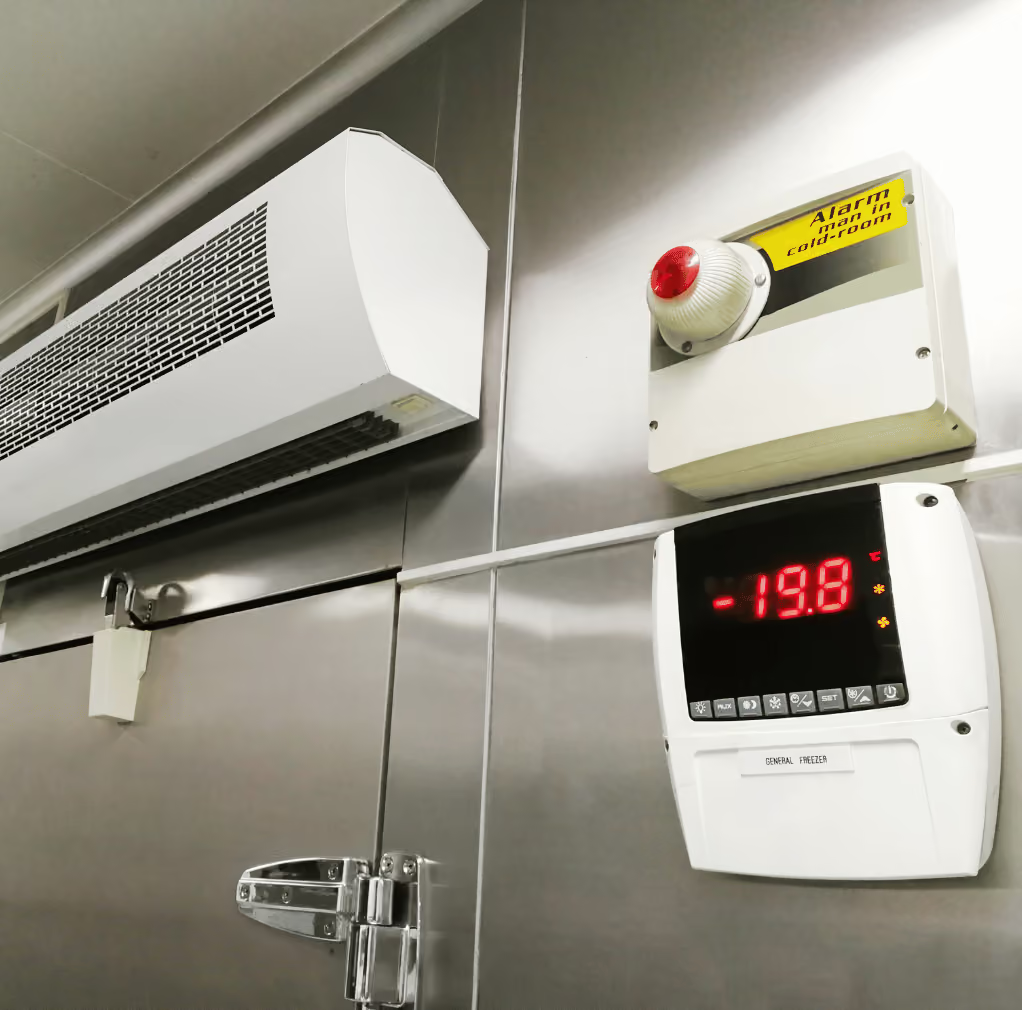
A -18°C cold room never stops: compressors and evaporators run day and night, while gas is often limited to offices, locker rooms, and hot water. Energy in a cold storage warehouse is defined by a flat electricity profile. Sirenergies advises you on procurement and adjusts your subscribed power levels.


Key industry figures
Dominant electricity, taxed gas, regulated setpoints: cold storage by the numbers
In a cold storage warehouse, every degree of the setpoint shows up on the electricity bill, while gas for the premises remains subject to rising taxes. A procurement strategy must be built on these realities.
Share of electricity in the main intermediate consumption costs for cold storage.
Modulation of the tertiary decree target for each degree of setpoint around -18°C.
€/MWh: standard excise duty rate on natural gas (formerly TICGN) as of August 2026.
Quelques industriels qui nous font confiance


The energy profile of a cold storage warehouse
A continuous electrical base load drives the bill, with gas used as a supplement
A consumption base load that never drops
In a positive or negative cold storage warehouse, compressors, evaporator fans, defrost cycles, and air curtains operate day and night. Refrigeration consumes an average of 50 kWh per cubic meter per year (INRAE, 2016). Electricity dominates, with a flat, high curve that tightens in the summer when condensers work harder in the heat. Gas heats offices, locker rooms, and equipment workshops, sometimes supplementing heat recovery from the condensers.
Our role: turning this continuous profile into an asset
Your refrigeration technicians maintain control over setpoints and installations; Sirenergies supports you with your contracts.
- Procurement: A steady base load is well-covered by base-load products, purchased in multiple tranches based on our advice.
- Distribution: Power levels per TURPE (public electricity grid usage tariff) period reviewed for your summer peaks, with ATRD (third-party access to gas distribution networks) options verified for your premises.
- Flexibility: We measure the load-shifting potential provided by product thermal inertia and identify the right service provider.


Your energy challenges
The 3 energy challenges for cold storage warehouses
How can you lower the energy bill for a site that cannot shut down its compressors or deviate from its regulated temperatures? The answer lies outside the cold room: purchasing continuous volume, meeting tertiary decree targets specific to refrigeration, and leveraging the thermal inertia of stored products. Sirenergies takes action on each of these through your contracts.
Poste froid dominant et continu
Le maintien de la chaîne du froid réglementaire, 24 heures sur 24, fait du poste froid le principal poste de consommation électrique d'un entrepôt frigorifique selon les professionnels du secteur.
Diagnostic énergie du poste froid
Sirenergies analyse vos contrats et vos courbes de charge pour objectiver le coût réel de votre poste froid, sans jamais intervenir sur vos paramètres réglementés.

Puissance souscrite et TURPE mal calibrés
Une puissance souscrite mal ajustée aux besoins réels des groupes frigorifiques génère des surcoûts récurrents sur l'acheminement.
Audit TURPE et recalibrage de la puissance souscrite
Sirenergies vérifie le paramétrage de votre TURPE et ajuste votre puissance souscrite au plus près de vos besoins réels.
Flexibilité électrique non valorisée
L'inertie thermique des produits stockés au froid peut, dans certaines conditions, constituer une source de flexibilité électrique mobilisable sans compromettre la conformité produit.
Étude d'éligibilité à l'effacement industriel
Sirenergies étudie avec vous le potentiel d'effacement de votre site, en lien avec les mécanismes opérés par RTE, sans jamais mettre en risque votre chaîne du froid.
Contractual and data expertise
Optimizing and managing energy contracts for your cold rooms and loading docks
From continuous refrigeration production to heating offices and workshops, Sirenergies handles both electricity and gas for your sites. Our recommendations respect your temperature requirements: only your contracts, distribution options, and purchasing strategy change.
Contractual and capacity audit
Review of your electricity and gas contracts, their expiration dates, and your subscribed power levels site by site, supplemented by an annual analysis of excise duties and energy savings certificates (CEE) applicable to your storage operations.
Purchasing strategy and competitive bidding
Specifications, supplier tendering, and clause-by-clause offer analysis for both your refrigeration unit electricity and facility gas, with no capital ties or exclusivity agreements with suppliers.
Distribution optimization (TURPE / ATRD)
For electricity, we select the optimal TURPE option and power levels per period based on your summer peaks and defrost cycles. For gas, we verify the ATRD option for offices and workshops. We handle all necessary procedures with grid operators.
Tariff modeling for flexibility
Budget simulation with partial shifting of refrigeration production to off-peak hours, a flexibility study, and, if the potential justifies it, support for monetizing demand response through a suitable provider.
Pilott software platform
D+1 consumption data for each site, price alerts for electricity and gas, budget forecasting, centralized contracts and documents, and CSV or API exports to support your regulatory reporting.
Expert consulting dedicated to cold chain logistics
A dedicated consultant monitors your coverage levels, contract deadlines, and regulations affecting cold storage logistics, and works with you to define key performance indicators such as energy cost per pallet stored.
Our platform
Pilott, simplified management to track your consumption
- Consolidate the meters for all your cold storage warehouses and platforms
- Track the electrical base load of each site at D+1
- Get alerted when electricity or gas prices cross your thresholds
- Forecast your energy budget and find all your contracts in one place


Warehouses and 3PL
Explore other processes
Un autre secteur ?


Methodology and definitions
What is energy consulting for a cold storage warehouse?
In a cold storage warehouse, electricity creates the cold, while gas keeps the staff warm. Energy consulting for cold storage leverages this contrast: it manages the procurement of a steady electricity baseload and facility gas, optimizes distribution costs, and measures the flexibility provided by the thermal inertia of stored products. Sirenergies consultants handle this work, while the Pilott platform monitors each site.
Objectives specific to cold logistics
The tertiary decree treats cold logistics separately: each pallet entry or exit counts as 1.5 kWh for frozen storage and 0.8 kWh for chilled storage (amended decree of April 10, 2020).
The three Sirenergies levers
- Flexibility: study of shiftable cooling loads and support for demand response monetization.
- Procurement: successive price fixing for the electricity baseload, including facility gas.
- Distribution: TURPE (public electricity grid usage tariff) and ATRD (third-party access to gas distribution networks) reviewed based on load profiles.

What is the actual cost of a megawatt-hour of cooling in your warehouse?
Your contracts and one year of load profiles are enough to estimate the potential of each site. No obligation.

