

Virginie
LEFÈVRE
Sirenergies editor
Table of contents


ASN: the Nuclear Safety Authority
March 6, 2026
7
Min reading
In May 2023, the civil nuclear recovery plan was confirmed. National Assembly and Senate have agreed on a law text to speed up the construction of new nuclear installations.
Nuclear power is part of the national energy strategy, alongside renewable energies and the energy sobriety. But the prospect of six new EPR2 and the future emergence of small SMR modular reactors are worrying. Nuclear power is scary. Chernobyl and Fukushima remain etched in the memories.
However, nuclear power is the most supervised and monitored energy in the world. In France, it is the ASN — the Nuclear Safety Authority — that plays the role of policeman and regulator. An independent and impartial administrative authority, it controls and regulates civil nuclear activities and radiation protection.
What is nuclear safety?
Definition of nuclear safety
Nuclear safety Aims to protect, in all circumstances, the population and the environment against the dispersion of all radioactive substances. It prevents nuclear accidents and limits their effects.
To use the ASN definition, nuclear safety covers “all of technical provisions And organizational measures ” taken in this sense. They also relate to “the design, construction, operation, stopping and dismantling of basic nuclear installations”, that on “the transport of radioactive substances”.
The challenges of nuclear safety
While accidents are rare, their human and environmental consequences are dramatic.
THEexposure to ionizing radiation causes burns, risks of cancers and leukemias, congenital malformations, behavioral changes. Plants, soil, air, waterways, waterways, animals and foodstuffs are contaminated by radioactive releases, with short-term consequences on the food chain.
Nuclear safety, a priority in France
The most nuclearized country in the world, France deployed a safety system for nuclear installations very early on.
As early as 1960, the CSIA (Atomic Facilities Safety Commission) was created. In 1973, it was succeeded by the predecessor of ASN, the SCSIN (central service for the safety of nuclear installations), and the IPSN (Institute for Nuclear Protection and Safety). ASN was established in 1991 within the DSIN (Directorate for the Safety of Nuclear Installations).
The nuclear safety system was put in place at the beginning of the 2000s. in its current form, organized around two complementary organizations:
- THE ASN : in 2006, ASN changed its status to become an independent administrative authority whose mission is to control, regulate and inform.
- IRAN : a public body created in 2002, the Institute for Radiation Protection and Nuclear Safety carries out technical expertise and research missions on nuclear and radiological risks.
What are the missions of the Nuclear Safety Authority (ASN)?
The Nuclear Safety Authority (ASN) has three “historical” missions: control, regulate, inform. It also intervenes in emergency situations to advise and inform about the state of safety and the health, medical and security measures to be taken.
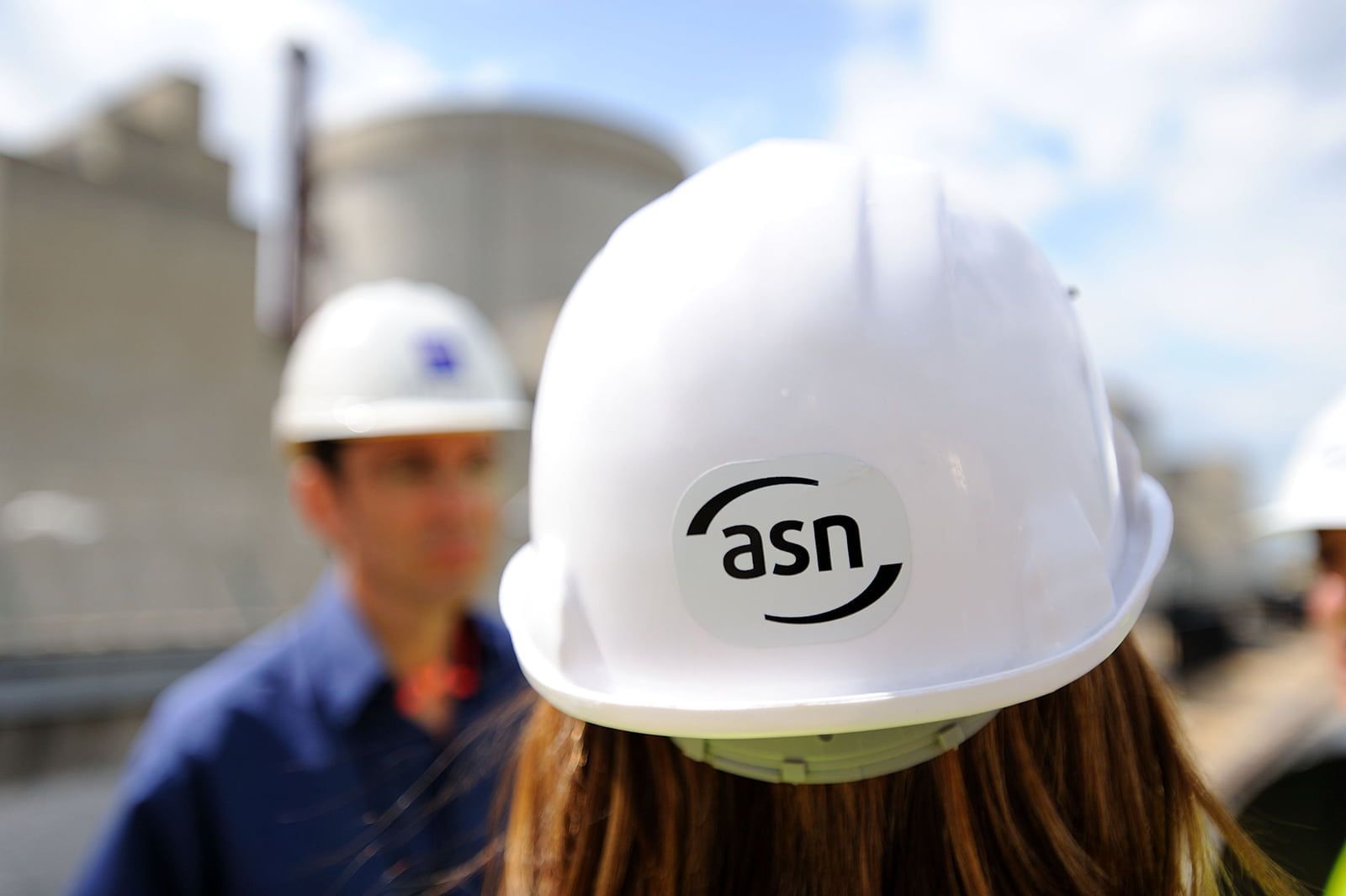
An international reference in nuclear safety
In the exercise of its missions, ASN displays four strong values: skill, thestatehood, the thoroughness And the transparency.
Recognizing its social responsibility, its ambition is to ensure in all circumstances a “efficient, impartial, legitimate and credible nuclear control”.
Regulation and licensing of nuclear installations
In France, it is the State that decides on the creation and dismantling of nuclear power plants, on the advice of ASN. But it is the independent authority that Establishes the requirements technical and organizational techniques and nuclear safety standards to ensure public safety and health, as well as the protection of the environment. It ensures that the regulations are proportionate to the challenges.
It is also ASN which processes individual applications for authorization of operation and authorizes the commissioning and operational extensions. In the event of serious and imminent nuclear risks, it can suspend the operation of a power plant.
Last lesser-known role: ASN regulates and manages approvals for the transport of radioactive materials.
Control and monitoring of nuclear activities
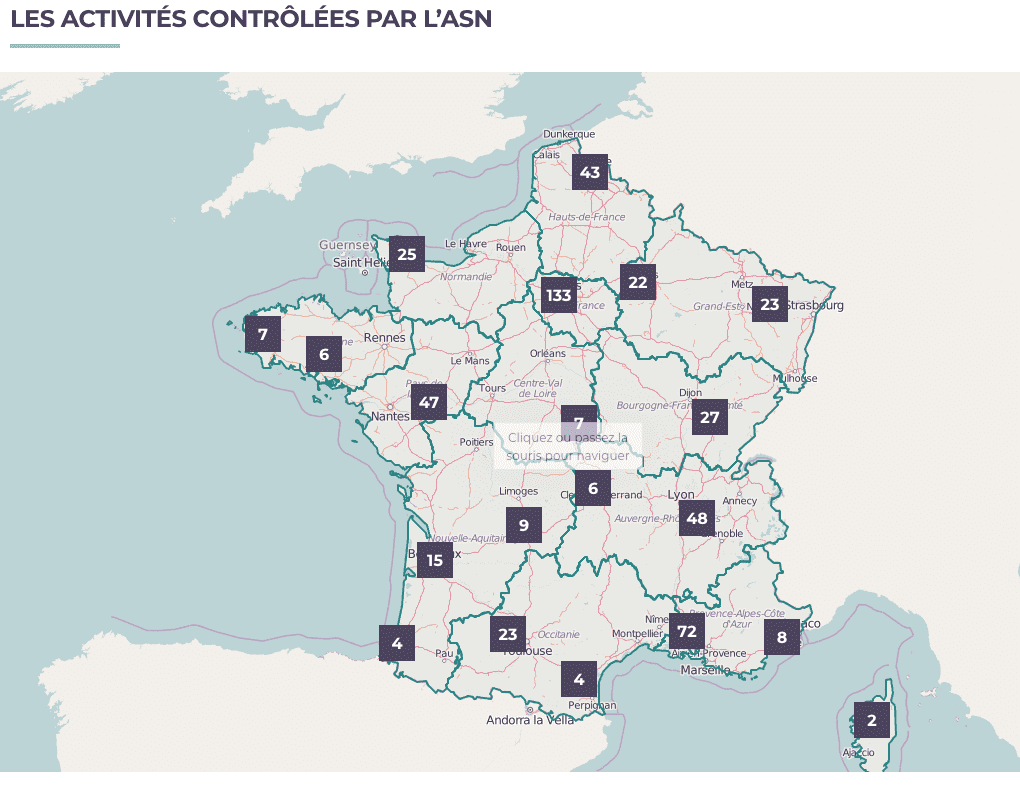
With 329 inspectors — representing 64% of its staff — control is the main activity of ASN.
Source: ASN
In 2022, 1,868 inspections were carried out, including more than 850 at nuclear power plants. Other controls concern the transport of radioactive materials, the medical and industrial sectors, research, and the protection of ionizing radiation sources against malicious acts.
ASN also monitors the uranium processing, conversion and enrichment plants operated by Orano, or the activities of radioactive waste management of the Commission for Atomic Energy and Alternative Energies (CEA).
From design to dismantling, including construction, operation and decommissioning, ASN's control is exercised at all stages of life ofthe Nuclear power plant.
Operated by EDF, the 56 reactors in the French nuclear industry are the subject of a periodic review during the decennial visit. The objective? Reassess the risks presented by the nuclear installation and its impact on the environment, taking into account its condition and the evolution of knowledge and regulations.
These visits can lead to very important work to bring the safety of the plant up to the level of new regulatory and technical requirements.
This control mission is accompanied by a Power of injunction and sanction, conferring legitimacy and authority on ASN. It can impose graduated sanctions, such as a formal notice, administrative fines, daily penalties, seizures, withdrawals or even deposits.
Communication and information to the public
In 2022, ASN provided 600 responses to requests from the public and stakeholders (media, associations, etc.). She also wrote 81 briefing notes and held 11 press conferences.
In an effort to provide complete, reliable and accessible information, the authority posts all inspection results online. Each year she also publishes her Report on the state of nuclear safety and radiation protection in France. The latest was presented on May 25, 2023.
Promoting transparency, ASN makes it possible for everyone to participate in the development of decisions with an impact on the environment via local information commissions.
Every citizen can follow the latest news on nuclear safety and consult the latest publications on their website.
The challenges of the Nuclear Safety Authority for the future
In a context of climate and energy crisis, Nuclear energy is back in the spotlight. Carbon-free electricity, she is a efficient component of energy mix to reach carbon neutrality in 2050.
Always anticipate and develop nuclear safety standards
For over 30 years, ASN adapts its safety standards to the evolution of nuclear risks. Technical, regulatory and organizational provisions are subject topermanent improvements, taking into account technological advances and new risks.
The Fukushima experience in 2011 is an illustration of this. The accident was a real accelerator for nuclear safety. It has led to the generalization of alternative solutions to manage the supply of water and electricity to power plants, as well as to the definition of a “hard core” to prevent and reduce the impact of an accident involving fuel fusion.
Today, security requirements include new standards such as the confinement of radioactivity within the enclosure or reinforcement devices in the face of internal and external natural risks.
Adapting nuclear safety requirements to new climate risks
Heat events, extreme weather events, water temperature and drought are all new risks that weigh and will weigh on the safety and availability of the French nuclear fleet.
They were pointed out by the Court of Auditors in a report published on 21 March 2023, insisting on the necessary adaptation of the nuclear reactor fleet to climate change.
Climate hazards are already integrated into the standards of the nuclear safety authority, updated during each reassessment procedure. But climate change calls for vigilance and foresight.
Responding to new nuclear safety challenges
The desire to relaunch civilian nuclear power is relaunching the debates on nuclear safety. Concerns are being raised about SMR, these small modular reactors that could spread in France and around the world.
In its annual report, the independent authority recalls that ” The enthusiasm for Small Modular Reactors should not overshadow questions of safety and security nuclear reactors that are posed for these reactors”. The Nuward project, led by the EDF consortium, Commissariat à l'Énergie Atomique (CEA), TechnicAtome and Naval Group, is under the spotlight of ASN. With a capacity of 340 megawatts, it is currently the subject of a preliminary safety review.
Ensuring the transition of the French nuclear industry
La extending the life of the nuclear fleet also raises legitimate safety issues.
In 2021, ASN agreed to extend the operation of 900 MW reactors from 40 to 50 years. It is now evaluating the possibility of doing the same for 1,300 MW reactors. The objective? Ensure the pragmatic transition of the existing fleet while waiting for the construction of new nuclear installations.
Given the age of the reactors, decisions are accompanied bystrong security obligations forcing the operator EDF to “bring safety to a level close to that of third-generation EPR reactors.”
Strengthen transparency and communication
The first Flamanville EPR has not yet been put into operation when the State has announced the construction of six EPR2 and the study of eight other nuclear reactors. One billion euros must also be released for a call for SMR projects.
These new projects reinforce the The question of social acceptance of nuclear power. While ASN is already doing a lot of communication work, it will have to deepen its transparency and educational efforts to reassure people about these new nuclear solutions.
Admittedly, Nuclear energy has many advantages. But in the minds of citizens, they still often disappear before its limits: management of radioactive waste, import of uranium, investment and operating costs.
ASN has been working for more than 30 years to guarantee a high level of nuclear safety in France. The results are in. Two level 4 nuclear accidents were to be deplored on the territory, in 1969 and in 1980 at the Saint-Laurent-Les-Eaux power plant.
Since then, France has not experienced major crises and incidents remain rare. But as pointed out by the former managing director of the International Atomic Energy Agency (IAEA), Yukiya Amano, “no country should give in to complacency when it comes to nuclear safety”. A responsibility that ASN carries out with rigor, expertise and independence.
Do not hesitate to consult our article on: Strengthened nuclear security: the role of the Rapid Nuclear Action Force (FARN)


Take the first step towards optimization
In a few clicks, organize an exchange with one of our experts.





weekly newsletter subscribers

4.9
