




Summarize with AI

March 6, 2026
8
Min reading
Each year, global primary energy consumption breaks the previous year's record.
In 2023, it reached 620 Exajoules, an increase of 2% compared to 2022. In 50 years, the increase of 320% is colossal, with dramatic consequences on the environment, climate and biodiversity.
In this context of emergency, all renewable and low-carbon energies must come together to replace fossil fuels and build a energy mix more durable. Alongside solar, wind, hydroelectricity, biomass and hydrogen, many energy resources are still little, or not, exploited.
What are these unexploited and still little-known energy sources? What are their promises? What is the status of the research?
Overview.
The idea of producing energy through the combustion of certain metal powders is increasingly enchanting specialized scientists. If, in their solid and agglomerated form, metals make very poor fuels, things change when they are reduced to a powder state. The main challenge is to find a metal with a high energy density that can be handled easily and safely.
Iron powder is now presented as a promising energy vector. The principle is simple: as it burns, iron powder releases heat that can be used directly or transformed into electricity.
This renewable energy attracts interest because of its numerous advantages: its excellent stability, her ability to release significant amounts of heat by burning and its transport and storage safety.
The first applications of using iron powder as an energy fuel were industrial. The pilot projects carried out in the Netherlands bear witness to this.
In October 2020, researchers from the Eindhoven University of Technology successfully installed a industrial heating system based on iron powder in a Swinkels Family Brewers brewery. Used as industrial fuel, this atypical energy source fuels the average production of 15 million glasses of beer per year.
Experiments continue in 2024, with the support of the Dutch State. The European leader in multi-technical services SPIE has launched a pilot study with the Metalot research laboratory. The objective? Prove the effectiveness of iron powder to power a 200 kW industrial thermal process. If the results are conclusive, this innovation can be deployed on a larger scale for district heating, industrial processes and electricity production.

Iron is one of the most abundant elements on Earth. This metal is the fourth most abundant in the Earth's crust. It represents more than 5% of the composition of rocks. The reserves are therefore large enough to allow long-term exploitation.
Direct greenhouse gas emissions generated by the combustion of iron powder are almost zero. The reaction also releases only minute quantities of nitrogen oxides (NOx). The rust obtained after combustion is transformed back into clean iron, which is burned again to produce heat, in a virtuous cycle.
As an energy resource, iron powder thus has a Almost zero carbon footprint And is infinitely recyclable.
Even if they are not yet well exploited, the energy resources provided by the oceans have a very interesting potential.
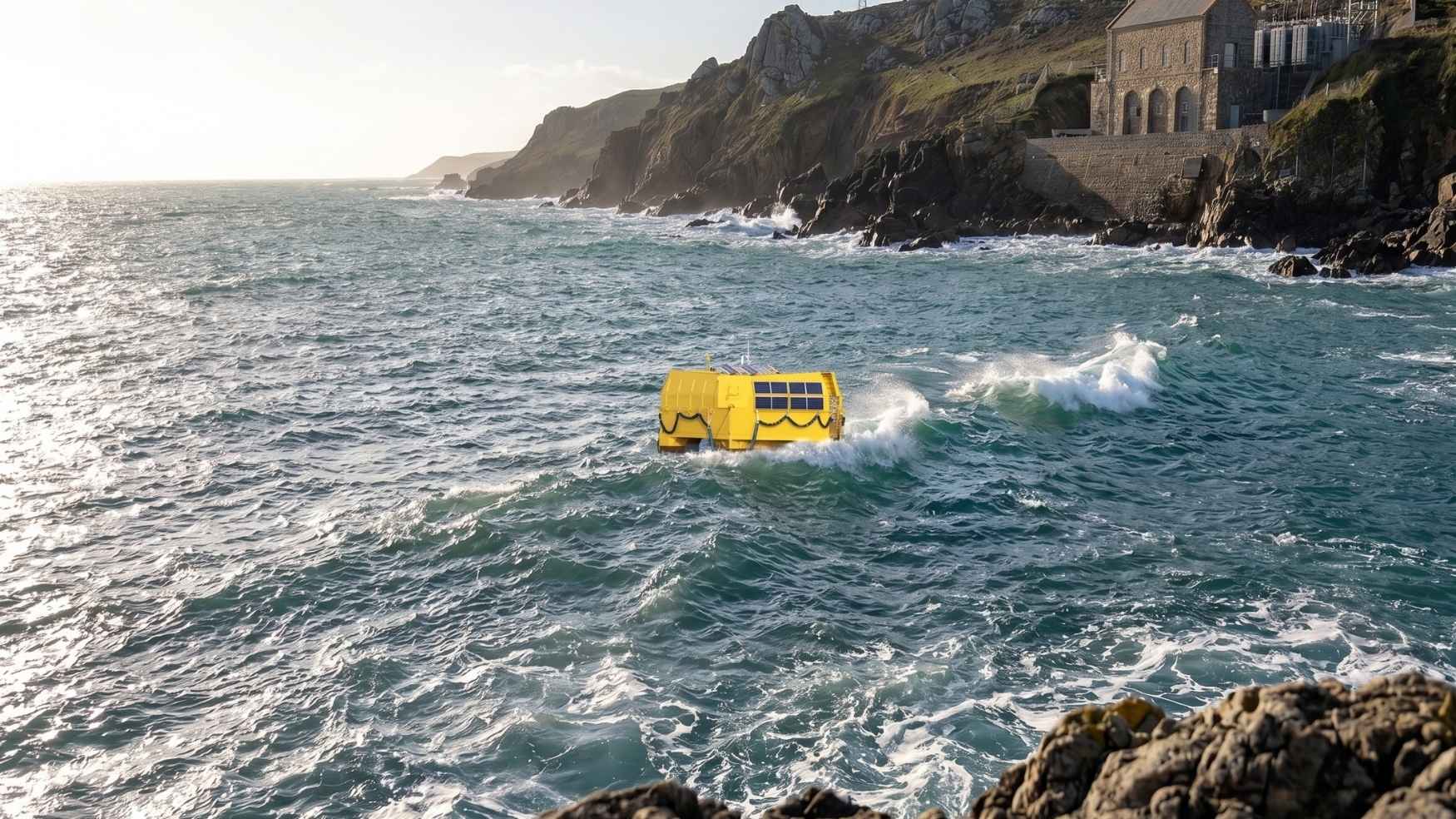
THEwave energy refers to the conversion of the force of wave motion (oscillations of water under the effect of wind at the surface) into mechanical energy. Wave energy is used to pressurize hydraulic fluid, which generates mechanical power to operate electric turbines.
With 1 watt/m²/year, the quantity of energy obtained from the swell is however quite low. For comparison, solar energy produces an average of 200 watts/m²/year.
But the vastness of the area exposed to wind movements compensates for this energy weakness. The International Energy Agency (IEA) estimates the theoretical global annual potential between 8,000 and 80,000 TWh of electricity.
During the experimental phase, articulated floating boxes, surge platforms, water columns, underwater oscillators or channel overflows have not yet reached technological maturity. Until then, the high costs hampered the development of this energy whose efficiency was considered too low. But mentalities are changing in the face of the climate emergency.
In 2024, around fifty projects are recorded around the world, mainly in France, the United Kingdom or Australia. In Portugal, the European Union is supporting the construction of the first large-scale commercial wave power plant with a capacity of 1 MW. The United States is also accelerating with the announcement of a plan to invest more than $100 million in wave energy.
Still called Ocean Thermal Energy Conversion, marine thermal energy is one of the least known and exploited marine energies. However, its global potential could reach 10,000 TWh/year according to the IEA.
Marine thermal energy (ETM) or tidal energy uses the Temperature difference between surface water and depth water to produce electricity. Through heat exchange, electrical energy is obtained through thermoelectric assemblies through the Seebeck effect.
The thermal gradient between surface and deep water must be equivalent to at least 20°C. This is why tidal power plants are ideally located in areas where the water depth reaches 1,000 meters.
Tidal energy offers a good ecological balance. The greenhouse gas emissions of an ETM power plant would be 100 times lower than those of a thermal power plant.
It is also a Predictable and available energy on a permanent basis throughout the year. At sea, it is close to 60 million square kilometers that can be used endlessly.
Restricted physical conditions limit the areas in which thermal energy from the seas can be exploited. They are only found in intertropical zones.
Tidal energy also faces the same difficulties as wave energy, with a low energy efficiency And costs investment and operation High.
For the vast majority, projects in this area are still at the stage of research and development. After the cessation of French projects in Martinique and Réunion, only two ETM power plants operate around the world, in Hawaii and Japan. In Europe, an ambitious project is being carried out by seven European companies at Canary Islands. Launched in 2024, the construction of the prototype aims to demonstrate the ability to produce electricity continuously using the sea.
Discovered in the 1950s but still under-exploited, osmotic energy could gradually take its place in the global energy mix. It is potentially between 1,000 and 2,000 gigawatts that could be produced each year worldwide, i.e. the production of 1,000 to 2,000 nuclear power plants.
Still called dilution energy, osmotic energy is obtained by playing on the Difference in salt potential between fresh water and sea water. Separated by a semipermeable membrane, the atoms contained in fresh water are attracted to water that is concentrated in salt. It is the phenomenon of osmosis. Their movement into salt water creates a so-called osmotic pressure. The energy transmitted by this pressure (equivalent to a 120-meter waterfall at the level of a hydroelectric dam) is used to activate a turbine and produce electricity.
We also distinguish reverse electrodialysis which makes one solution charge positively and the other negatively, to generate an electric current thanks to the difference in charge.
This osmotic energy is usable at all river mouths, where fresh and salt water meet.
The dilution energy is Not intermittent, with continuous electricity production and a very low carbon footprint. But it requires considerable technical investments.
To use it on an industrial scale, research is continuing to improve the performance of osmotic membranes.
It is in France, in Port-Saint-Louis-du-Rhône, that the first large-scale osmotic power plant in the world. The trials started in 2024. Supported by the company Sweetch Energy, Compagnie Nationale du Rhône and EDF Hydro, this osmotic power plant could produce up to 4 terawatt hours per year, i.e. the electricity consumption of two million inhabitants.
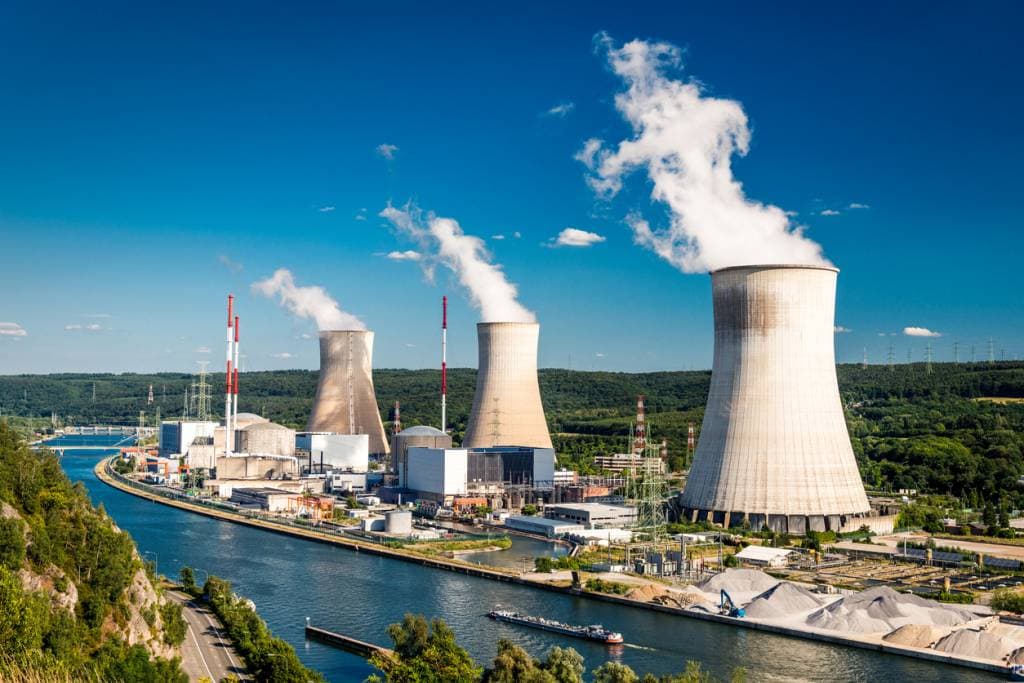
Nuclear energy represents around 10% of global electricity production. Two processes can be used: nuclear fission or nuclear fusion. In terms of both modes, all possibilities have not yet been fully explored.
The fission reaction consists in breaking heavy atomic nuclei under the impact of a neutron. This reaction is accompanied by a strong heat release, transformed to produce nuclear electricity.
Usually, nuclear power plants use uranium-235 or plutonium-239. But the Thorium-232 has attracted the interest of researchers for several years. Its main asset? Generate more fissile material than it consumes. Also, its cycle does not release no greenhouse gases or radioactive waste. Four times as abundant than uranium on Earth, this nuclear fuel would then allow sustainable exploitation.
However, the development of this sector requires significant financial and technical investments. With the largest reserves in the world, theindia focuses on thorium, with the construction of a first prototype of an advanced heavy-water reactor. La china follows closely with the issuance in 2023 of an operating license for an experimental thorium molten salt nuclear reactor.
Nuclear fusion is atOrigin of the energy produced by stars and the sun. The union of two light nuclei into a single, heavy nucleus releases an enormous amount of energy. Scientists are looking to replicate this reaction in order to produce unlimited, clean, incredibly powerful and incredibly powerful energy at an affordable cost.
The idea is to control the fusion of two light nuclei of deuterium and tritium. For this, it is possible to use a slow reaction by magnetic confinement or a rapid reaction by inertial laser confinement.
A major significant advance was achieved at the beginning of 2024 with the first nuclear fusion in the laboratory. But there is still a long way to go before we can consider the production of electricity by nuclear fusion. This reaction requires being able to maintain the plasmas at the core of the reactors at high temperatures over long periods of time. In recent years, records have multiplied, marked in 2021 by the maintenance, by a Chinese tokamak, of the plasma temperature at 70 million degrees for more than 17 minutes.
Bioluminescence of certain living beings, piezoelectricity, geothermal energy, geothermal energy, nuclear fusion, osmotic energy, molecular energy, valorization of waste heat...: many energy resources, renewable or low-carbon, are still too little exploited in the world. While they still have to overcome major technical and financial obstacles, these innovative and hopeful energy sources offer the promise of a more sustainable energy future.
In a few clicks, organize an exchange with one of our experts.


weekly newsletter subscribers

4.9

.png)

Les caves coopératives de taille ETI ou grande entreprise peuvent être soumises à l'audit énergétique réglementaire (norme NF EN 16247). Sirenergies n'a ni la compétence ni l'accréditation pour réaliser cet audit : nous vous orientons vers un bureau d'études partenaire accrédité, et vous accompagnons en amont sur vos achats et en aval sur le pilotage.
Yes. The supplier guarantees an offer 100% renewable via the official Guarantees of Origin (GO) mechanism.
For the most demanding companies, the offer GREENVOLT+ ensures very low carbon intensity electricity, sourced exclusively from independent French producers (hydraulic, wind, solar).
The range E @sy is available in four pricing structures to adapt to each risk profile: