




Summarize with AI

March 5, 2026
8
Min reading
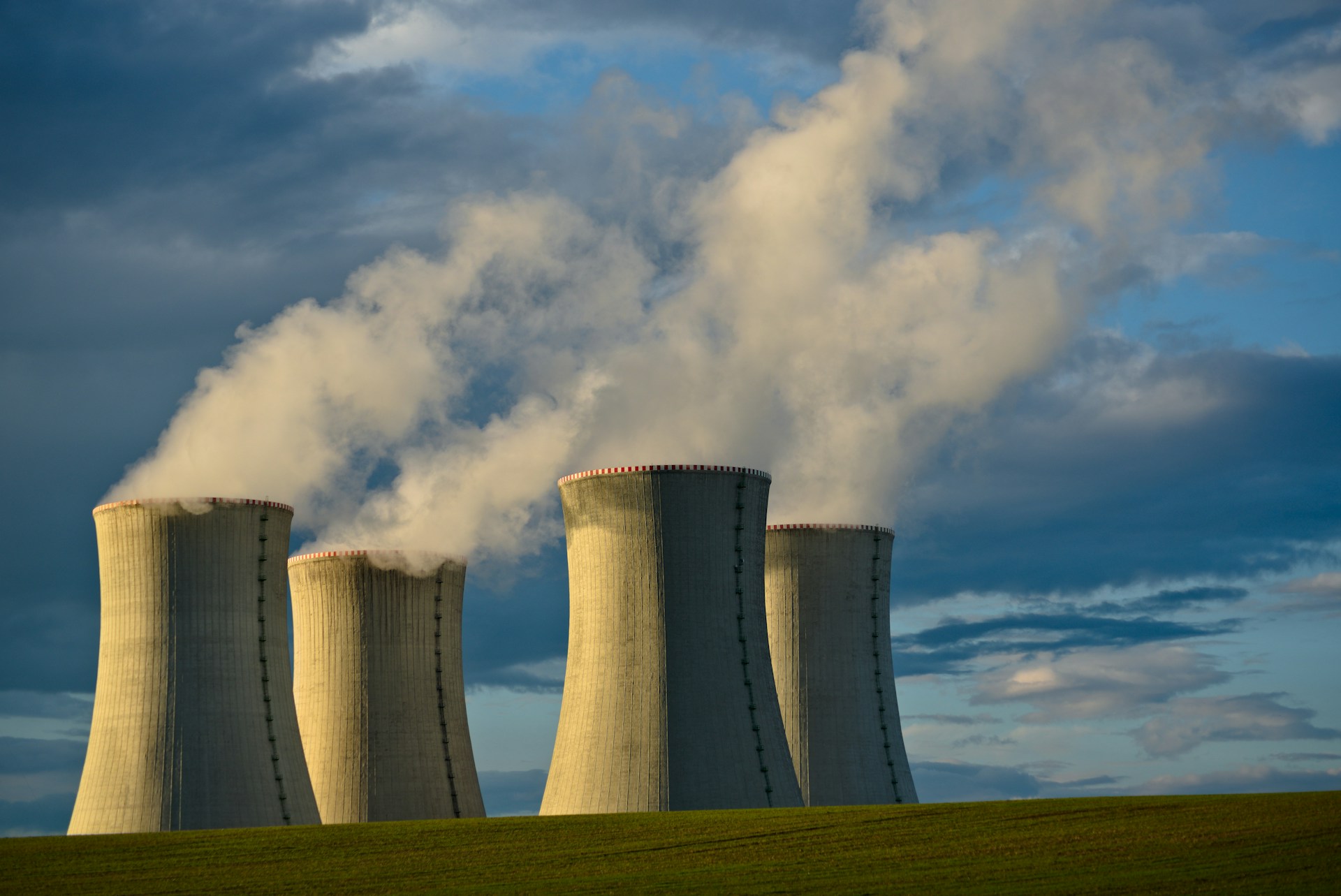
Imagine clean, almost unlimited energy that can produce electricity without emitting CO₂ or generating highly radioactive waste. This promise is that of nuclear fusion. Since the end of the Second World War, scientists have been trying to replicate on Earth the process at work at the heart of the Sun.
Faced with the climate and energy emergency, research has been accelerating for 20 years. Where are we today? Is nuclear fusion within reach or is it a technological pipe dream that is still out of reach?
Operation, challenges, recent advances, technical challenges, and international projects such as ITER: dive into the heart of this scientific quest with Sirenergies.
Nuclear fusion is a technical process that makes it possible to produce a large quantity of thermal energy thanks to fusion of several radioactive elements. The heat is then converted into electricity. The manufacturing process is based on the condensation of two atomic nuclei which, when assembled, form a heavier nucleus.
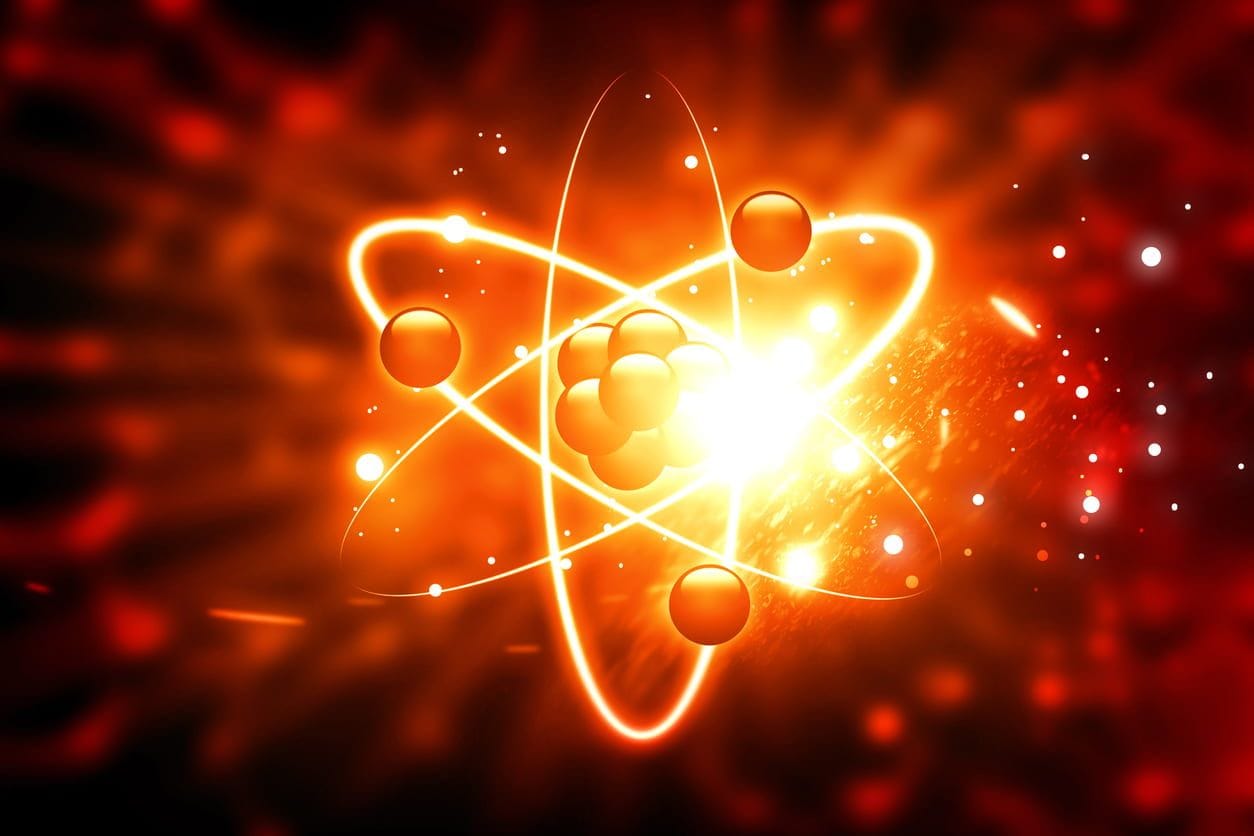
Nuclear fusion on Earth attempts to replicate the fusion reaction observed at Heart of the Sun and stars. The latter are essentially composed of a “plasma” in which hydrogen atoms fuse to produce helium.
How is this process possible? Aren't hydrogen atoms supposed to repel each other?
In theory, yes. But plasma is a very hot ionized gas. In addition, the center of a star is distinguished by a high gravitational force and very high temperatures (around 15 million degrees Celsius for our Sun). Particles have no choice but tocollide and merge.
When hydrogen atoms fuse, they form a heavier but very unstable nucleus... The neutron is expelled, causing a tiny loss of mass. La Quantity of energy released by this expulsion is huge!
This small step for the core is a big step for humans. But the process is far from over. Other particles meet as condensation occurs, producing increasing energy. The fusion reaction continues as long as there are resources to consume.
Nuclear fusion is possible on Earth, at least in theory. It could allow a considerable production of electricity thanks to adapted turbines.
The system to be put in place does not differ in any way from current technology: the Nuclear fission. The heat resulting from the reaction increases the temperature of the water contained in a primary circuit.
The latter in turn heats the water stock in the secondary circuit. At this point, water vapor causes the turbine connected to the alternator to rotate to produce electricity.
Thermonuclear fusion is in principle an inexhaustible source of energy. To better understand its potential and its place in the energy future, let's explore its advantages and disadvantages.
Measuring the benefits of nuclear fusion is only possible by comparing it to a similar process: fission. The latter is often criticized because of the technical risks it presents.
In theory, fusion can avoid these risks while offering greater energy production. Among the advantages of this process, we can mention:
One of the major challenges ofnuclear energy resides in the waste management. Although fusion generates waste, it is not highly radioactive. The most problematic residues should be able to be recycled in less than 100 years, while waste from nuclear fission has a lifespan of 300 years to several thousand years.
Although promising, nuclear fusion is not without risks. The Institute for Radiation Protection and Nuclear Safety (IRSN) warns against the formation of residues due toerosion of materials composing the internal cover of reactors (tungsten or beryllium).
OFother forms of pollution could arise from the dismantling of future nuclear reactors or from existing merger projects. The risk is all the more real as the materials and infrastructures are irradiated during the operation of nuclear power plants. However, this problem remains less significant than the consequences of fission.
Since the end of the Second World War, projects around nuclear fusion have multiplied. Each is a veritable mine of information to give life to the international ITER (International Thermonuclear Experimental Reactor) project, launched in 2006.
To create and confine fusion plasma, researchers designed a Experimental reactor: the tokamak. Since 1950, more than 200 models have been built around the world in the hope of reaching the holy grail: nuclear fusion.

The Tokamak — Source: © US ITER
Scientists are making full-scale tests to better understand and control the energy of nuclear fusion.
The best known projects are :
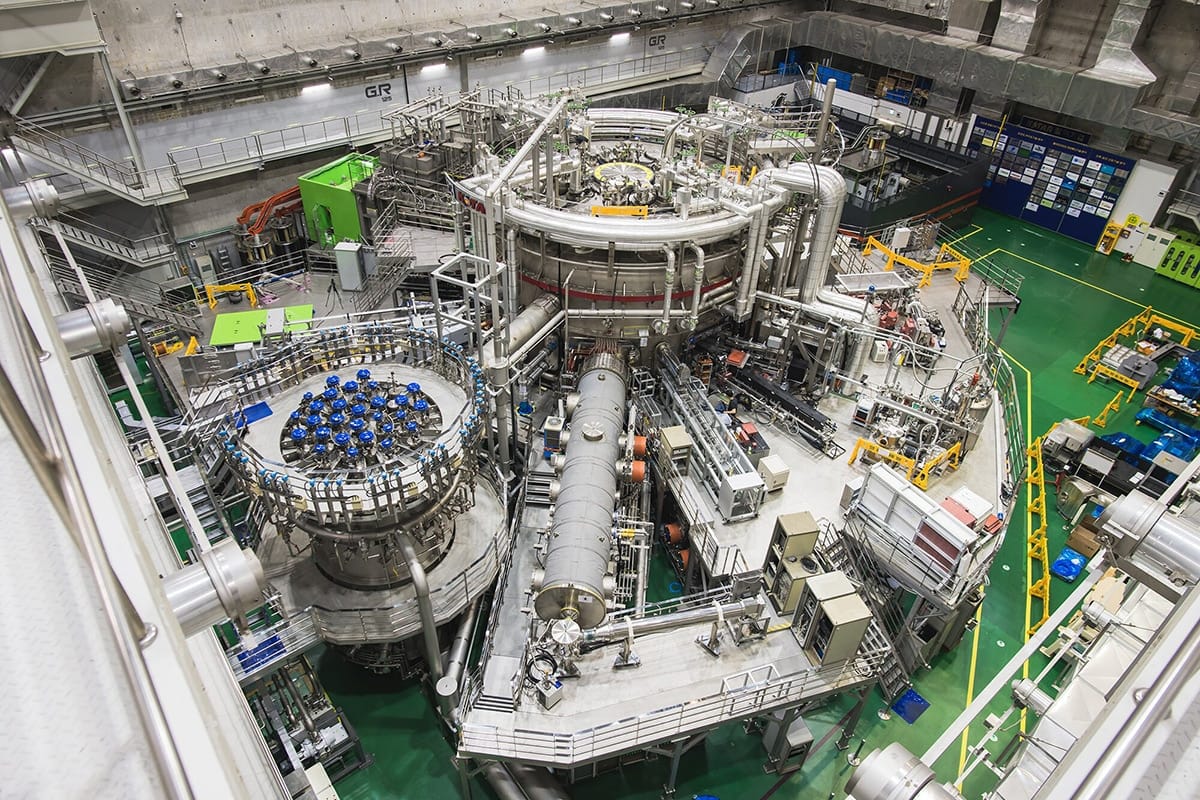
The KSTAR (Korea) — Photography: National Research Council of Science & Technology
Since 2006, the International thermonuclear experimental reactor ITER benefits from the collaboration of 33 countries.
The construction of the 830 m³ tokamak was carried out in Cadarache in the south of France. This project aims to generate “burning plasmas” and to analyze their behavior. Plasma production should start in 2033. The first deuterium/tritium fusion is expected to start in 2039. This preparatory period will make it possible to progressively increase the power of the ITER reactor, while guaranteeing its stability and limiting additional costs.
If ITER succeeds in achieving and maintaining nuclear fusion, it will prove the technical feasibility of the process. This advance would pave the way for an even more ambitious project: the Tokamak DEMO. Its objective? Demonstrate the possibility of producing large quantities of electricity through thermonuclear fusion, in the second half of the 21st centuryE century.
The future of nuclear fusion depends on the ability of researchers to overcome the obstacles to its exploitation. To answer this question, let's analyze the challenges and results achieved so far.
Fusion energy is a utopia. Many might be tempted to reach this conclusion, as there are so many challenges ahead. This ambitious project aims to reproduce the conditions of plasma formation in the heart of the Sun.
However, the gravitational force is not at all the same on Earth...
To harness the energy of nuclear fusion, scientists must combine four elements :
To date, two ingredients seem suitable for simmering in plasma soup: deuterium (D) and tritium (T), two isotopes of hydrogen. They offer good energy efficiency at relatively low temperatures. However, D-T fusion requires a temperature of 150 million degrees, which is 10 times more than the temperature at the center of the Sun!
With regard to plasma, two confinement techniques are being studied: inertial confinement And the magnetic confinement. The first solution requires heating a metal capsule of about 2 mm in size with laser beams and a power of 300 billion watts! This technique has not yet made it possible to reach the expected ignition threshold (production of thermal energy).

Principle of fusion by inertial confinement — Source: Veinhard, Matthieu. (2019). Surface damage to silica with LMJ laser beams.
Since the first tokamaks, nuclear fusion has oscillated between excessive hype and technological stagnation. Even though progress is significant, the technology is still a long way from being exploited on a large scale. However, the records keep coming, bringing hope:
All eyes are now on ITER, which aims to produce 500 MW for 400 seconds using only 50 MW of power to carry out the D-T deuterium-tritium fusion.
Nuclear fusion research could continue to accelerate in the coming years, with support from new countries. After years of skepticism, several European states have just taken major decisions in favor of nuclear power.
In Belgium, the repeal in May 2025 of the law to abolish nuclear power allows the maintenance of the five nuclear power plants in operation, two of which see their extended lifespan of ten years. Belgium is also considering the construction of new nuclear production capacities, in particular via small reactors (SMR).
A fervent defender of renewable energies, Denmark passed a law exploring the possibility of using nuclear power to cover electricity demand and reduce its dependence on gas and coal. Focusing on SMRs, the impact study should last one year.
Even anti-nuclear Germany seems to be softening its position. Although the last German power plants were shut down in 2023, Germany nevertheless remains a stakeholder in the ITER project and plans to invest more than one billion euros to develop its first fusion reactor.
Do you want to anticipate technological revolutions?
Subscribe to the SirEnergies market newsletter to follow fluctuations (gas, electricity, CO₂) and understand the impacts on your energy costs.
To conclude...
Clean, powerful and abundant, nuclear fusion embodies the energy ideal. But this seductive image hides a complex reality. Many states rely on nuclear power to meet energy and climate challenges. Every year, tokamak projects push the envelope. However, uncertainty remains: while experts hope for the first concrete results from 2050, large-scale energy production seems far from reaching. There is still a long way to go to transform nuclear fusion into the key to the energy future... but it is being traced by international research and cooperation.
In a few clicks, organize an exchange with one of our experts.


weekly newsletter subscribers

4.9

.png)

C'est le levier le plus rapide pour obtenir des résultats visibles. L'éclairage représente environ 40 % de la consommation d'électricité d'une commune.
Passer au LED avec pilotage intelligent permet de réduire la facture de 50 à 80 %, avec un retour sur investissement (ROI) rapide, souvent estimé à 2 ou 3 ans.
Sourcing consists in identifying and analysing the offers of several electricity and gas suppliers. This approach makes it possible to obtain contracts adapted to the consumption profile and budgetary constraints of the company.
These are signals sent by RTE during periods of tension on the electrical network. The Sirenergies tool informs you in real time to anticipate your uses.
Un appel d’offres permet de mettre en concurrence plusieurs fournisseurs d’électricité et de gaz afin d’obtenir des conditions contractuelles optimisées. C’est une démarche transparente qui permet de choisir l’offre la plus adaptée aux besoins budgétaires et techniques de l’organisation.
In 2025, the supplier had a NPS (Net Promoter Score) of +16 and a note of 4,17/5.
Satisfaction is based on a “zero solicitation” model and 100% in-house customer service in Toulon, guaranteeing proximity and responsiveness that cannot be found with major historical suppliers.
C'est l'indicateur d'efficacité d'un appareil électrique ; il représente le ratio entre la puissance active (utile) et la puissance apparente (totale).
Tertiary companies are concerned by taxes such as TICFE or TICGN. Sirenergies checks the accuracy of invoices, identifies possible exemptions, and helps correct errors to sustainably reduce costs.
The industry is concerned by TICFE, TICGN and other contributions that may represent an important part of invoices. Sirenergies identifies cases of exemption and accompanies the procedures to benefit from them.
Communities are subject to taxes such as TICFE or TICGN. Sirenergies analyzes invoices, identifies exemption possibilities and fixes possible errors to reduce the tax burden.
Exceeding capacity leads to financial penalties and can impact the size of the contract. Adjust the correctly subscribed power makes it possible to avoid these additional costs.
Tertiary companies must manage their energy costs while guaranteeing the comfort of users (offices, shops, services). Consumption is often linked to heating, air conditioning and lighting, which requires precise monitoring to avoid budgetary excesses.
Some businesses may obtain a partial or total exemption from the TICFE or the TICGN, depending on their activity and energy intensity. The support of an expert makes it possible to identify the eligibility criteria and to put together the file.
Yes. The supplier guarantees an offer 100% renewable via the official Guarantees of Origin (GO) mechanism.
For the most demanding companies, the offer GREENVOLT+ ensures very low carbon intensity electricity, sourced exclusively from independent French producers (hydraulic, wind, solar).
Le dispositif ARENH a laissé place au VNU (Versement Nucléaire Universel).
Ce changement structurel expose davantage les entreprises aux prix de gros, rendant la gestion des risques plus complexe qu'auparavant.
Il devient alors indispensable de définir une stratégie d'achat d'électricité avec Sirenergies pour lisser l'impact de la volatilité des marchés sur votre budget.
The subscribed power must be calculated according to the consumption profile and uses (heating, industrial processes, tertiary equipment). One fine analysis makes it possible to ensure the adequacy between real need and contract.
One invoice consists of several elements: consumption, supplier share, taxes and contributions. The analysis of each line makes it possible to identify possible errors and to check the consistency with the signed contract.
Le processus repose sur l'utilisation de la force de l'eau (énergie cinétique) issue des courants, des chutes d'eau ou des dénivelés. Le fonctionnement suit trois étapes clés :
The €/MWh is a price unit used in wholesale markets, while kWh is the unit visible on your bills.
Le kVA mesure la capacité maximale que votre compteur peut supporter à un instant T, tandis que le kWh mesure la quantité d'énergie consommée sur une durée.
Farms are subject to taxes such as TICFE or TICGN. Sirenergies verifies their application, identifies cases of exemption and accompanies the procedures to reduce the tax burden.
L'abondance de production française tire les prix du marché de gros vers le bas.
En vertu du mécanisme de l'Ordre de Mérite (Merit Order), les centrales les moins coûteuses (nucléaire, renouvelables) couvrent la demande plus souvent, évinçant les centrales à gaz ou charbon plus onéreuses.
Cela multiplie les épisodes de prix bas, voire négatifs, sur le marché spot.
Oui, elle est considérée comme une énergie renouvelable à faibles émissions de gaz à effet de serre.
De plus, l'eau ne subit aucune transformation chimique durant le cycle de production et réintègre son milieu naturel en aval.
Cependant, la construction de barrages nécessite des mesures pour protéger les écosystèmes (débit minimum, passes à poissons).
Le transport (RTE) correspond aux "autoroutes" de l’électricité. Il s’agit de transporter de très grandes quantités d'énergie sur de longues distances, depuis les centrales de production (nucléaires, barrages, parcs éoliens offshore) vers les régions de consommation.
La distribution (Enedis) s'apparente aux "routes départementales" et aux rues. Elle récupère l'électricité à la sortie du réseau de transport pour la livrer directement chez le client final, en abaissant la tension pour qu'elle soit utilisable par vos appareils.
Among the taxes include TICFE, TICGN, CTA, CJA and TURPE. They represent a significant part of the bill and vary according to consumption profiles. Understanding them well is essential to optimize costs.
En 2025, la France a atteint un solde exportateur net de 92,3 TWh, battant le précédent record de 2024 (89 TWh).
The range E @sy is available in four pricing structures to adapt to each risk profile:
Ce record de 92,3 TWh s'explique par la conjonction de trois facteurs :
This makes it possible to choose the right time to contract, secure your budgets and anticipate increases.
Parce que la puissance souscrite en kVA détermine le prix de l'abonnement et que tout dépassement peut entraîner des surcoûts importants.