




Summarize with AI

March 12, 2026
7
Min reading
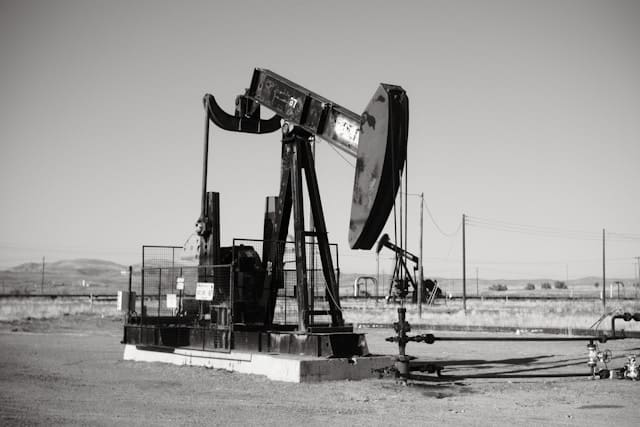
Oil has been present in the daily lives of people on Earth for over a century. This primary energy source is the most exploited in the world. Oil fields are concentrated in several regions, especially under the soil of countries such as Saudi Arabia, Venezuela, Iran, Iraq, etc.
Their exploitation involves major geopolitical challenges. For decades, Oil has remained an essential source of energy for running industries and ensuring transport. Today, black gold is losing ground to other energy sources to the point where many people already talk about it in the past.
With SirEnergies, get to know SirEnergies in depth here Oil, yesterday's energy whose residues are still present in our lives.
Oil was known to our Mesopotamian, Egyptian, Roman, and Chinese ancestors. Several researchers trace the exploitation of black gold back to Antiquity. On the other hand, oil did not really transform ancient societies as has been the case for less than two centuries. Many scientists agree that the story Petroleum The modern era began in 1859.
That year, innovative technologies were used to extract oil in Pennsylvania, in the northeastern United States. The Pennsylvania Rock Oil Company, which handled the operation, can therefore be considered the oil company of the story.
The United States has taken advantage of its status as a pioneer in oil exploitation. They have constantly improved techniques and tools for oil exploration and exploitation. It is therefore not surprising that they are at the top of the list of oil-producing countries in the world.
It is not a scoop to inform you that oil is fossil energy. It is formed from the degradation of organic materials by heat. They are found in mother rocks that make up the surface mineral layer of the Earth's crust. Organic matter is actually fossilized residues of plants and microscopic animals accumulated at the bottom of oceans, lakes and deltas.
They are stored in aquatic environments where oxygen is absent. Also referred to as” kerogen ”, organic residues mix with mineral sediments to form the bedrock.
All of this happens over millions of years. Under the effect of high temperatures, between 2,500 and 5,000 m deep, thermal cracking takes place. In fact, organic matter is transformed into liquid oil followed by gas.
Lower, at more than 5,000 m, the oil in turn undergoes cracking and becomes Natural gas. Oil, being lighter than water, makes an ascent towards porous rocks often called “reservoir rocks”. It accumulates in these rocks when they have impermeable rocks on top of them.
Since man discovered that he can take advantage of oil fields, they no longer remain in reservoir rocks indefinitely. You are probably wondering what makes petroleum such a coveted mineral oil. It is composed of a multitude of different molecules. It is essentially a mixture of hydrocarbons and molecules containing, among others, atoms such as oxygen, sulfur and nitrogen.
For information, the hydrocarbons are molecules made of carbon and hydrogen atoms. When exposed to ambient temperature and pressure, some components of petroleum, such as asphalt and paraffins, are solid. Under the same conditions, other components such as methane and propane are gaseous.
As for components such as hexane, heptane, and octane, they are liquid at room temperature and pressure. To obtain petroleum products, molecules are fractionated and transformed, once the oil has been extracted from reserves.
In order to extract this energy, the establishment of a whole mechanical and technical arsenal is necessary. This involves heavy work and the use of large-scale equipment. A large part of the oil exploitation budget is devoted to this stage. The operators create a production well.
Over time, a Rotary drilling technique became widely popular due to its efficiency. It is the one used by most oil companies in the world.
La Rotary technique makes it possible to set up diverted boreholes and horizontal borings. In the first case, the underground obstacles are bypassed and in the second case, the borehole can be crossed along its length. The production well or development well may be of the multi-drain type. With this installation, several parts of the oil reservoir rock are exploited from a single point.
After the creation of the borehole, production, processing and metering pipes and equipment are installed. A system for evacuating crude oil to the ground surface is also in place. You will have understood that to extract every milliliter of oil, technicians and logistical resources must be mobilized, which requires a lot of money.
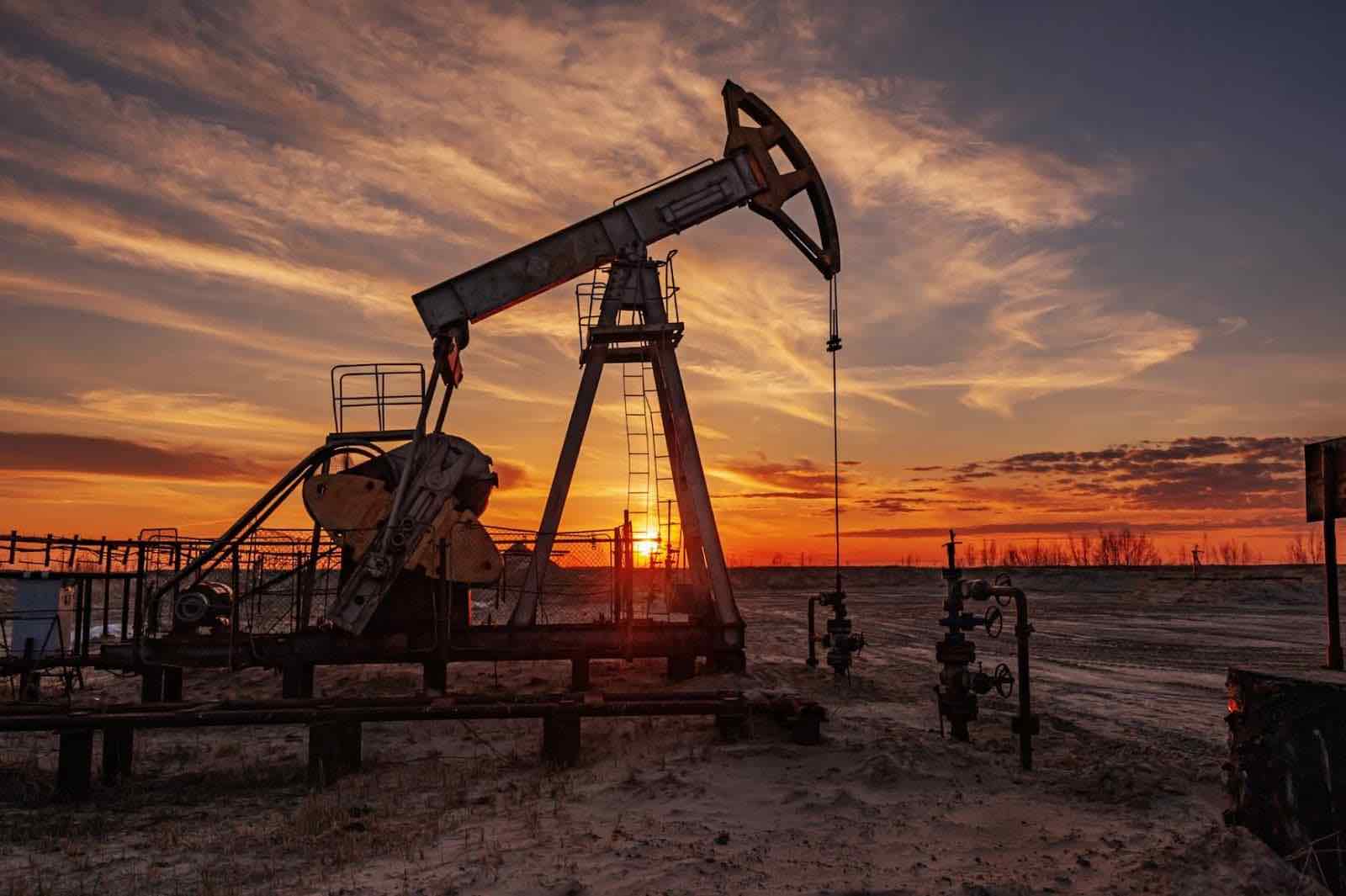
The Crude oil extracted from the subsoil must be treated to become fuel or fuel to meet energy needs. Refining is carried out in several stages:
The distillation of crude oil makes it possible to obtain intermediate products. The latter are of three types and are also called “oil cuts”. There are light cuts made from gasoline, gas and naphtha; medium cuts made from domestic fuel, kerosene and diesel. Heavy cuts, containing heavy fuel oil and long-chain hydrocarbons (atmospheric residue), are the third type of intermediate products.
To improve product quality, unwanted compounds such as sulfur and metals are removed. Heavy products, being very useless, are transformed into lighter and highly consumed energy products, including gasoline, kerosene, diesel... The refining units used for this transformation have the particularity of being able to operate at very high temperature and/or at high pressure. In order to obtain ready-to-use petroleum products, several semi-finished products are mixed.
Oil has undoubtedly changed the face of the world. Countries like the United States, Saudi Arabia, Canada, Canada, Russia, and China owe their economic power to it in part. As early as the 1950s, oil became The flagship energy source, in front Coal in particular. In the decades that followed, it was widely used to meet energy needs in several areas.
Petroleum comes in the form of gasoline, diesel, and kerosene to power motor land vehicles, boats, and airplanes. For comfort in buildings, domestic fuel, derived from petroleum, has long been a fuel of choice for boilers.
Oil is also used to produce electricity. In industry, it is a significant commodity. An important source of energy, oil has brought a wind of revolution in various sectors. However, it has shown its limits.
It is time for him to bow out after having served us for nearly two centuries.
Given the uses for which it is used, you may think that oil is too useful, even today, to be abandoned.
It is true that Oil is not obsolete for the time being, but it is due to become one in the near future. This is the opinion of organizations that campaign for the preservation of nature. This opinion is shared by a good number of governments around the world.
The end of oil is a subject that comes up again and again at international climate conferences. The production and consumption of oil require us to pay a significant environmental toll. Oil exploitation is sometimes the cause of the oil spill.
It is a large-scale industrial disaster. It follows the spill of an oil slick in a coastal zone. During the extraction or transport of oil in one form or another, a certain volume of the product may accidentally spill into the ocean.
Moreover, oil companies do not hesitate to empty barrels of oil waste into the sea. Hydrocarbons poured into the oceans are drained to the coast by winds and marine currents. It is the beginning of the destruction of surrounding ecosystems.
Marine animals that cannot cope with the toxicity of the environment due to oil spills or drilling mud end up falling asleep permanently, suddenly or slowly. The most resilient continue their lives with after-effects.
Plants don't have more chances than animals. The soils, polluted by hydrocarbons, are becoming impoverished and no longer able to nourish the plants. The global production of petroleum also has an impact on air quality.
From extraction to refining to processing, oil operations cause greenhouse gas emissions into the atmosphere. The rest of us, consumers of petroleum-based products, are finally participating in the cycle of pollution of this material. For example, plastics pose an environmental problem when they are found in nature.
Given the impact of the oil sector on nature, countries including France are considering The energy transition. This consists in gradually replacing fossil fuels with green energies. The development of infrastructures for the production of renewable energy is promoted. Businesses that opt for so-called “clean” energies are encouraged through aid schemes.
If you want to know more about” The history of electricity in France ”, do not hesitate to read our complete article on this subject.
In a few clicks, organize an exchange with one of our experts.


weekly newsletter subscribers

4.9

.png)

La fin de l'ARENH (Accès Régulé à l'Électricité Nucléaire Historique) marque l'arrêt de la fourniture d'électricité à prix fixe garanti (42 €/MWh).
Dès le 1er janvier 2026, les entreprises sont exposées aux prix de marché, mais deux nouveaux mécanismes de régulation prennent le relais, bien que leur logique soit différente :
Conseil stratégique : Ne comptez pas sur le VNU pour réduire votre facture en 2026 si les marchés restent stables. Auditez vos contrats dès maintenant pour intégrer une part de prix fixe ou explorer des "Power Purchase Agreements" (PPA) pour sécuriser vos coûts sur le long terme.
Non. L'IA traite la donnée (data processing), mais l'analyste apporte la compréhension du contexte (market sentiment) et la prise de décision stratégique.
In 2025, the supplier had a NPS (Net Promoter Score) of +16 and a note of 4,17/5.
Satisfaction is based on a “zero solicitation” model and 100% in-house customer service in Toulon, guaranteeing proximity and responsiveness that cannot be found with major historical suppliers.
The central objective of PPE 3 is to engage France towards carbon neutrality by 2050 by breaking the country's historical dependence on fossil fuels.
Today, approximately 60% of final energy consumption in France still relies on imported oil and natural gas. PPE 3 aims to radically reverse this trend by setting an ambitious target: to reach 60% of carbon-free energies in final consumption by 2030.
To achieve this, PPE 3 pursues three major sub-objectives:
Instauré en 2017, ce dispositif répond à un enjeu de sécurité nationale.
L'électricité ne se stockant pas à grande échelle, le réseau doit être capable de répondre instantanément à la demande, même lors des pics de froid hivernaux. Le mécanisme incite financièrement les producteurs à maintenir leurs centrales disponibles et les entreprises à réduire leur consommation (effacement) lors de ces périodes critiques.
Le prix Forward est fixé à l'avance (sécurité budgétaire), tandis que le prix Spot varie heure par heure selon le marché (opportunité mais risque élevé).
La Multiannual Energy Programming (PPE) is the strategic management tool for France's energy policy. Established by the 2015 law on energy transition for green growth (LTECV), it serves as a compass for the State, communities and businesses.
Concretely, the PPE sets the priorities for action of the public authorities for the management of all forms of energy on the national territory. It covers a period of ten years, divided into two periods of five years, and must be revised periodically to adapt to technological and economic developments.
It deals with major topics such as:
It is crucial not to confuse it with National Low Carbon Strategy (SNBC). While SNBC sets carbon budgets (the ceilings for greenhouse gas emissions by sector), the PPE determines the technical and energy resources to achieve them.
L'impact dépendra des prix de marché. Le mécanisme prévoit une redistribution si les prix dépassent 78 €/MWh. Cependant, si les cours restent bas (actuellement autour de 60 €/MWh), le dispositif ne s'activera pas. La facture sera alors indexée à 100% sur les prix de marché, rendant le choix du fournisseur et du moment d'achat critiques.
Chaque modèle d'IA répond à un besoin spécifique du cycle d'achat :
L'expertise humaine reste néanmoins indispensable.
The range E @sy is available in four pricing structures to adapt to each risk profile:
Ce seuil est jugé élevé par rapport aux prévisions actuelles du marché. Si le prix de l'électricité reste en dessous de 78 €/MWh, les entreprises ne bénéficieront d'aucune redistribution. Cela signifie que la protection promise par la réforme pourrait être inexistante dans un marché baissier, d'où l'importance de stratégies de sourcing agiles et d'outils de monitoring comme Pilott.
Car les marchés dépendent de facteurs exogènes imprévisibles (géopolitique, météo soudaine, politique) que les modèles basés sur l'historique ne peuvent pas anticiper, tout comme on ne prédit pas le Loto.
La Vente de Nucléaire Universelle (VNU) est le nouveau mécanisme de régulation des prix de l'électricité en France. Contrairement à l'ARENH, il ne s'agit plus d'un volume fixe à prix réduit, mais d'une redistribution financière des revenus excédentaires d'EDF aux consommateurs, basée sur les prix de marché et les coûts de production du nucléaire historique.
Absolument. La réforme des heures creuses vise à absorber la surproduction solaire en milieu de journée. Les créneaux d'heures creuses se déplacent progressivement vers la plage 11h00 – 17h00, notamment en été. C'est une opportunité majeure pour les sites industriels ou tertiaires capables de flexibilité.
Conseil stratégique :

L'industrie pétrolière moderne naît officiellement le 27 août 1859 grâce à Edwin Drake. Il fut le premier à utiliser une technique de forage par tubage pour atteindre une nappe souterraine à 21 mètres de profondeur, lançant ainsi la ruée vers l'or noir.
Le pétrole se forme par la décomposition de matières organiques (plancton et végétaux) accumulées au fond des océans pendant des millions d'années. Sous l'effet de la pression et de la chaleur, ces sédiments se transforment progressivement en hydrocarbures liquides.
Le mot pétrole vient du latin "petra" (pierre) et "oleum" (huile), signifiant littéralement "huile de pierre". Cette étymologie rappelle que cette ressource est extraite des couches sédimentaires. Historiquement, cette transition vers les combustibles fossiles a complété l'histoire du charbon.
Ce surnom est apparu lors de la ruée vers l'or noir aux États-Unis, car le pétrole est devenu la ressource la plus précieuse de l'économie mondiale. Pour les entreprises d'aujourd'hui, le sourcing d'énergie nécessite une vigilance constante face à la volatilité des prix de ces matières premières.
Le pétrole a permis le développement des moteurs à combustion et de la pétrochimie. Aujourd'hui, de nombreux sites du secteur industriel cherchent à s'en détacher pour réduire leur empreinte carbone tout en maintenant leur performance opérationnelle.
Au XXe siècle, le pétrole est devenu l'énergie dominante devant le charbon. Cependant, les enjeux climatiques poussent désormais les entreprises vers une transition. Un conseil en stratégie énergie est indispensable pour substituer les énergies fossiles par des solutions décarbonées.
L'ADEME finance des projets d'innovation pour aider les entreprises à sortir de la dépendance au pétrole, en favorisant l'électrification des procédés et le développement des biocarburants ou de l'hydrogène.
Oui, bien que de façon indirecte. Les prix des énergies fossiles impactent les marchés de gros. Il est donc recommandé d'utiliser des alertes prix du marché pour souscrire ses contrats d'électricité au moment le plus opportun.
Bien que formés dans les mêmes bassins sédimentaires, le pétrole est liquide tandis que le gaz est gazeux. Pour en savoir plus sur cette autre ressource majeure, consultez notre guide sur l'histoire du gaz naturel en France.
Les ETI et grandes entreprises anticipent les fluctuations via des contrats complexes. Une plateforme de suivi et analyse des consommations est essentielle pour détecter les dérives budgétaires liées aux variations des prix de l'énergie.
Le pétrole est soumis à une fiscalité lourde (TICPE). Pour les professionnels, des dispositifs d'optimisation des taxes existent parfois selon l'usage des produits, permettant de réduire la charge fiscale sur les factures énergétiques globales.
L'objectif de neutralité carbone en 2050 impose une réduction drastique de sa consommation. Les entreprises s'orientent vers l'énergie nucléaire et les énergies renouvelables pour sécuriser un approvisionnement pérenne et propre.