

Road transport: refrigerated transport
Refrigerated carriers, pay the right price for your dockside cooling
Units plugged into the grid after rounds, transit cold storage rooms (positive or negative), gas-heated workshops, and sometimes a private CNG station: energy for refrigerated transport is managed at the depot. Sirenergies adjusts your subscribed dockside power and helps you put your gas and electricity contracts out to tender.


Key industry figures
From diesel to grid and gas: refrigerated road transport is changing its energy source
Every trailer plugged in at the dock and every truck switched to gas fuel shifts consumption to your depot meters. Measuring this transfer is the starting point for any electricity and gas procurement strategy.
Refrigerated semi-trailers in the French fleet of temperature-controlled vehicles.
Average electrical power required by a semi-trailer battery-powered refrigeration unit.
Heavy goods vehicles running on gas fuel (CNG or bio-CNG) in France by the end of 2025.
The energy profile of a refrigerated carrier
Dockside cooling and gas fuel are reshaping the depot bill
The reality: cooling doesn't stop when the truck returns
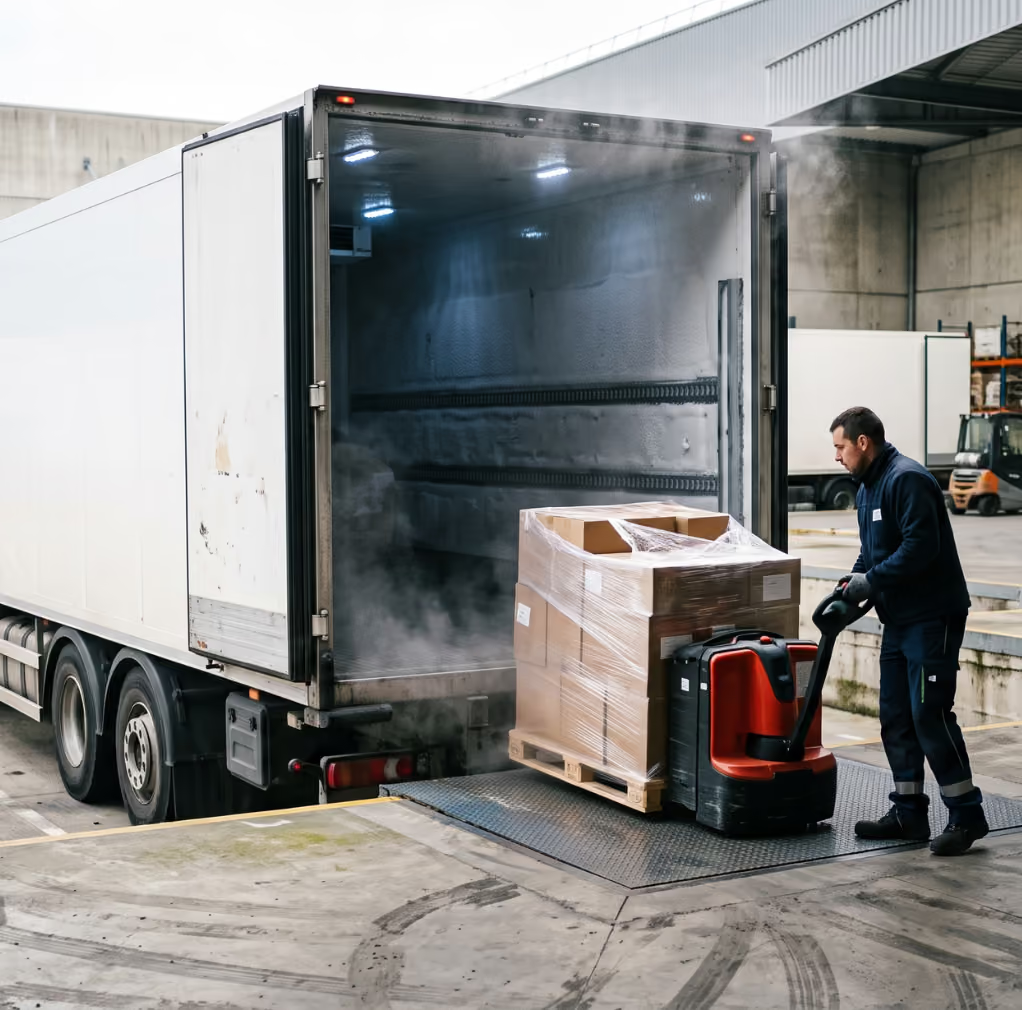
A significant portion of a refrigeration unit's energy is consumed during static loading and unloading phases (Cemafroid). Every unit plugged into the grid after a round transfers this consumption from diesel to the depot meter. Electricity is becoming the fastest-evolving cost item: transit rooms, refrigerated docks, and vehicle charging. Gas remains in use for heating workshops and hot water for cleaning truck bodies, and sometimes powers a private bio-CNG station.
Our role: managing your contracts before your docks go electric
Refrigeration engineers, bodybuilders, and charging station installers remain your technical partners; Sirenergies handles the contractual side, both before and after their work.
- Dock power: analysis of evening and weekend load profiles, when units are plugged in simultaneously, to adjust power levels and avoid overages.
- Procurement: consultation with electricity and gas suppliers for your depots, including private stations, so you can select the best offer.
- Distribution: review of the TURPE (public electricity network usage tariff) and ATRD (third-party access to gas distribution networks) for each site.


Your energy challenges
The 3 energy challenges for refrigerated transport depots
Units switching to mains power as soon as they hit the dock, a fleet caught between gas and electric, and depot bills that are never reconciled with route costs: temperature-controlled transport faces three energy blind spots. For each one, Sirenergies applies a specific contractual lever.
Energy-intensive onboard refrigeration units
Onboard refrigeration units run continuously to maintain the cold chain during transport, a cost that is rarely isolated from other depot expenses.
Energy audit for multi-temperature depots
Sirenergies analyzes your contracts and load profiles to provide an objective assessment of the true cost of your multi-temperature depots.

Poorly consolidated multi-energy contracts
A refrigerated transport company manages both electricity contracts for its depots and fuel purchases for its onboard refrigeration units, often without a consolidated overview.
Multi-energy procurement and supplier tendering
Sirenergies structures a consolidated purchasing strategy for your depot electricity, integrated with your fuel monitoring.
Regulatory transition for refrigerants
The F-Gas regulation imposes a phase-down schedule for high-emission refrigerants, steering equipment choices toward more efficient and, in some cases, more electric-based solutions.
Ongoing support for electrical sizing
Sirenergies works with you to anticipate the impact of these equipment changes on the electrical capacity of your warehouses.
Contractual and data expertise
Optimizing and managing energy contracts for your temperature-controlled depots
From powering dock units to heating maintenance workshops, Sirenergies manages your electricity and gas contracts together. Every recommendation is based on your actual load profiles and fleet plans, ensuring energy keeps pace with your routes rather than the other way around.
Contractual and capacity audit
Reviewing your electricity and gas contracts, their expiration dates, and your subscribed power levels depot by depot, with a special focus on evening peaks when trailers are all plugged in at the dock.
Purchasing strategy and competitive bidding
Tendering for electricity for your docks and gas for your workshops or private station, with a pricing strategy (fixed, market-indexed, or staggered fixed rates) tailored to your budget exposure.
Distribution optimization (TURPE / ATRD)
Your depots' TURPE is checked first: tariff options and power per period are aligned with evening plug-in times. Next, we address the ATRD option and the daily capacity of your gas sites. This includes all necessary coordination with network operators.
Tariff modeling for dockside refrigeration
Projecting the cost of a mains-powered unit, an electric trailer, or a bio-CNG truck on your depot bill: including required power, distribution fees, and purchase price, to compare scenarios before you invest.
Pilott software platform
Next-day consumption tracking for each depot, price alerts for electricity and gas, budget forecasting, and centralization of contracts and invoices for your entire site network.
Expert consulting dedicated to refrigerated transport
A consultant who understands the constraints of the cold chain monitors your markets, deadlines, and regulatory updates, and works with you to build energy cost indicators for each depot.
Our platform
Pilott, simplified management to track your consumption
- Centralize the meters for all your refrigerated depots
- Track the consumption of your docks and transit chambers on a daily basis
- Receive price alerts for your sites' electricity and gas
- Simulate your energy budget and manage your contracts from a single platform


Road transport
Explore other processes
Un autre secteur ?


Methodology and definitions
What is energy consulting for refrigerated transport?
In the evening, when all trailers plug in at the loading dock, a refrigerated depot suddenly demands the power level it will be billed for all year long. Energy consulting for refrigerated transport involves anticipating this subscribed power and the gas capacity of workshops, supporting the procurement of both energy types, and monitoring each depot: work carried out by Sirenergies consultants using the Pilott platform.
Two fleet trajectories
Fuel gas is on the rise: 5.4 TWh of NGV (natural gas for vehicles) were sold in France in 2025 (France Mobilité Biogaz, 2026). Meanwhile, the electrification of refrigeration units is shifting a portion of diesel consumption to the depot's power grid.
The three Sirenergies levers
- Capacity planning: power sized before adding power outlets or charging stations.
- Multi-energy procurement: electricity and gas for your sites tendered together, including private stations.
- Depot management: consumption data at D+1 and contracts for each site centralized in Pilott.

How much are your refrigerated docks really costing you on your energy bill?
Your contracts and your depots' load curves are enough to calculate the potential. No obligation.

