

Road transport: heavy goods vehicle depots and garages
Carriers, take control of your depot energy
Heating large-volume workshops, continuous lighting, compressed air, and now electric vehicle charging: heavy goods vehicle depots and garages face a mix of energy demands across often multi-site fleets. Sirenergies analyzes your contracts and anticipates your transition to electric.


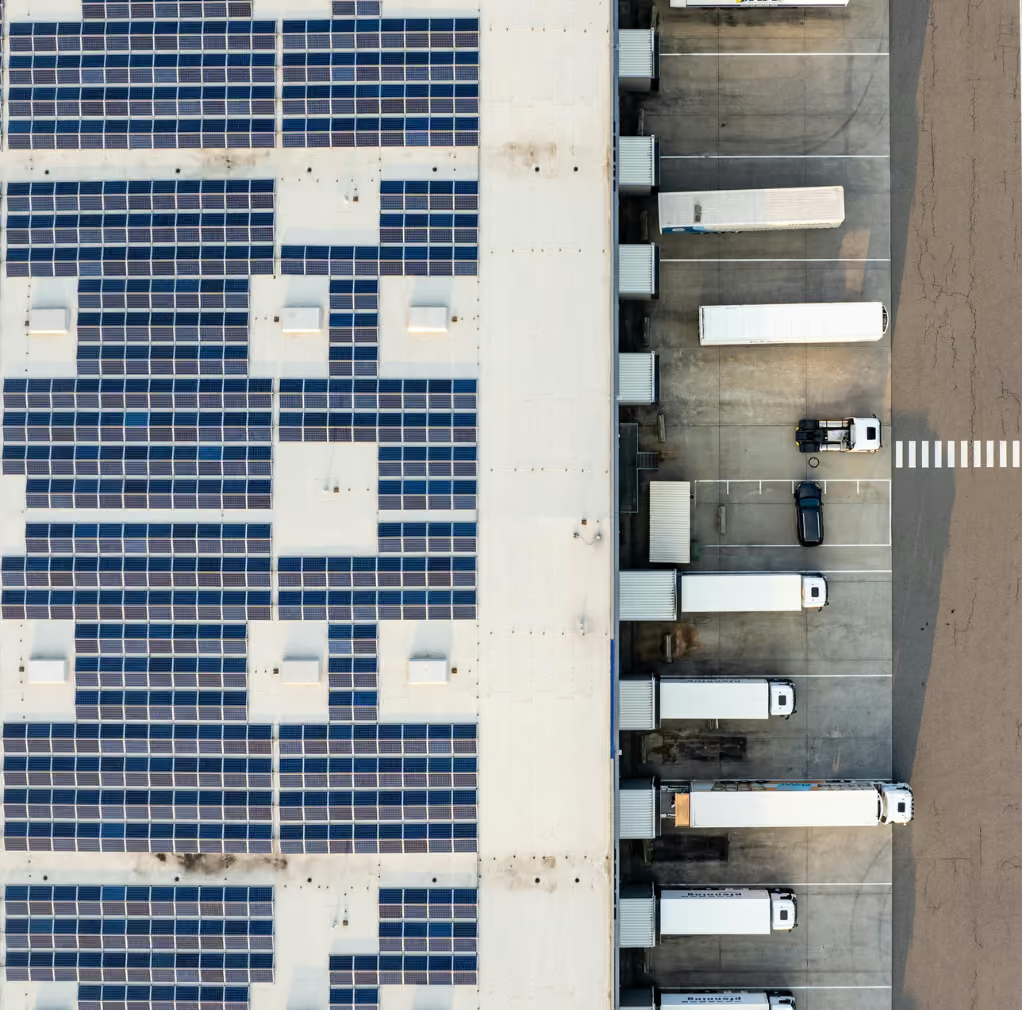
Key industry figures
The energy impact of your workshops and fleet electrification
A road transport depot heats workshops open to trucks and is preparing for the arrival of high-power charging stations. These two areas—gas and electricity—drive your purchasing strategy and contract sizing.
Share of heating in the total energy consumption of a road maintenance workshop.
Share of compressed air in the electricity bill of a heavy goods vehicle garage.
Peak power demand of a single ultra-fast charging station for a truck fleet.
Quelques industriels qui nous font confiance


The energy profile of a heavy goods vehicle depot
Workshop heating and fleet charging drive the bill
The situation: gas-heated workshops and new charging stations on the grid
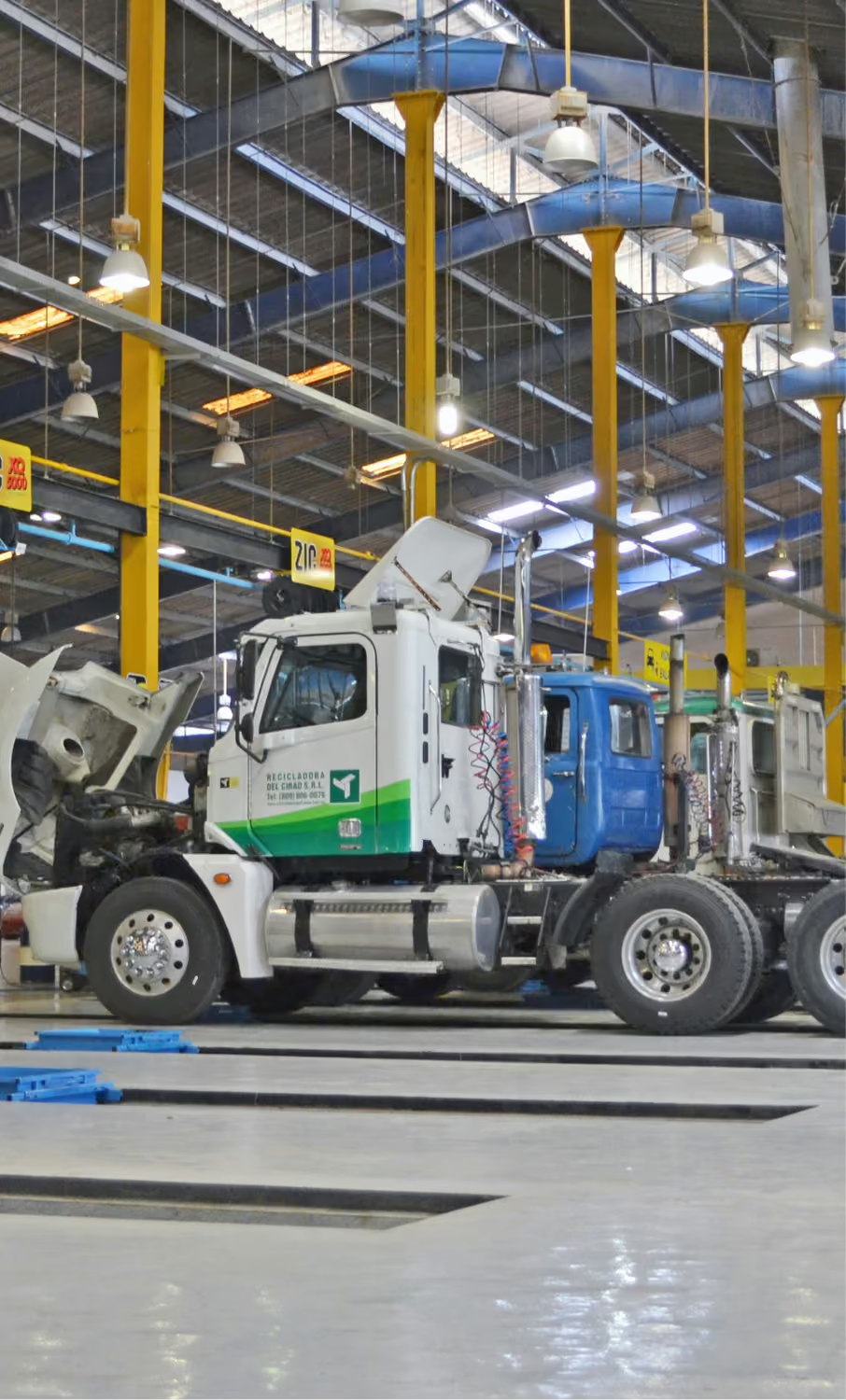
A road transport depot primarily consumes energy for its workshops: gas heating for large volumes open to trucks, air compressors for tools and tire inflation, and lighting for docks and parking lots that is often left on all night. Electric charging adds a new demand with high power requirements. The European AFIR regulation sets public charging targets for heavy goods vehicles for member states, including hubs of at least 3,600 kW every 60 km on the core network (KPMG): a market signal accelerating fleet electrification, and consequently, the electrification of depots.
Our role: preparing your contracts for this transition
Your technical partners install the charging stations; Sirenergies works alongside you on everything related to contracts and measurement.
- Capacity planning:subscribed power capacity sized before the charging stations are connected, based on your load profiles.
- Distribution:TURPE (public electricity grid usage tariff) for charging stations and lighting, and ATRD (third-party access to gas distribution networks) for workshop heating.
- Procurement and monitoring:a tender process that consolidates your sites, followed by D+1 monitoring for each location in Pilott.

Your energy challenges
The 3 energy challenges for heavy goods vehicle depots and garages
Large-volume gas-heated workshops, electrical capacity to be anticipated before charging stations arrive, and dozens of remotely monitored meters: energy management for a fleet of road depots is played out on three fronts. Here is how Sirenergies addresses each one through contracts and data.
Gas heating and continuous lighting: rising fixed costs
Heating large spaces like maintenance workshops and keeping depots lit around the clock create significant base-load consumption. These unavoidable expenses are being hit hard by energy market volatility.
Load profile analysis and tariff optimization
Without the need for an on-site physical audit, Sirenergies deciphers your metering data. We isolate the financial impact of your workshops to optimize your distribution costs (ATRD for gas, TURPE for electricity) and automatically reduce your bill.

Heavy-duty electromobility: the AFIR capacity wall
The implementation of the European AFIR regulation mandates the deployment of ultra-fast charging stations for heavy goods vehicles. This new equipment exposes depots to severe power surges and heavy excess capacity penalties.
Capacity planning and grid tariff optimization
Well before your charging stations are physically connected, Sirenergies models the impact of these mega-chargers on your contracts. We determine your required power capacity and adjust your grid tariffs to absorb these future consumption peaks without penalizing your margins.
Multi-site management: the opacity of invoices
With garages and depots spread across multiple regions, managing contracts in isolation (multi-meter) prevents any global overview. This data fragmentation leads to consumption drift and complicates budget forecasting.
Centralized management and consolidation via Pilott
Sirenergies centralizes all your electricity and gas meters on a single software interface. Our platform Pilott consolidates your multi-site data in real time, tracks anomalies, and gives you the visibility needed to launch highly competitive group tenders.
Contractual and data expertise
Optimization and management of energy contracts for your road depots and garages
From heating maintenance workshops to charging electric trucks, Sirenergies supports you with the electricity and gas for your depots. Every recommendation is based on your load profiles and fleet renewal plan, without ever interfering with your site operations.
Contractual and capacity audit
Review of electricity and gas contracts for each depot and their expiration dates, analysis of load profiles and subscribed power levels, and annual review of excise duties and CEE certificates applicable to workshops and charging stations.
Purchasing strategy and competitive bidding
Consulting with suppliers for your depot electricity and gas, site by site or as a portfolio, with offer analysis and advice on when to lock in your prices before the first charging stations arrive.
Distribution optimization (TURPE / ATRD)
Electricity: TURPE options and power levels per period adjusted for overnight charging and lighting. Gas: ATRD options and capacity reviewed based on workshop heating. Includes handling procedures with grid operators.
Tariff modeling for electromobility
Simulation of the impact of your future charging stations on subscribed power and depot invoices, integrated into your fleet's TCO, with a comparison between overnight and daytime charging.
Pilott software platform
All your depots on one interface: D+1 consumption data, price alerts for electricity and gas, budget projections by site, and centralized contracts, with CSV export or API integration for your fleet management tools.
Expert consulting dedicated to transport
A dedicated consultant monitors your markets and deadlines, keeps you informed of regulatory changes affecting heavy vehicle charging, and works with you to build an energy cost per depot, integrated into your fleet's TCO.
Our platform
Pilott, simplified management to track your consumption
- Centralize all your road depots and garages
- Track your consumption at D+1, depot by depot
- Receive an alert when electricity or gas reaches your price threshold
- Simulate your energy budget and manage your multi-site contracts from a single platform


Road transport
Explore other processes
Un autre secteur ?


Methodology and definitions
What is energy consulting for a road transport depot?
For a carrier, the total cost of ownership (TCO) of an electric truck also depends on the utility bill for the depot where it charges. Energy consulting for heavy-duty vehicle depots and garages breaks down this bill line by line—covering supply, distribution costs, and taxes—for both charging station electricity and workshop gas. Sirenergies consultants conduct this analysis and monitor each depot via the Pilott platform.
A threshold that includes diesel
Since the law of April 30, 2025, any company consuming at least 2.75 GWh of final energy per year, including fuel, must conduct an energy audit every four years. For a carrier, fleet diesel is included in the calculation; Sirenergies verifies the threshold and directs you to a qualified engineering firm.
The levers we use
- A procurement process that consolidates electricity and gas for all your depots.
- TURPE (public electricity grid usage tariff) power levels optimized before every charging station connection.
- Annual verification of the excise duty on electricity (formerly TICFE) and the excise duty on natural gas (formerly TICGN).

How much can your depots save on their energy contracts?
An audit of your contracts and electrical capacity is all it takes to estimate the potential. No obligation.

