

Tourism and leisure: theme parks and aquatic centers
Theme parks: sustainably reduce your energy bill
Heated pools, dehumidified indoor air, electric rides, and illuminated night events: the energy profile of a theme park or aquatic center combines heat—often gas-powered—with electrical power peaks. Sirenergies supports you in purchasing both energy types and aligns your contracts with your operating schedule.


Key industry figures
Heated pools and electric rides: two profiles in one park
An aquatic center primarily consumes heat, while a theme park primarily consumes electrical power; many sites combine both. Each profile requires its own purchasing strategy and distribution settings.
kWh consumed per year per square meter of pool surface in public swimming pools.
Share of air treatment in the total energy consumption of an indoor swimming pool.
Visitors welcomed each year by sites belonging to the Snelac in France.
The energy profile of a leisure park
Pool heating and ride power peaks dominate the bill
The situation: pool heat and ride power
On the aquatic side, energy is used to maintain water and indoor air temperatures, provide continuous dehumidification, and heat shower water, often via a natural gas boiler room. On the attractions side, electricity dominates: ride motors, river pumps, and lighting for night events. The season now extends through Halloween and the year-end holidays. Self-consumption is growing: at Parc Astérix, photovoltaic solar carports will cover nearly 30% of the park's needs (Compagnie des Alpes, 2026).
Our role: managing each energy source according to its use
Your design offices plan boiler rooms and solar power plants; Sirenergies provides clarity on your contracts:
- Pool gas: supplier competitive bidding and an ATRD (third-party access to gas distribution networks) option reviewed based on actual consumption.
- Attraction electricity: TURPE (public electricity network usage tariff) power levels distributed according to opening periods.
- Projects: a heat pump or self-consumption project costed against your two bills, followed by D+1 tracking in Pilott.


Your energy challenges
The 3 energy challenges for theme parks and aquatic centers
Pools that require heating every day they are open, regulations that now set specific targets for large facilities, and power peaks that never show up on your monthly bill: operating a park or aquatic center means managing energy on three fronts. Sirenergies tackles them one by one.
Pool heating, the primary energy consumer
Heating pool water is the primary energy consumer in an aquatic center, encompassing heat production, continuous filtration, and automated treatment.
Energy audit for pool heating
Sirenergies analyzes your contracts and load profiles to determine the true cost of your water heating.

Energy-intensive show lighting
Show and nighttime attraction lighting adds a significant consumption cost, particularly in the evenings and during the off-season.
Energy audit for lighting systems
Sirenergies identifies optimization opportunities for your show lighting, in addition to your heating systems.
Strong seasonality not accurately reflected in contracts
The activity of parks and aquatic centers is highly seasonal, which complicates the calibration of optimal subscribed power throughout the year.
TURPE audit and seasonal adjustment of subscribed power
Sirenergies adjusts your subscribed power to your actual peak activity and verifies your TURPE settings.
Contractual and data expertise
Optimizing and managing contracts for your parks and aquatic centers
From boiler rooms keeping pools at temperature to attractions drawing power the moment the gates open, Sirenergies supports you with both energy sources on your site. Every recommendation takes into account your opening days, seasonal events, and self-consumption projects.
Contractual and capacity audit
Review of electricity and gas contracts for each site, monitoring of power levels, overages, and daily capacity, and annual verification of Energy Savings Certificates (CEE), natural gas excise duties (formerly TICGN), and electricity excise duties (formerly TICFE).
Purchasing strategy and competitive bidding
Competitive bidding for pool gas and attraction electricity suppliers, site by site or as a portfolio, with clause-by-clause offer analysis and a price-fixing schedule that avoids concentrating purchases during market peaks.
Distribution optimization (TURPE / ATRD)
Two energy sources, two networks. ATRD: boiler room options and daily capacity reviewed based on pool attendance. TURPE: power levels per period adjusted for opening hours and night sessions. Includes all dealings with network operators.
Tariff modeling for self-consumption
Energy budget simulation based on various price and attendance scenarios, followed by cost analysis for photovoltaic self-consumption via carports or rooftops, with or without storage, compared against grid purchasing over the life of the project.
Pilott software platform
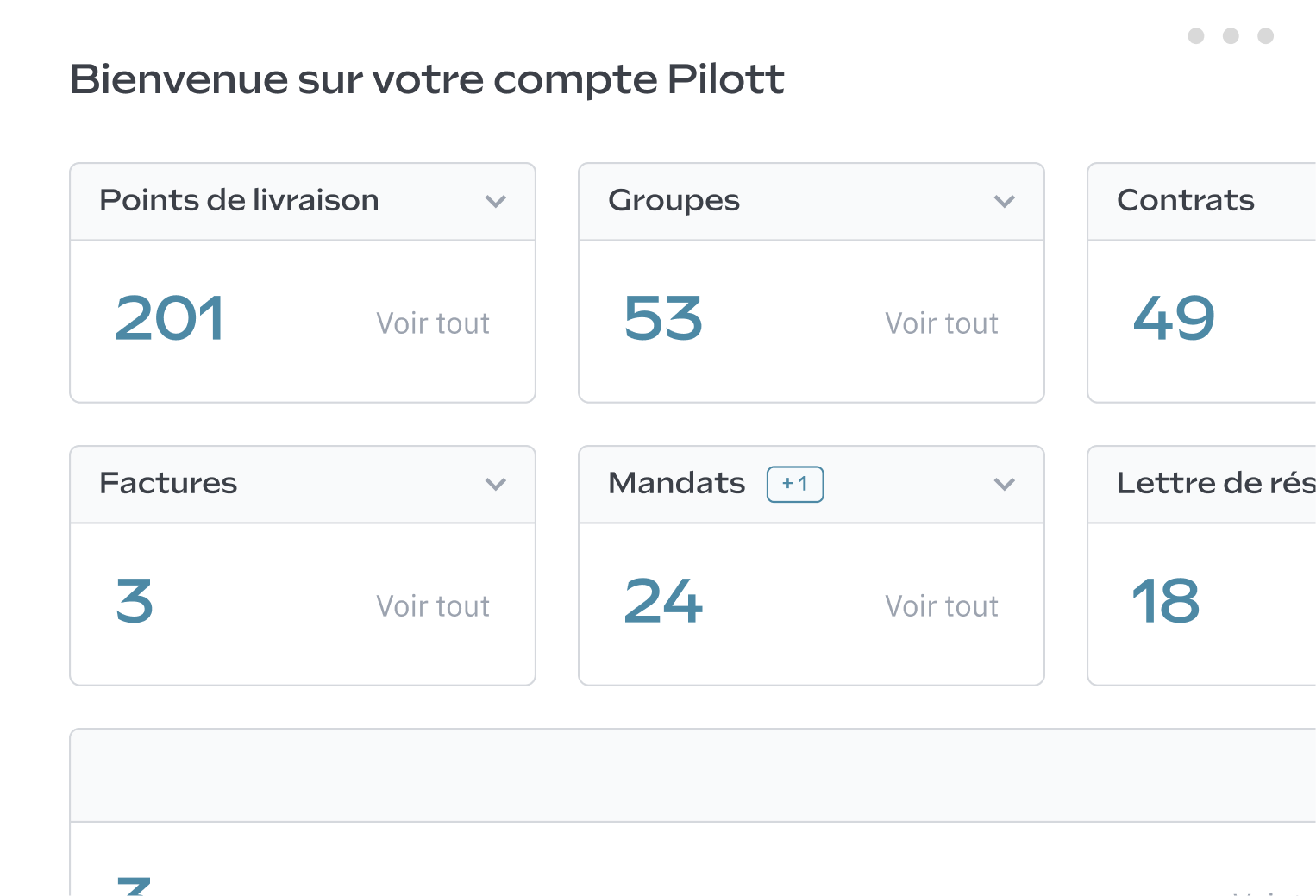
Pools, attractions, catering, and parking lots tracked on a single interface: previous day's consumption, gas and electricity price alerts, projected budget, and centralized contracts, with data export via CSV or API.
Expert consulting dedicated to leisure parks
A dedicated consultant tracks your markets and deadlines, prepares for each season and event, keeps you informed of regulatory changes, and works with you to build an energy cost per visitor to compare your sites.
Our platform
Pilott, simplified management to track your consumption
- Group pools, attractions, and service buildings on a single screen
- Monitor consumption for opening days and late-night events with next-day reporting
- Trigger your purchases using gas and electricity price alerts
- Forecast your seasonal budget and keep all your contracts in one place


Tourism and leisure
Explore other processes
Un autre secteur ?


Methodology and definitions
What is energy consulting for theme parks or aquatic centers?
For theme parks or aquatic centers, energy consulting involves managing gas procurement for pools and electricity for rides, adjusting distribution fees based on opening days, and calculating the costs of photovoltaic self-consumption projects before investing. Sirenergies consultants lead this work, while the Pilott platform tracks the results site by site.
The cost of a degree of water
In a public swimming pool, every additional degree of water temperature represents approximately 7 kWh per m² per year (Cerema, 2025). Swimming pools are also subject to the Eco Energy Tertiary scheme, which aims for a 60% reduction in final energy consumption by 2050.
Our levers:
- Decarbonization: self-consumption via solar carports or guarantees of origin, compared to grid purchasing.
- Procurement: a procurement process that separates gas for pools from electricity for rides.
- Distribution: TURPE (public electricity grid usage fees) and ATRD (third-party access to gas distribution networks) reviewed based on visitor numbers.

How much does each degree in your pools cost you?
Your gas and electricity contracts and invoices from the last season are all we need to estimate the potential. No obligation.

