

Slaughter and cutting: cattle, pig, and poultry slaughterhouses
Slaughterhouses, take back control of your energy
Carcass chilling, cold storage, and cutting rooms drive electricity demand; scalding, singeing, and line cleaning consume gas from the boiler room. An abattoir's energy profile is defined by these two meters. Sirenergies helps you put your gas and electricity contracts out to tender and aligns your power capacity with your slaughtering operations.


Key industry figures
Gas and electricity per animal slaughtered: benchmarks for the pork industry
Measured in pork slaughtering and cutting plants, gas accounts for as much as electricity. When scaled to the millions of animals slaughtered each year, this dual expense requires a procurement strategy that addresses both energy sources together.
Gas (GCV) consumed per 90 kg pork carcass in a slaughtering and cutting plant.
Electricity consumed per 90 kg pork carcass at these same sites.
Pigs slaughtered in France in 2022 in inspected slaughterhouses.
The energy profile of a slaughterhouse
Electric refrigeration and gas-powered hot water split the bill
The reality: a line that heats and cools at the same time
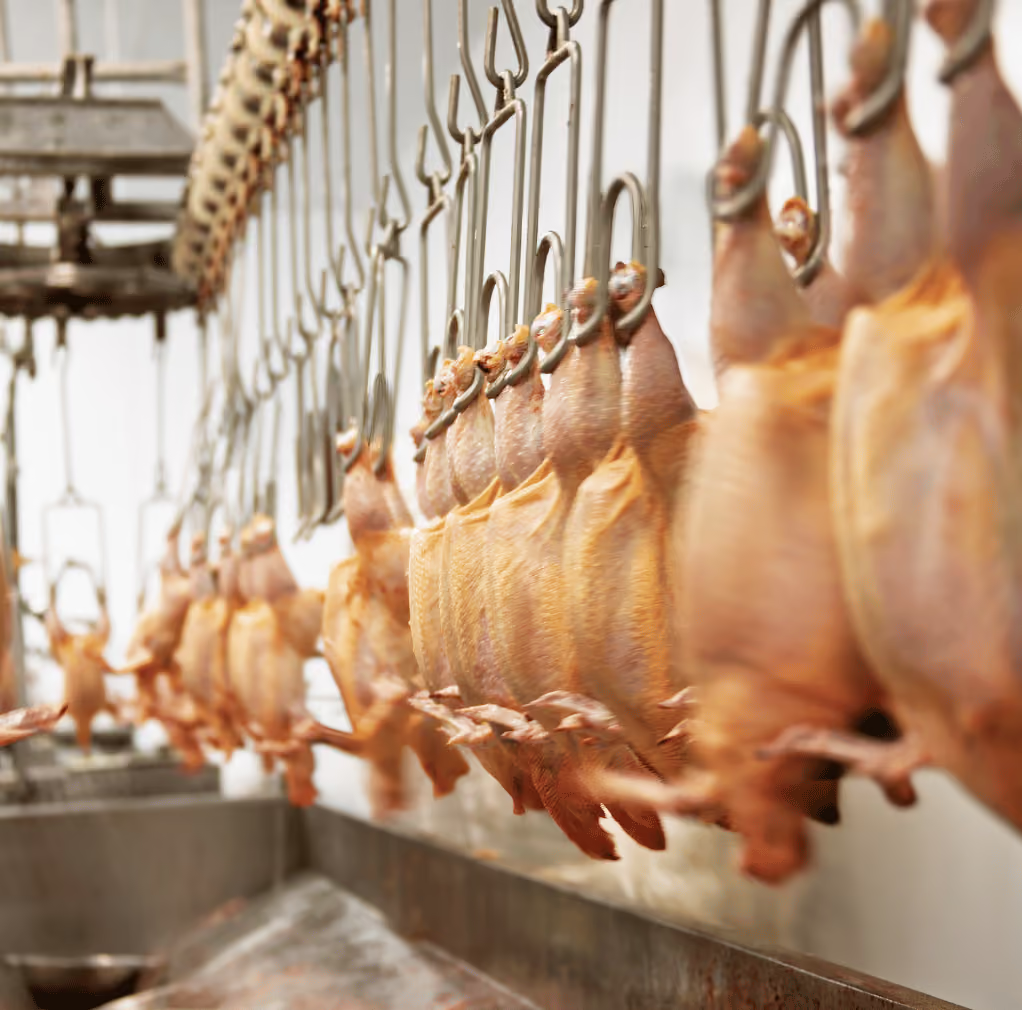
Upstream, the scalding of pigs and poultry, singeing, 82°C knife sterilizers, and line cleaning rely on the gasboiler. Downstream, chilling cools the carcasses, while cold storage and cutting rooms keep them cold: this is whereelectricity powers these compressors, compressed air, and motors. Refrigeration accounts for 50% to 70% of the electricity consumption of slaughtering, cutting, and processing facilities (Viandes et Produits Carnés, vol. 29). Gas represents a larger share for pork and poultry than for beef.
Our role: contracts and data
Refrigeration and heating technicians adjust your equipment; Sirenergies handles the contracting and measurement side.
- Power: load curves analyzed to set TURPE (public electricity grid usage tariff) power levels as closely as possible to the chilling process.
- Procurement: joint gas and electricity tendering, including daily capacity and ATRD (third-party access to gas distribution networks) options.
- Data: consumption data in Pilott at D+1, reconciled with your tonnage.

Your energy challenges
The 3 energy challenges for beef, pork, and poultry slaughterhouses
An electricity peak that follows the arrival of carcasses for chilling, a boiler room where gas remains twice as expensive as in 2019, and an audit obligation now calculated based on consumption: a slaughterhouse operator must manage these three fronts simultaneously. Sirenergies addresses them through contracts and data.
Energy-intensive regulatory cold chain
Refrigeration accounts for 50% to 70% of an abattoir's electricity consumption depending on the meat sector, an unavoidable regulatory requirement for health compliance.
Energy audit for refrigeration systems
Sirenergies analyzes your contracts and load profiles to measure the actual cost of your cold chain, without ever interfering with your regulated parameters.

Complex main low-voltage switchboard and high subscribed power
The main low-voltage switchboard of a slaughterhouse combines refrigeration, compressed air, and lighting, which complicates the calibration of an optimal subscribed power level.
TURPE optimization and subscribed power adjustment
Sirenergies optimizes your grid access tariff (TURPE) to calibrate your subscribed power based on your actual consumption.
Generic addressed segment
Generalist brokers offer generic food industry pages, lacking the expertise dedicated to the specific energy needs of a slaughterhouse.
Procurement and supplier tendering
Sirenergies pits our trusted partner suppliers against one another to secure a contract tailored to your profile.
Contractual and data expertise
Optimization and management of contracts for your slaughterhouses and workshops
From the boiler room powering the scalding process to the refrigeration units for chilling and storage, Sirenergies supports you in purchasing and monitoring your two energy sources. Our recommendations are based on your slaughter schedule and tonnage, ensuring the contract aligns with the rhythm of the production line.
Contractual and capacity audit
Review of your electricity and gas contracts, their expiration dates, your subscribed power levels, and your daily capacity, followed by an annual analysis of excise duties and energy savings certificates (CEE) applicable to your refrigeration and hot water installations.
Purchasing strategy and competitive bidding
Specifications, supplier tendering, and clause-by-clause offer analysis, with a pricing strategy designed for a profile that is both continuous—due to cold storage—and rhythmic, based on slaughter days.
Distribution optimization (TURPE / ATRD)
For electricity, TURPE options and power levels per period are calibrated to the chilling process. For gas, ATRD options and boiler room daily capacity are set according to your hot water peaks. We handle the procedures with grid operators.
Hot water tariff modeling
Budgetary projection for heat recovery from refrigeration units or a heat pump: gas saved, electricity added, and power to be subscribed. A flexibility study can be added if the thermal inertia of your cold rooms allows it.
Pilott software platform
Your slaughterhouses and workshops gathered on a single interface: previous day's consumption, alerts when gas or electricity prices cross your thresholds, projected annual budget, and all contracts stored in one place.
Expert advice dedicated to the slaughtering industry
A dedicated consultant monitors your markets and deadlines, alerts you to regulatory changes affecting the meat industry, and works with you to build indicators such as energy cost per carcass weight equivalent.
Our platform
Pilott, simplified management to track your consumption
- Consolidate the meters for your slaughterhouses, cutting plants, and cold storage warehouses
- Check the previous day's consumption every morning, site by site
- Get notified when gas or electricity prices exceed your thresholds
- Forecast your energy budget and manage your contracts from a single platform



Slaughtering and cutting
Explore other processes
Un autre secteur ?


Methodology and definitions
What does energy consulting for a slaughterhouse involve?
What a slaughterhouse operator expects from energy consulting often boils down to one question: are they paying the right amount for the network? The consulting process here involves adjusting transmission costs—TURPE (the tariff for using public electricity networks) for cooling and chilling, and ATRD (third-party access to gas distribution networks) for hot water—as well as managing energy procurement and tracking consumption per ton slaughtered. Sirenergies consultants use the Pilott platform to achieve this.
The context
Between 2019 and 2024, the average price of a tonne of oil equivalent paid by the food industry increased by a factor of 1.9, compared to 1.3 in the chemical industry (Insee Première No. 2095, February 2026).
Three levers
- Subscribed power levels that follow the slaughter schedule rather than the worst day of the year.
- ATRD daily capacity and options verified for the scalding and washing boiler room.
- Energy cost per carcass-equivalent ton tracked in Pilott at D+1 to compare sites and periods.

How much does energy cost per ton slaughtered in your facility?
One year of gas and electricity bills and your load curves are all we need to calculate your potential savings. No obligation.

