





Summarize with AI

February 10, 2026
5
Min reading
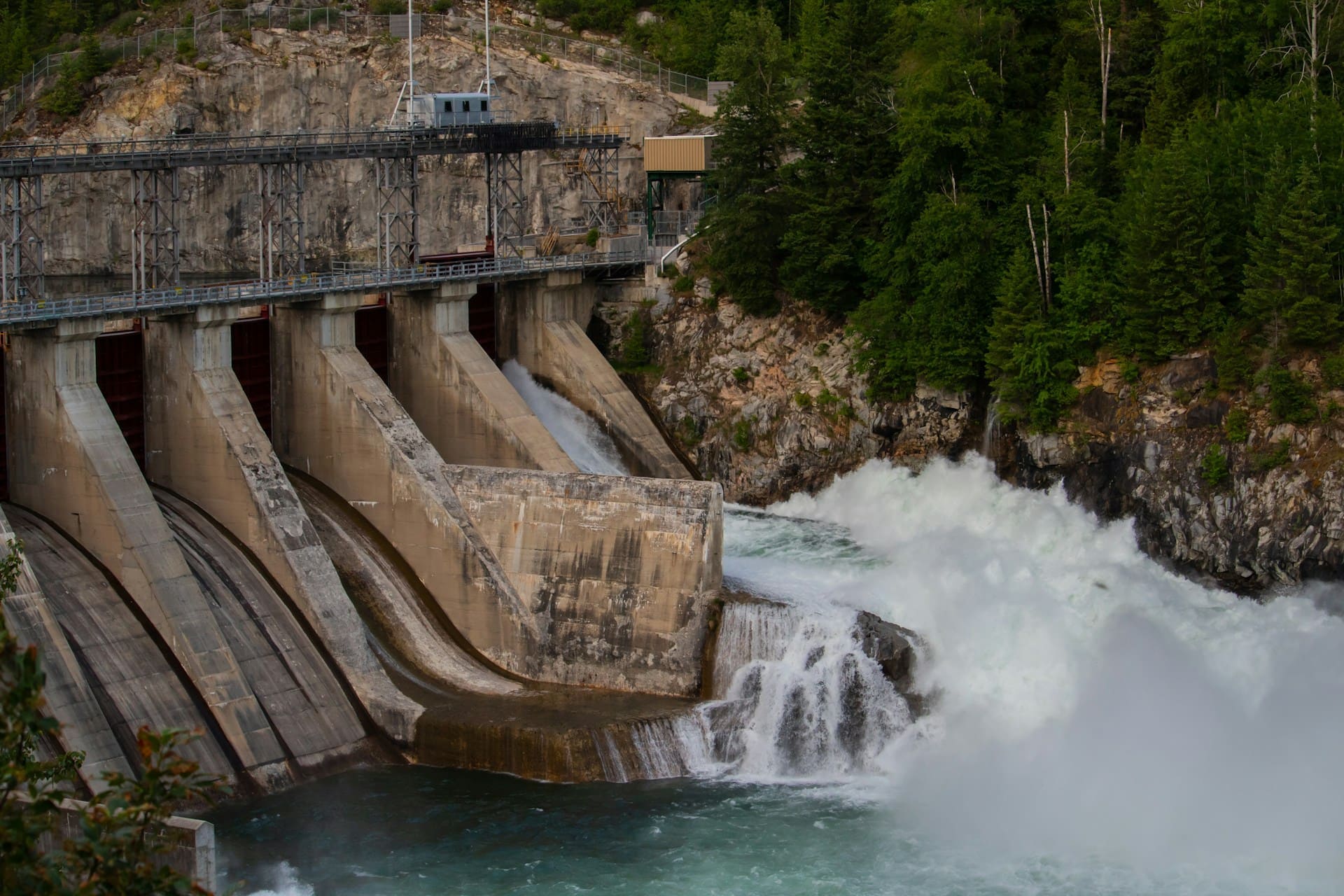
One hydroelectric dam or transfer station is a concrete structure built directly into the current of a natural watercourse to serve as a reservoir of potential energy. It also has the mission of conveying large quantities of water to turbines which in turn run generators that produce electricity. How does this type of dam work? What is its environmental impact?
It is not enough for water to accumulate in a hydroelectric dam for it to be transformed into electricity. On the contrary, it is a whole transformation process which takes place in several stages.
Depending on its power, a natural water stream (river, lake) can release a certain amount of potential energy. The latter is generally in the form ofmechanical energy whose flow is concentrated on a specific path by gravity.
Built across a watercourse, a hydroelectric dam not only regulates its flow, but also stores its water in an artificial lake called an “accumulation lake”. At the same time, it imprisons its potential energy. The speed and depth of water passing through the dam pipe create a hydraulic load that makes the turbine in the hydroelectric plant turn.
Turbines are composed of mechanical blades of various shapes and sizes. Large reaction turbines such as the Francis turbines (found on the Three Gorges Dam in China) are equipped with large blades that need very high voltages and big motors to run.
For example, to rotate, the Francis turbine relies on hydraulic load. The latter is created by the hydrostatic pressure arising from the potential energy of the dam and increases with the speed of the water.
In other words, the hydraulic load of a hydroelectric dam depends exclusively on its height and on the flow of the water. The rotation of the turbine transforms the hydraulic load into kinetic energy, which eliminates speed and hydrostatic pressure of the fluid. From that moment on, water flows peacefully to the base of the dam.
It is the rotating movement of the turbine that transforms the kinetic energy of water into electrical energy. A hydraulic turbine can be coupled directly to an electrical generator or through a transmission or gearbox that drives the shaft as well as the generator frame. The brooms and the collector, on the other hand, capture the flow of electricity generated by the rotating frame of the generator.
Hydroelectric plants use very powerful generators capable of creating a significant amount of resistance to mechanical rotation (reluctance). To overcome this reluctance, the rotation of the turbine must generate significant torque forces. Thanks to a system of transmission similar to that of a car, the gyratory movement of the turbine is converted into several torque-speed ratios.
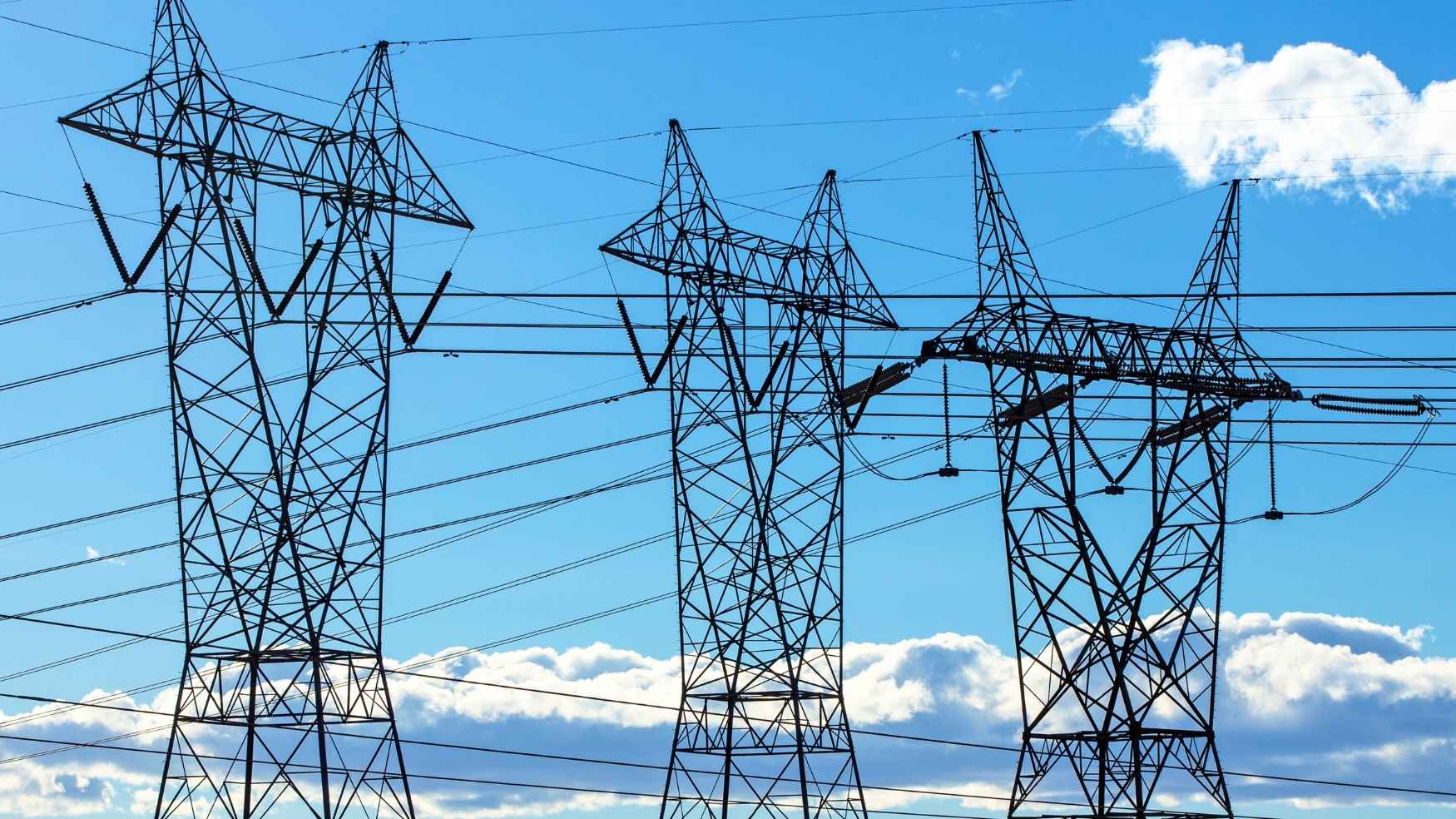
The electricity produced in this way is converted into voltage and then transported to consumers via high and very high voltage power lines. Concretely, hydraulic dam elevators use the output voltages of low-current generators to generate tensions that can be directly used through homes. This is the case in particular for Round-the-river power plants.
Hydroelectric power plants also generate higher voltages intended for long-distance electrical transmissions. Moreover, the lower the electric current, the more effective its voltages are. For example, thanks to the use in electric transport ofA transmission of 500 kV, the Glen Canyon dam in Paige, Arizona, can provide electricity to households located about 1,500 km north of Nebraska.
In order not to collapse under water pressure, a hydraulic dam must adapt perfectly to the geology of the soil where it is installed. This is the reason why there are different types of hydroelectric dams.
Imposing in mass, the gravity dam is designed in earth, concrete and rock and then compacted with a BCR. Its resistance to water pressure is given to it by the weight of its reinforced concrete structure.
In addition, he is equipped with a wall with a flat surface that allows water to be distributed over the entire surface. The gravity dam only rests on the ground. It is therefore essential that it is really very solid. This is why this type of dam is generally built in large valleys.
The arch dam owes its name to its curved shape. It is found exclusively in narrow valleys with rocky shores. It is built to close the valley so as to form an accumulation lake and a waterfall.
The arch dam is oriented towards the lake, this allows it to channel the force of the water push to the rocky shores via a diversion channel. Since the power of the fluid is directed towards the sides of the dam, the dam's natural walls have every interest in being very solid.
Also built of reinforced concrete, the buttress dam still requires fewer materials than the others. Installed at the back of the dam and firmly anchored to the rocky ground, the foothills serve to support a flat wall.
The whole is oriented towards the accumulation lake. The sides of the structure are also anchored to the rocky ground. The latter must therefore be resistant to allow the dam to weather resistant.
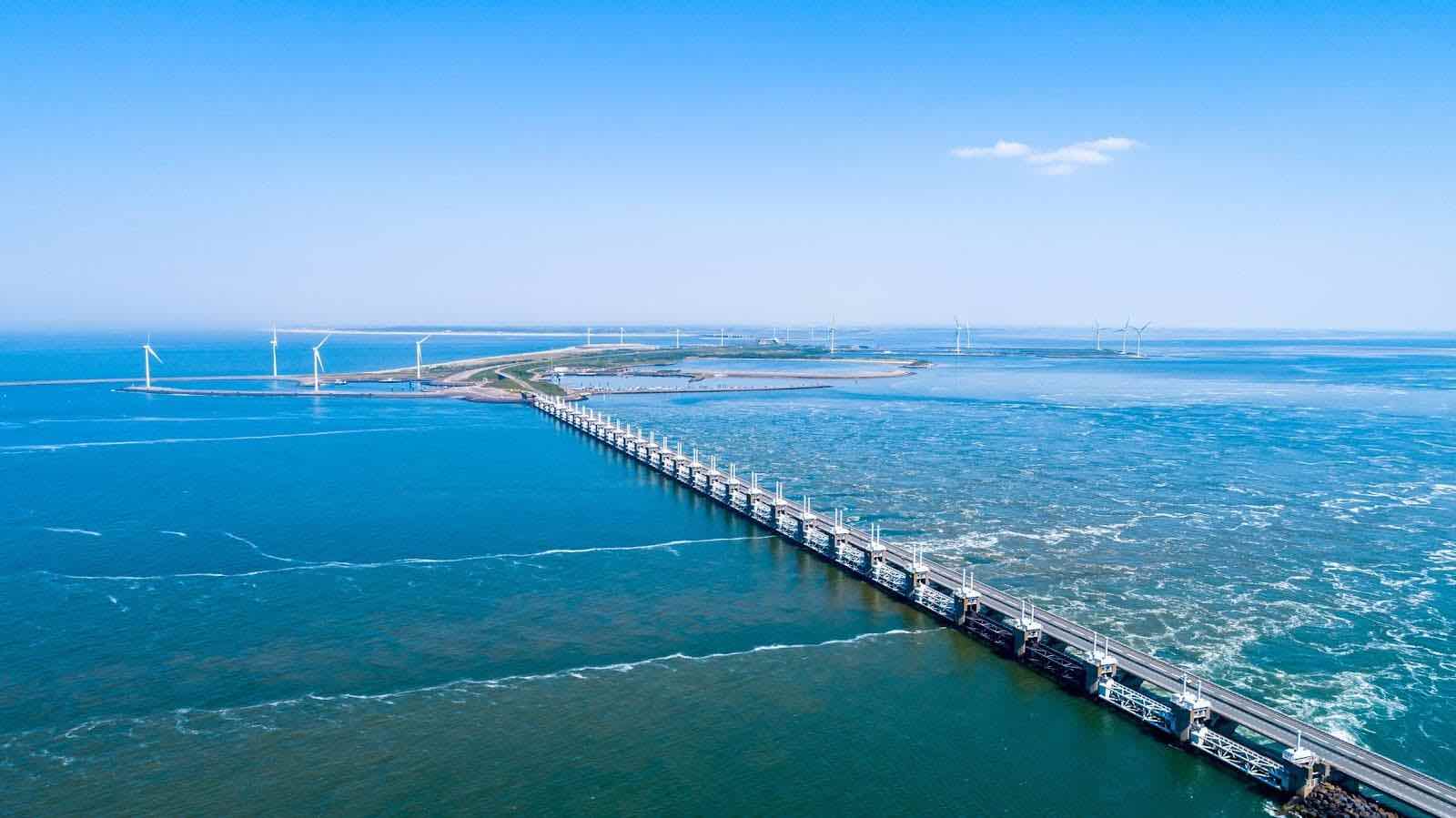
Hydroelectric dams require very large spaces. As a result, during their construction, many populations are displaced and several agricultural lands are flooded. However, their environmental impact is negligible compared to the enormous potential represented by the exploitation of Hydraulic power.
In fact, it should be noted that in addition to the potential energy of watercourses, it is also possible toHarnessing tidal energy. This is the case, for example, of the Rance dam, which feeds The Rance tidal power plant and which draws energy from the power of the tide.

Dam and tidal power plant in La Rance (Ille-et-Vilaine)/Source: Telegram
Better still, hydroelectric power is constantly evolving. Today, China has the second largest hydroelectric power plant in the world (located in Baihetan, 289 meters high), a structure intended to eventually cover more than 2.6% of the country's electrical energy needs. This is due toimprovement of production systems and the construction of new dams and new tidal power plants. In addition, turbine efficiency is now close to 100% thanks to the modeling of fluid dynamics and the reduction of manufacturing thresholds.
In addition, advances in lubricating materials science, gearbox design, driver efficiency, etc. All of these factors make hydroelectric power rightly considered to be renewable energy The most important of the world.
To go further, do not hesitate to consult our article to understand everything about controllable energy.
In a few clicks, organize an exchange with one of our experts.


weekly newsletter subscribers

4.9

.png)

L'abondance de production française tire les prix du marché de gros vers le bas.
En vertu du mécanisme de l'Ordre de Mérite (Merit Order), les centrales les moins coûteuses (nucléaire, renouvelables) couvrent la demande plus souvent, évinçant les centrales à gaz ou charbon plus onéreuses.
Cela multiplie les épisodes de prix bas, voire négatifs, sur le marché spot.
Exceeding capacity leads to financial penalties and can impact the size of the contract. Adjust the correctly subscribed power makes it possible to avoid these additional costs.
Farms are subject to taxes such as TICFE or TICGN. Sirenergies verifies their application, identifies cases of exemption and accompanies the procedures to reduce the tax burden.
Tertiary companies are concerned by taxes such as TICFE or TICGN. Sirenergies checks the accuracy of invoices, identifies possible exemptions, and helps correct errors to sustainably reduce costs.
These are signals sent by RTE during periods of tension on the electrical network. The Sirenergies tool informs you in real time to anticipate your uses.
The range E @sy is available in four pricing structures to adapt to each risk profile:
This makes it possible to choose the right time to contract, secure your budgets and anticipate increases.
Le kVA mesure la capacité maximale que votre compteur peut supporter à un instant T, tandis que le kWh mesure la quantité d'énergie consommée sur une durée.
Un appel d’offres permet de mettre en concurrence plusieurs fournisseurs d’électricité et de gaz afin d’obtenir des conditions contractuelles optimisées. C’est une démarche transparente qui permet de choisir l’offre la plus adaptée aux besoins budgétaires et techniques de l’organisation.
One invoice consists of several elements: consumption, supplier share, taxes and contributions. The analysis of each line makes it possible to identify possible errors and to check the consistency with the signed contract.
C'est l'indicateur d'efficacité d'un appareil électrique ; il représente le ratio entre la puissance active (utile) et la puissance apparente (totale).
Communities are subject to taxes such as TICFE or TICGN. Sirenergies analyzes invoices, identifies exemption possibilities and fixes possible errors to reduce the tax burden.
Sourcing consists in identifying and analysing the offers of several electricity and gas suppliers. This approach makes it possible to obtain contracts adapted to the consumption profile and budgetary constraints of the company.
Tertiary companies must manage their energy costs while guaranteeing the comfort of users (offices, shops, services). Consumption is often linked to heating, air conditioning and lighting, which requires precise monitoring to avoid budgetary excesses.
The subscribed power must be calculated according to the consumption profile and uses (heating, industrial processes, tertiary equipment). One fine analysis makes it possible to ensure the adequacy between real need and contract.
Parce que la puissance souscrite en kVA détermine le prix de l'abonnement et que tout dépassement peut entraîner des surcoûts importants.
In 2025, the supplier had a NPS (Net Promoter Score) of +16 and a note of 4,17/5.
Satisfaction is based on a “zero solicitation” model and 100% in-house customer service in Toulon, guaranteeing proximity and responsiveness that cannot be found with major historical suppliers.
Le transport (RTE) correspond aux "autoroutes" de l’électricité. Il s’agit de transporter de très grandes quantités d'énergie sur de longues distances, depuis les centrales de production (nucléaires, barrages, parcs éoliens offshore) vers les régions de consommation.
La distribution (Enedis) s'apparente aux "routes départementales" et aux rues. Elle récupère l'électricité à la sortie du réseau de transport pour la livrer directement chez le client final, en abaissant la tension pour qu'elle soit utilisable par vos appareils.
Ce record de 92,3 TWh s'explique par la conjonction de trois facteurs :
Le processus repose sur l'utilisation de la force de l'eau (énergie cinétique) issue des courants, des chutes d'eau ou des dénivelés. Le fonctionnement suit trois étapes clés :
The industry is concerned by TICFE, TICGN and other contributions that may represent an important part of invoices. Sirenergies identifies cases of exemption and accompanies the procedures to benefit from them.
Some businesses may obtain a partial or total exemption from the TICFE or the TICGN, depending on their activity and energy intensity. The support of an expert makes it possible to identify the eligibility criteria and to put together the file.
Yes. The supplier guarantees an offer 100% renewable via the official Guarantees of Origin (GO) mechanism.
For the most demanding companies, the offer GREENVOLT+ ensures very low carbon intensity electricity, sourced exclusively from independent French producers (hydraulic, wind, solar).
Among the taxes include TICFE, TICGN, CTA, CJA and TURPE. They represent a significant part of the bill and vary according to consumption profiles. Understanding them well is essential to optimize costs.
Le dispositif ARENH a laissé place au VNU (Versement Nucléaire Universel).
Ce changement structurel expose davantage les entreprises aux prix de gros, rendant la gestion des risques plus complexe qu'auparavant.
Il devient alors indispensable de définir une stratégie d'achat d'électricité avec Sirenergies pour lisser l'impact de la volatilité des marchés sur votre budget.
The €/MWh is a price unit used in wholesale markets, while kWh is the unit visible on your bills.
En 2025, la France a atteint un solde exportateur net de 92,3 TWh, battant le précédent record de 2024 (89 TWh).
C'est le levier le plus rapide pour obtenir des résultats visibles. L'éclairage représente environ 40 % de la consommation d'électricité d'une commune.
Passer au LED avec pilotage intelligent permet de réduire la facture de 50 à 80 %, avec un retour sur investissement (ROI) rapide, souvent estimé à 2 ou 3 ans.
Oui, elle est considérée comme une énergie renouvelable à faibles émissions de gaz à effet de serre.
De plus, l'eau ne subit aucune transformation chimique durant le cycle de production et réintègre son milieu naturel en aval.
Cependant, la construction de barrages nécessite des mesures pour protéger les écosystèmes (débit minimum, passes à poissons).

On distingue trois catégories principales : les barrages de haute chute (en montagne), les barrages au fil de l'eau (sur les fleuves) et les STEP (Stations de Transfert d'Énergie par Pompage). Ces installations sont des actifs stratégiques, particulièrement pour le secteur industriel fortement consommateur d'énergie stable.
Oui, l'hydroélectricité est la première source d'électricité renouvelable en France. Elle exploite le cycle naturel de l'eau sans émission de gaz à effet de serre. Pour les entreprises, c'est un levier majeur de sourcing d'énergie verte afin de décarboner leur activité.
L'hydroélectricité représente environ 12 % de la production électrique nationale. Sa capacité de stockage unique en fait le complément indispensable du nucléaire et des énergies éoliennes ou solaires. Un accompagnement conseil en énergie est souvent nécessaire pour intégrer ces spécificités de production dans une stratégie d'achat globale.
Grâce à sa grande réactivité, une centrale hydraulique peut injecter de fortes puissances sur le réseau en quelques minutes. Ce mécanisme est crucial pour l'ajustement de l'offre et de la demande d'électricité en temps réel, évitant ainsi les risques de délestage lors des pics de consommation.
Un barrage est conçu pour durer plusieurs décennies, voire plus d'un siècle avec une maintenance rigoureuse. C'est un investissement de long terme très prisé par les ETI et grandes entreprises qui cherchent à sécuriser leur approvisionnement énergétique futur avec des infrastructures pérennes.
Bien que décarbonée, la construction d'un barrage modifie l'écosystème local et le transport des sédiments. Des mesures de compensation sont pilotées sous l'égide d'organismes comme l'ADEME pour le climat afin de garantir un équilibre entre production énergétique et préservation de la biodiversité.
Contrairement au solaire ou à l'éolien, l'hydroélectricité de barrage n'est pas intermittente mais pilotable. L'eau stockée peut être turbinée à la demande, ce qui permet aux gestionnaires de flux de mieux piloter leur énergie en fonction des besoins réels du site ou du réseau.
Les prix dépendent des cours du marché de gros européen. Des facteurs comme la pluviométrie influencent la disponibilité de la ressource et donc les tarifs. Il est recommandé de suivre les alertes prix du marché pour optimiser ses périodes de souscription contractuelle.
La "petite hydroélectricité" permet d'exploiter des chutes d'eau modestes directement sur des sites privés. C'est une opportunité concrète pour les PME et PMI situées à proximité de cours d'eau de générer leur propre électricité en autoconsommation et de réduire leurs factures.
EDF exploite la majorité du parc hydraulique français, suivi par la CNR et la SHEM. Comprendre le rôle d'EDF comme producteur historique permet de mieux appréhender le fonctionnement des concessions et la structure des coûts d'accès à l'énergie en France.
Un barrage hydroélectrique sert principalement à produire une énergie décarbonée et stockable à grande échelle. Il permet de réguler le réseau électrique lors des pics de consommation et aide à la gestion de l'eau pour l'irrigation, la navigation et la prévention des crues.
Le fonctionnement d'un barrage hydraulique suit trois étapes : la rétention de l'eau par un mur massif, la conduction de l'eau vers la centrale via des conduites forcées, et la conversion mécanique de la turbine en électricité via un alternateur intégré.